Ready-made, one-time
$3,699
Reddit Clone
Live in 6 working days from kickoff
- Full source code
- White-label under your brand
- 60 days of technical support
- 1 year of free updates
- App publishing support
Community forum platform
Communities that police themselves, and a coin economy that pays for them.
A ready-built forum platform where members create communities, vote on posts and argue in threaded comments, while moderators work real queues and operators watch revenue from one admin console. Premium subscriptions, a coin wallet and awards share a single ledger. Web app, Android app, 133 API routes and full source are yours.
The facts a buyer checks first, in one place. Everything on this page is the product as it ships.
| Product type | Multi-community discussion platform with voting, moderation and a coin economy |
|---|---|
| Platform price | $3,699 one time, no revenue share, no per-seat fee |
| Launch time | 6 working days from kickoff |
| Content modes | Text, link, image, video, poll and crosspost on one publishing engine |
| Roles | Member, moderator, admin and owner inside every community, plus a site-level role |
| Backend | 133 route handlers on Next.js 16 and React 19, PostgreSQL with Prisma 7 |
| Clients | Responsive web platform and a branded Android app on the same API |
| Payments | Stripe and Razorpay, with your own credentials and webhook signing |
| Source code | Complete Next.js and Prisma codebase with schema, migrations and seed scripts |
| Support and updates | 60 days technical support, 1 year of free updates, app publishing support |
A Reddit clone is a ready-made community platform: a place where members join topic-based communities, post, vote, comment in nested threads and build personal feeds. Ours is original software on Next.js 16, React 19, PostgreSQL and Prisma. You own the code, and the product runs on mainstream tools that most development teams already know.
The difference lies in what sits under the posting screen. Report queues, removal reasons, bans with expiry, member appeals, moderator notes, mod logs and per-community automod rules are first-class records with audit trails. A community can grow past its first thousand members without its volunteers drowning, because the tooling matches the workload.
Revenue is part of the same data model. Members can buy premium, top up a coin wallet and spend coins on awards for posts, comments or other members. Premium members receive a coin stipend that feeds more award spending. Operators change pricing and feature gates from a configuration panel, without redeploying.
Reddit is organized around communities rather than people. Each community has its own subject, rules and volunteer moderators, members vote posts and comments up or down, and the ranking that results decides what gets seen. The unit of value is the thread: a link, a question or a picture followed by a tree of replies that other members have sorted for you.
A white-label Reddit clone gives you that structure as software you own. It is an original implementation, sold under your name, with the source in your hands. It does not come with Reddit members or content. What you get is a multi-community platform with moderation, a premium and coin economy and an operator console, so the work that remains is the human one: deciding what your communities are for and who runs them.
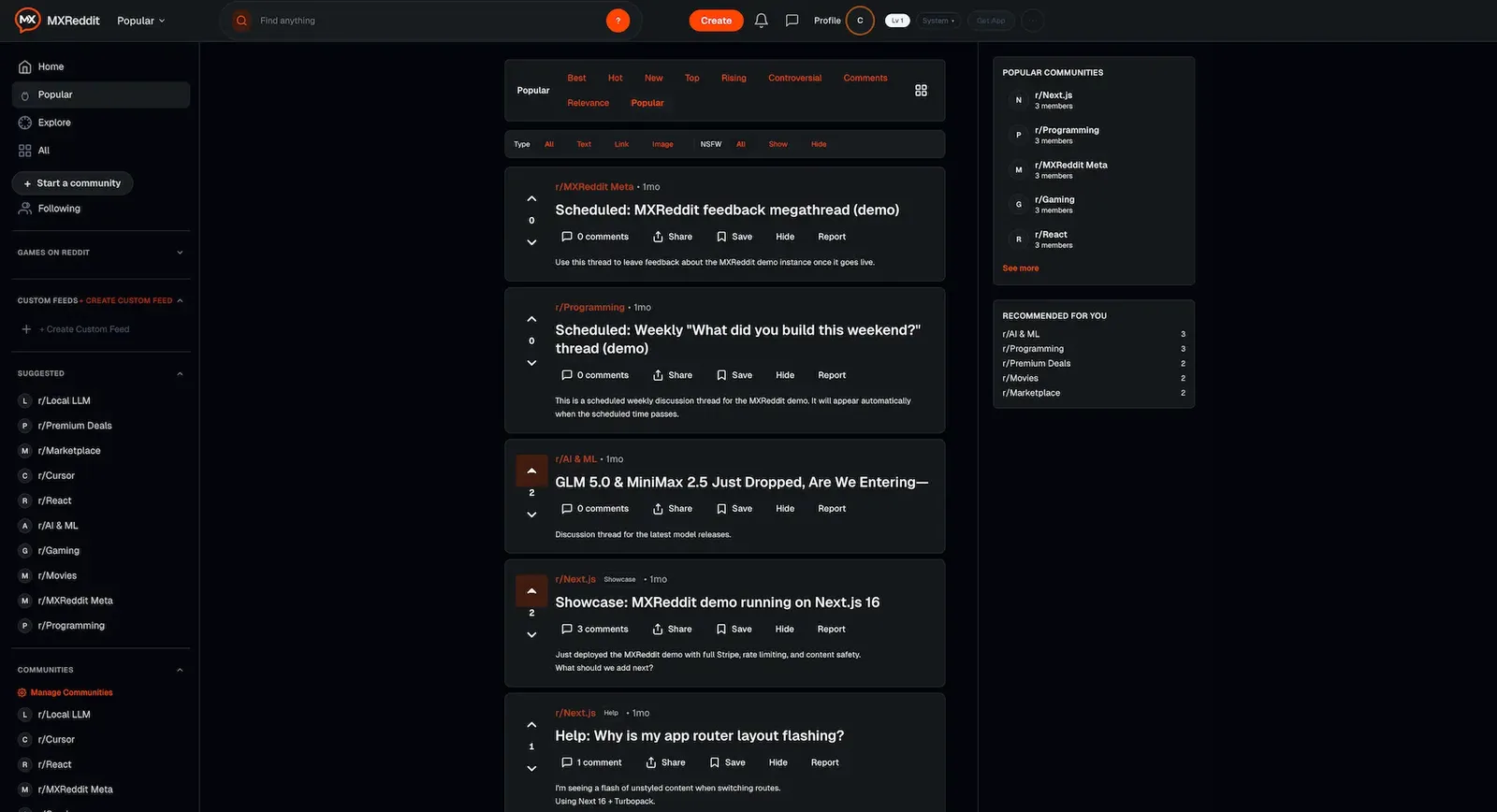
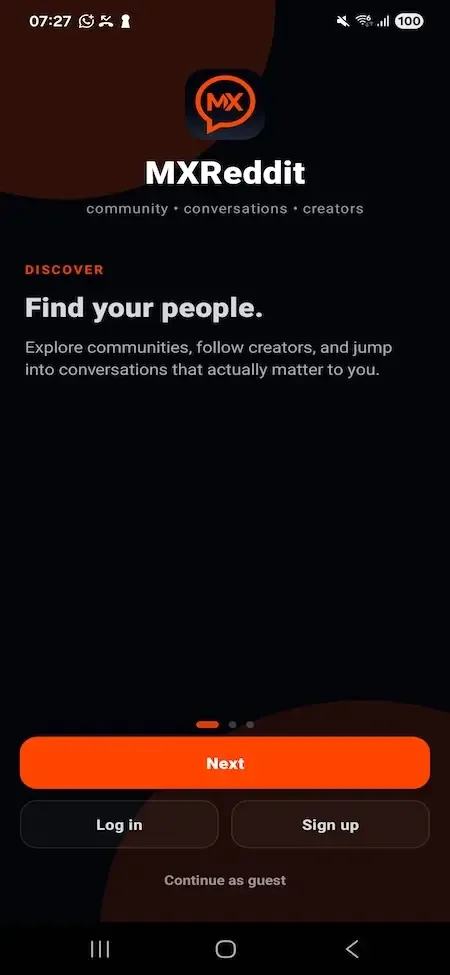
Each role works in its own side of the same product. The screens come from the working demo.
A member lands on a feed shaped by the communities they join, reads threaded discussion, votes on what deserves attention and takes part through six kinds of post. Personal controls decide what they never want to see.
Moderators police a single community. They see a queue of reports, act on posts and comments with consistent reasons, manage bans and appeals and write rules the platform can enforce automatically.
The economy role covers the members who spend and the operator who prices. Premium, coins and awards share one ledger, so a subscription, a top-up and an award all reconcile in the same place.
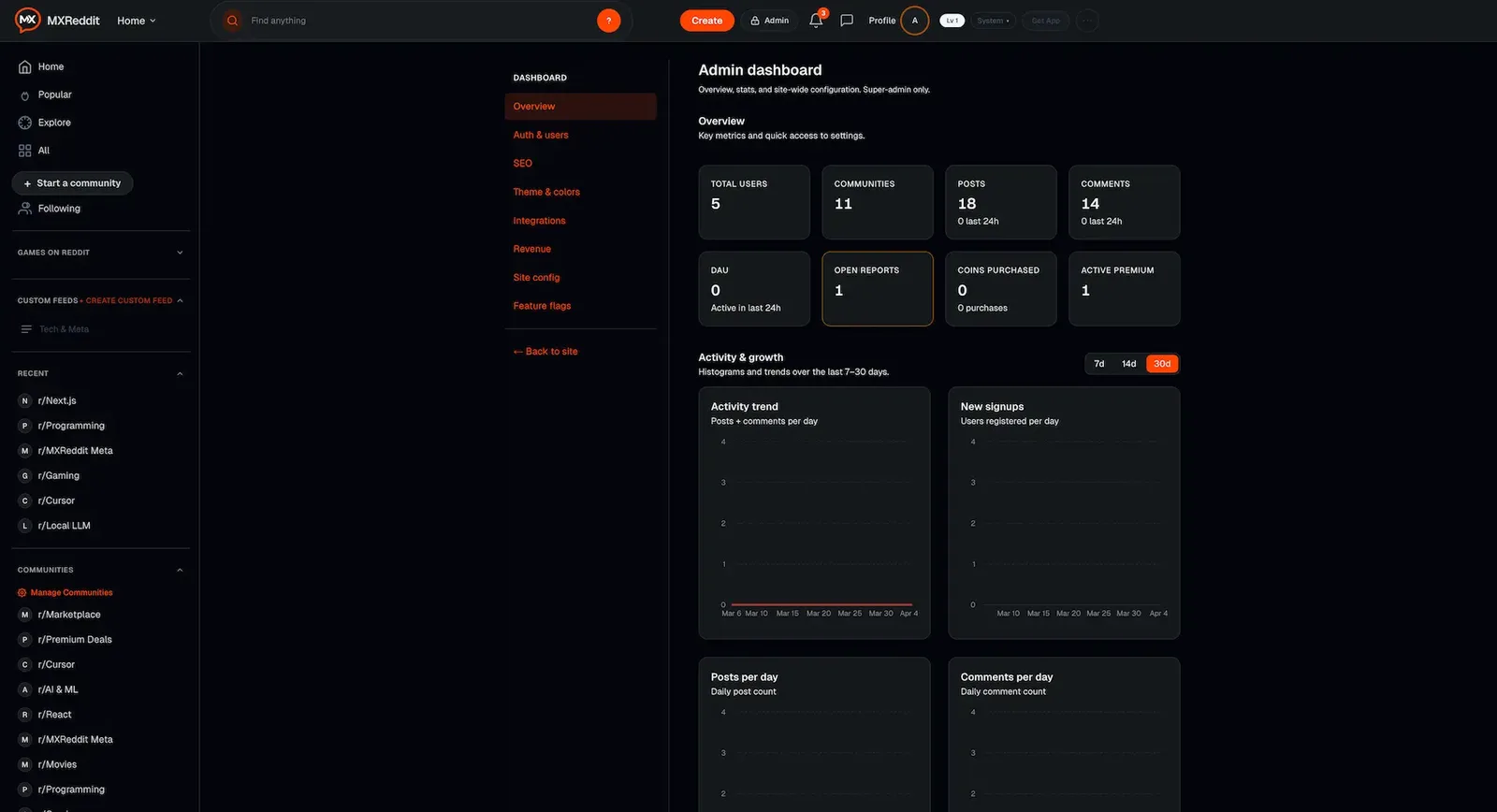
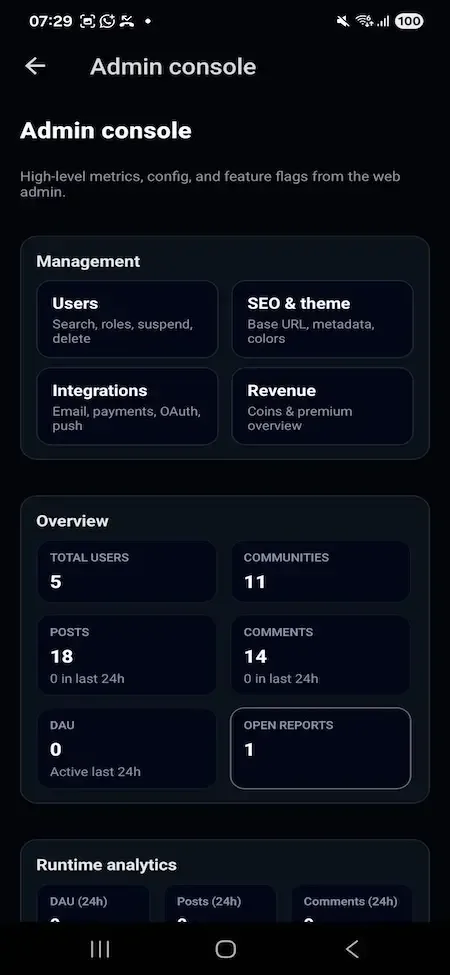
Operators run the platform around the communities. They watch health and revenue, administer accounts, oversee moderation across every community and confirm which integrations are live in the running environment.
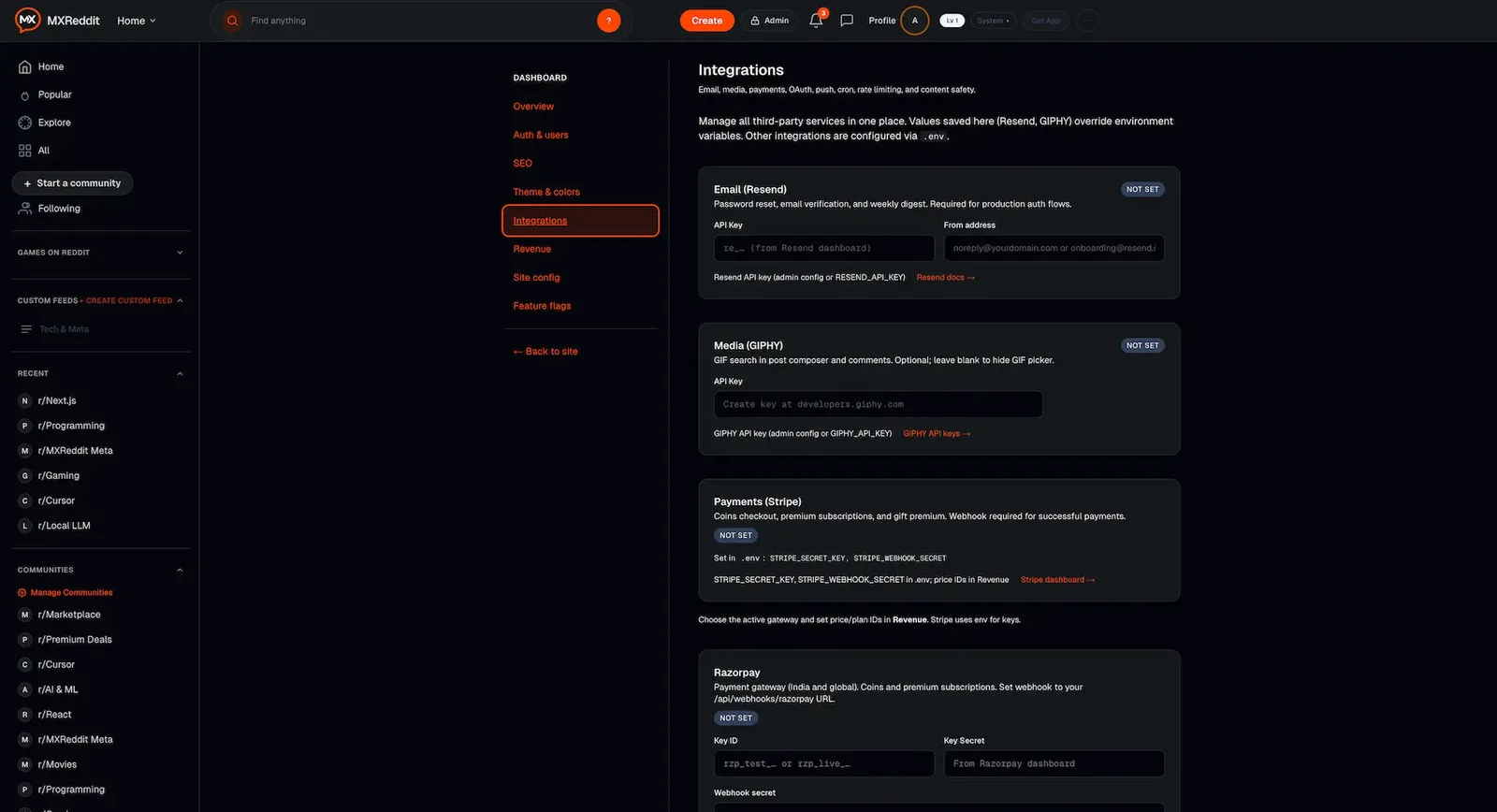
22 screens from the working demo, grouped by where they live. Your platform ships rebranded with your name, logo and colors.
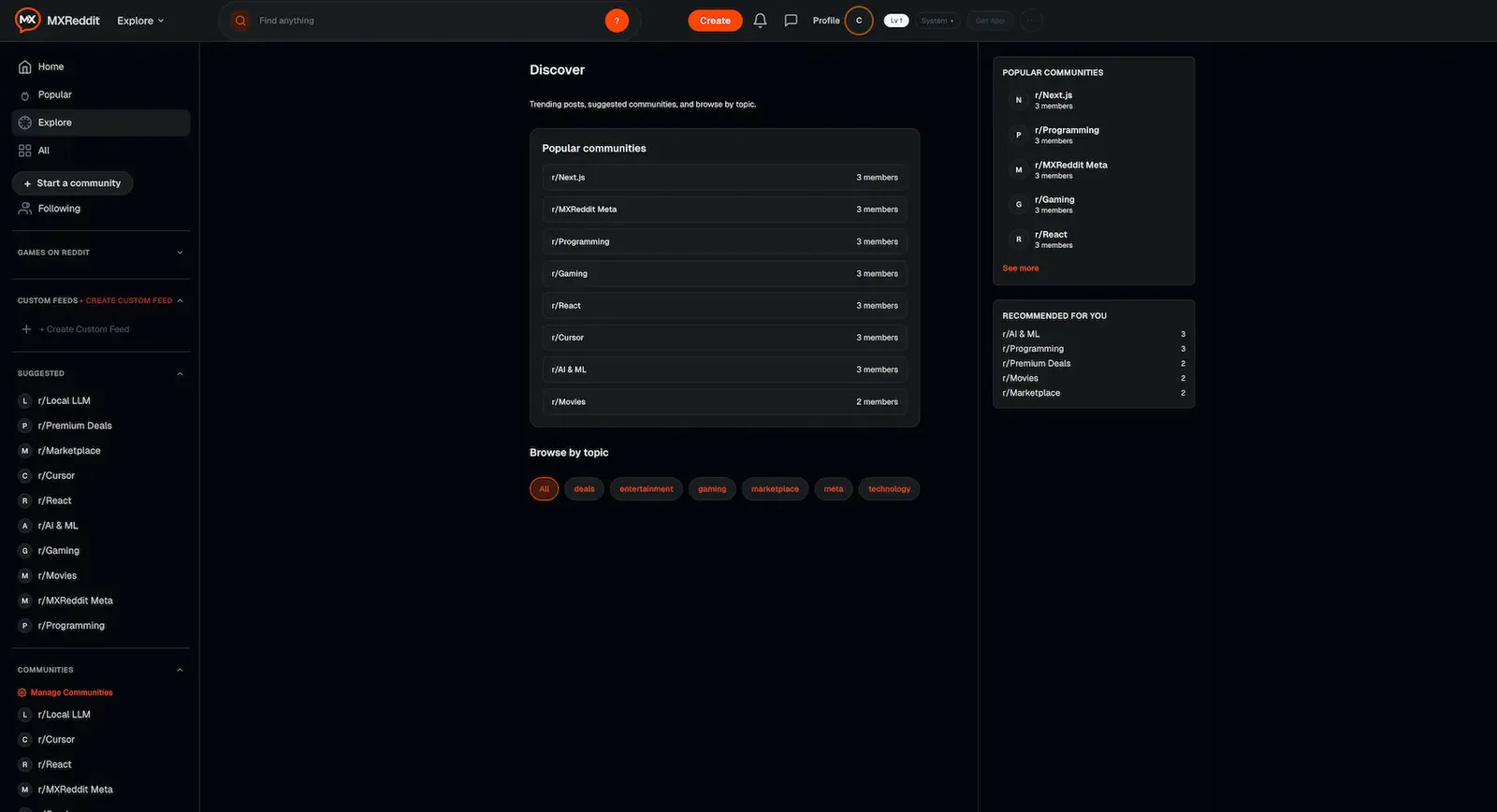
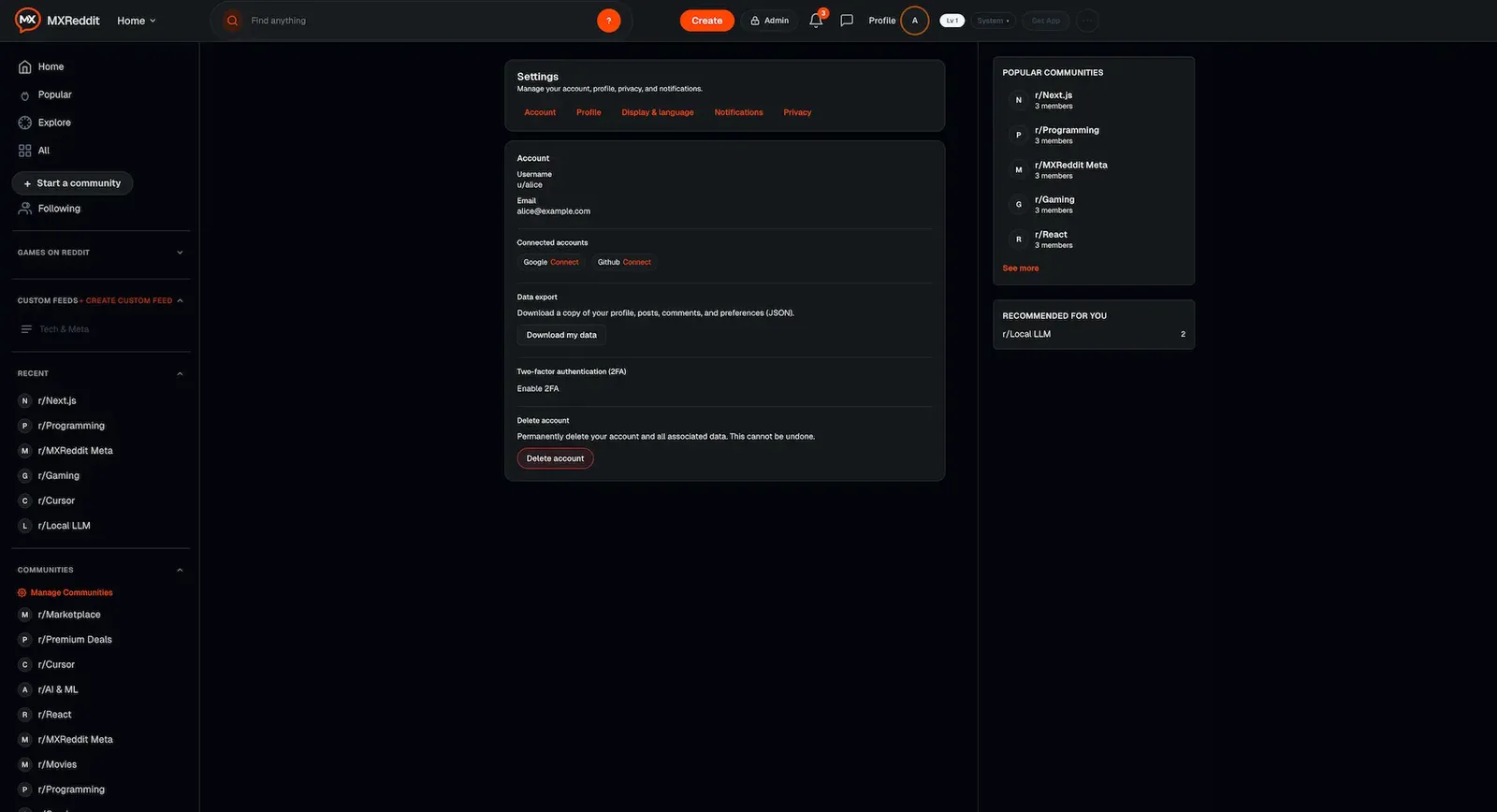
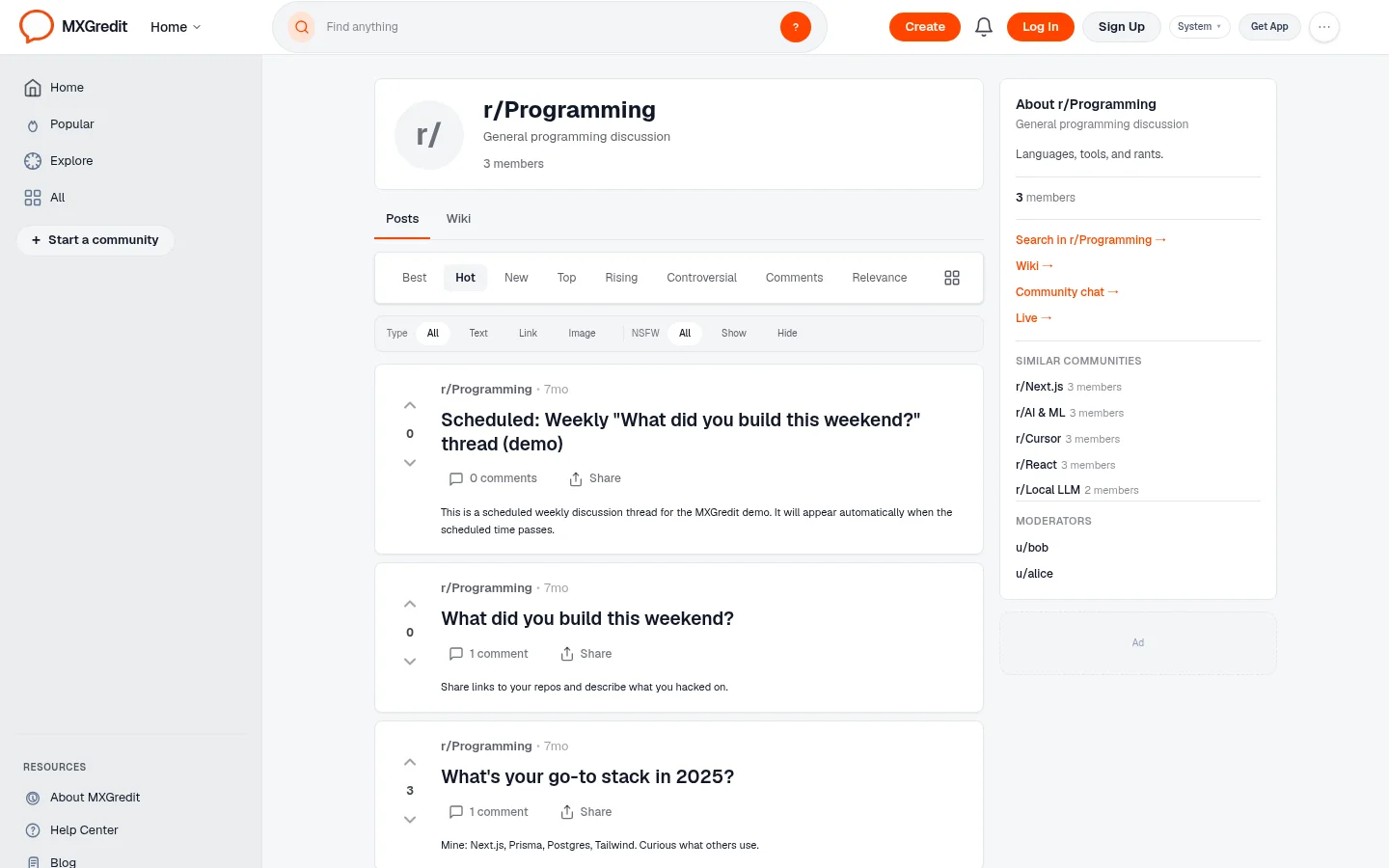
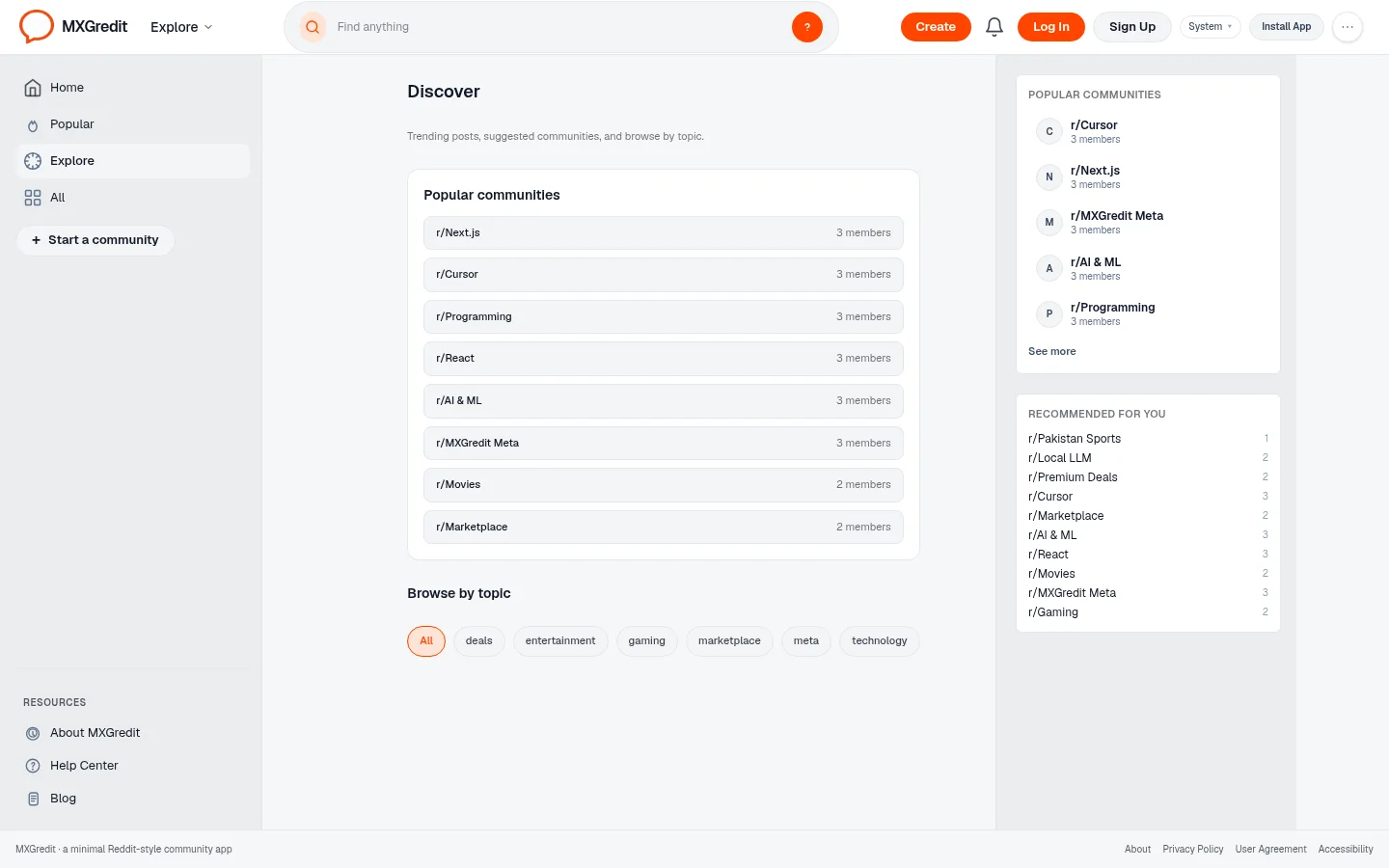
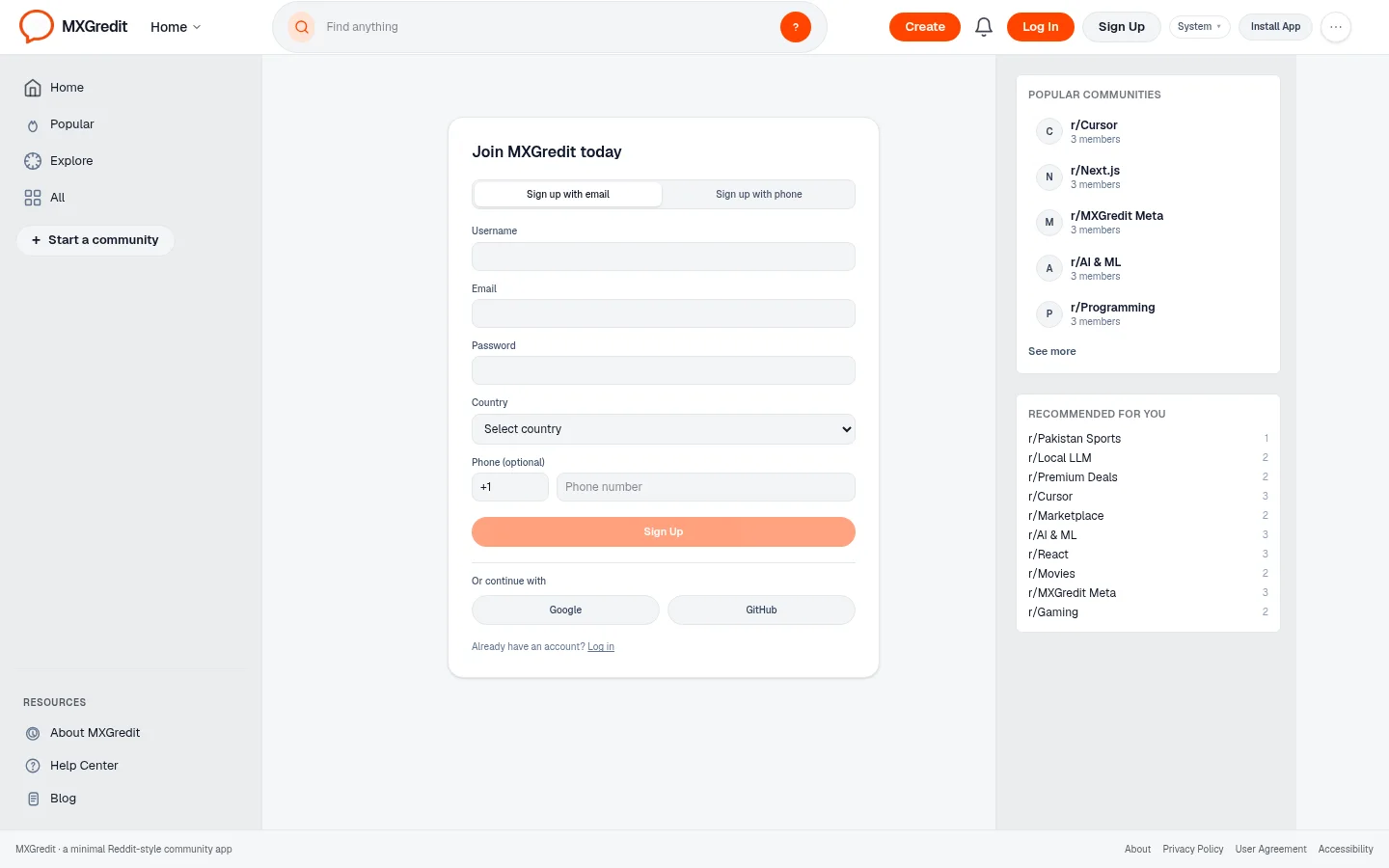
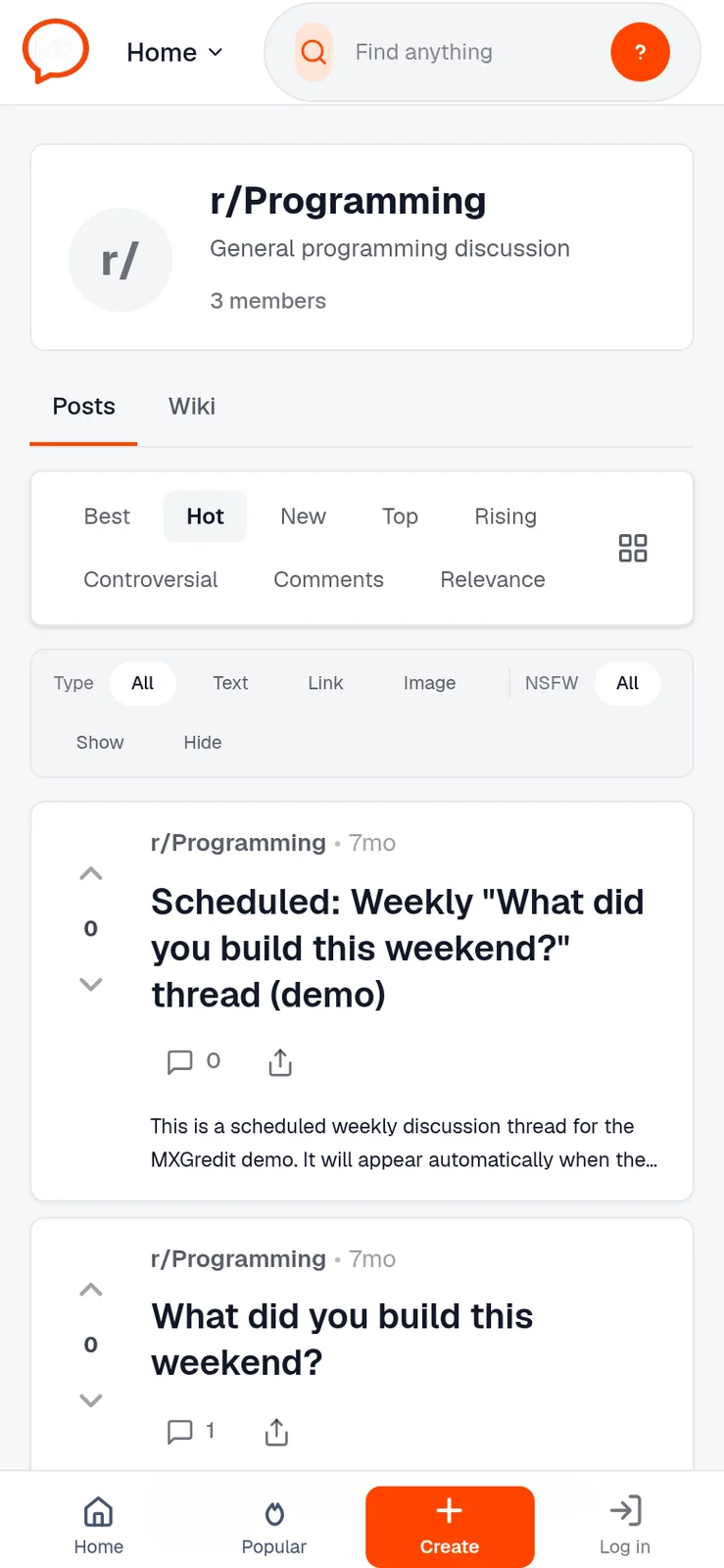
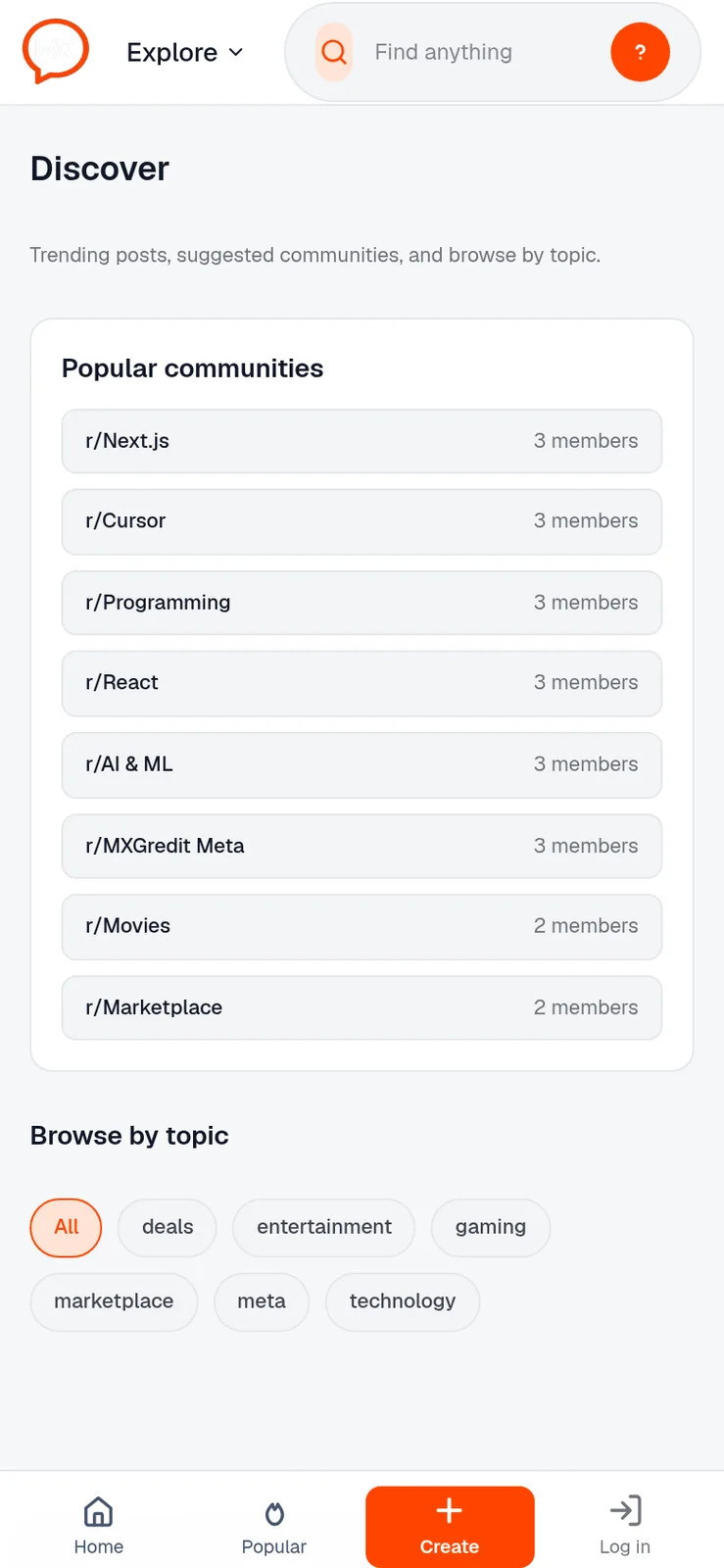
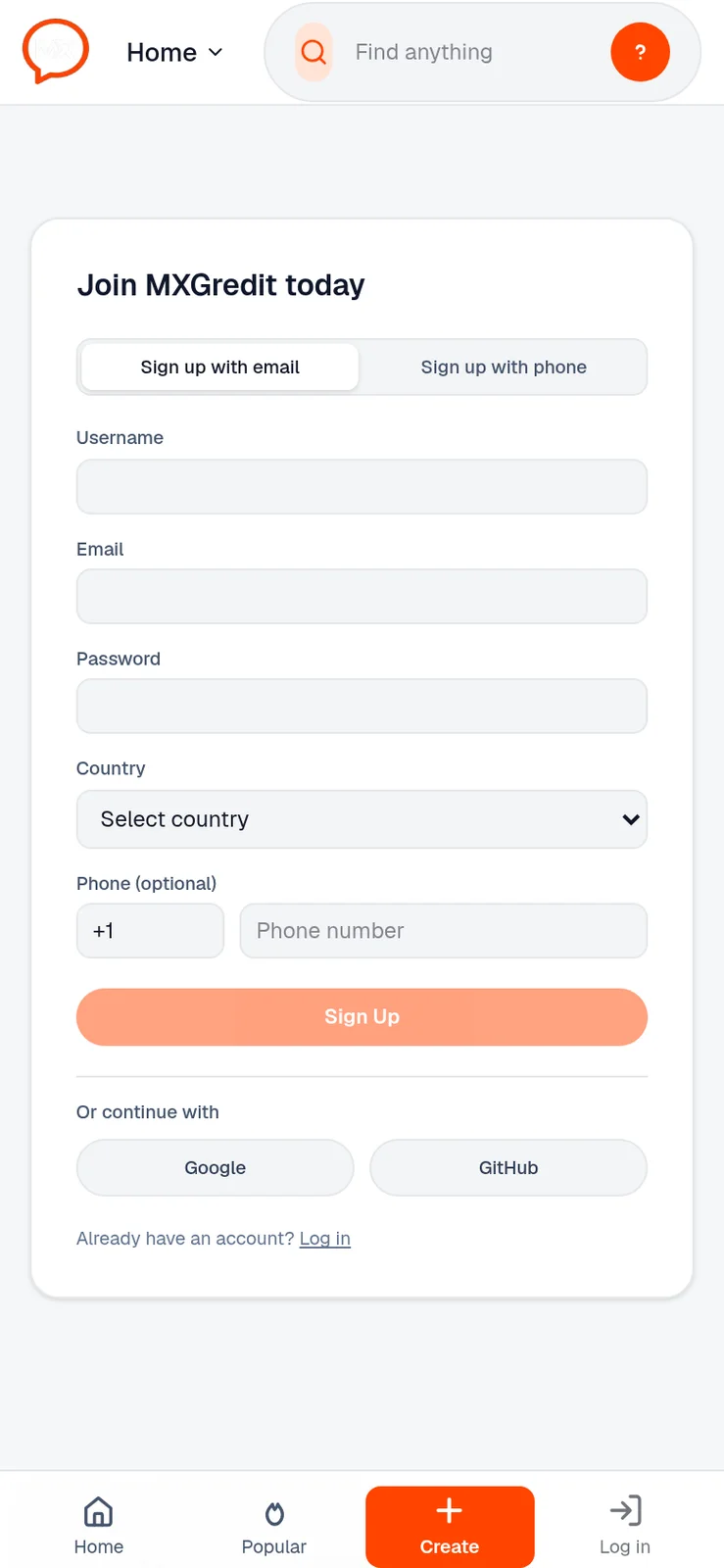
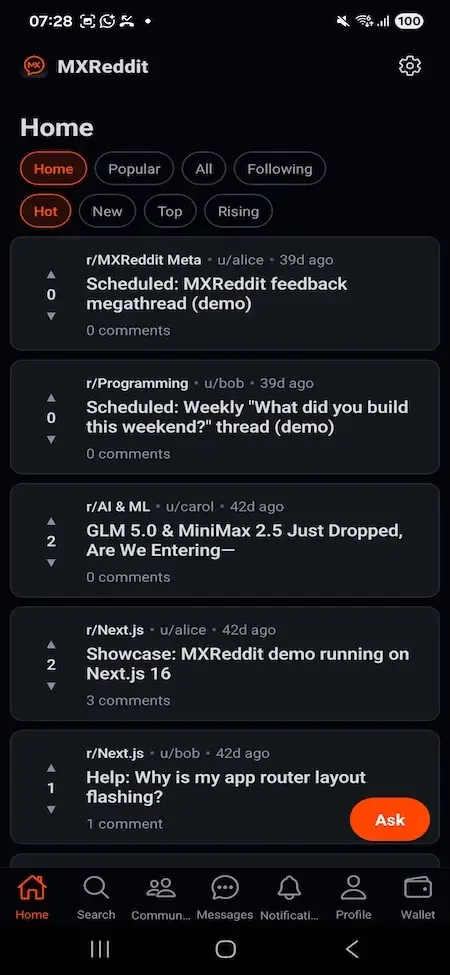
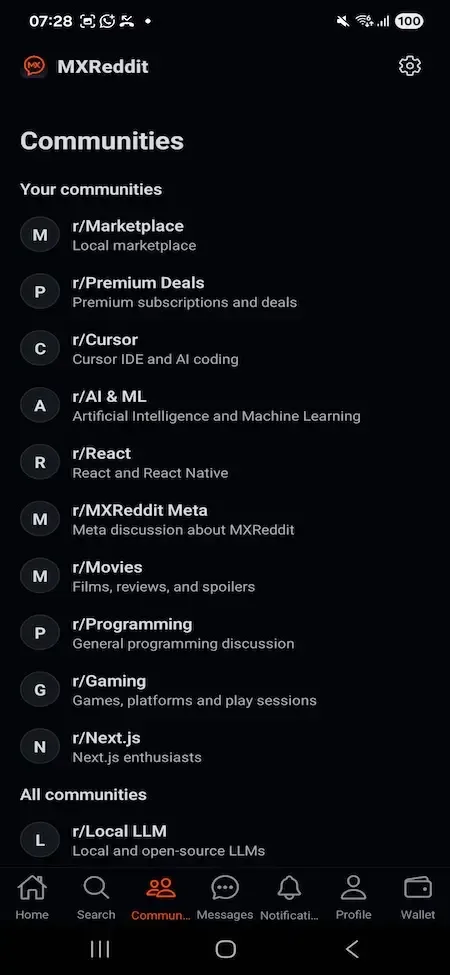
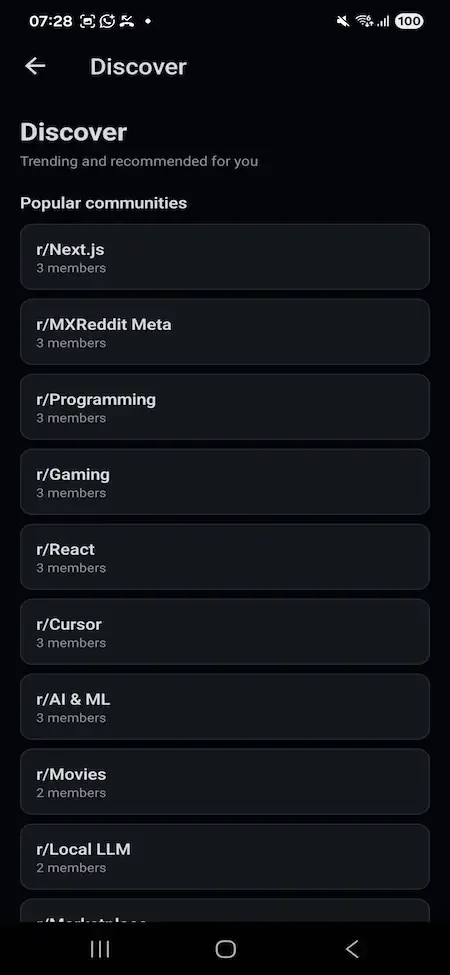
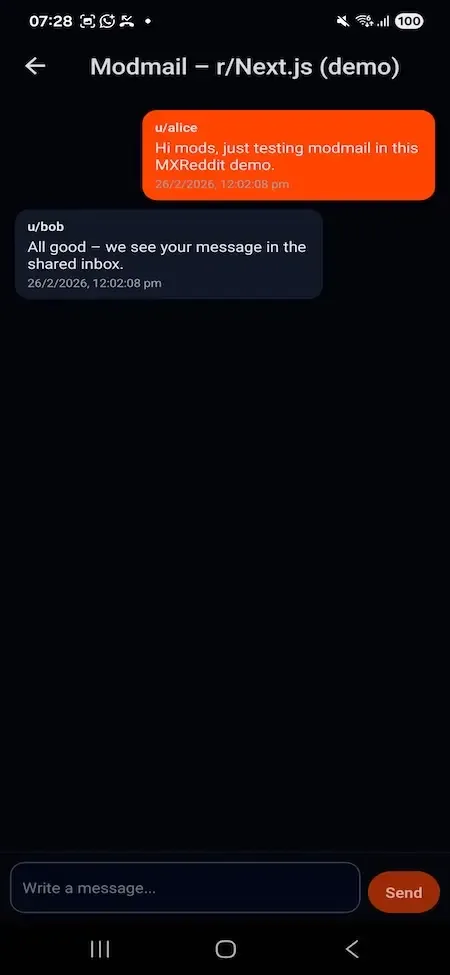
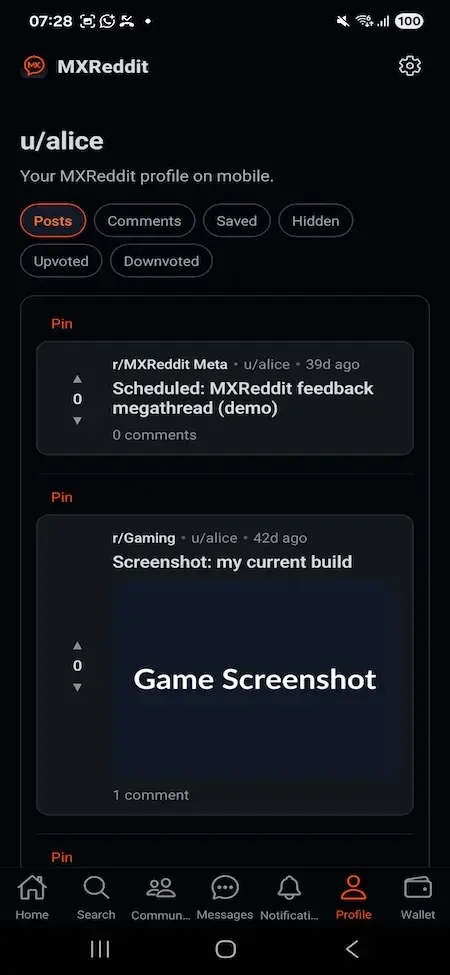
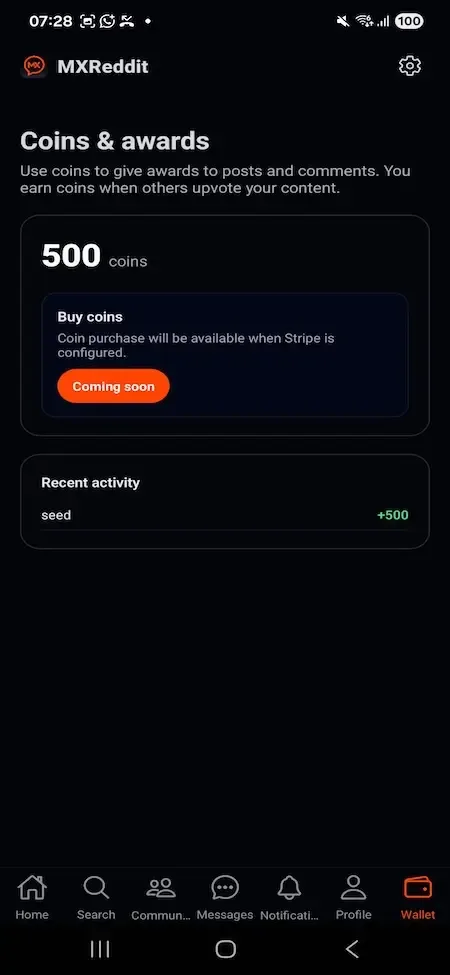
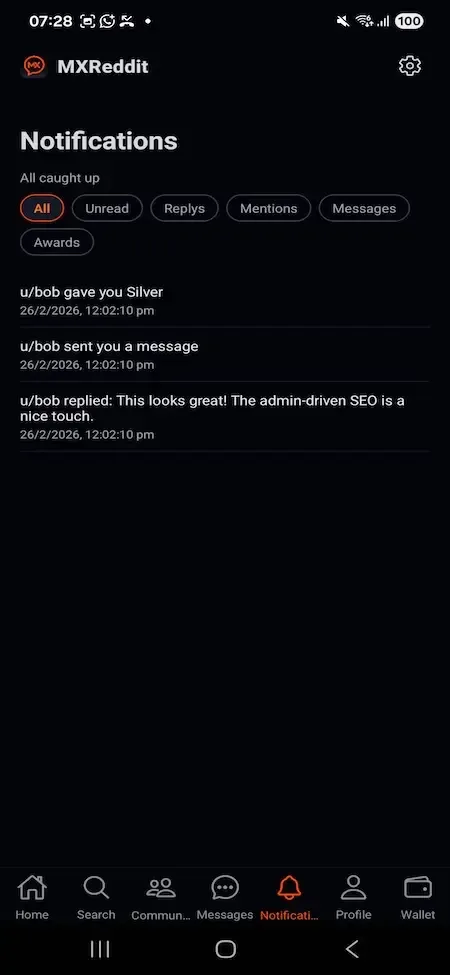
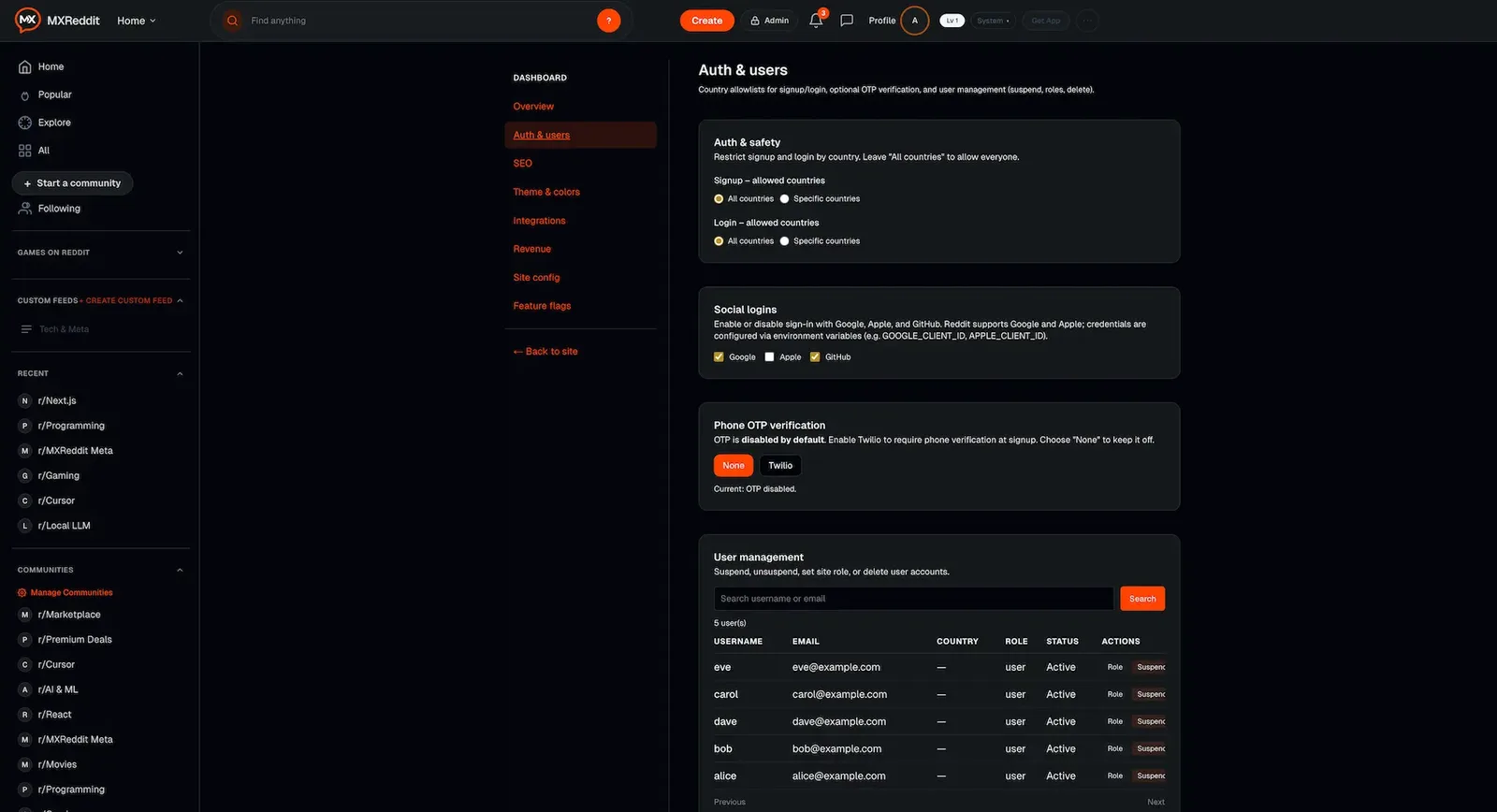
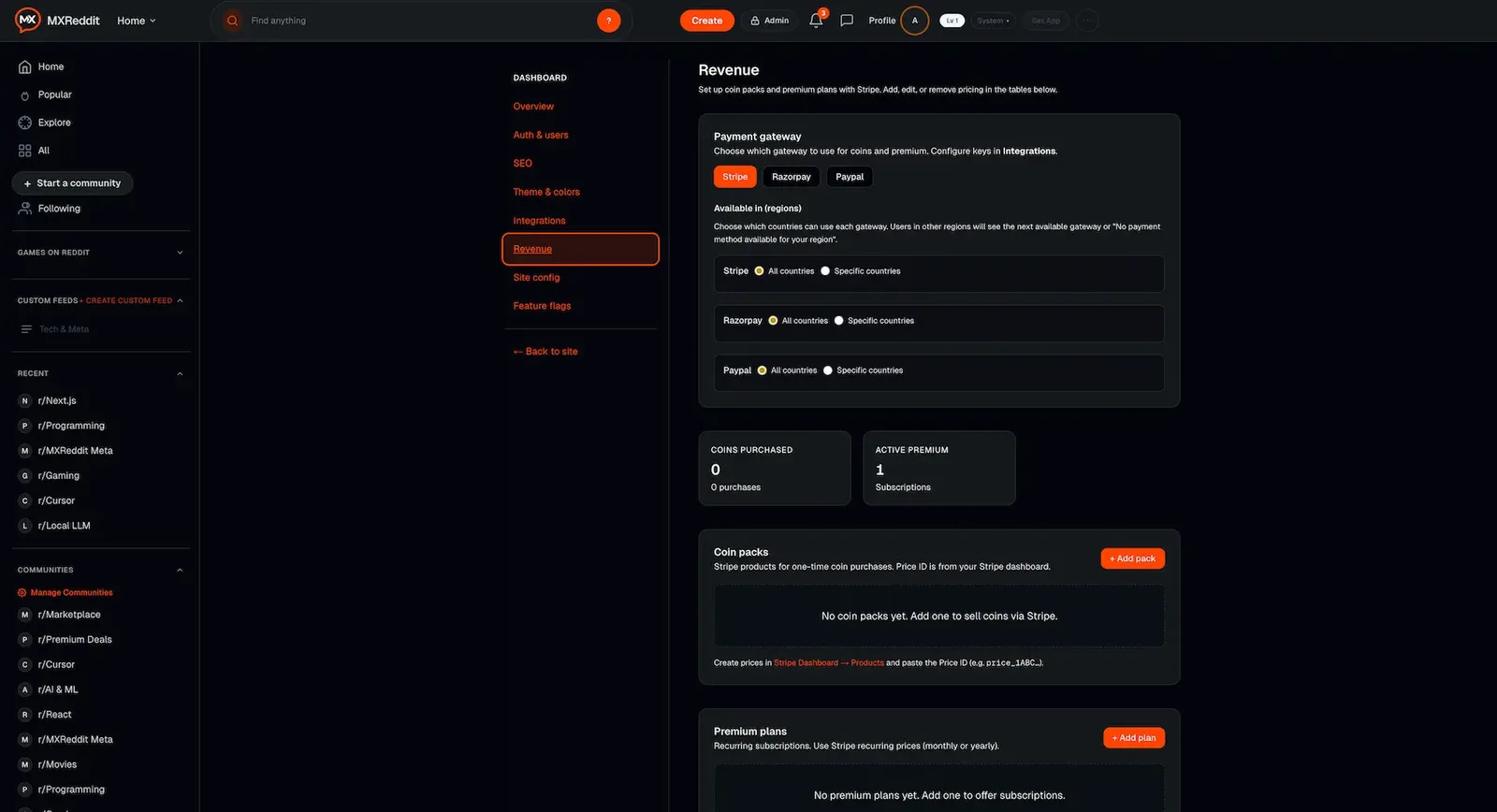
The demo is a running copy of the platform with demo branding and public sample accounts, one for each seat in the system. Sign in as a member to post and vote, as a moderator to work the report queue, and as the operator to see site statistics and revenue. An Android build runs against the same data.
davepassword123bobpassword123alicepassword123carolpassword12355 features across 4 roles. The first six of each role are here and the full list is one click away. Nothing is held back for a sales call.
The two plainest modes: write a discussion post or share a link for the community to talk about.
Media posts carry the same voting, comments and moderation flags as text, with uploads validated on the way in.
A poll post collects votes inside the thread, so a community can settle a question without leaving it.
Sharing a post into another community records where it came from, so the origin stays traceable.
Members save a draft and restore it later, or set a post to publish at a chosen time.
Posts and comments keep a record of edits, which helps moderators judge whether a change was in good faith.
11 more Members features are in the full list.
Anyone with permission can start a community and choose public, restricted or private visibility.
Each community publishes its rules and defines flairs that categorize posts and members.
Members, moderators, admins and owners hold different permissions, scoped to that single community.
Members file reports against posts and comments using a reason taxonomy the community defines.
Reports collect in one queue where a moderator decides the outcome and the decision is attributed.
Saved reasons keep enforcement consistent and tell members exactly why something was removed.
7 more Moderators features are in the full list.
A premium record holds status, expiry and the provider reference for a subscription.
A member can buy premium for someone else, which turns generosity into a revenue event.
Each member has a coin balance that funds awards and other in-community spending.
Every wallet movement is written as a transaction instead of overwriting a counter, so balances are auditable.
Buying coins runs through checkout and capture routes with webhook handling for the payment provider.
Operators define the awards members can give, each with its own coin cost.
5 more Economy features are in the full list.
Platform-level counts of members, content and activity for the people who run the network.
Trend data supports period-over-period reporting without exporting to a spreadsheet first.
Aggregated engagement signals across communities, content and members guide growth decisions.
Premium and wallet revenue appear in one view tied to the product ledger.
Operators search accounts, inspect them and act on suspension state and site role.
Diagnostics show which providers for OAuth, billing, email and push are configured in this environment.
8 more Operators features are in the full list.
The path through the product, in the order it happens for the people using it.
Members sign up with email or phone, verify, and can add TOTP two-factor authentication with hashed backup codes.
Onboarding interests shape the first feed, so a new member sees relevant communities instead of an empty page.
Members publish any of six post types, vote, save and reply in nested comment threads.
Reports enter a queue, moderators act with removal reasons and notes, and bans carry expiry and an appeal route.
Premium and coins feed one ledger. Operators watch statistics, revenue and integration status in the admin console.
Every earning route built into the product you receive: how it works, who pays and where the operator earns.
| Revenue model | How it works | Who pays | How you earn |
|---|---|---|---|
| Premium subscriptions | Members subscribe for premium status with expiry tracked on the entitlement, or gift it to others at checkout. | Member | Recurring subscription revenue plus gifted purchases |
| Coin top-ups | Members buy coins through checkout and capture, and each purchase lands on the ledger. | Member | Immediate revenue from coin purchases |
| Awards | Members spend coins to give awards on posts, comments or other members from a catalogue you define. | Member | Spend that recurs as long as the community rewards its own |
| Premium stipends | Premium members receive scheduled coins that feed award spending and keep value circulating. | Platform | Indirect: drives award activity and premium retention |
| Site configuration pricing | Operators change pricing, gating and feature availability through a key-value plane without redeploying. | Operator decision | Faster price testing without engineering time |
| White-label licensing | License your branded platform onward to partner communities or brands, priced on deployment scale. | Partner | Contract revenue from each licensed deployment |
The flow of money, the gateways you can connect and how payouts are handled.
Money in this platform moves as three linked things: a subscription entitlement, a coin wallet and an award spend. All three write to one ledger, so finance can reconcile them together. Checkout, capture and webhook routes are included for both supported providers. Live billing needs your own provider credentials and webhook signing, and the entitlement and wallet models are complete before you connect them.
| Gateway | What it covers |
|---|---|
| Card | |
| Stripe | Checkout, capture and webhook route families included; needs your own credentials |
| Regional | |
| Razorpay | Second supported provider, suited to markets where it operates; your account required |
You operate the platform, so legal compliance in each market you serve is yours. This is the tooling that ships in the product. It is not legal advice.
Reports, actions, notes, bans and appeals are stored as explicit records with resolver identity, so a rotating group of volunteers can hand over without losing context. Appeals and private notes are what keep moderators from burning out. You still need to recruit them, train them and publish rules, since software only gives them a place to work.
A community role gives authority inside one community only, while platform authority is a separate site-level attribute. A moderator of one community holds no elevated rights elsewhere. Route-level checks apply on sensitive actions. Review who holds the site role at launch and keep that group very small.
The upload route requires authentication and rate limits, then checks content rather than trusting the declared type. MIME allowlists are backed by magic-byte checks, executable patterns are rejected, sizes are capped and filenames are UUIDs. Image optimization is limited to allowed hosts. Add automated image classification yourself if your communities allow heavy media.
Sessions are stored in the database with expiry and invalidated on logout. Cookies are httpOnly and sameSite, passwords are hashed with bcrypt and TOTP two-factor uses hashed backup codes. Provider credentials, webhook secrets and the job secret belong in environment configuration. Rotation policy and strict production settings are deployment tasks you complete.
Four rate-limit presets cover default, auth, write and strict traffic. They run in memory by default, and Upstash Redis provides shared limits across several nodes, which needs configuration. Open registration invites automated abuse quickly, so test the limits before you promote the platform widely.
Members can block accounts, mute communities, hide keywords and mute notifications per community, and a data export endpoint supports portability requests. Soft deletion preserves moderation context while removing content from view. What you must retain or delete, and for how long, depends on your market, so settle a retention policy with your own counsel.
Stripe and Razorpay route families are built, but live payments need your own provider credentials. Webhook idempotency is recommended during production hardening so a replayed event cannot double-credit a wallet.
The layers of the product as delivered. You receive the full source code for every one of them.
| Layer | Built with | Hosting note |
|---|---|---|
| Web experience | Next.js 16 App Router, React 19 | Standard Next.js production build and start, with 133 route handlers in one runtime. |
| API | Next.js route handlers, 133 grouped by domain | |
| Data | PostgreSQL with Prisma 7 | |
| Identity and access | Session cookie, bcrypt, OAuth sign-in, TOTP two-factor | |
| Payments and automation | Stripe, Razorpay, secret-gated cron routes | |
| Mobile and delivery | Android app, Web Push, Expo tokens | Web Push and Expo tokens for multi-device notifications, including the Android app. |
| Hosting choice | Vercel or a self-managed server, selected by environment-driven integration gating. | |
| Database | PostgreSQL with Prisma 7, indexes on feed, comment and notification paths and soft deletion. | |
| Distributed limits | Upstash Redis for rate limits across nodes; configuration required, in-memory by default. | |
| Scheduled jobs | Secret-gated cron routes for digests, archives, scheduled posts and premium stipends. | |
| Monitoring | A health endpoint for liveness checks and security headers applied at the proxy layer. | |
This platform is a modular monolith: one deployable runtime, with the API grouped by domain. You can host it on Vercel or manage your own servers, because nothing in the design assumes a particular host or region. After handover you run it without any dependency on us.
A community platform works when responsibility is layered. Volunteers handle the daily flow, staff handle the edge cases, and the system keeps records for everyone. The table shows how those layers divide the work and where the platform provides the tools.
| Layer | Who handles it | Tools in the platform |
|---|---|---|
| Everyday flow | Community moderators | Queue, removal reasons, automod rules and mod notes |
| Repeat offenders | Community admins | Bans with expiry and a visible mod log |
| Disputes | Moderators and owners | Member appeals and recorded decisions |
| Platform policy | Operator staff | Admin console, site roles and community governance views |
| Abuse and spam | Operator staff | Rate-limit presets, upload checks and report intake |
| Automated triage | Operator, once added | AI moderation we set up ahead of the human queue |
| Accountability | Everyone | Soft deletion and audit records that preserve context |
Competitor pages list AI features such as moderation, summaries and recommendations. For this platform the picture is focused. We set up automated moderation that scores toxicity, detects spam and classifies images ahead of the human queue. We confirm its scope with you, and it helps moderators triage rather than replacing them.
AI summarization of threads and personalized recommendation models are things we can build for you as tailored work, so ask for a written scope and an example before counting them in your plan. Keep expectations modest: automated tools make errors, so a human appeal path should stay in place.
A practical order is to launch with queues, automod rules and clear policy, watch where volunteers struggle, and add AI triage when the queue is genuinely too long. That way you pay for automation only when the problem exists, and you have real examples to test it against.
The hardest problem for a new community platform is emptiness. Nobody posts in a quiet place and nobody joins one with no posts. These steps address that directly, in the order that tends to work, using tools the platform already provides.
One fixed price for the ready-made platform, published here so you can plan before you talk to us.
Ready-made, one-time
$3,699
Live in 6 working days from kickoff
The engineers who deploy your platform stay with it once it is live.
Need more? We tailor the platform to your plan, typically in 2-8 weeks, and confirm the scope with you before work starts. App store review times are set by Apple and Google.
Everything here is available around the ready-made Reddit clone. We confirm the scope with you before any price is agreed.
A branded iOS client beside the Android app, using the same API surface and push infrastructure.
Confirm with usToxicity scoring, spam detection and image classification placed ahead of the human moderator queue.
Confirm with usNative video upload, transcoding and adaptive playback for communities where video is the main format.
Confirm with usKarma tiers, badges, trust levels and permissions that unlock as members build good standing.
Confirm with usScheduled events, AMA formats and audio or video rooms layered on the live thread model.
Confirm with usSAML or OIDC sign-in with directory sync for internal and partner community deployments.
Confirm with usScheduled exports and warehouse connectors that send community data to your reporting stack.
Confirm with usInterface translation and per-community language settings for regional or multilingual audiences.
Confirm with usMost of the platform ships ready, and the rest is set up around your plan. This table lists what a Reddit-style platform needs and where each item stands. Items that depend on your own provider accounts or deployment choices say so, so a status of included never hides work you still have to do.
Visibility types with rules, flairs and membership roles per community.
Text, link, image, video, poll and crosspost with drafts and edit history.
Recursive trees with per-comment voting and soft deletion that preserves context.
Voting on posts and comments, plus saves, hides and pins.
Home, popular and following feeds, and bundles of communities.
Full-text search with typeahead and trending surfaces.
Threaded messaging with a dedicated channel for contacting moderators.
Community wiki with revision history and live threads with streamed updates.
Intake with reason taxonomies, decisions and a library of removal reasons.
Bans with expiry, member appeals, notes and full mod logs.
Rule-based automation set separately for each community.
Member, moderator, admin and owner within a community, separate from platform roles.
Entitlements with expiry and gift purchases; live billing needs your provider account.
An append-only ledger, top-ups, an award catalogue and premium stipends.
Statistics, revenue, users and a configuration plane edited without redeploying.
Two-factor with backup codes, OAuth sign-in and role checks on sensitive actions.
One backend serves the web platform and a branded Android build.
Toxicity scoring, spam detection and image classification ahead of human review. We set this up for your build.
A branded iOS client on the same API and push infrastructure. We set this up for your build.
Native upload, transcoding and adaptive playback for video-first communities. We set this up for your build.
Reputation systems with progressive permissions as members earn standing. We set this up for your build.
SAML or OIDC with directory sync, and scheduled data export to reporting tools. We set this up for your build.
Revenue levers are premium and coins; we build an ad product around them, with the scope confirmed with us.
Four pages go deeper on the questions buyers ask most about the Reddit Clone. This page stays the overview.
A discussion platform is really three products sharing one database: what members do, what moderators enforce and what the operator controls.
See the full breakdownA community platform has two kinds of cost: the software and the work of running a community.
See exact pricingA community platform earns differently from a social feed, because its value builds up in relationships, reputation and history and not in advertising impressions.
See the playbookA community platform is mostly trust machinery: roles, reports, appeals and a ledger, with a posting screen on top.
Compare optionsFrom kickoff to a live Reddit clone under your brand: what we do each day, and what we need from you.
1Day 1
2Day 2
3Day 3
4Day 4
5Day 5
6Day 6
The posting screen of a community platform is cheap to build. The cost sits in governance and money: report queues with reasons, removal libraries, bans that expire, appeals, automod, an audit trail, a wallet that cannot silently lose coins and a billing layer that reconciles with a payment provider. Teams that build posting first and moderation later often rebuild the data model under live traffic. A ready-made platform ships those parts together, and your budget goes to acquiring communities.
| Factor | Build from scratch | Rent a SaaS | Own it with GetFame |
|---|---|---|---|
| Moderation tooling | Usually added after the first crisis, with data migrations | Limited to what a forum host exposes | Queue, bans, appeals, notes, logs and automod included |
| Economy and billing | Wallet, ledger and webhooks are a project of their own | Often absent or locked to the vendor | Premium, wallet and awards share one ledger |
| Community permissions | Retrofitted once the first community wants delegation | Fixed roles you cannot change | Four community roles plus a separate site role |
| Time to launch | Many months before governance is safe to open | Fast to start, restricted afterward | 6 working days to a branded deployment |
| Factor | Build from scratch | Rent a SaaS | Own it with GetFame |
|---|---|---|---|
| Data ownership | Yours, if you design for it | Held on the vendor platform | PostgreSQL you host, plus full source |
| Recurring fees | Team salaries and hosting | Monthly fees that rise with members | No per-seat fee and no revenue share |
| Changing prices and gating | Needs a code change unless designed for config | Limited to the vendor plan options | Key-value site configuration, no redeploy |
Running costs. The platform price excludes your hosting, the PostgreSQL service, an email provider, push credentials, payment processor fees and Stripe or Razorpay accounts. Add Upstash Redis if you run several nodes. The largest ongoing cost of a community platform is people: volunteer moderators need support, and paid staff become necessary as the communities grow. Plan for them alongside the infrastructure.
A posting screen is the smallest part of a Reddit-style product. Governance and money decide whether it survives. This table shows what each module takes when you build it, set against the ready-made version, using effort words and no figures.
Build it yourselfA permission model that scopes powers to one community without leaking to the platform.
Ready-madeFour community roles kept separate from platform-level site roles.
Build it yourselfVote storage, ranking snapshots and abuse resistance that gets harder with scale.
Ready-madeVoting on posts and comments, with indexes on the hot read paths.
Build it yourselfNested retrieval, depth handling and deletion that keeps moderation context.
Ready-madeRecursive trees with soft deletion and depth-aware retrieval.
Build it yourselfReasons, actions, bans, appeals and logs; a workstream often postponed until the first crisis.
Ready-madeQueue, actions, bans, appeals, notes and logs as core entities.
Build it yourselfA rule engine per community with testing so rules do not misfire.
Ready-madePer-community automod rules are already modeled in the data layer.
Build it yourselfAppend-only accounting so balances, awards and payments always reconcile.
Ready-madeA coin wallet with an append-only transaction ledger.
Build it yourselfEntitlement lifecycle, gifting and provider webhooks with careful failure handling.
Ready-madePremium entitlements with expiry, gifting and webhook route families.
Build it yourselfFull-text indexing and suggestions across posts, communities and people.
Ready-madeFull-text search with typeahead; a dedicated engine is a later step.
Build it yourselfType checks, size caps and executable rejection added after an incident.
Ready-madeAllowlists, magic-byte checks, size caps and safe filenames.
Build it yourselfStatistics, revenue views, user admin and settings screens, usually built last.
Ready-madeAn admin console with a live configuration plane.
Reddit is widely known for communities that set their own rules, rank content by votes and rely on volunteer moderators. The comparison covers operating model only. It makes no claim about the size or finances of any company, and this platform is independent of it.
| Aspect | The Reddit model | This platform |
|---|---|---|
| Who owns the communities | The platform owner hosts and governs the whole network | You own the platform and every community on it |
| Moderation authority | Volunteer moderators under owner policy | Your moderators under policy that you write |
| Content ranking | Votes and owner-controlled ranking | Votes plus feed settings you can change |
| Recognition and spend | Awards and premium run by the owner | Awards, coins and premium on your ledger and pricing |
| Member data | Held by the platform owner | Stored in a PostgreSQL database you control |
| Source access | Closed product | Complete source code with schema and migrations |
| Audience | A very large existing user base | None included; you bring the first communities |
The founders and teams this product fits most directly, one line each. The launch ideas that follow turn these audiences into a first-week plan.
Let communities form around topics, delegate moderation to their owners and keep platform oversight central.
Give a creator audience a branded home where premium, coins and awards turn participation into recurring revenue.
Use wiki pages with revision history, flairs and moderator review to keep contributions accurate.
Run restricted communities for members, partners or staff, with role-aware permissions and traceable moderation.
Collect product feedback and answer questions in structured threads with flairs and reports to keep signal high.
Deploy branded community platforms for clients from one codebase, each with its own configuration.
The same engine of communities, voting and moderation serves more than open discussion. These are the shapes that go beyond a Reddit copy, with the first settings to choose and the rule most worth deciding before you invite anyone.
Customers answer each other, and your team steps in where it matters. Create a community per product, use flairs for status such as answered or planned, and give staff moderator roles. Well-searched answers can reduce repeat questions, but only if the team keeps the best threads tidy.
A brand brings its audience in-house to own the conversation and the data. Separate communities for news, help and fan content keep threads focused. Use awards and premium sparingly at first, and give a named staff member the job of welcoming newcomers.
Peers in one industry swapping practical knowledge. Restricted or private visibility keeps conversation among members, and the wiki holds shared references. Require approval to join, and write a rule against vendor pitching so the community stays useful to the people it is for.
A company question-and-answer space where staff post and vote. Private communities mirror teams, the wiki captures decisions, and we can set up enterprise sign-on to connect to the company directory. Assign owners per community so answers do not go stale.
A place per city or region for recommendations, events and notices. Local volunteers take moderator roles, and localization helps the interface fit. Start with a few well-chosen communities rather than dozens, so each one has enough activity to feel alive.
Enthusiasts who enjoy recognizing each other. Awards and premium stipends keep coins circulating, and a coin wallet makes recognition a spend loop. Watch the ledger from the beginning, so currency does not inflate faster than members value it.
Much of the search interest around a Reddit clone is really a search for forum software. Those tools are mature, and for a conventional forum they may be the right pick. The comparison below is about how each handles the things a Reddit-style product cares about most.
Open-source forum with hosted option
Discussion-heavy communities that want a polished, well-known forum experience.
Built around topics and trust levels rather than voting across many communities.
Open-source Node.js forum
Teams that want a real-time, plugin-friendly forum on a JavaScript stack.
A forum model first, so a coin economy and multi-community governance are yours to build.
Open-source PHP forum
Lightweight forums with extensions, hosted on common PHP servers.
Fewer built-in moderation and monetization tools, and extensions vary in quality.
Commercial hosted community software
Organizations that want a supported, hosted forum for customers.
You rent it, and control over the model and data is more limited.
Purchasable Reddit-style scripts
Small experiments on simple hosting with modest needs.
Usually thin on moderation depth, security documentation and a maintenance path.
A white-label Reddit clone sits where you want many communities with voting, delegated moderation and a money layer, all under your brand. You own the source and run it on a mainstream stack. It is a heavier choice than installing a forum, so if you only need a conventional discussion board, one of the tools above may be simpler and entirely sufficient.
Longer answers to the questions buyers of this model ask before they commit.
A community platform fails when it opens with a dozen empty rooms. Start with fewer communities than you think you need, each with a reason to exist and a named person who will post and reply for the first weeks. Pick topics where conversation already happens elsewhere in a form people find awkward, and offer a better home with tools that suit the topic, such as a wiki for a hobby or flairs for a support forum.
Recruit a moderator before you recruit members. A community with an owner who cares, written rules and saved removal reasons feels cared for from the first visit. Use private or restricted visibility to run a closed beta in your first communities, then open them once there is a body of threads worth reading. Custom feeds help newcomers by bundling related communities into one starting point.
Seed content from people, not scripts. Ask your first moderators to start discussions, answer questions and welcome new members by name. Use the live thread and wiki features to give each community something that rewards returning. Measure which communities earn replies, not just views, and put your attention on the few that show real conversation before opening more.
Policy should be short enough that members read it and specific enough that moderators agree on the same case. Write platform-wide rules first, covering what is never allowed anywhere, then let each community add its own rules on top. Build your removal reason library from real cases as they appear, so every removal tells the member which rule applied and nobody has to invent an explanation under pressure.
Train moderators using the console they will actually use. Walk them through the queue, the bans with expiry, the appeals flow and the private notes, and agree what each tool is for. Encourage proportionate responses: a removal with a reason for most cases, a time-limited ban for repeat behavior and a permanent ban only for serious harm. The mod log lets you review decisions together afterward.
Protect your volunteers. Moderation burns people out when every decision is theirs alone and every appeal is personal. Use appeals as a shared safeguard, rotate on-call duty, and have an operator who can step in on hard cases. Automod rules remove routine work, and AI triage that we set up can take more once volume justifies it, but a person should still own each outcome.
A coin economy works when coins are scarce enough to mean something and useful enough to spend. Because the platform writes every movement to an append-only ledger, you can see exactly how many coins exist, who holds them and where they go. Review that picture regularly. A balance that only grows signals that members are not finding reasons to spend.
Treat the premium stipend as a tuning dial. Coins handed to subscribers feed award spending, and awards recognize the content you want more of. If stipends are too generous, coins pile up and awards lose meaning. If they are too tight, premium feels thin. Start modestly, watch award activity and adjust through site configuration, which lets you change values without a deployment.
Keep the catalogue purposeful. A small set of awards with distinct meanings beats a long list nobody remembers. Price them so everyday recognition is affordable and rare awards feel special. Decide up front whether coins can ever leave the platform, since cash redemption has legal and accounting consequences so confirm any such setup with us. Take advice before you promise anything about coin value.
Test governance first, not the feed. Open the member, moderator and admin logins from the demo and file a report as a member. Resolve it as a moderator, remove content with a saved reason, ban a user with an expiry and submit an appeal, then see the same events from the admin side. If any step is missing or only described, you will end up building it yourself.
Ask what needs configuration. Live billing needs your own Stripe or Razorpay credentials, webhook signing needs to be set, distributed rate limits need a shared store when you run several nodes, and production secrets need a proper rotation policy. A seller that states these plainly is more trustworthy than one that says everything works out of the box.
Read the documentation before you commit. The ERD, the schema guide, the API collection and the security handbook tell you how maintainable the code is. Have your technical lead check that the stack suits your team, that migrations and seeds run cleanly and that the test scaffolding runs. Finally, confirm that you receive full source and that nothing depends on a hosted service after handover.
Projects and comments as published by our parent company, Miracuves, with the release notes as printed there.
We had built the posting and commenting side ourselves in a previous attempt and it worked fine until the community grew. What broke us was moderation. Having the queue, bans, appeals and automod already modelled meant our two volunteer moderators could actually keep up from week one.
Premium and the coin wallet being part of the same data model mattered more than we expected. Awards drive engagement, engagement drives premium, and both reconcile against one ledger instead of three disconnected systems.
Our security review focused on uploads and access control. Magic-byte validation, executable rejection and route-level role checks were already there, documented. That turned a long review into a short one.
We opened registration on day one because the moderation queues were already there. Appeals and mod notes are what kept our volunteers from burning out.
An operator in India launched a moderated multi-community social platform on this product. The goals were moderation depth from the start, role-aware governance and premium and wallet features from day one. The printed results were six post types, four moderation roles live, and five weeks from brief to go-live.
v2026.1Jul 2026
It includes a responsive web app on Next.js 16, a branded Android app, 133 API route handlers, moderator tooling and an operator admin console. Members get six post types, threaded comments, voting, custom feeds, messaging and wikis. The economy covers premium, a coin wallet and awards. Complete source code transfers to you.
The ready-made platform is $3,699 one-time with no per-seat fee and no revenue share. Branding and deployment take 6 working days. Extras such as a native iOS app, AI moderation or enterprise SSO are available too. We confirm that scope with you at kickoff, and tailored work typically runs 2 to 8 weeks.
Each community has a four-tier role model. Reports arrive with reason codes, moderators act from a queue using saved removal reasons, bans can expire, and members can appeal. Per-community automod rules and mod notes round it out. A moderator in one community has no elevated rights anywhere else.
Revenue comes through premium subscriptions, a coin wallet, award spending, premium stipends and white-label licensing. Awards can be given to posts, comments and users. Paying creators out from award income is something we can set up for your build, with the scope confirmed with us.
No. It is independent software built to a functional target, and the name describes the category of platform. No code, design or content comes from the Reddit website or apps. You deploy it under your own name, logo and colors.
Next.js 16 with React 19 for the web app and API, PostgreSQL with Prisma 7 for data, session cookies with bcrypt and optional TOTP for identity, and Stripe and Razorpay route families for billing. The stack is mainstream and runs on Vercel or a self-managed host.
You get a branded Android app with push notifications for replies, mentions and moderator messages, built on the same API as the web app. We can also set up a native iOS client, which shares the same API surface and push setup.
Live billing needs your Stripe or Razorpay credentials. Distributed rate limiting needs Upstash Redis if you run several servers. OAuth, email and push providers are wired with your own keys, and the integration status page shows what is live. We handle these steps during deployment.
Yes, within what the platform exposes. A key-value site configuration plane lets operators change pricing, gating and feature availability at runtime, and the admin console shows statistics, revenue and automation health. Deeper changes to behavior are code work on source you own.
The price includes 60 days of technical support and 1 year of free updates. First response comes within 2 hours, Monday to Saturday, 10:00 to 19:00 IST. Support covers the platform we shipped and does not extend to code your own team adds, though we will happily review an approach if you ask.
Either works. The moderation tools are role-based, so unpaid community moderators and paid staff use the same queue, actions and logs. Many operators start with paid staff while communities are small, then add volunteers per community. Plan training and support for whichever group you choose, since the tools do not replace judgment.
Yes. Each community has public, restricted or private visibility, with its own rules, flairs and membership roles. Private and restricted communities suit partner, member-only or internal use. Platform operators can still oversee reports and actions across every community, so decide who holds the site role and tell members how oversight works.
We can set up iOS for your build, with the scope confirmed at kickoff. The Android app is built on the same API, and Web Push and Expo tokens already support multi-device notifications. An iOS client would share that surface. Publishing needs your own Apple developer account, and review decisions rest with Apple, so allow time for the process.
Automod is configured per community. Moderators set rules that apply automatically, so routine cases do not need a person each time. It sits beside the report queue, removal reasons and mod log, and decisions stay attributable. More advanced triage such as toxicity scoring or image classification is available as AI moderation that we set up beside the queue.
A migration is tailored work, with the scope confirmed once we see your data format. The PostgreSQL schema, migrations and seed scripts are documented, so an import can map users, communities, posts and comments. Plan how members will claim accounts and how you will communicate the move, because that part often decides success.
Top-ups run through checkout and capture routes with webhook handling. The wallet is a balance backed by an append-only ledger, so you can trace each movement. Payment webhooks verify provider signatures and handle repeats safely. You should still test failure cases with your own provider credentials before launch.
It can serve as a partner or internal community, using private visibility, role-aware permissions and the wiki with revision history. Enterprise sign-in through SAML or OIDC is something we set up, with the scope confirmed with us. For regulated use, access control and retention requirements are deployment decisions you must settle with your own security team.
The design is a stateless modular monolith with indexed feed, comment and notification paths, and a documented scale path of counters, ranking snapshots, partitioned message threads and queue-backed notifications. Running several nodes needs shared rate limits through Redis. We do not quote member-count limits, so test with your own traffic.
If you need a conventional forum, they are mature and may be the simpler choice. They are built around topics and a single community, while a Reddit-style platform centers on many communities, voting and delegated moderation, with a coin economy attached. Choose the forum tools when a forum is the goal and this platform when community structure and money matter.
It is designed around that moment, with explicit indexes on community, author, comment and notification paths, and four rate-limit presets applied per route family. A documented scale path covers counters, ranking snapshots and queued fanout. Distributed limits need your own Redis service, and you should still load test your deployment before a launch spike.
Expect hosting and database fees, file and media storage, payment provider fees, email and push services, and moderation staff. The platform price covers software and deployment, with support and updates for set periods. Budget these running costs separately and review them as activity rises, since media and storage tend to grow fastest.
You can build a Reddit-style product with those tools, but this platform is a different stack: Next.js and React on the web, PostgreSQL with Prisma, and a branded Android app. If your team is committed to another language, weigh how much of governance and the ledger you would rewrite. Ask for the codebase review before deciding.
It is the emptiness of a new community: nobody posts where nobody reads. Start with a few communities, recruit moderators first, seed real threads and wiki pages, and open by invitation. Delay premium and awards until members care about recognition. Software cannot fix this, but the queue and rules prevent a bad first impression.
The published sources do not describe a standard process. Several published pages show client stories with names withheld under NDA, which suggests confidentiality is practiced. If your concept is sensitive, request a non-disclosure agreement in writing before sharing details, and keep early conversations focused on scope and timing.
Yes, as a pattern rather than a promised result. Customers can answer each other, flairs mark status, staff hold moderator roles and full-text search helps people find existing answers. The effect depends on keeping good threads tidy and answering new questions quickly. Treat it as a content effort that the platform supports.
The documented revenue levers are premium subscriptions, a coin wallet, awards, stipends, site configuration and licensing. We can set up an advertising desk if you need one, with the scope confirmed with us. Many community operators find subscriptions and awards fit better than ads on a young network.
Keep the ledger central and watch it from the start. Stipends give premium members coins that they spend on awards, which then drive further premium conversion, so the loop needs balance. Set stipend sizes conservatively, review totals in the admin console and adjust through the configuration plane rather than waiting for a problem.
The product ships a documented control mapping aligned to the OWASP Top 10, session and two-factor hardening, role-based checks, upload validation and rate limits, plus a VAPT posture document. Enterprise hardening such as strict secrets handling remains a deployment task, and an independent test against your own instance is still worth commissioning.
→Start here
Share the platform and your market. You get a walkthrough of the live demo, the exact scope of what ships, and a fixed price in writing. First response in under 2 hours, Monday to Saturday, 10:00 to 19:00 IST.
This page uses the name Reddit to describe a type of platform. The product sold here is separate software, built independently, and Reddit has no part in it.
"Reddit clone" is industry shorthand that founders use when searching for software with a comparable business model. It names a category of product, not a copy of Reddit.
The platform is an original product designed and written by Miracuves. It contains no code, design, graphics or content originating from the Reddit website or applications, and it ships under your own brand.
Reddit and its logos are trademarks of their respective owner and are named here for reference only. GetFame is not affiliated with, sponsored by or endorsed by Reddit. Rights holders can write to legal@miracuves.com.
Operator responsibility. The operator of a launched platform is responsible for legal compliance in the markets it serves. Nothing on this page is legal advice.Read the full disclaimer
First response under 2 hours, Mon-Sat 10:00-19:00 IST
India+91 98300 09649 United States+1 516 202 3950