Ready-made, one-time
$3,699
Twitter Clone
Live in 6 working days from kickoff
- Full source code
- White-label under your brand
- 60 days of technical support
- 1 year of free updates
- App publishing support
Microblogging network
A public square you own, with an ad desk and API.
A ready-built microblogging network under your brand: ten post types from one composer, three named timelines, direct messages with presence, typed ad campaigns, creator subscriptions and scoped API keys. Web, Flutter and an operator console share one REST API, and you receive the full source code.
The facts a buyer checks first, in one place. Everything on this page is the product as it ships.
| Product type | Text-first public network with an ad desk and a developer API |
|---|---|
| Platform price | $3,699 one time, no revenue share, no per-seat fee |
| Launch time | 6 working days from kickoff to a branded deployment |
| Clients included | Next.js web app (68 pages), Flutter mobile app (28 screens), operator console (15 pages) |
| Backend | 64 REST handlers under /api/v1/, Firebase Firestore, Firebase Authentication, 12 Cloud Functions |
| Source code | Complete, unencrypted, plus Firestore rules, indexes and typed converters |
| Hosting | Self-hosted on infrastructure you control; Linux host with PM2 |
| Payments | Stripe referenced in the build; other processors are integration work |
| Mobile builds | Android build supplied; iOS build available |
| Support and updates | 60 days technical support, 1 year of free updates, app publishing support |
A Twitter clone is a ready-made platform for short public posts, replies and timelines, built to work the way people expect a microblogging network to work. This one is original software, not a reskin of anyone else's code. It is written in Next.js and Flutter on a Firebase core, so a small team can run it without operating its own database servers.
The composer publishes text, images, video, audio, GIFs, polls, quote posts and threads, with scheduling and content warnings on the same control. Timelines split into For You, Following and Bookmarks. Follows, lists, blocks and mutes are stored as explicit records, and direct messages carry audio, reactions, read receipts and typing indicators.
Around that sit the two businesses a network of this kind runs on. One is an advertising engine with typed campaigns, budgets and spend tracking. The other is a developer platform that issues OAuth apps and rate-limited API keys. The package is sold white-label, so it ships under your name, your colors and your domain.
Twitter is the network built around short public posts: you follow accounts, read a timeline, reply, repost and search what the world is talking about. People who type "Twitter clone" usually mean one of three things: a script they can host, a tutorial they can follow, or a finished product they can launch under their own name. Those are very different purchases, and the search results mix all three.
A white-label Twitter clone sits in the third group. It is software that works the way a microblogging network is expected to work, written as an original implementation, with the source handed to you. It does not come with the original network, its members or its brand. What you gain is a running product to point a community at, with the commercial and safety machinery already attached.
Each role works in its own side of the same product. The screens come from the working demo.
A member arrives on a conversation surface that already feels complete: one composer, three timelines they can choose between, private messages that show presence, and the tools to curate who they hear from.
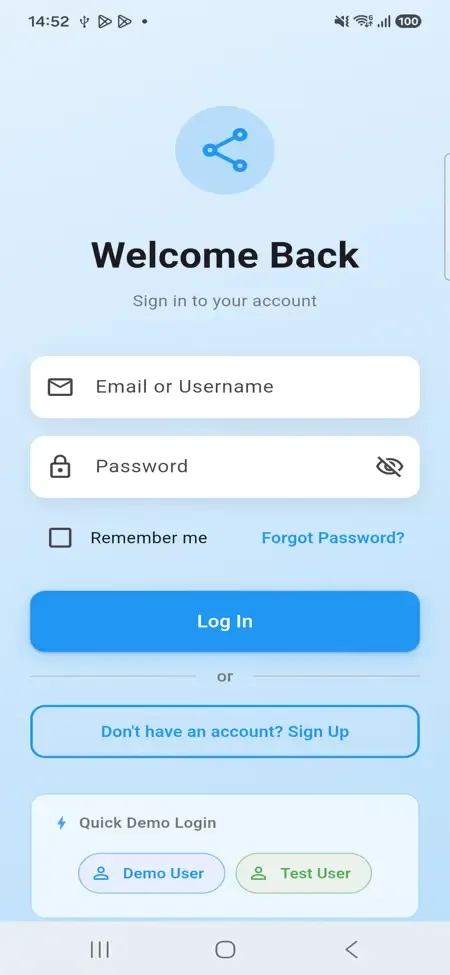
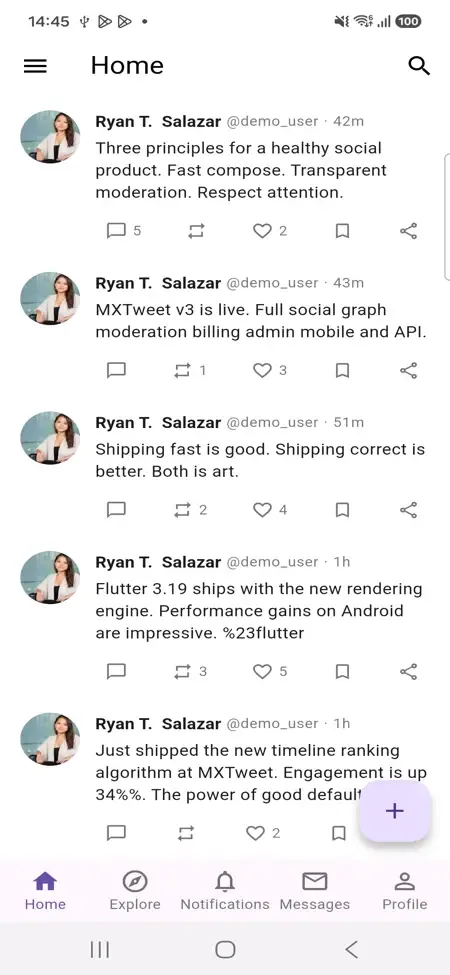
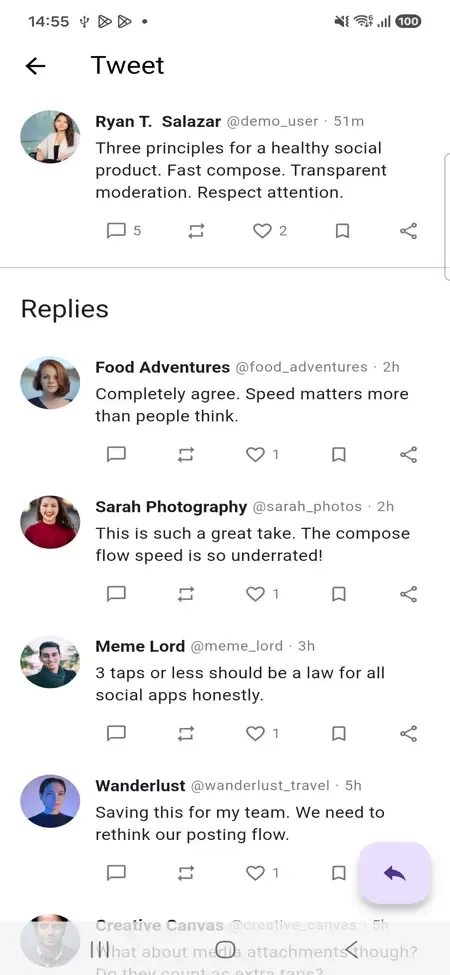
Two kinds of people bring money to a network: those who earn from a following and those who pay for attention. Both get their own records, limits and review steps, so neither is a bolt-on to the feed.
The operator console is a separate application with its own sign-in path. Trust and safety, ad review and account decisions happen there, and each privileged action leaves a record that can be read months later.
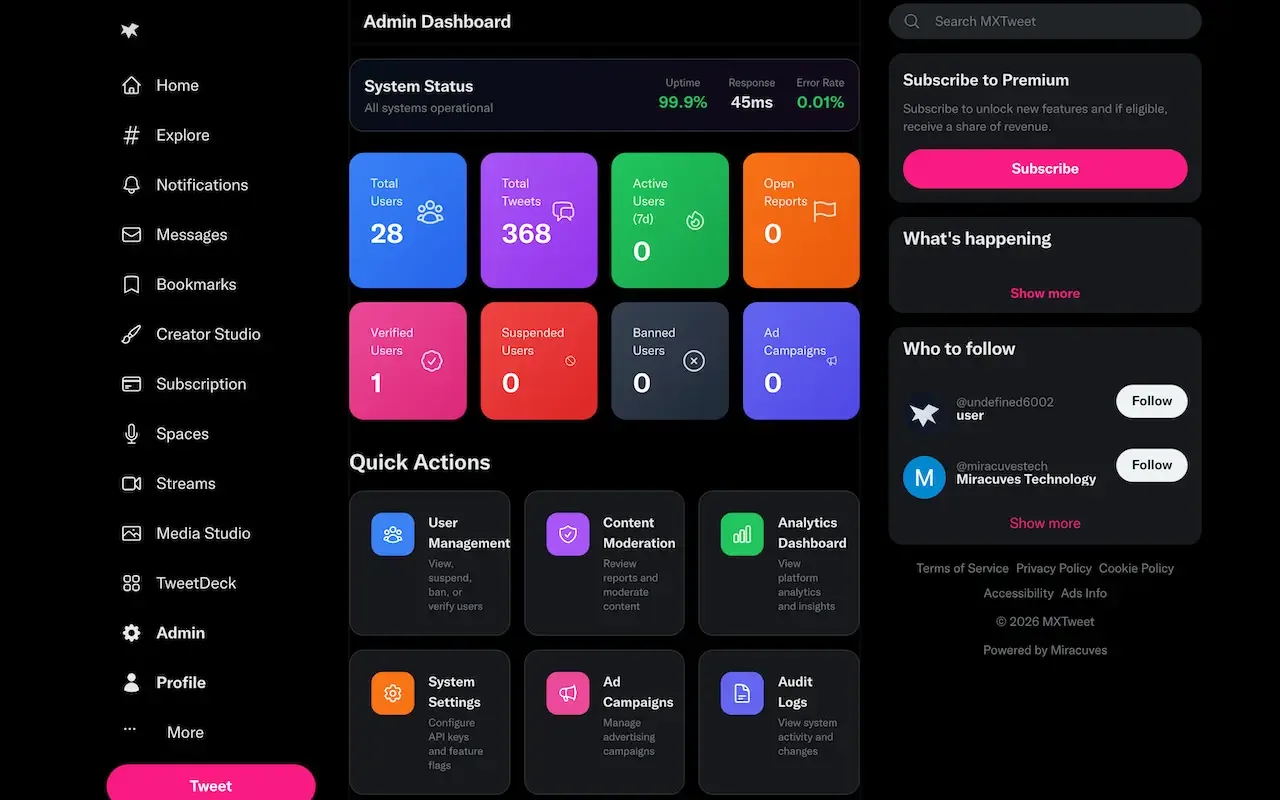
A network becomes infrastructure when other products can build on it. Developers get scoped credentials, predictable limits and one consistent response shape, and you get a way to measure and revoke their access.
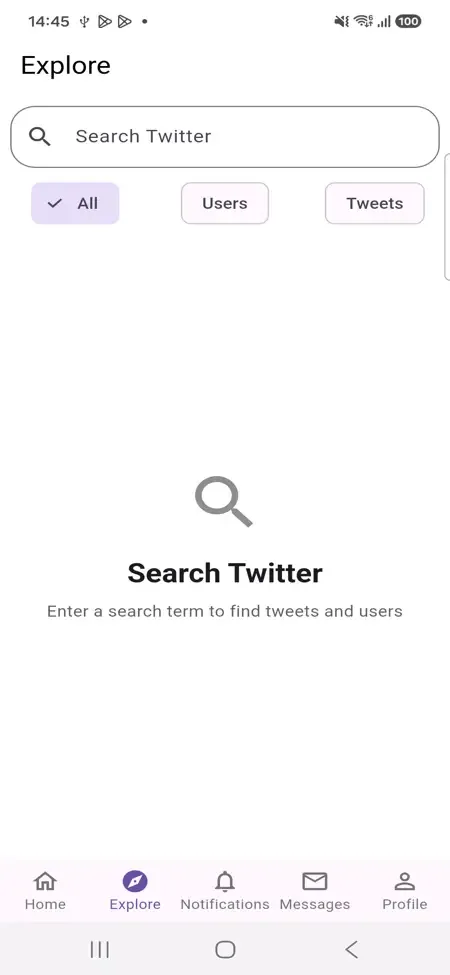
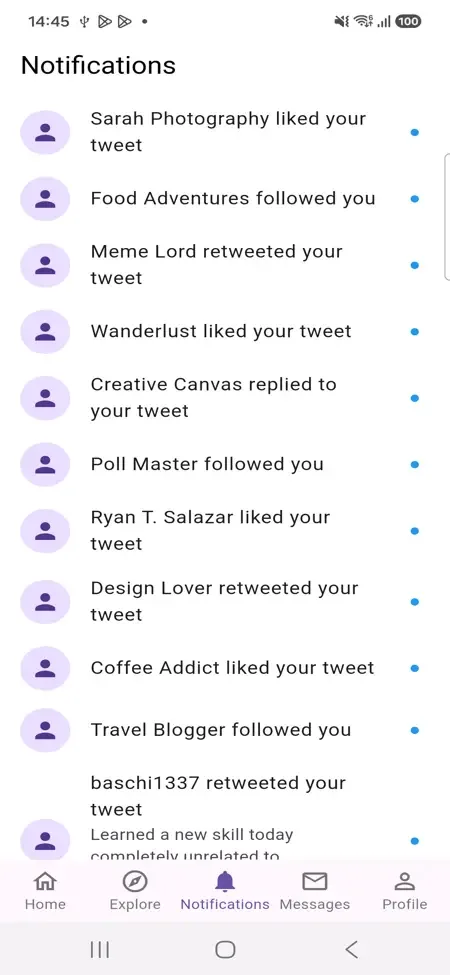
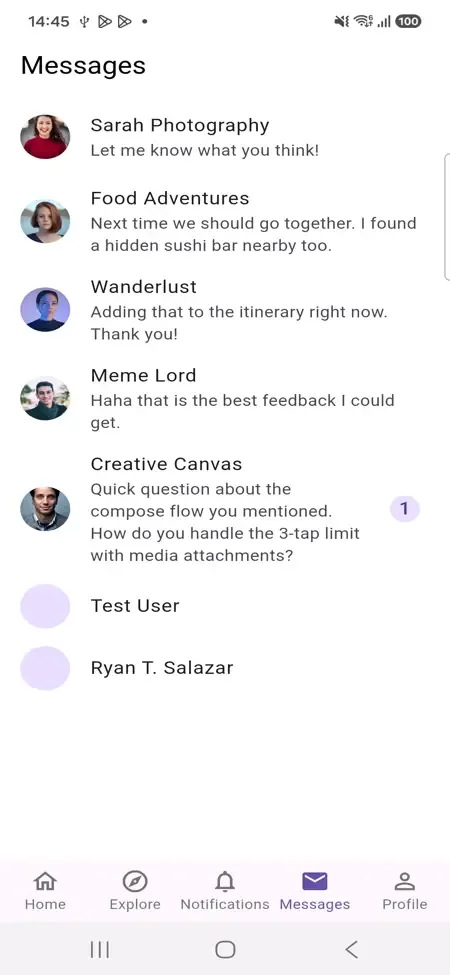
15 screens from the working demo, grouped by where they live. Your platform ships rebranded with your name, logo and colors.
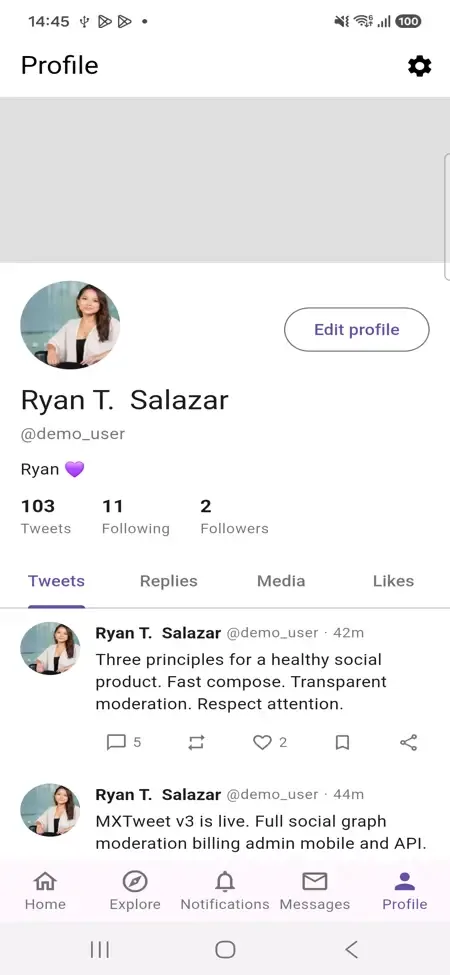
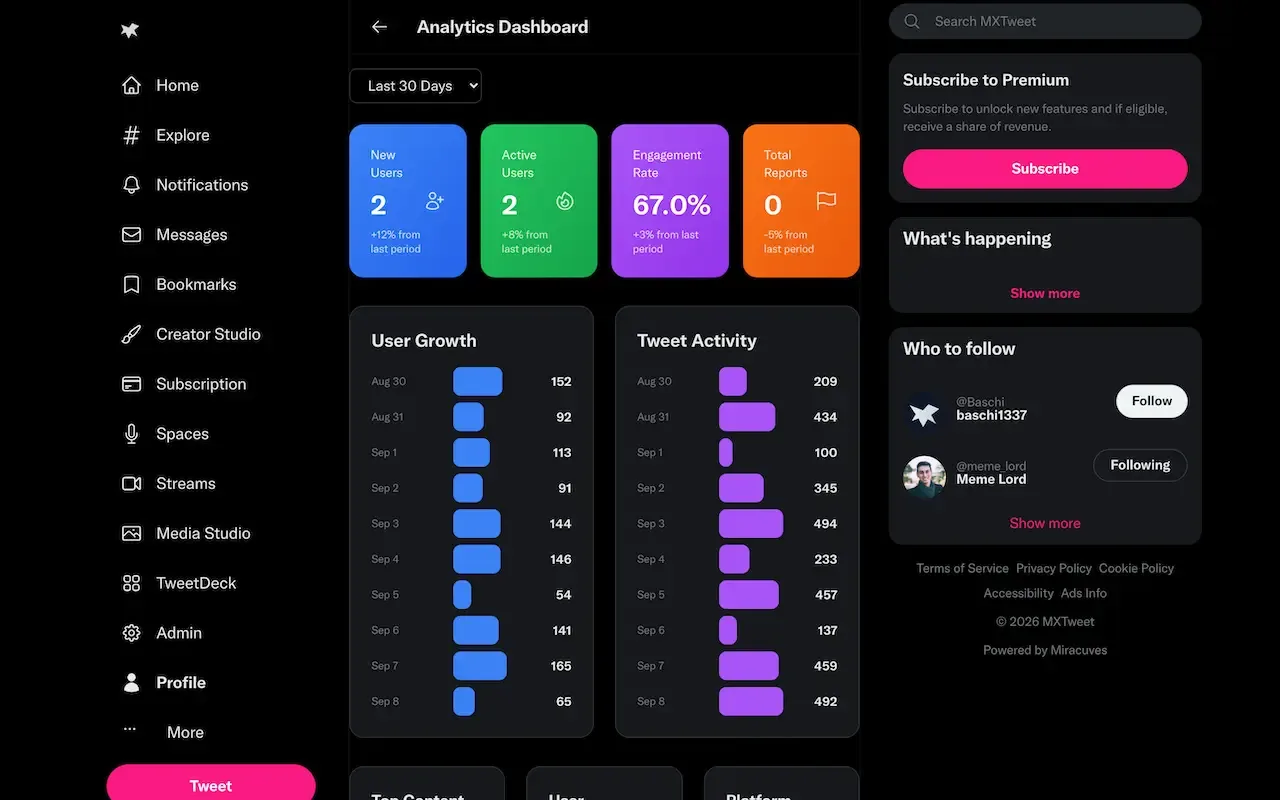
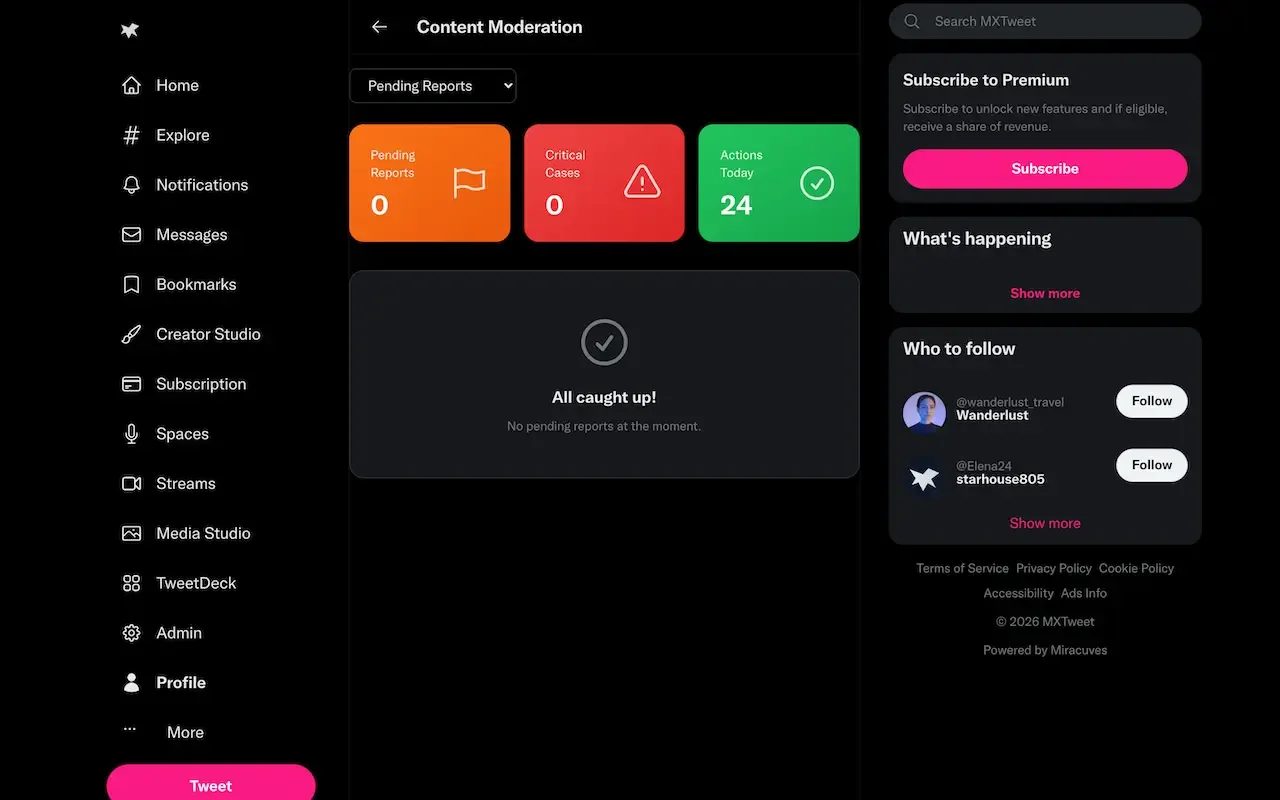
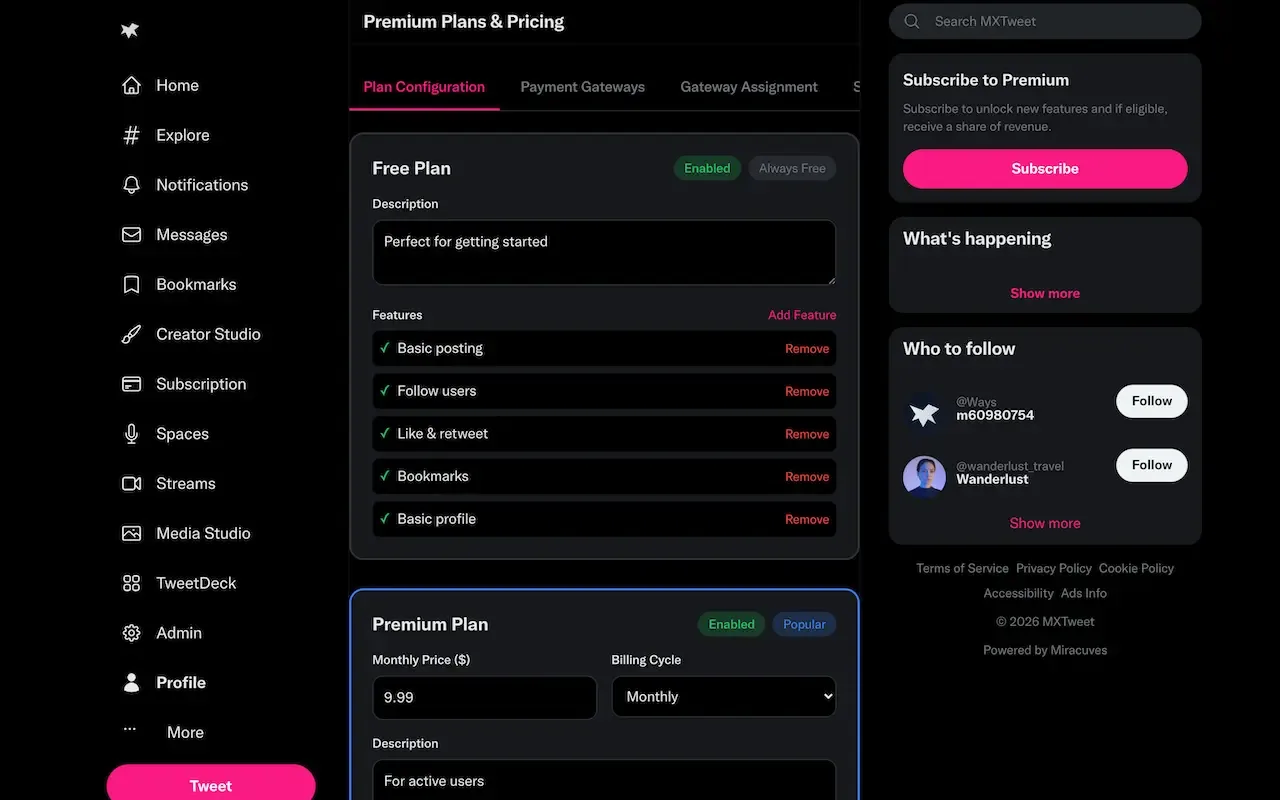
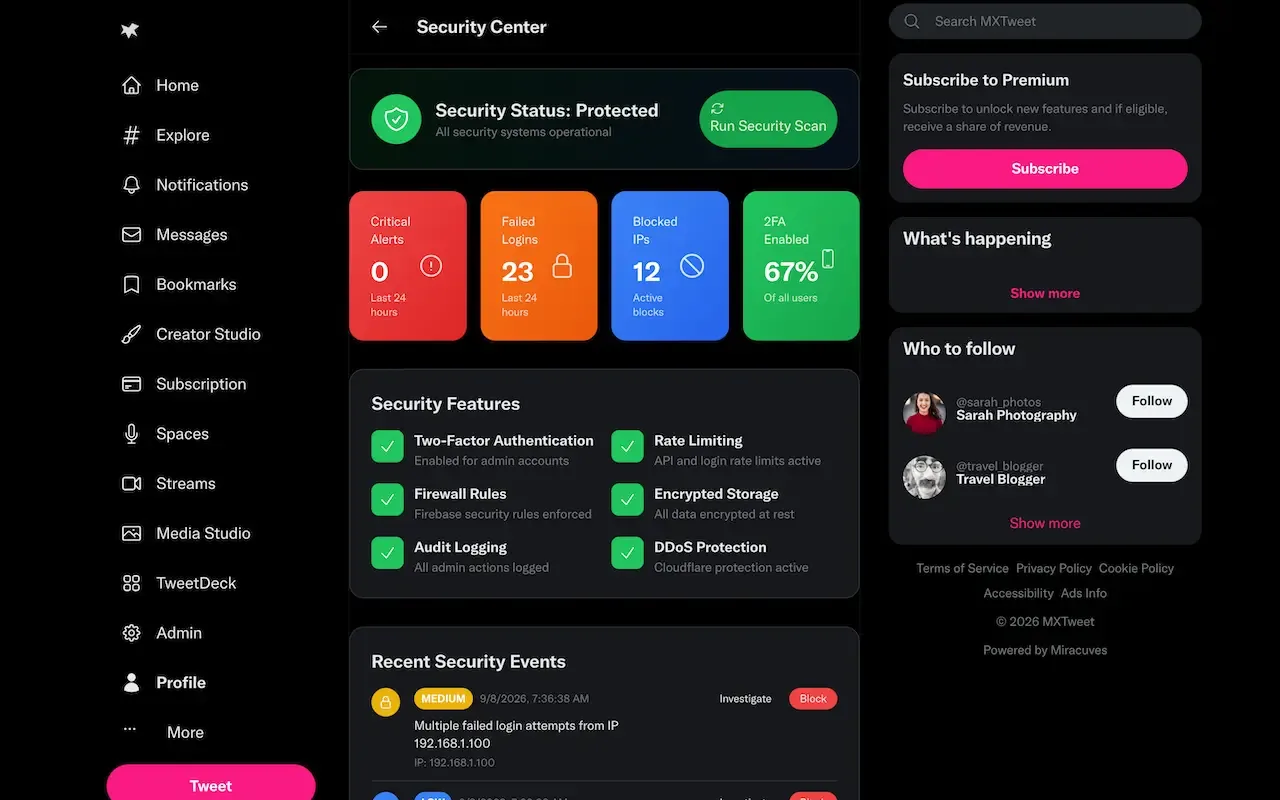
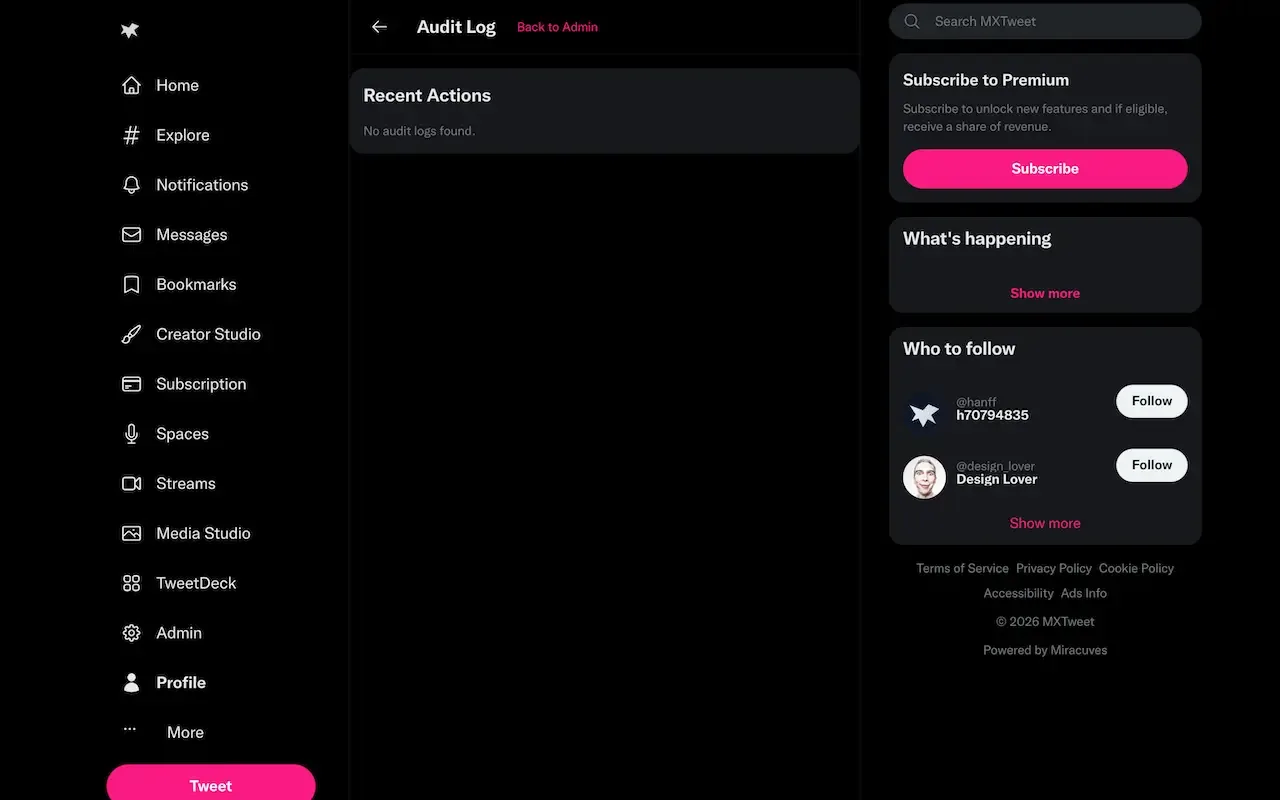
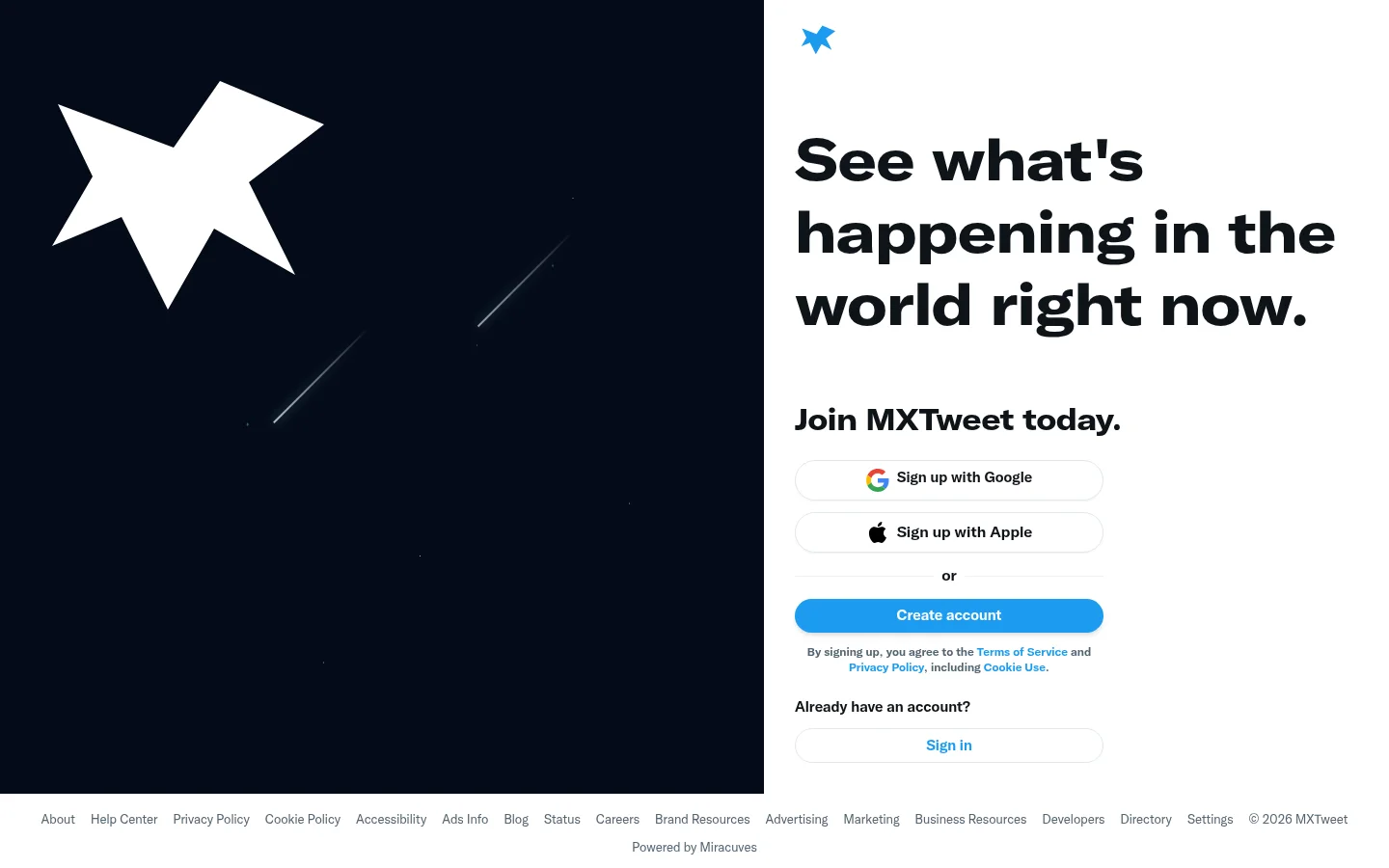
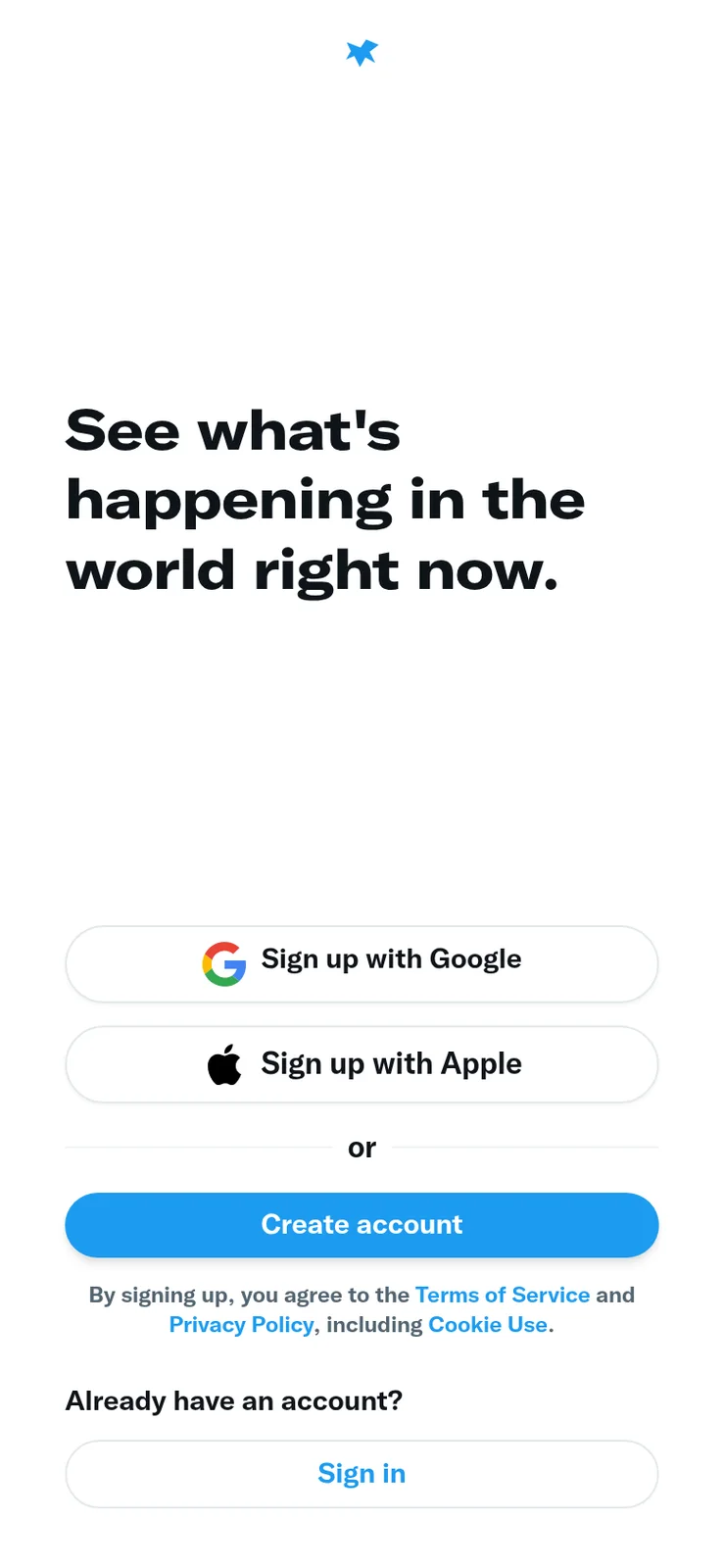
The demo runs the shipped build with demo branding on live infrastructure. Two member accounts let you talk to yourself in a private window, and the operator console shows the same activity from the moderator side. An Android build sits on the same API as the web client.
demo@mxtweet.comDemo@123test@mxtweet.comTest@123admin@demo.comAdmin@123demo@mxtweet.comDemo@12353 features across 4 roles. The first six of each role are here and the full list is one click away. Nothing is held back for a sales call.
A poll closes at the time the author sets, so a question can run for an afternoon or a week.
Members can comment on another post by quoting it, or chain several posts into one thread with parent links.
Posts can be queued for later and flagged with a content warning from the same composer control.
Links pasted into a post expand into a preview card, which keeps shared articles readable in the timeline.
An algorithmic feed that gives the operator something to tune and members something to opt into.
A chronological feed of the accounts a member follows, for people who distrust ranking.
11 more Members features are in the full list.
The default plan every account starts on, which keeps the network open while paid plans are priced above it.
A paid plan priced at $9.99 in the shipped configuration, with entitlements the server checks on each request.
A higher plan priced at $29.99 in the shipped configuration, for members who want the full entitlement set.
Plan limits are enforced by the API rather than hidden in the interface, so repricing needs no release.
Subscriber ids sit on the creator record, so a paid following is a first-class relationship between two members.
Any member can send a tip on a post or a profile, which is the lowest-friction way to pay a creator.
7 more Creators and advertisers features are in the full list.
Member reports arrive as records to work, with resolution actions attached instead of a free-text status.
Hide, unhide, delete, suspend and ban let a moderator respond in proportion to the problem.
A member can contest a decision and an operator reviews it against the reason that was recorded.
Administrator, action, target user, target post, target report, reason and timestamp are readable in one screen.
Account status changes carry a reason, so a restore or an appeal has something concrete to review.
Every sign-in records IP, user agent, device, browser, location, timestamp and whether it succeeded.
7 more Operators features are in the full list.
Each application has a client id, secret, redirect URI and a list of scopes it may request.
Keys are stored as SHA-256 hashes under the owning user, so the plaintext exists only when issued.
Counters are kept per key, so one heavy integration cannot slow the network for everyone else.
Members use Firebase Bearer tokens and integrators use an x-API-Key header, so no member session is needed.
Auth, users, posts, timeline, conversations, notifications, search, hashtags, lists, media and settings.
Every endpoint answers with success, data, error and meta, so client error handling is written once.
4 more Developers features are in the full list.
The path through the product, in the order it happens for the people using it.
Members register with email and password or Google sign-in. Profile, privacy and timeline preferences are written to the member record next to the counters the feed reads.
The composer publishes any of the ten post types. Replies, quotes and threads link back to a parent post, and hashtags and link previews are extracted on the way in.
Follows, lists, blocks and mutes shape the timelines, and conversations run as direct or group threads with presence signals.
Tiers gate features on the server, operators create ad campaigns as records, and creator subscriptions and tips move money between members.
Reports enter the queue and resolve through five actions, and each privileged action writes an audit entry naming who did what and why.
Every earning route built into the product you receive: how it works, who pays and where the operator earns.
| Revenue model | How it works | Who pays | How you earn |
|---|---|---|---|
| Subscription tiers | Free, Premium and Pro plans with entitlements enforced on the server, priced from configuration. | Member | Recurring plan revenue from members you already have |
| Ad campaigns | Promoted post, banner and sponsored campaigns with budgets, daily caps, spend tracking and targeting keywords. | Advertiser | Campaign spend that grows with attention, not with headcount |
| Creator subscriptions | A member pays a creator for a paid following, recorded as subscriber ids on the creator. | Fan | The platform share of a transaction between two members |
| Tips | One member pays another directly from a post or profile with no ongoing commitment. | Member | A share of each tip, and early revenue before anyone subscribes |
| API and developer access | Scoped OAuth applications and rate-limited keys, with limits that can be packaged per tier. | Developer | Access fees from products that depend on your network |
| Verification | A badge granted after operator review, which can be tied to a plan or to an application process. | Member | Plan upgrades or review fees, depending on how you package it |
| White-label licensing | The same codebase deployed under a second brand for a partner or a regional operator. | Partner | Licence fees you negotiate yourself, since you own the source |
The flow of money, the gateways you can connect and how payouts are handled.
Money enters a network like this in four places: a member buying a plan, an advertiser funding a campaign, a fan paying a creator, and a developer paying for access. The build records each as its own kind of record and enforces plan limits on the server. Stripe is the processor referenced in the shipped build. Any other processor, regional rail or multi-currency payout setup is integration work done on accounts you hold.
| Gateway | What it covers |
|---|---|
| Card | |
| Stripe | The processor referenced in the build for tiers, tips and creator subscriptions |
| Other | |
| Other processors | Added by us as integration work against your own merchant accounts |
| Regional | |
| Regional rails | Local payment methods are wired the same way, with scope confirmed with us before work starts |
You operate the platform, so legal compliance in each market you serve is yours. This is the tooling that ships in the product. It is not legal advice.
Reports enter a queue and resolve through hide, unhide, delete, suspend or ban, each with an audit entry. Automated classification of text or images is an integration we can add ahead of the queue. Staffing the queue, writing the policy it enforces and deciding what counts as abuse in your market are decisions that belong to the operator.
Privileged actions record the administrator, the action, the target and the reason, and sign-ins record IP, device, browser and location with the outcome. When a member says an account was taken, or an advertiser disputes a removal, support reads a record instead of reconstructing events from memory.
Firebase Authentication handles email, password and Google sign-in, and the Admin SDK verifies every Bearer token in middleware. Two-factor fields exist on the member record, but enforcing multi-factor sign-in, which matters most for operator accounts, is configuration finished with you rather than a control that ships switched on.
On this architecture the security rules are the boundary around data, and they ship with the build. Review them against your own threat model before launch. Ownership checks run on every mutation in the API, and Zod schemas validate request bodies, which narrows what a hostile client can attempt.
OAuth applications carry explicit scopes and redirect URIs, and keys are hashed and revocable per user. Rate limits sit on each key. The thresholds that suit your traffic are an operational decision to tune after launch, not values anyone can set correctly in advance.
Configuration is driven by environment variables, which is correct for a codebase and not enough for production, so moving credentials into a managed secret store is a deployment step. A security handbook and VAPT reference material ship with the source. An independent penetration test of your deployed instance is yours to commission.
Payments are connected during delivery. Wiring Stripe or your own processor for tiers, tips and creator subscriptions, including local rails, is integration work we set up with you.
Login history, privacy preferences and account status changes are stored as records. Retention and legal obligations in your market remain the operator's responsibility.
The layers of the product as delivered. You receive the full source code for every one of them.
| Layer | Built with | Hosting note |
|---|---|---|
| Web application | Next.js, React 18.2, TypeScript 4.7, SWR 1.3 | A Linux host running the Next.js application and API routes under a PM2 process configuration. |
| API layer | Next.js API routes under /api/v1/ with Zod validation | |
| Data | Firebase Firestore with typed converters and composite indexes | |
| Mobile app | Flutter (Android build supplied, iOS build available) | |
| Identity and access | Firebase Authentication, OAuth 2.0, SHA-256 hashed API keys | Firebase Authentication for email, password and Google sign-in, verified through the Admin SDK. |
| Deployment | PM2 on Linux, twelve Cloud Functions | |
| Database | Firebase Firestore with security rules, composite indexes and typed converters deployed as code. | |
| Background logic | Twelve Cloud Functions that handle work outside the request path. | |
| Real-time delivery | Firestore snapshot listeners drive feeds, notifications and messages, so there is no socket server to run.Video and audio play as shipped; transcoding into several renditions and CDN delivery are available, and we set them up for your build. | |
| Configuration | Environment variables per deployment, with a managed secret store recommended for production credentials. | |
The platform runs on infrastructure you control. The web application and API run as processes on a Linux host, while data, identity and background jobs run on Firebase services in a project you own. Nothing depends on a hosted service run by us after handover.
Most projects in this category do not fail on code. They fail on a handful of predictable operating mistakes. The table pairs each with what the ready-made platform provides and what is still entirely your job, so you can plan the human side as carefully as the technical one.
| Failure mode | Why it happens | What the platform gives you, and what stays with you |
|---|---|---|
| Empty timeline | New members arrive to no one worth following and leave | Lists, suggestions and search help; seeding accounts and invitations is your work |
| Algorithm too early | A ranked feed on a tiny graph feels random and untrustworthy | Separate For You and Following feeds, so you can lead with chronological |
| Moderation after the incident | Abuse arrives before any queue or policy exists | A queue, graded actions and audit entries from the first day; the policy is yours |
| Ads before attention | Advertisers need inventory the network cannot yet offer | The ad desk can stay switched off until there is something to sell |
| Media cost surprise | Video and audio quietly become the biggest bill | A transcoding and CDN setup from us; budgeting for storage and delivery is yours |
| API abuse | Third parties drain capacity or scrape without limits | Scoped keys, hashed storage and per-key rate limits; thresholds need tuning |
| Unclear promise | The network is a worse copy of everything else | Nothing in software fixes this; pick a niche and say why it exists |
Mastodon, Misskey and similar projects share a defining idea: many independent servers that talk to each other, so a member on one can follow a member on another. That is attractive if you want to be one voice in a wider conversation. It also means your rules, your blocklists and your growth depend partly on decisions made elsewhere, and a single operator rarely controls the whole experience.
A closed network makes the opposite trade. Everything lives under one brand, one moderation policy and one billing relationship. You can sell tiers and ads without negotiating with other server admins, and you can promise members a consistent experience. The cost is isolation: members cannot follow people outside your network unless you build a bridge, and a bridge would be tailored work, with scope confirmed with us.
A sensible way to decide is to ask who the network is for. If the answer is a community that already shares an identity, such as a profession, a publication or a customer base, a closed network usually serves them better. If the answer is a free exchange across many communities, federation is likely the more honest fit, and you should choose software built for it.
One fixed price for the ready-made platform, published here so you can plan before you talk to us.
Ready-made, one-time
$3,699
Live in 6 working days from kickoff
The engineers who deploy your platform stay with it once it is live.
Need more? We tailor the platform to your plan, typically in 2-8 weeks, and confirm the scope with you before work starts. App store review times are set by Apple and Google.
Everything here is available around the ready-made Twitter clone. We confirm the scope with you before any price is agreed.
Classification of text and image content ahead of the human queue, so moderators triage instead of reading everything.
Confirm with usWiring your chosen processor for tiers, tips and creator subscriptions, including local payment methods and multi-currency payouts.
Confirm with usTranscoding, thumbnailing and CDN delivery for video, which tends to become the largest cost line on a media-heavy network.
Confirm with usThe data rules already define a spaces collection; we build the live audio surface on top of it as tailored work.
Confirm with usCohort retention, creator earnings reports and advertiser dashboards beyond the statistics in the console.
Confirm with usProducing, signing and submitting the iOS build from the Flutter codebase, using your Apple developer account.
Confirm with usMulti-language interface and right-to-left support for regional launches, with moderation policy written per market.
Confirm with usSAML or OIDC for organizations running the network internally beside their existing identity provider.
Confirm with usCompetitor pages sell three package tiers. This table replaces them with a plain list of what a Twitter-style network needs and where each item stands. Most of it ships ready, and the rest is set up around your plan, so you can see the path to the network you picture.
Text, images, video, audio, GIFs, polls, quote posts, threads, scheduling and content warnings from one control.
Long thoughts can be chained, and any post can be quoted with commentary.
An algorithmic feed the operator can tune, kept separate from the chronological one.
A chronological feed of accounts the member follows.
Saved posts behave as their own feed per member.
Stored as explicit records so they can be enforced in every client.
Audio messages, reactions, read receipts and live typing indicators.
Full-text search over posts and people, with saved searches per member.
Mentions, replies, follows and likes, delivered to the mobile client.
Granted through operator review, with the decision recorded.
Hide, unhide, delete, suspend and ban, with an audit entry on every resolution.
Promoted post, banner and sponsored types with budgets, daily caps and targeting keywords.
Three tiers with entitlements checked on the server.
Paid followings and one-off payments between members.
Scoped apps and hashed, rate-limited keys for third parties.
A Next.js web application and a Flutter app on one shared REST API.
Classification of text and images ahead of the human queue. We set it up for you.
The data rules hint at a spaces collection, and we build the live surface on top of it.
Needed once video takes hold, and usually the largest cost line. We set it up for your build.
Wiring your processor for tiers, tips and subscriptions, including local rails. We set it up with you.
The codebase supports it; we handle signing and submitting as a defined piece of work.
Localization with right-to-left support, plus SAML or OIDC for internal networks. We set these up for you.
The product is a single-operator network; a federation protocol is tailored work, with scope confirmed with us.
Four pages go deeper on the questions buyers ask most about the Twitter Clone. This page stays the overview.
A feed is the easy part of a microblogging network.
See the full breakdownQuotes for a public microblogging network from scratch are open-ended, because moderation, advertising and a developer platform each become their own project.
See exact pricingA public network rarely earns from one source, because no one can predict which side of the market will fill first.
See the playbookAny developer can show you a scrolling feed.
Compare optionsFrom kickoff to a live Twitter clone under your brand: what we do each day, and what we need from you.
1Day 1
2Day 2
3Day 3
4Day 4
5Day 5
6Day 6
A public network looks cheap to prototype and expensive to finish. The feed and composer are quick. The cost sits in the parts users never see until something goes wrong: a moderation queue with an audit trail, an ad engine that can bill, a developer platform with scoped keys, messaging with presence, and three clients that must stay in step. Those pieces decide how long a custom build takes and what a rented service charges. Buying the finished surface moves the cost from building to operating, which is where the real money goes on a network.
| Factor | Build from scratch | Rent a SaaS | Own it with GetFame |
|---|---|---|---|
| Time to launch | Quarters of engineering before the first post is moderated | Quick signup, but limited to what the vendor exposes | 6 working days to a branded deployment |
| Ownership of the source | You own what you pay to write | None; you rent access and terms | Full source for web, mobile, API and console |
| Moderation tooling | Easy to under-scope and rewrite after the first incident | Whatever the vendor decided to build | Queue, five actions and audit log included |
| Advertising | A separate project with its own billing logic | Usually absent or controlled by the vendor | Typed campaigns with budgets and caps included |
| Factor | Build from scratch | Rent a SaaS | Own it with GetFame |
|---|---|---|---|
| Developer ecosystem | Scoped keys and limits are often a second-year feature | Access rules can change without notice | OAuth apps and hashed keys included |
| Per-seat or revenue fees | None, apart from team salaries | Recurring fees that rise with members | No per-seat fee and no revenue share |
| Changing the rules later | Your team changes code at your own pace | The vendor decides when and whether | Prices, tiers and policy are yours to change |
Running costs. The platform price covers the software and its deployment. It does not cover the Firebase usage your members generate, the Linux host, payment processor fees, push delivery, a media pipeline for video at volume, or the people who moderate and support the network. Apple and Google developer accounts and store review are also yours. Plan these as running costs from the first month, and scope any large item before launch.
Most of the effort in a microblogging network is not the composer. It is the machinery around it. This comparison shows what each module involves when you write it, set against what the ready-made product gives you on day one, using effort words rather than figures.
Build it yourselfRanking, chronological paging and counters that stay cheap as the graph grows; a team for several weeks.
Ready-madeThree named timelines with denormalized counters and cursor paging already in place.
Build it yourselfMany post types, upload handling, previews, polls with expiry and scheduling, each with edge cases.
Ready-madeOne composer covering text, media, polls, quotes, threads and scheduling.
Build it yourselfFollow, mute, block and list records enforced consistently across every client and query.
Ready-madeExplicit records for each relationship, enforced at the data layer.
Build it yourselfRealtime delivery, presence, receipts and group threads; a specialist workstream on its own.
Ready-madeMessages with audio, reactions, read receipts and typing, driven by live listeners.
Build it yourselfIndexing, hashtag extraction, saved searches and trending logic that needs tuning with real traffic.
Ready-madeFull-text search, hashtag extraction and saved searches with indexes defined up front.
Build it yourselfA report queue, graded actions, appeals and records; often postponed until after the first abuse incident.
Ready-madeA queue, five resolution actions and a recorded reason on each.
Build it yourselfLogging privileged actions and sign-ins in a form support can actually query months later.
Ready-madeAdministrator, target and reason on privileged actions, plus per-sign-in history.
Build it yourselfCampaign types, budgets, daily caps and spend tracking; a separate product for a small team.
Ready-madeTyped campaigns with budgets, caps, spend tracking and targeting keywords.
Build it yourselfOAuth apps, scopes, key hashing and per-key limits, plus documentation for outsiders.
Ready-madeScoped OAuth apps and hashed keys with their own rate limits.
Build it yourselfA second codebase kept in step with the web app, which tends to drift over time.
Ready-madeA Flutter app on the same REST contract as the web client.
Twitter is the reference many buyers have in mind for a public conversation network, and this page is independent of it. The comparison below is about operating model, not about the size or business of any company. It shows what changes when you run the network yourself.
| Aspect | The Twitter model | This platform |
|---|---|---|
| Who sets the rules | One company owns policy, moderation and product direction | You set policy, tier prices and moderation workflow |
| Access to the source | Closed product, not available to buy or self-host | Full source code transferred to you |
| Developer access | Access terms are set by the platform owner | You issue scoped keys and set the limits |
| Advertising | Ads are sold and controlled by the platform owner | You sell your own inventory through typed campaigns |
| Audience data | Held by the platform owner | Stored in a Firebase project you own |
| Audience | A very large installed audience | None included; you bring the community |
| Branding | Its own name, logo and design | Your brand on web, mobile and console |
The founders and teams this product fits most directly, one line each. The launch ideas that follow turn these audiences into a first-week plan.
Build a network for one profession, language, region or interest, with a moderation queue from the first day instead of after the first incident.
Put subscriptions, tips and tiers at the center so a creator can earn in week one and the operator takes a share.
Move reader conversation off a rented platform onto infrastructure you control, with an ad desk you sell yourself.
Run a public square for staff or customers where account status control, audit logs and a separate admin login matter more than growth.
Enter a market with local language, moderation policy and payment rails configured on a codebase you own.
Open scoped keys to outside builders so other products grow on top of your network.
A general network is a capital problem. A specific one is a product decision. These are the shapes that tend to make sense for an operator who already knows where the first members will come from, with the first settings to touch in each case.
A public square for one trade, such as clinicians, developers or logistics managers. Members follow peers, join discussions and share links. Switch on verification review first so credentials mean something, then the Following timeline, and leave ads off until the conversation has real volume.
A network for a language or region that the large platforms serve poorly. Posting, replies and moderation policy are written in the local language. Configure the For You feed lightly, plan localization early, and set up your payment processor for local rails before opening paid tiers.
Musicians, writers and streamers who want followers in one place that they do not rent. Tips move first, subscriptions follow once a creator has regulars. Decide the operator share before inviting anyone, and make sure the first creators are brought in personally.
A news or magazine brand moving its comment culture onto its own square. Readers get threads, polls and replies, while the publisher sells promoted posts and sponsored slots directly. Start with the report queue and clear house rules, because a brand carries reputational risk that a hobby does not.
A company social space for staff or for paying customers. Audit logs, account status control and a separate operator login matter more than viral reach. Plan enterprise sign-on with us early if the company has an identity provider, and keep the network private at the start.
A home for builders who want to ship small tools on top of a network. Open scoped keys late, after moderation is stable, and publish clear rate limits. Charging per tier for access turns the API into a second revenue line instead of a support burden.
A lot of searchers want something they can self-host or fork. The options below are real and different in kind: some are open networks you join, some are protocols, some are code you assemble. None is better in the abstract; each suits a different aim, and each asks you to give something up.
Open-source federated network
Communities that want their own server inside a wider network of servers.
Moderation and identity are shared with other servers, and monetization is not a built-in focus.
Open protocol and hosted app
Builders interested in a portable identity and custom feeds on an open protocol.
You build on a protocol rather than own a closed product with its own tiers and ad desk.
Open-source federated network
Hobbyist and regional communities that like a feature-rich, customizable federated server.
You run and maintain the server yourself, with community-driven support instead of a vendor.
Learning projects in React, Next.js or Flutter
Developers learning how a feed, auth and a database fit together.
Usually no moderation queue, audit trail, ad engine or maintenance path.
Purchasable legacy scripts
Very small projects on shared hosting with modest expectations.
Dated architecture, thin safety tooling and limited mobile support.
A white-label platform you own sits where you want a closed, branded network with its own money and rules. You get a working product, tiers, an ad desk and a developer API under your name, and you keep the source. You do not get federation, a community of volunteer server admins, or a protocol ecosystem. If those matter more than control and revenue, one of the open options above is the better starting point.
Longer answers to the questions buyers of this model ask before they commit.
The software is the fast part of launching a text-first network. The slow part is supply and demand arriving together, and a general network cannot win that race against incumbents. Pick one profession, region, language or interest where people already talk to each other somewhere inconvenient, and make your network the obvious place for that group. A narrow definition also makes moderation easier, because the rules are shared by almost everyone who joins.
Seed before you open. Invite a small number of recognised voices from that community, ask each to bring a handful of peers, and let the first weeks feel busy rather than empty. Use lists and hashtags to organize the early conversation around the two or three topics members came for, and keep the For You timeline tuned toward those topics so a newcomer sees activity within seconds of signing up.
Switch on messaging and moderation on day one, and the money lines in sequence. Tips need no commitment from someone who just arrived, so enable them first. Add a single paid tier once members have a reason to upgrade, then ads once real attention exists, and open the developer API last. Because tier gating is enforced on the server, reordering that sequence is a pricing decision and not a release.
An advertiser buys attention, and attention has to exist before there is anything to sell. On a young network the honest approach is to run the ad desk as a direct-sales product: a handful of advertisers who care about your specific audience, set up by hand. The typed campaign model supports this well, because promoted post, banner and sponsored are separate products that can carry different prices and different review rules.
Use budgets and daily caps as trust tools. A new advertiser who sees a total budget, a daily limit and spend that tracks to the cent is more willing to try a small test than one asked to prepay for an open-ended slot. Review each campaign before it runs, since the operator review step is the difference between a managed desk and an upload form, and a bad ad on a small network damages trust quickly.
Build the sales story from your audience, not from reach. Describe who your members are, which topics they follow and what the targeting keywords let an advertiser reach. Keep a first campaign record created at launch so the desk is proven before anyone asks to buy. Resist selling inventory you cannot yet deliver, because refunds and make-goods consume the goodwill you need.
An API makes a network harder to leave, because other products start to depend on it. It also creates risk, because a badly behaved integration can slow the platform or scrape member data. The build helps by issuing hashed keys with per-key rate limits and OAuth applications with explicit scopes, which means access is granted, measured and revocable instead of shared.
Start with read-only scopes on public data and add write scopes only after you have watched how integrators behave. Publish the limits plainly and keep them boring. Developers abandon platforms whose terms move without warning, so treat your limits as a promise. If you plan to charge for access, define tiers around request volume and scopes before anyone builds, so pricing never arrives as a surprise.
Watch the console. The operator view shows which applications exist, which keys are live and what limits they carry, so an unusual integration is visible before it becomes a problem. Decide in advance who may suspend a key and under what conditions, and write that into your developer terms. A small, well-run developer program usually brings more durable value than a large, unmanaged one.
Open the demo with all the logins and work through a full loop: post, reply from a second account, send a direct message, file a report, resolve it in the console and read the audit entry it wrote. A platform that only demonstrates the feed has skipped the parts that decide whether you can run it. Check that the same loop works on the mobile app, not only in the browser.
Ask what is configuration rather than default. Two-factor enforcement, secret storage, rate limit thresholds and Firestore rules review are all things you should expect to finish before launch, and a vendor who says nothing is required is overselling. Ask for the documentation set and have your technical lead read the rules, the schema and the API collection before you commit.
Be honest about what software cannot supply. It cannot provide an audience, automated moderation, a transcoding pipeline for heavy video or the merchant accounts behind payments. Those are real line items, and the useful question is whether the vendor names them up front. Prefer a seller that states its limits, gives a fixed price for the platform and confirms extensions in writing.
The release notes as published by our parent company, Miracuves.
v2026.1Sep 2026
It includes a Next.js web application, a Flutter mobile app, a 64-handler REST API and a fifteen-page operator console. Members get ten post types, three timelines, a social graph and messaging with presence. Operators get a report queue, an audit log and ad oversight. Developers get OAuth apps and hashed, rate-limited keys. The full source code transfers to you.
The ready-made platform is $3,699 as a one-time price, with no per-seat fee and no revenue share. A branded deployment takes 6 working days. Tailored work such as payment integrations, automated moderation or an iOS build is available and runs 2 to 8 weeks depending on scope, confirmed with us in writing before it starts.
No. It is independent software built to a functional target, and the name is used only to describe what the platform does. No code, design, graphics or content comes from the Twitter or X website or apps. You launch under your own brand, with your own name, logo and colors.
Six lines are modeled: subscription tiers, ad campaigns, creator subscriptions, tips, API access and white-label licensing. None needs a code change to switch on. Most operators start with tips and a single paid tier, add ads once there is attention to sell, and open the developer API last.
Yes. Reports enter a queue and resolve through hide, unhide, delete, suspend or ban, and every privileged action writes an audit entry with the administrator, target and reason. Login history supports disputes. The console runs on a separate login from member accounts. We can also add automated content classification as an integration.
On the core social experience, yes. The Flutter app has 28 screens and calls the same REST API as the web client, so feeds, composer, profiles, messaging and notifications behave alike. The operator console is web only by design. We supply the Android build, and we can also produce the iOS build and handle store submission, with scope confirmed with us.
The web app uses Next.js, React 18.2 and TypeScript 4.7 with SWR. The API runs as Next.js routes with Zod validation. Data lives in Firebase Firestore, identity in Firebase Authentication, and the mobile client is Flutter. Deployment uses PM2 on a Linux host, with twelve Cloud Functions. The stack is mainstream, so most teams can hire for it.
An audience, first of all, since software cannot supply one. Automated moderation, a video transcoding and CDN pipeline, live audio rooms, payment integration beyond the referenced Stripe setup, an iOS build, enterprise SSO and advanced advertiser analytics are all available, and we set them up around your plan. Two-factor enforcement and managed secrets are completed during deployment.
Yes. You own the source, so deploying the platform for a partner or a regional operator under another brand is a commercial decision rather than a license negotiation. Branding, configuration and feature emphasis differ per deployment while the code stays common, which suits agencies and resellers.
The price includes 60 days of technical support and 1 year of free updates. First response comes in under 2 hours, Monday to Saturday, 10:00 to 19:00 IST. Support covers the platform we shipped, and we will review an approach if your team builds on top of it.
Running a social network is lawful in most places, but the rules that apply to you depend on your market, your members and the content you allow. You are responsible for your terms of service, privacy notices, content policy and any registration or reporting duties. We supply moderation, audit and account tooling and cannot give legal advice, so take local counsel before you open registration.
Member data lives in a Firebase Firestore project that you own and control, and the application runs on a Linux host you provide. We do not hold your member data after handover. That also means data protection duties, backups and access controls are yours to manage, with the security rules and handbook we supply as the starting point.
Yes. Plans are priced from configuration, and entitlement checks run on the server, so repricing or changing what a tier allows does not need a code release. The shipped configuration uses Free, Premium at $9.99 and Pro at $29.99, but those figures are starting values for you to change.
Firebase Authentication provides email and password sign-in and Google sign-in in the shipped build. We can add further identity providers as an integration. Operator accounts use a separate authentication path, so enabling a new member sign-in method does not change how administrators log in.
The architecture is built around cheap reads: counters are stored on the documents the feed already loads, lists page by cursor, and composite indexes are defined up front. Managed infrastructure trades some ceiling for speed, which suits a launch. We do not publish member-count promises, and capacity planning, CDN placement and function concurrency are decisions to revisit as you grow.
Importing members and posts from another system is tailored work we do, scoped after we see your data format. The API and Firestore structure are documented, so your team or ours can write an import. Plan for how members will claim accounts and how you will communicate the move, since the technical import is usually the easier half.
Yes. Account status control, audit logs and a separate operator sign-in suit internal or customer-facing networks. Enterprise single sign-on through SAML or OIDC is something we can set up if you need it beside an existing identity provider. Private deployment is a hosting decision on your side.
No for ordinary operation. Moderators, support staff and ad reviewers use the operator console without code, and plan prices and policy are configuration. You will want a technical person for deployment, security review, upgrades and anything you add, but routine running does not need a developer on call.
The platform ships with one interface language, and we set up multi-language support with right-to-left layouts as localization work. That work also covers moderation policy per market. If you are launching in a regional language, raise it before kickoff so translation, fonts and policy wording are planned alongside the deployment rather than discovered afterward.
The sources describe a ready-made product sold to operators, not a one-off commission, so assume the platform is licensed to others too. What is exclusively yours is the branded deployment, your data, your configuration and any custom code you add. If exclusivity of the base code matters to your plan, ask for that to be addressed in writing before you commit.
The published sources do not describe a standard confidentiality process. Some published pages show client work with names withheld, which suggests confidentiality is practiced. If your plan is sensitive, ask for a non-disclosure agreement before you share details, and keep the first conversation to scope and timing rather than proprietary specifics.
Media delivery is the usual answer on a network where video or audio takes hold, because transcoding, storage and CDN bandwidth grow with usage. After that come moderation staffing, payment processing fees and hosting for your Firebase project. The platform price covers the software and deployment, so budget for these running costs separately and revisit them as the network grows.
A reason for a specific group to treat the network as their default place. The software provides the feed, the queue and the money tools, but members stay for the people and the topic. Decide who the first few hundred accounts are, bring them in personally, and make sure moderation is working before you open registration widely.
You can run it independently as a separate branded network, and members of other networks can simply create accounts. Linking the two so posts flow between them is tailored work we can scope with you. If cross-network following is central to your idea, a federated project built for that purpose is usually a better match.
The platform provides an algorithmic timeline that is separate from the Following feed, and the operator has something to tune rather than a fixed black box. The sources do not spell out the ranking signals, so ask for a walkthrough in the demo. Many operators keep the chronological feed as the default on a young network and introduce ranking later.
Campaigns are records with a type, budget, daily budget, spend tracking and targeting keywords, and the operator reviews them in the console. Collecting money from advertisers depends on a payment processor, and the build references one while wiring your own, including local rails, is integration work we set up with you. Plan for that step before you promise invoicing to sponsors.
Not for daily operation. Moderation, account status, verification review, ad oversight and settings sit in an operator console on its own login. You will want a developer for deployment decisions, upgrades, security hardening and any custom features. Many operators hire one part-time and rely on the included support period for questions about the shipped platform.
A tutorial gives you a feed and a login. It usually leaves out the queue, audit trail, ad engine, entitlements and developer platform that decide whether a network can be run in public. If learning is the goal, build it yourself. If launching a product is the goal, starting from a maintained base saves the unglamorous work.
→Start here
Share the platform and your market. You get a walkthrough of the live demo, the exact scope of what ships, and a fixed price in writing. First response in under 2 hours, Monday to Saturday, 10:00 to 19:00 IST.
This page uses the name Twitter to describe a type of platform. The product sold here is separate software, built independently, and Twitter has no part in it.
"Twitter clone" is industry shorthand that founders use when searching for software with a comparable business model. It names a category of product, not a copy of Twitter.
The platform is an original product designed and written by Miracuves. It contains no code, design, graphics or content originating from the Twitter website or applications, and it ships under your own brand.
Twitter and its logos are trademarks of their respective owner and are named here for reference only. GetFame is not affiliated with, sponsored by or endorsed by Twitter. Rights holders can write to legal@miracuves.com.
Operator responsibility. The operator of a launched platform is responsible for legal compliance in the markets it serves. Nothing on this page is legal advice.Read the full disclaimer
First response under 2 hours, Mon-Sat 10:00-19:00 IST
India+91 98300 09649 United States+1 516 202 3950