Ready-made, one-time
$3,699
IsMyGirl Clone
Live in 6 working days from kickoff
- Full source code
- White-label under your brand
- 60 days of technical support
- 1 year of free updates
- App publishing support

Managed creator platform
Run a managed creator roster, not just a subscription site
This IsMyGirl clone script is a white-label platform for the agency model, where your team recruits creators, verifies them, works their inboxes and settles the earnings. Configurable splits, a staff-run messaging layer, payout approval and a full audit trail sit on top of subscriptions, pay-per-view, live and calls. You also get the apps, a web app, the admin panel and complete source code.
| Model | Managed creator business: you recruit talent, run accounts and keep a defined share |
|---|---|
| Price | $3,699 one-time for the ready-made platform |
| Launch | 6 working days to go live |
| Revenue splits | Platform, agency and creator shares, configurable per creator |
| Staff model | Scoped roles for chat operators, managers, finance approvers and owners |
| Creator surface | One unified Android and iOS app and a web app on the same login |
| Payout control | Approval-gated withdrawals with reconciliation records |
| Agency tooling | Delegated manager access included, deeper agency module available |
| Ownership | Full Laravel 12 source, no per-seat or per-creator licence |
| Aftercare | 60 days of support after handover, bug fixes for 6 months, plus 1 year of free updates |
An IsMyGirl clone is a white-label creator platform designed for operators who manage creators rather than simply host them. Fans subscribe, unlock content, tip and message. Behind that, your staff manage a roster, apply splits between creator, manager and platform, and approve payouts. The name is a search term only, with no affiliation or endorsement implied.
The managed model depends on records. Onboarding captures identity and age documentation, sets the creator split and records consent before the first post goes live. Every later payout references that record, which makes the run defensible if anyone asks. Manager permissions are scoped, so staff see only what their role requires.
The IsMyGirl clone app is complete and ships under your brand, with Android and iOS apps from one codebase, a web app with PWA support, a Laravel API, the admin console and every line of source code. Advanced agency tooling is available when the roster outgrows the standard console, set up by us for your build. Split rules, verification standard and regional content settings are configuration, so the same product fits different agency agreements.
The name IsMyGirl is usually tied to managed creator income, a model where an operator recruits creators, handles much of their account work and keeps an agreed share of the earnings in return. The creator supplies the content and the personality; the operating team supplies the surrounding work that turns an audience into repeat paying fans, from messaging to scheduling to payouts. A search for apps like IsMyGirl is usually a search for this managed model.
An IsMyGirl clone is a white-label platform built for that arrangement, not a copy of any brand's software or roster. It puts the agency's back office inside the product: a creator roster, configurable splits, staff logins with limited permissions, payout approval and an audit trail, with subscriptions, paid unlocks, live and calls on the fan side. The name serves purely as the search phrase buyers use for this model. Your agency, terms and creators are your own.
This is where the working day happens. A manager adds a creator to the roster, sets the split, checks the verification and hands the account to the right people. Chat operators then work the inbox while finance watches balances and approvals.
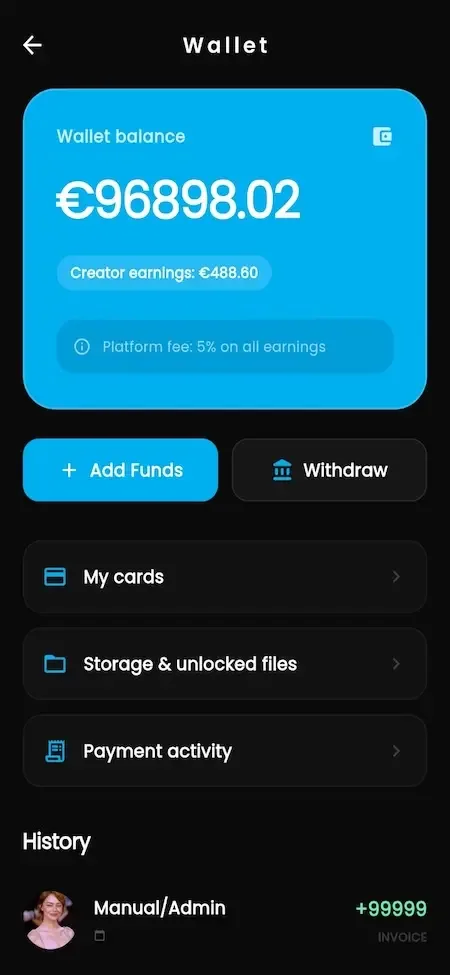
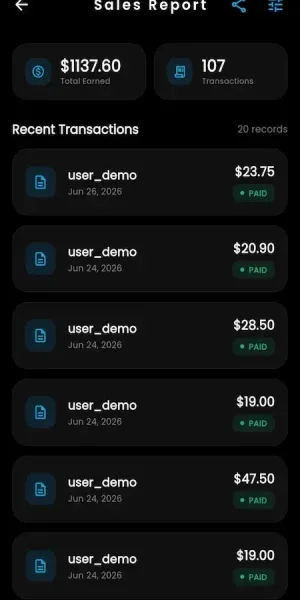
A creator on a managed roster still needs a product they can see themselves in. The app shows their earnings, their split and their content tools, while the team behind them handles the volume work.


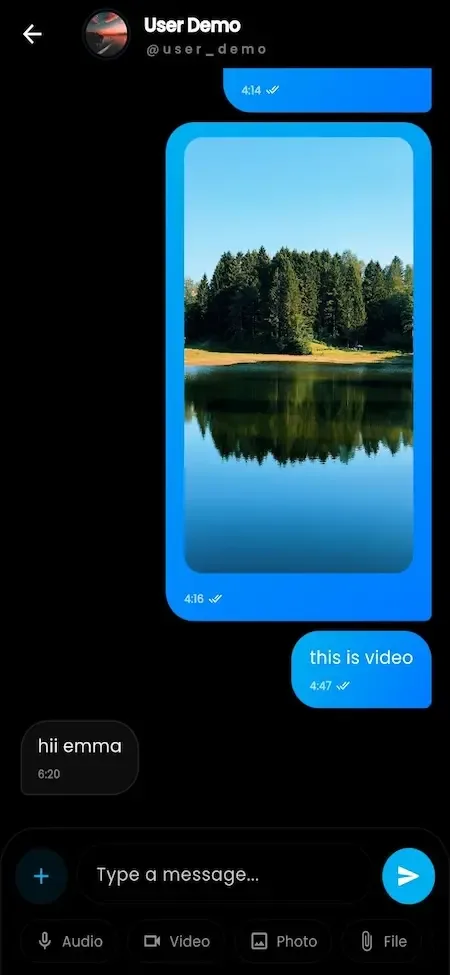
Fans see a normal creator platform, and that is the point. Whether the creator or a team member is typing, the fan gets one place to follow, pay and talk, with the wallet making repeat spending quick.
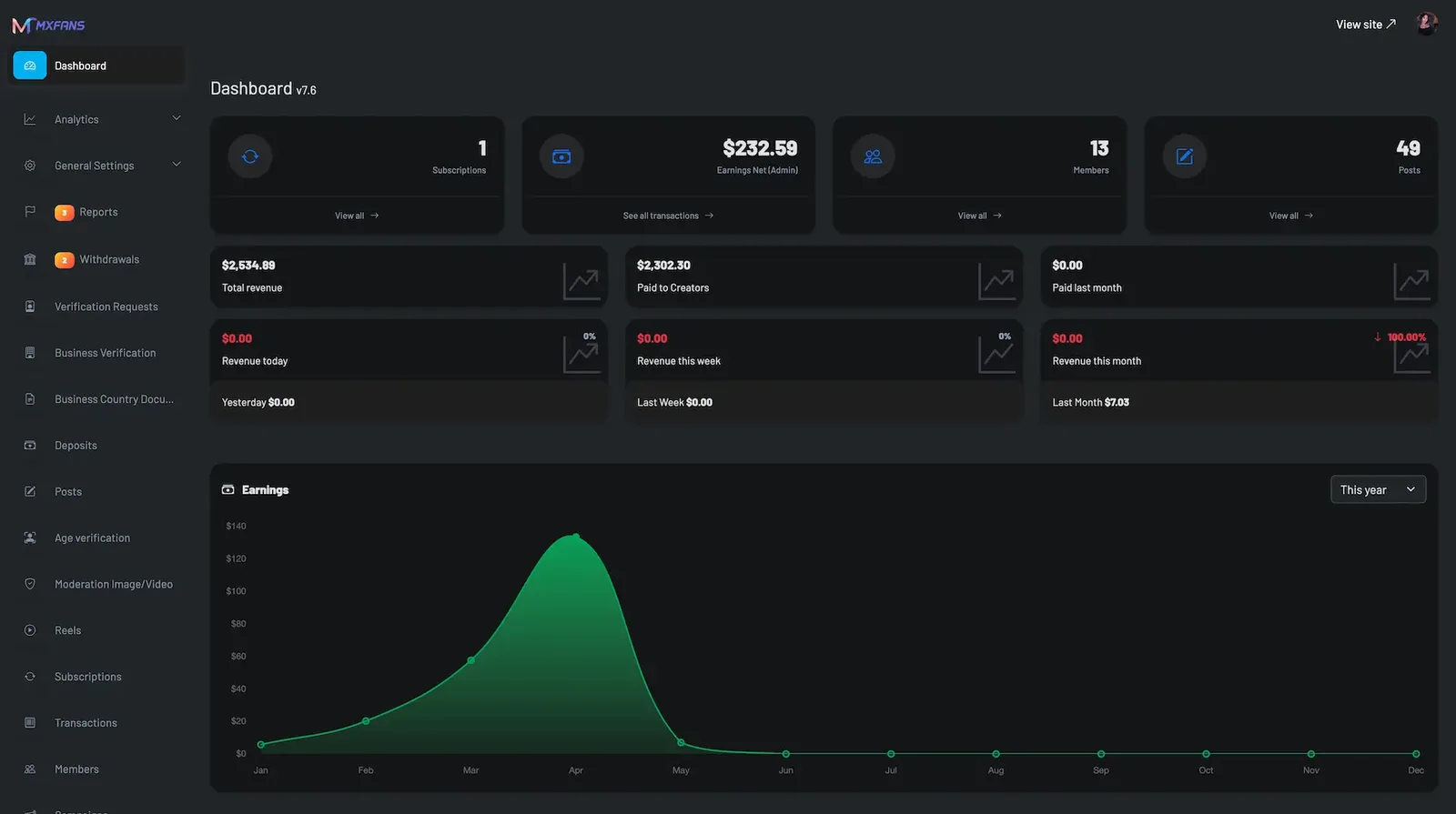
A managed operation answers to processors, regulators and creators at once. The console gives the owner verification review, moderation queues and an audit trail so that every decision can be explained later.



The demo site runs a live copy of the same build you would receive, in demo branding rather than yours. It covers the mobile app that fans and creators share and the operations console. For a managed business the console is the part to judge, because roster, verification, splits and payout approval all live there. The logins are public demo accounts.
user@demo.comUser_321creator@demo.comCreator_321admin@demo.comAdmin_$32148 features across 4 roles.
Add creators, set status and restrictions, and control which staff can see each account.
Collect talent applications and vet them before an account is created.
Define platform, agency and creator shares, adjusted per creator and per revenue type.
Each earning is divided on arrival, so payouts reconcile without a spreadsheet.
A manager works a creator account with permissions limited to a scope you define.
Operators see inboxes and send messages but cannot touch payouts or settings.
Approvers see balances and requests, and release payouts after checks.
Templates, lists and scheduled sends let staff work many inboxes with consistency.
Send one offer to a saved list, with priced media from the vault attached.
Staff upload, name and price media, then reuse it across posts and messages.
Revenue and engagement per creator show who earns, who is stalling and who needs help.
Per-creator portfolio pages, permission scopes, team dashboards and agency analytics build on the base tools.
Balance, subscriber count and each revenue source appear on the dashboard, net of the agreed share.
Post updates, stories and reels, attaching images, video, audio or files.
Set prices for weekly through annual periods, each enabled separately.
Lock single posts, sets and messages until a fan pays a one-time price.
Broadcast publicly or accept private session requests priced per session.
Audio and video calls are booked and logged into the split ledger.
Products and services sell with coupons, and orders show to creator, manager and operator.
Paid personalized requests are tracked through to fulfillment.
Goal-based drives show progress to fans and to the team.
Personas reply in the creator voice, easing the load on staff inboxes.
Set up a prize wheel where each spin has a price and a reward, as a paid engagement hook.
Request payment and follow each step until it is approved and settled.
Fans explore featured creators, categories and search, and see previews before they pay.
Fans join a free or paid plan, and renewals and lapses are handled automatically.
Pay once to open a post, reel, story, file or message.
A stored balance funds quick repeat purchases with saved payment cards.
Send one-off support on posts, profiles or live sessions.
Chat privately with a single fan or with a whole group, and unlock paid media without leaving the thread.
Join streams with comments and likes, or request a private session.
Reserve audio or video calls charged by duration.
Fans place live bids on exclusive items that open at a set starting bid.
Contribute to creator goals and watch progress.
Sign up with an email address, a phone OTP or a social login, and turn on two-factor authentication.
Fans block accounts and report content for review.
Review identity, business and age-related checks, with provider callback status.
Set the documents each supported jurisdiction requires.
Gate payout runs behind approval, with balances and reconciliation records.
Each report or complaint follows a policy workflow and ends in a recorded decision.
Payments, withdrawals, reports, verification and admin actions are stored for later review.
Blocked users, suspicious activity and account restrictions are visible in one place.
Enable providers, set wallet funding and store credentials.
Set platform commission, referral share, currency and caps per transaction.
Close the platform off for any chosen market, whether a country, a state, a city or a region you are not ready for yet.
Require or recommend app updates and toggle modules per platform.
Edit public pages, domain, colors and logo in the panel.
See earnings, members, posts, payouts and verification activity together.
Your team signs the creator and starts the onboarding record.
Identity and age checks are captured, the split is set and consent is recorded.
Fans subscribe, unlock, tip and message, with moderation across it all.
Each payment resolves against the split ledger for creator, manager and platform.
Staff approve withdrawals and the decision is logged for later review.
| Revenue model | How it works | Who pays | How you earn |
|---|---|---|---|
| Platform and agency share | A defined percentage of each creator earning, split between platform and agency, applied by one engine on every surface. | Creator, through the split | Your main income, set per creator and per revenue type |
| Managed messaging | Staff work inboxes with templates, lists and scheduled sends, selling priced media in conversation. | Fan | Share of message revenue, where margin follows staffing more than traffic |
| Subscriptions | Recurring paid access to creators on your roster, priced per plan. | Fan | Share of every renewal once the roster is live |
| Pay-per-view unlocks | One-off payments for posts, sets, reels or files. | Fan | Share of each unlock, driven by content volume |
| Tips and gifts | Wallet-funded support on profiles, posts and live sessions. | Fan | Share of tips, which operators often take at a lower rate |
| Live, calls and shoutouts | Paid streams, private sessions, calls and personalized requests. | Fan | Share of bookings, with scheduling work falling on staff |
| Storefront and auctions | Orders, coupons and auction sales from creator shops. | Fan | Share of orders and winning bids |
| Placements and ads | Boosts, featured slots and platform advertising. | Creator or advertiser | Flat fees, independent of creator sales |
| AI persona credits | Fans buy credits to chat with AI personas. | Fan | Credit revenue less provider cost |
In a managed operation the fan payment is only the first step. Money arrives through a gateway or the wallet, is recorded as a transaction and is divided through the split ledger between the creator, the agency and the platform. The creator balance then waits for approval, and your finance approver releases payouts after checks. Which processors you can use depends on your market and category, and approval rests with the provider.
| Gateway | What it covers |
|---|---|
| Card | |
| Stripe | Cards for subscriptions, unlocks and wallet top-ups. |
| Wallet | |
| PayPal | Wallet checkout as an alternative to card entry. |
| Adult-friendly | |
| CCBill | Named path for categories mainstream processors often decline. |
| Regional | |
| Paystack | Regional processor for markets it supports. |
| Flutterwave | Regional processor with local methods. |
| MercadoPago | Regional processor for Latin America. |
| Crypto | |
| Crypto gateways | Crypto paths, depending on the provider you contract. |
| Other | |
| Wallet | Funded balance with full transaction visibility for finance and support. |
Managed operations put many people near creator accounts, which is a risk in itself. Scoped roles let a chat operator, a talent manager, a finance approver and an owner each see only their remit. Review role assignments when staff change and remove access the day someone leaves. An audit trail records who acted on which account, which matters when a creator disputes something.
You are representing people, so verify them properly. Identity checks and business verification run before a creator can earn, and document rules can differ by country. Age checks plug into a provider that follows Yoti and Didit patterns. Consent for staff to write in a creator name is a contractual matter for your own agreements. Extra consent or release workflows are tailored work, with scope confirmed with us.
Messages sent by staff are still content on your platform. Reports, review queues and takedowns apply to them, with decisions recorded. Automated screening of uploads uses SightEngine, with manual review behind it. Write guidance for chat operators about what they may and may not say, because their volume makes mistakes frequent and visible.
Creators judge a managed operation by whether it pays correctly. The split ledger divides earnings automatically, approvals gate payouts and reconciliation records show what moved. Publish your schedule and thresholds, and reconcile each run against gateway statements. Advanced KYC and AML integration can also be set up in your deployment, once its scope is agreed with us.
Blocking by country, state, city or region keeps you out of markets you have not prepared for. Legal compliance in each market, including agreements with creators and rules about managing accounts on their behalf, rests with the operator. We supply moderation and age-verification tooling, not legal advice.
Token-based API access through Sanctum, encrypted HTTPS traffic, role checks, rate limiting, capped OTP attempts and two-factor authentication guard accounts and the APIs behind them. Shared staff logins are a common weakness in this model, so give each person an individual account. We claim no security certification, and having your deployment tested independently makes sense before launch.
Should your roster carry adult content, you answer for legal compliance where you operate, contracts with creators included. What we provide is tooling for age verification and moderation; legal advice is not part of it.
Identity and age documentation and consent are recorded against the account before publishing begins.
Moderation actions and payout decisions are recorded so they can be reviewed.
| Layer | Built with | Hosting note |
|---|---|---|
| Mobile and web | One codebase for Android and iOS, Blade and Livewire web app, PWA | |
| Backend | Laravel 12, PHP 8.2+, Sanctum APIs | Runs on Laravel 12 with PHP 8.2 or newer, and Sanctum-secured APIs serving apps, web, staff and admin. |
| Database | MySQL or MariaDB with audit-friendly records | MySQL or MariaDB, keeping records of payments, withdrawals, reports and verification that auditors can follow. |
| Queues and cache | Redis with queue workers | Redis with queue workers for notifications, payment events and media jobs. |
| Verification and moderation | Yoti and Didit patterns, SightEngine | Age and identity checks follow Yoti and Didit patterns, and SightEngine is named for media screening. |
| Cloud | AWS, GCP or DigitalOcean with S3-compatible storage | AWS, GCP or DigitalOcean, with backups and staging to production workflow. |
| Media storage | S3-compatible object storage for posts, vault items and message attachments. | |
| Real time | WebSockets for conversations and live chat that staff and fans share. | |
| Live and calls | Agora or Zego style providers, billed to your own account. | |
A managed platform has more simultaneous internal users than a self-serve one, and its records matter more because money is split between parties. The stack runs on your own cloud and keeps audit-friendly records across payments and review. Setup is done alongside you in the first week.
Agency disputes usually start with money no one can trace. This table follows a single fan payment from checkout to payout so you can see where each control sits, who can see it and where a human decision enters. Use it as a map when you design your own approval policy.
| Stage | What happens | Who sees or controls it |
|---|---|---|
| Fan pays | A subscription, unlock, tip, message or call is charged through a gateway or the wallet | Fan, support and finance staff can view the transaction |
| Entry in the ledger | The earning is recorded against the creator with its type and source | Finance and owner roles |
| Split applied | Platform, manager and creator shares are calculated from the terms set for that creator | Owner configures; talent managers see their own roster |
| Balance accrues | The creator share builds up as a balance awaiting a payout run | Creator sees it in their dashboard; finance sees all balances |
| Withdrawal request | A creator asks for a payout or a scheduled run collects due balances | Creator requests; finance reviews |
| Approval | A named finance account approves the run, so the decision is attributable | Finance approver and the audit trail |
| Reconciliation | Records tie the approved run to what was actually paid out | Finance and owner roles |
| Dispute or reversal | A refund or chargeback adjusts the ledger and the affected balances | Support raises it; finance resolves it |
Moving accounts and content over in bulk is a separate job we plan with you, since formats and consents differ, so the sensible path is a staged move rather than a switch-over weekend. This sequence keeps risk low and lets you correct terms while only a few creators and a small amount of money are involved.
Staff-run messaging raises a question that software cannot settle for you: how much should fans be told about who is typing? The platform gives you separate staff logins, scoped permissions and an audit trail for admin and review actions. Whether a given message carries a visible staff or persona label, and how much attribution is retained, depends on your configuration, so confirm what you need during scoping rather than assuming it.
Decide your disclosure policy before you hire chat staff, and write it into their instructions. AI personas deserve the same treatment: they can take some of the load, but your own rules, your payment providers and the market you serve may require that fans know when they are speaking to one. Rules differ by country and by provider, and we do not give legal advice. Treat transparency as a business decision with consequences for chargebacks and trust, not only as a compliance box.
Keep role design simple at first. A chat operator needs the inbox and templates. A talent manager needs their own creators and the earnings view. A finance approver needs balances and the payout queue. The owner needs everything. Start with those four, observe where staff run into limits, and only then consider the advanced agency module or tiered permissions as an extension.
Ready-made, one-time
$3,699
Live in 6 working days from kickoff
Go past the base tools with deeper manager access, portfolio views per creator, scoped permissions, team dashboards and agency-level analytics.
Confirm with usDefine finer role levels for chat teams, regional managers and finance than the standard scopes offer.
Confirm with usBuild payout calendars, thresholds and batch rules that match your agreements with creators.
Confirm with usDirect payments by region, with payout rules, tax logic, invoicing steps, wallet caps and fraud review checks.
Confirm with usLarge chat teams get escalation rules, moderation analytics and queues organized by policy.
Confirm with usLink a specialist provider for deeper checks on creators.
Confirm with usAdd cohort analytics, fan lifetime value and churn views to evaluate creators and staff.
Confirm with usMarketing automation, a CRM, single sign-on or internal accounting tools can be wired in.
Confirm with usAgency software tends to hide the boundary between the product and the project. The larger share of this platform arrives complete, and what remains is tailored to how your agency runs, so one matrix covering both is the helpful view. Use it to separate day one needs from phase two ideas.
Onboard creators, set their status and restrictions, and decide which staff members can see each one.
Platform, manager and creator shares, set per creator across every earning type.
Applications, vetting and account setup run inside the app and the console.
Chat operator, talent manager, finance approver and owner each see their own slice.
Templates, saved lists and scheduled sends worked by your team for a creator.
Approval-gated payout runs with reconciliation records tied to a named account.
Admin and review actions are recorded and attributable to individual staff.
Recurring access plus pay-per-view posts and message media.
Fan balances and tipping with transaction visibility for support and finance.
Streams, private requests and calls feeding the same split ledger.
Creator shops, coupons, shoutouts and paid placement with order records.
Personas answering in a creator's voice, with a choice of provider per deployment.
Connect age and identity providers you contract into onboarding review.
Reports, review queues and takedown workflow, staffed by your own people.
Branded Android, iOS and web, with complete source and no per-seat fee.
Creator portfolios, richer permission scopes, team dashboards and agency analytics; we set it up for your build.
Churn and lifetime value to compare creators and staff performance; we set it up for your build.
Routing by region, tax logic and invoice workflows beyond the standard gateways; we set it up for your build.
Regional managers and chained delegated approvals are tailored to your structure, with scope confirmed with us.
We build the import for you; it depends on your formats and consents, with scope confirmed with us.
Thresholds, batch rules and cadences that match your creator agreements, built for you, with the scope agreed with us beforehand.
The software cost of a managed platform is modest next to the cost of the operation it supports. Recruiting, vetting, staffing inboxes and approving payouts are ongoing work, and the platform decides how much of that work becomes manual. A spreadsheet-based operation is cheap to start and gets expensive as the roster grows. A hosted service usually lacks the split and staff tooling a managed model needs. A ready-made platform with source code sets up the management layer once and leaves your spend for people and growth.
| Factor | Scratch build | SaaS | GetFame |
|---|---|---|---|
| Management layer | Roster, splits and roles built from scratch | Rarely offered | Included, with deeper agency module available |
| Time to first payout run | Slow, split logic is delicate | Depends on vendor features | 6 working days to a configured platform |
| Split flexibility | Unlimited, at your cost | Fixed vendor model | Configurable per creator and revenue type |
| Staff access control | Yours to design | Limited | Scoped roles in the console |
| Recurring platform fees | None, but maintenance | Monthly fee plus a cut | None from us, no revenue share |
| Audit records | Built by your team | Vendor controlled | Audit-friendly records on your servers |
| Custom workflows | Part of the roadmap | Unavailable | Tailored for you, usually 2 to 8 weeks |
Running costs. Past the purchase price, budget for servers and storage, charges from your live-session and calling vendor, processor fees with chargebacks, text-message and OTP delivery, AI usage bills, verification checks, store accounts and legal paperwork. The largest running cost in this model is people: chat operators, managers, moderators and a finance approver, whose hours should be modeled before you promise creators a split.
The consumer side of a creator platform is familiar. The expensive part of a managed operation is the back office, where money, staff and creators meet. This table compares building each piece with using it ready-made, in effort words only, since your agreements decide the real scope.
Build it yourselfCreator records, statuses, restrictions and staff visibility rules designed and wired through every screen.
Ready-madeA roster screen with status, restrictions and per-staff visibility already in place.
Build it yourselfCalculation rules for each earning type, tested against refunds, reversals and rounding.
Ready-madePlatform, manager and creator shares applied automatically on every earning.
Build it yourselfA batching and approval process with reconciliation, normally done by hand at first.
Ready-madeApproval-gated runs with a named approver and reconciliation records.
Build it yourselfRole definitions, scoped access and tests that no role sees more than it should.
Ready-madeScoped roles for chat, talent management, finance and ownership.
Build it yourselfTemplates, lists and scheduling layered over realtime chat, often a later phase.
Ready-madeTemplates, saved lists and scheduled sends included for staff-run inboxes.
Build it yourselfApplication intake, vetting steps and verification callbacks built as a workflow.
Ready-madeApplication, vetting and verification review run inside the console.
Build it yourselfRecording and retaining who did what, usually retrofitted after a dispute.
Ready-madeAttributable admin and review actions recorded from the first day.
Build it yourselfTwo store apps and a web client designed, built and kept in step with the back end.
Ready-madeBranded Android, iOS and web builds on one shared back end.
Build it yourselfReports, queues, takedown and records, essential for a team handling many accounts.
Ready-madeQueues, reports and takedowns with scoped staff roles ready to use.
Build it yourselfRevenue and engagement per creator modeled before any report can be drawn.
Ready-madeRevenue and engagement per creator across the roster, with deeper views available.
IsMyGirl is linked with managed creator income: an operator recruits creators, takes over day-to-day account work and keeps a defined share. This platform suits that operating style. The brand has no tie to this product, and what follows compares business-model traits alone.
| Aspect | The IsMyGirl model | This platform |
|---|---|---|
| Who runs the business | The brand operates its managed service | You run your own agency or platform |
| Share structure | Terms set by the brand | Splits you configure per creator |
| Staff on creator accounts | Handled inside the brand organization | Your staff, with scoped roles |
| Payout control | Decided by the brand | Approval-gated runs that you control |
| Creator contracts | Between creator and brand | Between creator and you, drafted by you |
| Data and records | Held by the brand | Audit records on your infrastructure |
| Source code | Not available | Full source delivered |
Run an IsMyGirl alternative: recruit, onboard and run a roster with a shared console and clear splits.
Use scoped manager access to run creators across a team.
Staff work inboxes at volume with templates, lists and scheduled sends.
Deploy a managed-roster platform for a client under their brand.
Gateways, languages and territory rules tailored to a single local market.
The agency model is not one business. Operators vary in how much they do for creators and how they share the result. These setups show the range, with the first thing to configure so the platform matches the commercial arrangement before any creator is onboarded.
You recruit creators, run their inboxes, schedule content and keep a share. Creators focus on making content. Configure splits and staff roles first, then onboard a pilot group so you can confirm that payouts reconcile before the roster grows and your team starts handling real money.
Your edge is messaging at volume for creators who prefer not to answer fans themselves. Revenue follows how well your team converts conversations. Set up templates, saved lists and scheduled sends first, and decide early how you disclose staff-run conversations to fans where your rules or market require it.
A handful of creators receive coaching, branding and strategy, and the agency takes a smaller share. Fans pay for the creator, not the operator. Configure per-creator splits that reflect each deal, and use roster analytics to show creators what the coaching changes, which keeps them on your platform.
You sign creators in one country or language where global services feel remote. Fans pay in local methods and read local content. Choose payment providers and a verification standard for that market first, because both shape who can be onboarded and how quickly earnings can be paid out.
Several managers each look after their own creators under your platform and brand. You take a platform share, and they take theirs. Start with scoped manager access so each sees only their own roster, and plan for sub-agency hierarchies as tailored work if the network grows.
An agency represents influencers who earn from fans and from brand-sponsored placements. Fan revenue runs through splits and payouts, while sponsored placements use storefronts and campaigns. Configure which revenue types count toward the manager share so the arrangement is explicit.
Agencies already work in several ways, and a platform like IsMyGirl of your own is one choice among them. These rows describe the usual alternatives and what each costs you in control. They are routes people use today, not rankings, and many agencies combine two of them.
Managing accounts on someone else's service
Agencies that want to start quickly using an audience already there.
The service keeps control of fees, rules and fan data, so your terms have to fit its policies.
Informal tracking
A very small roster where one person can keep every number in their head.
Splits and payouts depend on people not making mistakes as the roster grows.
General team tooling
Teams that need several staff answering messages from one queue.
Not built for paid media, creator splits or payout approval.
Rented management software
Teams that want reporting and workflow without engineering.
You rent features and data access rather than owning the platform fans see.
Bespoke development
Operators with unusual structures and engineers to maintain the system.
Money logic, permissions and verification must be designed and tested before launch.
A white-label platform you own puts the fan product and the agency back office in one system under your brand. You set the splits, decide who approves payouts and keep creator records on your servers. The price of that control is responsibility: you recruit and vet talent, contract payment and verification providers, and answer for the content your platform carries.
Begin with the agreement, not the software. Decide what you offer creators in return for your share: account setup, chat operation, growth work, reliable payouts. Write it down in plain terms, because the split you configure should mirror a contract they have actually read.
Then design the roles. Decide who recruits, who verifies, who works inboxes and who approves money. Separating these duties is cheap to do on day one and painful to do after a payout mistake. Give every person an individual login and the narrowest scope that lets them do the job.
Start with a small roster. Five creators you know well will teach you more about workload, templates and payout timing than fifty you barely know. Expand when your routines are running without constant fixes.
A split is a recruiting argument as well as an accounting rule. Creators compare your share with what they could keep elsewhere, so know what you offer in return and be ready to explain it. The configuration allows different shares per creator and per revenue type, which lets you reward established talent without rewriting terms for everyone.
Show them the numbers. Creators should see each earning with the split applied, not only a gross figure. Transparency reduces disputes and gives you an answer when someone asks where money went.
Avoid frequent changes. Raising your share after creators are earning damages trust quickly, because your best earners have the most to lose and the most options. Set terms you can live with for a long time, and use bonuses or tiers for incentives instead of changing the base.
Messaging is where a managed operation earns most of its margin, and it follows staffing more than traffic. Build a template library for greetings, offers and follow-ups, and keep media in the vault so any operator can send a priced item quickly. Saved lists let you target new fans, active spenders and lapsed subscribers differently.
Protect the creator voice. Fans notice when tone changes, so write style guidance for each creator and have operators review recent messages before starting a shift. AI personas can take some of the load, but disclose how they are used where your rules or market require it.
Measure the work. Roster analytics show revenue and engagement per creator, which tells you where an extra operator pays for itself and where a creator needs coaching instead of more messages.
Open the admin demo and look for the management layer rather than the fan feed. You should find roster tools, split settings, scoped roles, an approval queue for payouts and an audit trail. If these are missing, you will rebuild them in spreadsheets.
Test a full money path: an earning, a split, a balance, a withdrawal request, an approval and a reconciliation record. Ask what the standard console includes and what the agency module adds, so there are no surprises when your roster grows.
Finally, check ownership and exclusions. You should receive complete source with no per-seat or per-creator licence, plus a plain list of what you still carry: gateway approval, hosting, staffing, legal agreements and app store acceptance.
As published by Miracuves, our parent company.
Miracuves reports 4.8 out of 5 from 91 reviews for its IsMyGirl Clone App. View rating source on Miracuves.
For an agency model, the backend matters as much as the app. We needed creator controls, fan payments, reporting, moderation, and room to expand.
v2026.2Jun 2026
v2026.1Jan 2026
v2025.2Jul 2025
The ready-made package costs $3,699, paid once, and goes live under your brand within 6 working days. Tiered agency permissions, custom payout schedules or stricter age gating are tailored work we plan with you, with scope confirmed at kickoff, and that work usually takes 2 to 8 weeks. What you finally pay moves with how deep the features go, how many apps you need, which gateways connect, where it is hosted and what support level you choose.
Yes. Managed messaging lets staff run conversations on behalf of a creator with templates, saved lists, bulk sends and scheduled campaigns. Manager access is scoped through permissions, so staff do not need full admin rights. Each module can be activated, deactivated or extended depending on your market and how your agency operates.
You set the platform share per revenue type and per creator from a single split engine. Calls, subscriptions and orders all resolve against the same ledger. A three-way split with a manager share is a configuration question for your agreement.
Creators request withdrawals against their balance and staff review them in the admin panel. Status and reconciliation are tracked, and the decision is recorded in an audit trail, so a payout run can be explained later. Wallet movements and withdrawals sit next to it in the records, which keeps finance and support working from identical numbers.
The platform includes manager access and scoped permissions. An advanced creator agency module is also available; we install it in your deployment once its scope is agreed, bringing manager portfolios, team dashboards and agency-level analytics. Any module can be turned on, turned off or extended to match your market and business model.
A search for an IsMyGirl clone open source project returns free code, though completing, securing and maintaining it falls to you, and split engines, payout approval and audit trails are often missing. A ready-made IsMyGirl clone source code package comes finished and belongs to you completely. It is Laravel, PHP and MySQL, so your team can change split logic, add a verification vendor or adjust regional rules without us.
You are. The platform gives you age gating, verification, moderation, takedown handling and geo-blocking, but laws and creator agreements differ by market. Legal advice is not something we give. Budget for provider checks, record-keeping and moderation staffing from the start of launch planning, not as an afterthought.
A platform built around a similar model is lawful. Reusing the name, logo, content or code of the original brand is not, and we never copy any of it: your platform carries a name and design of its own. Content choices and operating regions remain the operator's responsibility. How we treat third-party brand names is set out on our disclaimer page.
Yes. The platform ships fully white-label, with your name, logo, colors and domain used throughout. Our branding never shows to your fans or creators. Branding extends to the app name, splash screens, content categories and policies as well. Landing pages, banners and localized presentation can also be tuned to your market.
You get documentation, a credentials handover, help with app store submission, 60 days of engineering help for your agency platform, defect repair until month six, and a free year of IsMyGirl clone updates. Longer maintenance and custom changes can be arranged afterward. We reply first inside 2 hours while the desk is open, 10:00 until 19:00 IST on Mondays to Saturdays, and guidance on applying updates continues through the first year.
Staff each get their own login with scoped permissions, so several people can work a creator inbox without sharing credentials. The audit trail records who acted. Separate logins are safer than a shared password and make later disputes easier to resolve.
You can set a different split for each creator and each revenue type, and adjust it later. Changes should follow your agreement with the creator, and you should decide in advance whether a change applies to future earnings only, since past transactions keep their original records.
Creators see their earnings with the split applied in their dashboard. How much detail you reveal is a business decision. Showing the full calculation tends to reduce disputes, while hiding it invites suspicion in a business built on trust.
The audit trail covers admin and review actions, and staff operate through individual roles. Message-level attribution depends on how your deployment is configured, so confirm what you need during scoping rather than assuming it.
Yes. Roster and staff tools are optional. You can let creators sign up themselves, set a single commission and keep staff roles for support and moderation only. Switching modules on or off is a configuration choice.
Applications and vetting run in the app and console, creator by creator. Importing existing accounts and content in bulk takes separate work that we scope with you, because formats and consent differ. Plan to verify each creator individually before they earn.
On top of manager access it adds a portfolio for each creator, scoped permissions, team dashboards and analytics at agency level. The standard console already has delegated manager access and scoped roles, so decide whether your team size justifies the module.
The console keeps balances, requests, status and reconciliation records, and webhooks update payment events. You still match payout runs against gateway statements and your bank, so keep a monthly routine for that check.
Existing creator details can be entered through onboarding or migrated as tailored work. The practical step is to set up splits and roles first, onboard a pilot group and confirm payouts reconcile before moving everyone.
IsMyGirl is widely associated with managing creators on a revenue-sharing basis: an operator helps run accounts and keeps an agreed share of what they earn. We make no claims about its results. The same logic applies to your own platform, where income is your share of subscriptions, unlocks, messages and other fan spending, set by the terms you agree.
Yes. The package includes Android and iOS apps in your branding plus a web app, all on one back end, so fans, creators and staff work from the same data. We help prepare store submissions, but whether a listing in your category is accepted is for Apple and Google to decide, so keep the web app ready as a fallback.
Yes. The build covers public and private live sessions as well as paid audio and video calls, and their earnings flow into the same split ledger as everything else. Live and call features run on an outside provider that you contract directly, so its charges and regional coverage belong in your planning.
Yes. Modules can be enabled, disabled or reshaped via configuration, while anything beyond that counts as tailored work, with the scope agreed with us first. Typical examples are sub-agency hierarchies, bespoke payout calendars and roster imports. Agreeing the extras up front keeps the price clear and the delivery date predictable.
The platform lets you change a creator's status, restrict their account and settle their balance through the normal payout run. Who owns the content and the audience is a matter for your contract with the creator, not for the software. Write departure terms into your agreements before you onboard anyone.
Yes. Managed models exist for musicians, athletes, fitness coaches, gamers and lifestyle influencers, and the platform does not depend on adult content in any way. Content policy, verification standard and payment providers are all configuration, which lets you set them for the audience you serve and check each provider's view of your category.
The platform records transactions, shares and payouts, and finance staff can generate reports for reconciliation. Tax treatment, forms and invoicing obligations depend on where you and your creators are, and remain the operator's responsibility. Regional routing with tax logic and invoice workflows is available if you need it built in; we set it up for your build.
You do. The database and media sit on servers you choose, so fan and creator records are not stored with us. That brings obligations under privacy law in the markets you serve, such as having a privacy policy and handling deletion requests, which are yours to meet with the tools the console provides.
Yes. Creators have a dashboard of their earnings and performance statistics, and the split terms you set determine what they receive. How much of the calculation you reveal is your choice. Staff see only what their role allows, so a talent manager can follow their own creators without access to the rest.
Yes. The live demo includes the creator studio, the operator console and the browser platform, so you can set a split, work a template, review a verification and look at a payout queue as a staff member would. Ask for a branded walkthrough if you want your own name and terms on the screens.
→Start here
Share the platform and your market. You get a walkthrough of the live demo, the exact scope of what ships, and a fixed price in writing. First response in under 2 hours, Monday to Saturday, 10:00 to 19:00 IST.
This page uses the name IsMyGirl to describe a type of platform. The product sold here is separate software, built independently, and IsMyGirl has no part in it.
"IsMyGirl clone" is industry shorthand that founders use when searching for software with a comparable business model. It names a category of product, not a copy of IsMyGirl.
The platform is an original product designed and written by Miracuves. It contains no code, design, graphics or content originating from the IsMyGirl website or applications, and it ships under your own brand.
IsMyGirl and its logos are trademarks of their respective owner and are named here for reference only. GetFame is not affiliated with, sponsored by or endorsed by IsMyGirl. Rights holders can write to legal@miracuves.com.
Operator responsibility. The operator of a launched platform is responsible for legal compliance in the markets it serves. Nothing on this page is legal advice.Read the full disclaimer
First response under 2 hours, Mon-Sat 10:00-19:00 IST
India+91 98300 09649 United States+1 516 202 3950