Ready-made, one-time
$3,999
Dubsmash Clone
Live in 6 working days from kickoff
- Full source code
- White-label under your brand
- 60 days of technical support
- 1 year of free updates
- App publishing support

Lip-sync and sound clip video app
Short video built around a sound clip and a performance
Build a Dubsmash clone app where a creator picks a snippet of audio, mouths along to it and posts the result in seconds. The package brings a categorized sound library, reusable creator sounds, trimming and speed tools, duets and gifting, The Android, iOS, web and admin apps arrive together with the complete source.
| Product type | Lip-sync and sound clip video app with a searchable audio library |
|---|---|
| Surfaces | Android and iOS apps, a browser app that can be installed as a PWA, and an admin console |
| Platform price | $3,999 one time, running in your own cloud account |
| Launch time | Ready-made build goes live roughly 6 working days after kickoff |
| Sound sources | Categorized library, reusable creator audio and staff imports |
| Creation tools | Trim, speed control, multi-take recording, filters, AR effects, duet and stitch |
| Source code | Full source for apps, web and admin, with no revenue share |
| Stack | Flutter on mobile, Laravel behind web and API, and a MySQL or MariaDB database |
| Payment gateways | Connected through the API layer to merchant accounts you hold |
| Support terms | Engineer help for 60 days, then 6 months of separate bug fixing and 12 months of updates |
A Dubsmash clone is a ready-made app for sound-led, lip-sync style video. Members browse a library of short audio clips, pick one, record a performance to it and publish the clip to a feed. Viewers can open any sound, see everyone who used it and make their own version in a tap. It suits a founder who wants an app like Dubsmash for a particular crowd of comedians, mimics, dancers or language learners.
The engine is the production code of our short video product. Mobile apps are written in Flutter, the web app and API in Laravel, and an admin console manages the rest. The complete source is handed over, every visible detail can be changed, and hosting is your choice of AWS, GCP or DigitalOcean.
The original service closed on 22 February 2022 after Reddit folded its tools into its own video features, so nobody can sign up there today. What remains is the idea, and this page describes how to build that kind of app now. Each module can be turned off, left as shipped or built further, and work beyond the shipped list is scoped with us before it starts.
Dubsmash was a mobile app, founded in Germany and released in late 2014, in which people filmed themselves lip-syncing to short audio clips: lines from films, famous quotes, sections of songs and sounds that other users uploaded. Reddit bought the company in December 2020 and closed the standalone app on 22 February 2022, folding some of its tools into Reddit's own video features. Nobody can sign up for it today.
A Dubsmash clone, commercially, is a ready-made app in the same spirit that you launch under your own name. It is not a copy of the old service, its members or its audio. It is a white-label platform where the sound is the starting point, a performance follows, and a feed spreads the result. You choose the audience, the catalog and the rules, and you hold the source code and the data.
A performer wants to look good doing one small thing: delivering a line, a gag or a song hook to someone else's words. The app lets them find the audio, cut it to the exact phrase, film several takes and publish, with the sound credited so others can copy the idea.
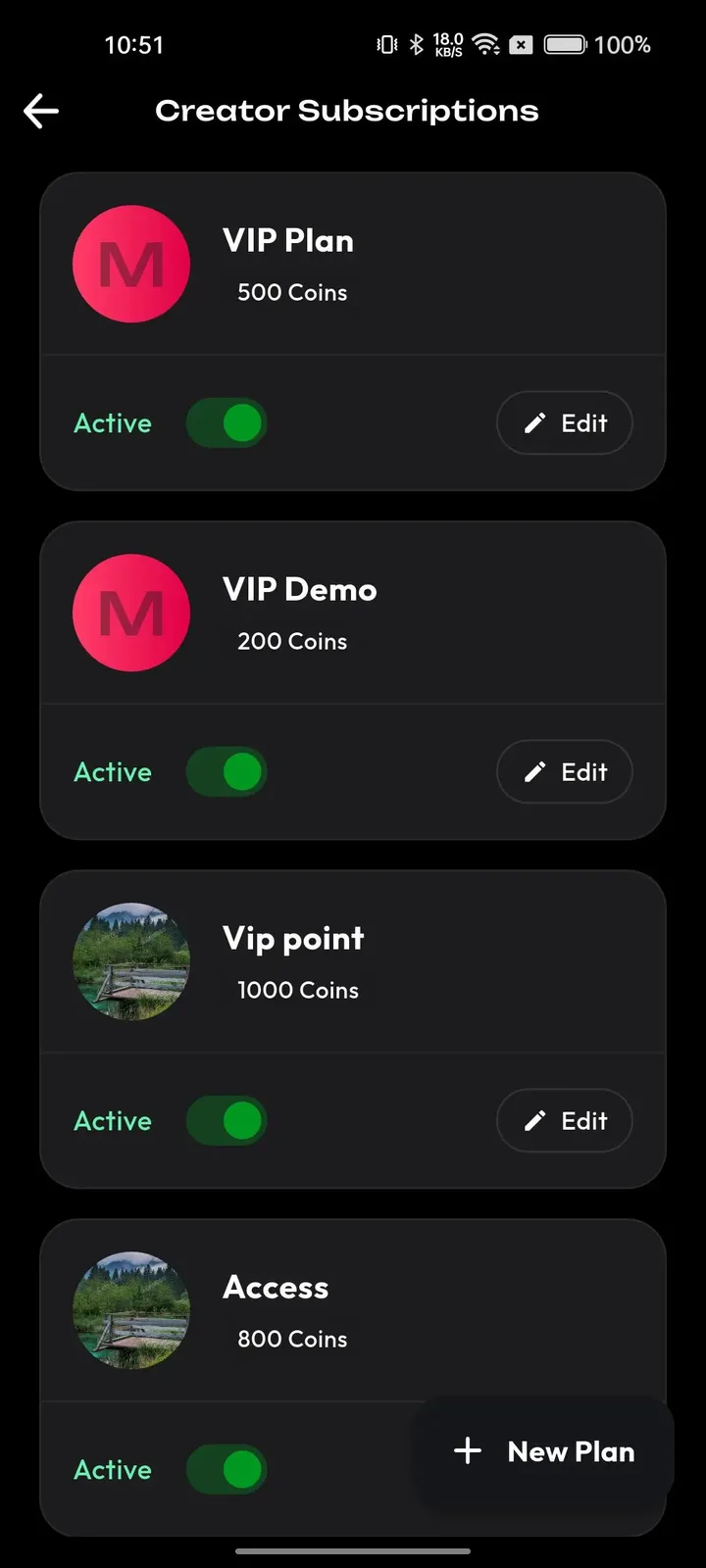
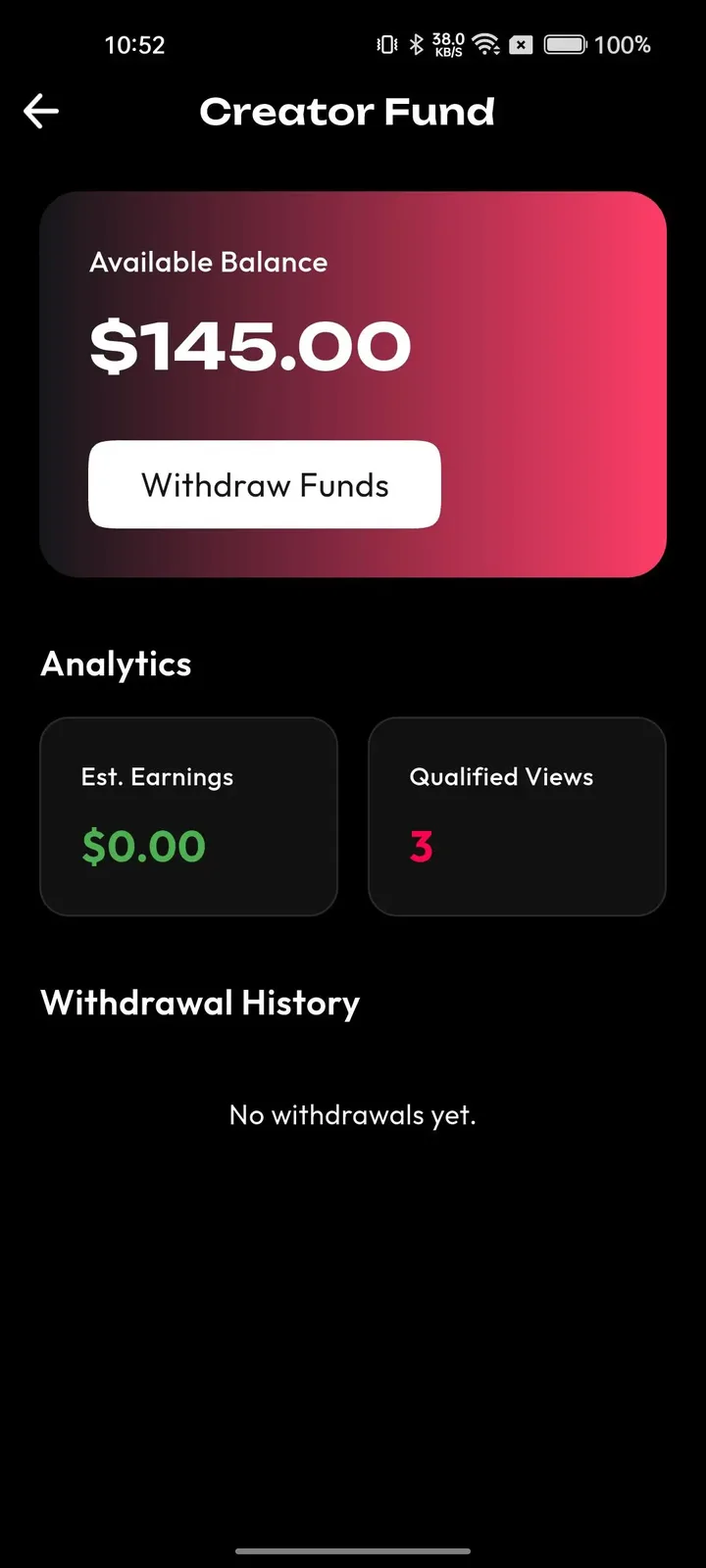
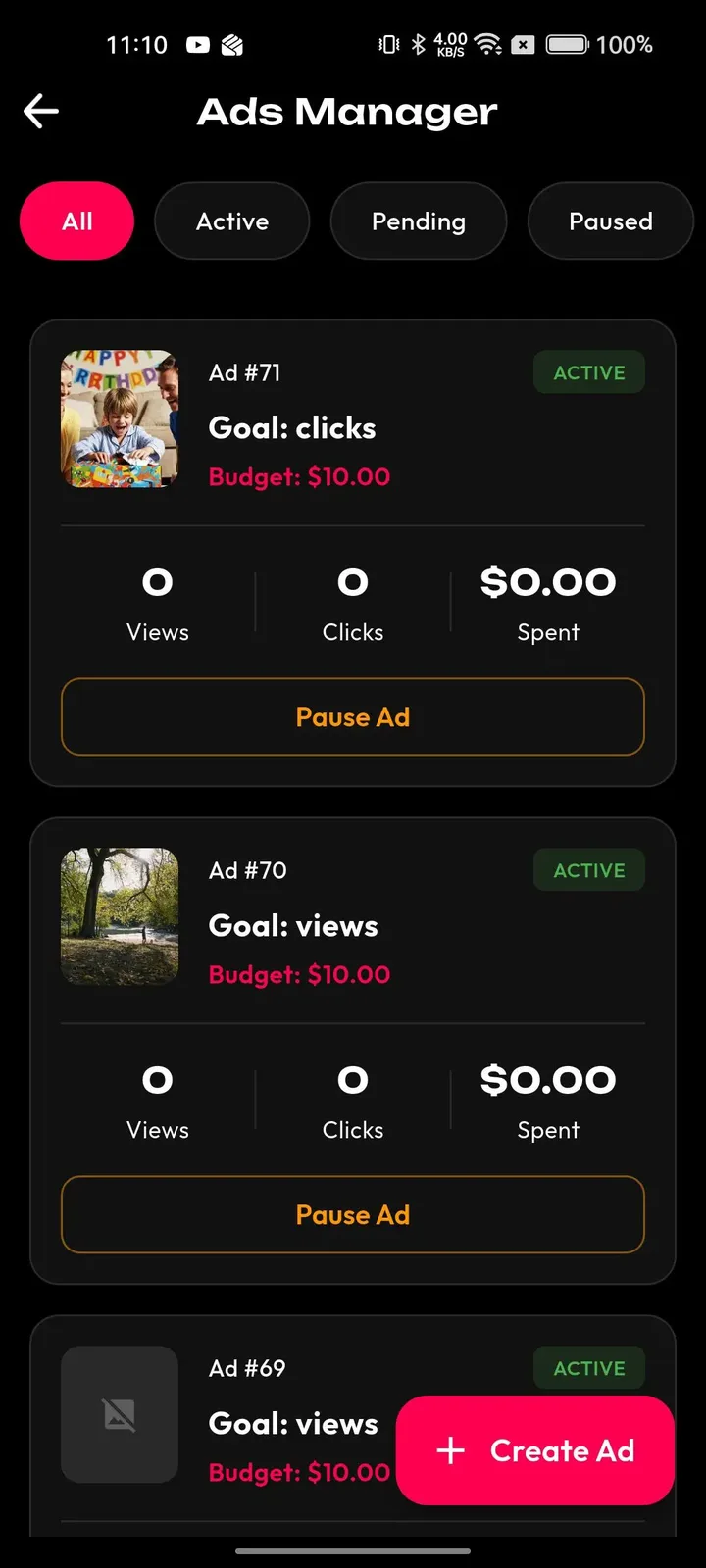
Viewers mostly watch, and sometimes join in. A clip they like should lead to the sound it uses, the other takes of that sound and a one-tap route to making their own. Gifts and comments give them ways to react without recording anything.
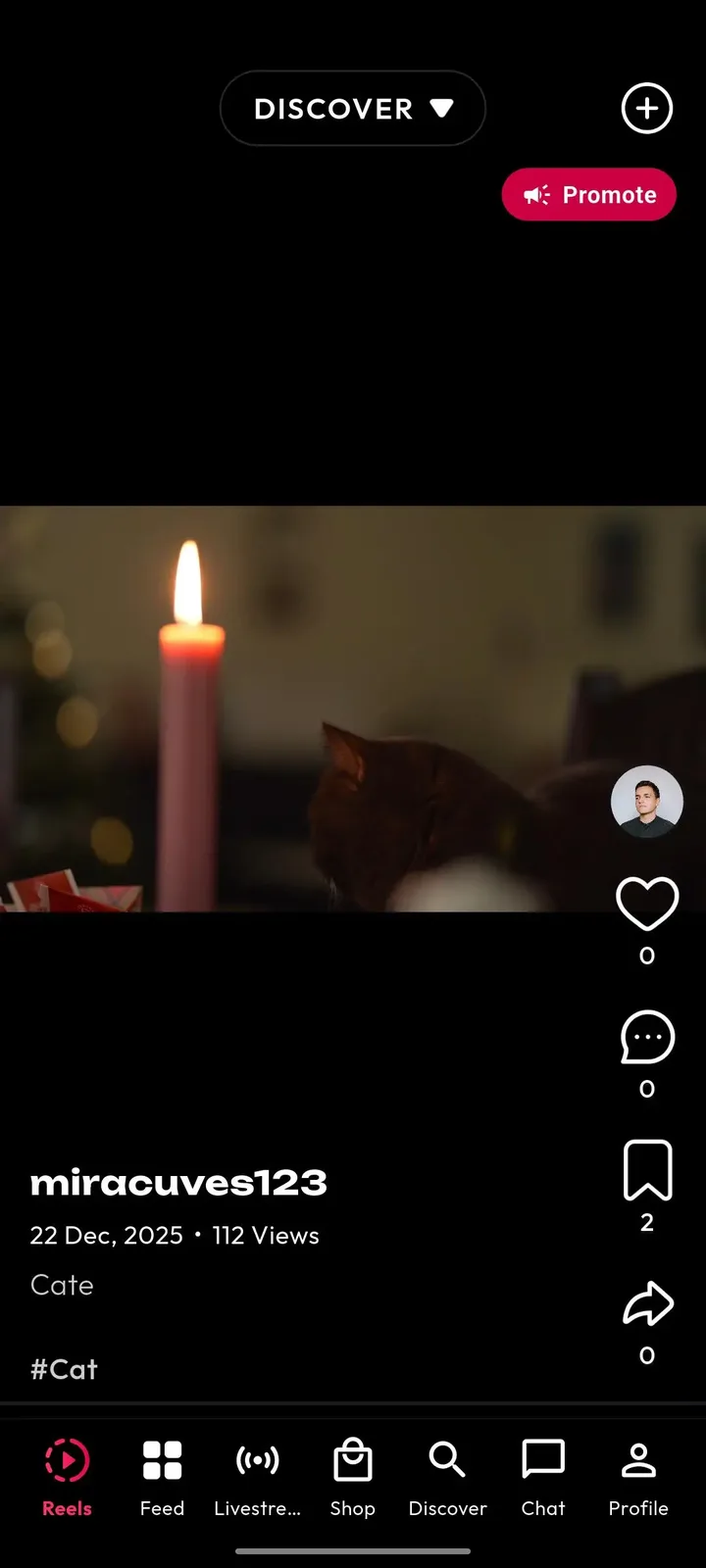
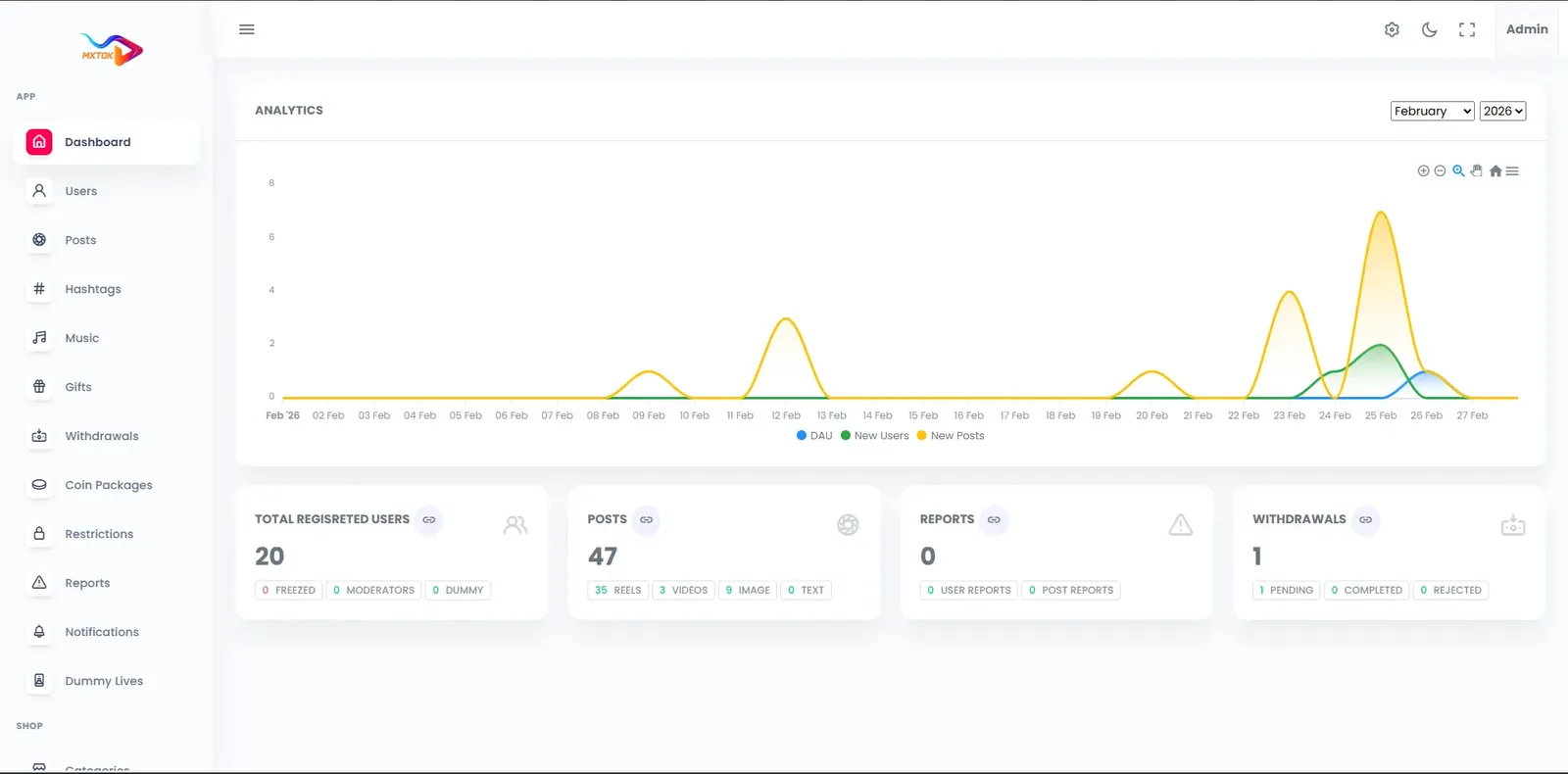
In a sound-led app the catalog and the rights record decide whether the product holds up. Managers need to add audio, tidy categories, promote the right sounds, and answer complaints quickly. The admin panel gives them those levers in one place.
A company can use a short audio line as a campaign hook, then let the crowd perform it. The product gives sponsors a featured placement and a challenge format, while the operator keeps control of which sounds and creators appear.
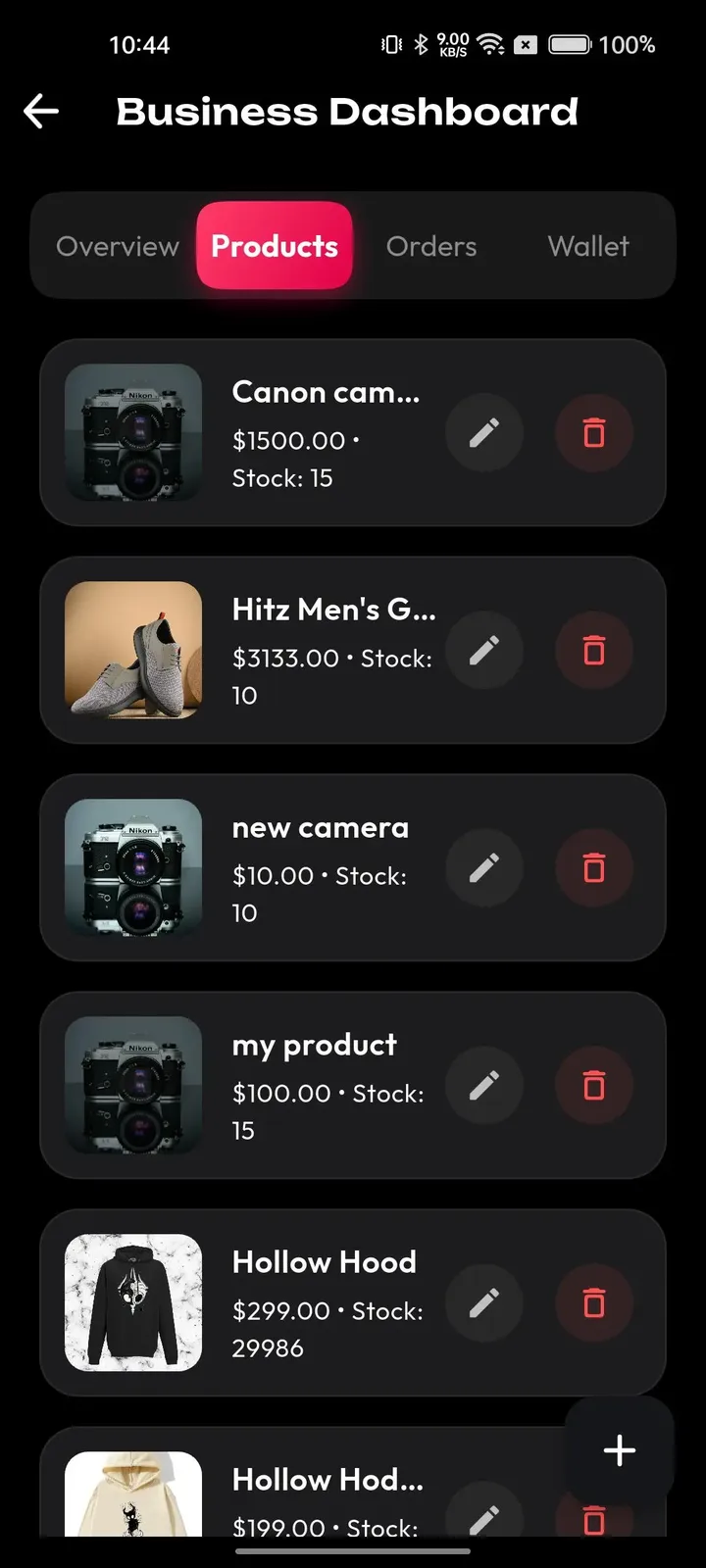
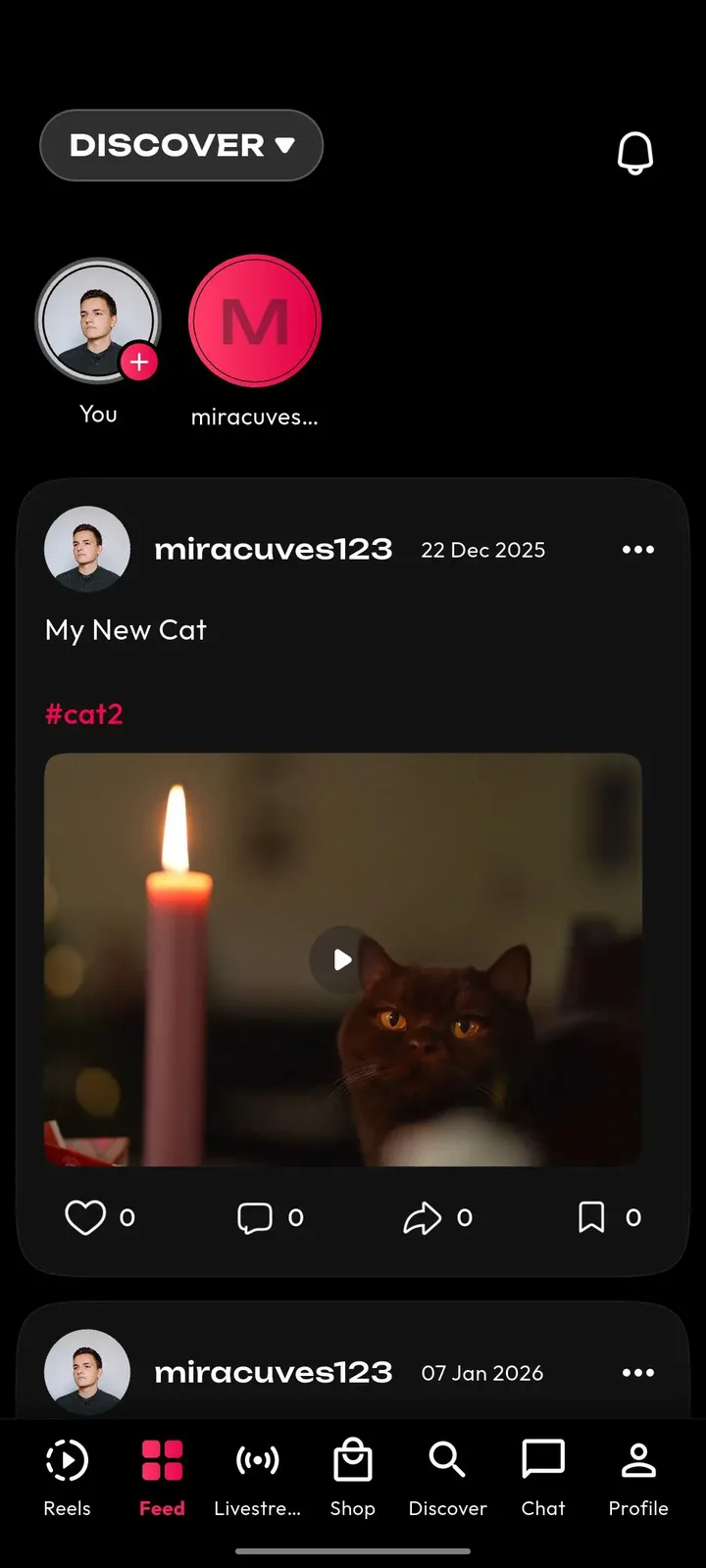
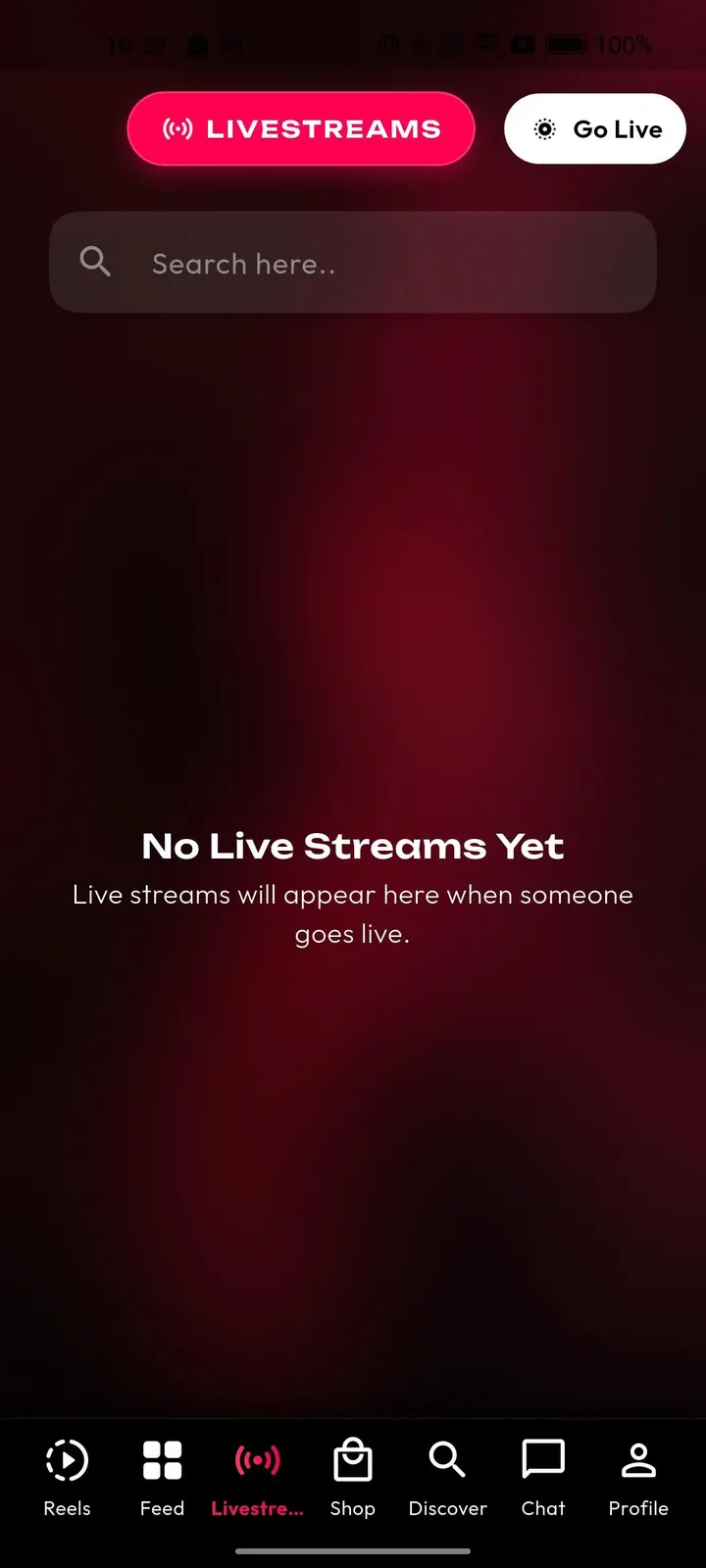
Shared core preview. These screenshots show the shared tiktok platform foundation used for this solution family. Product-specific branding and any additional modules are configured in the build scope.
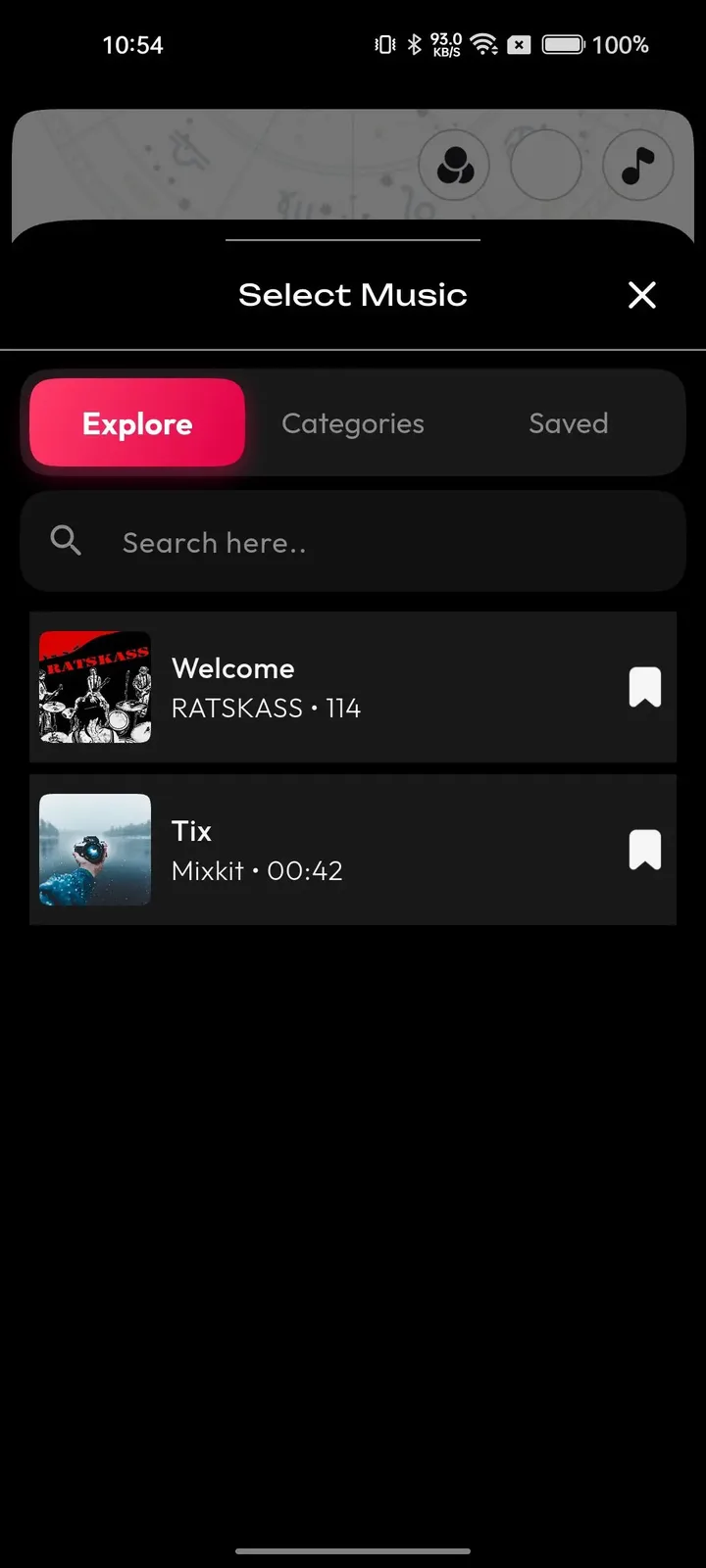
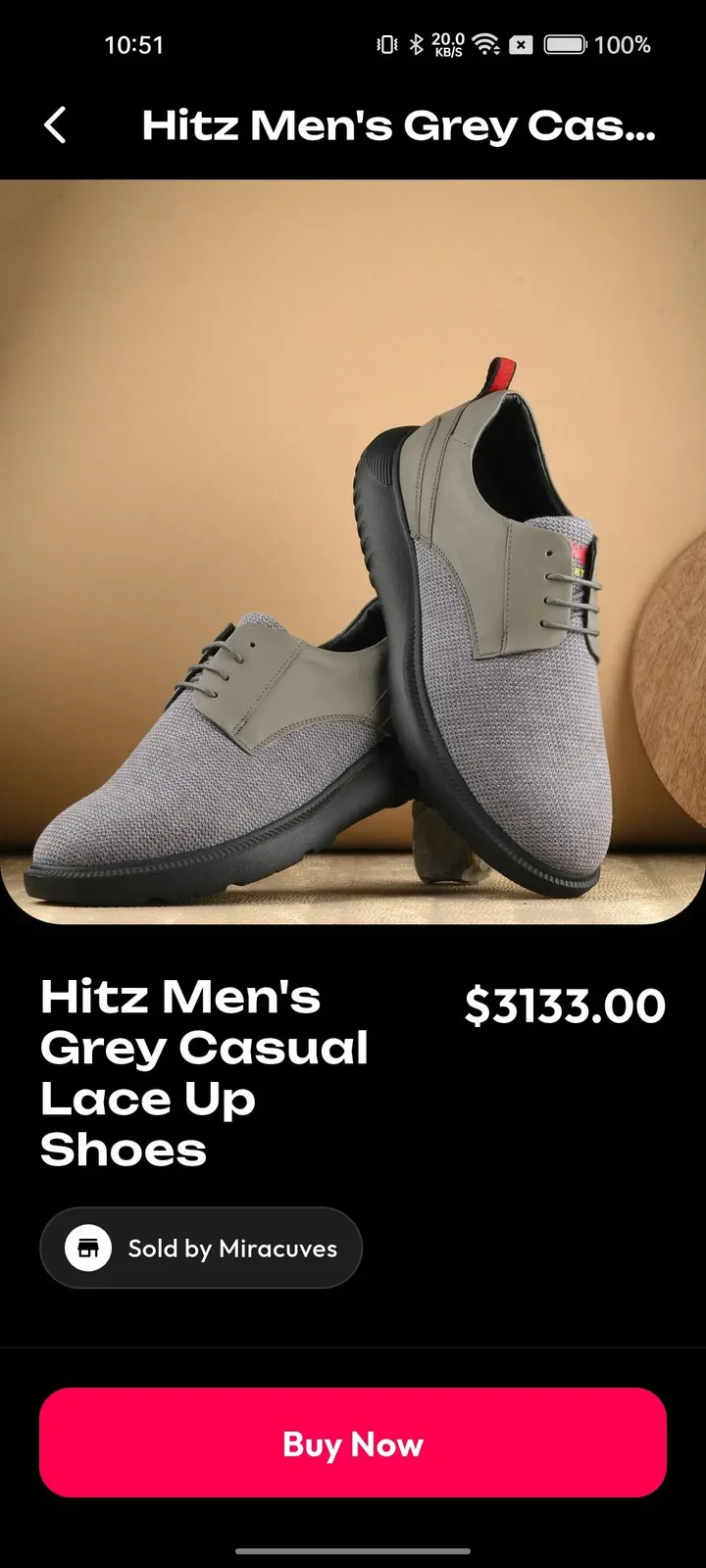
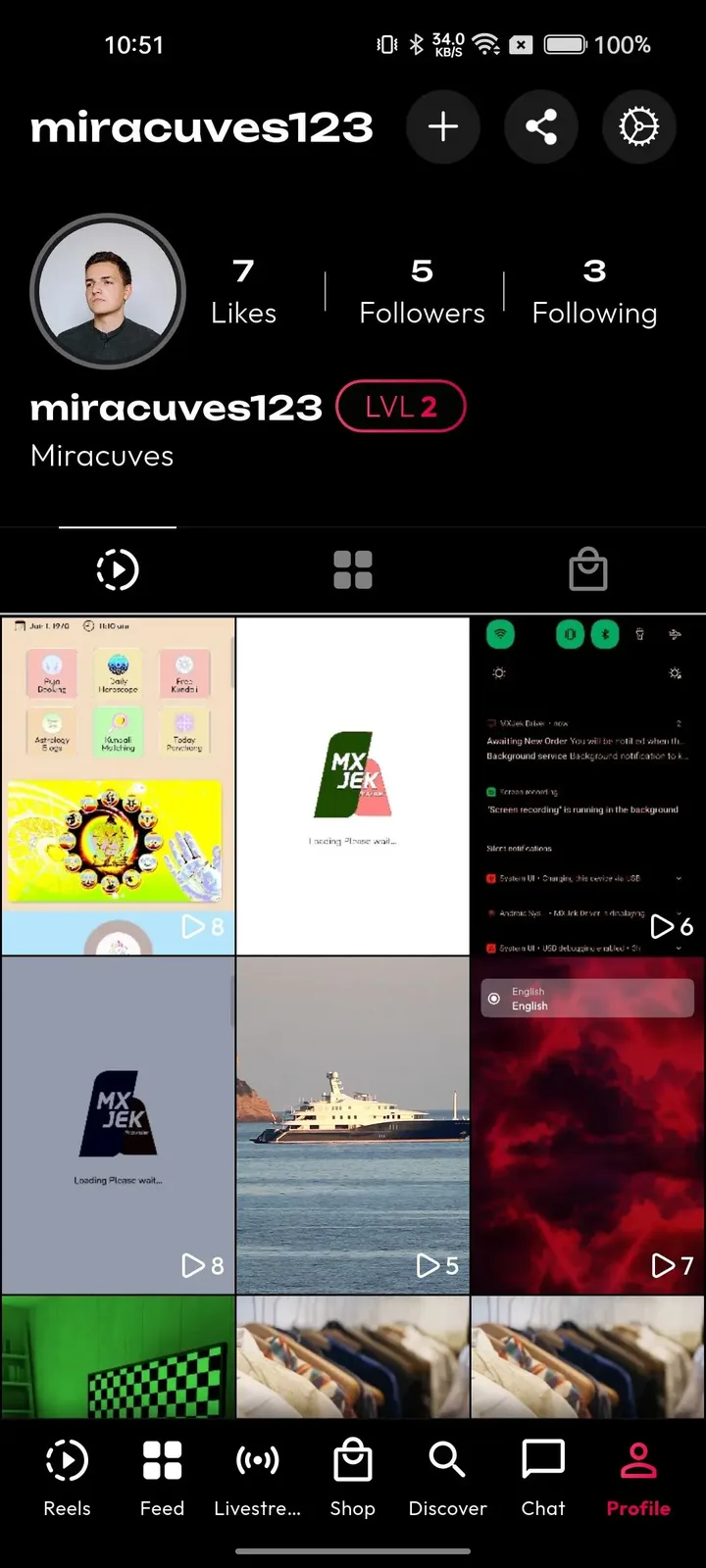
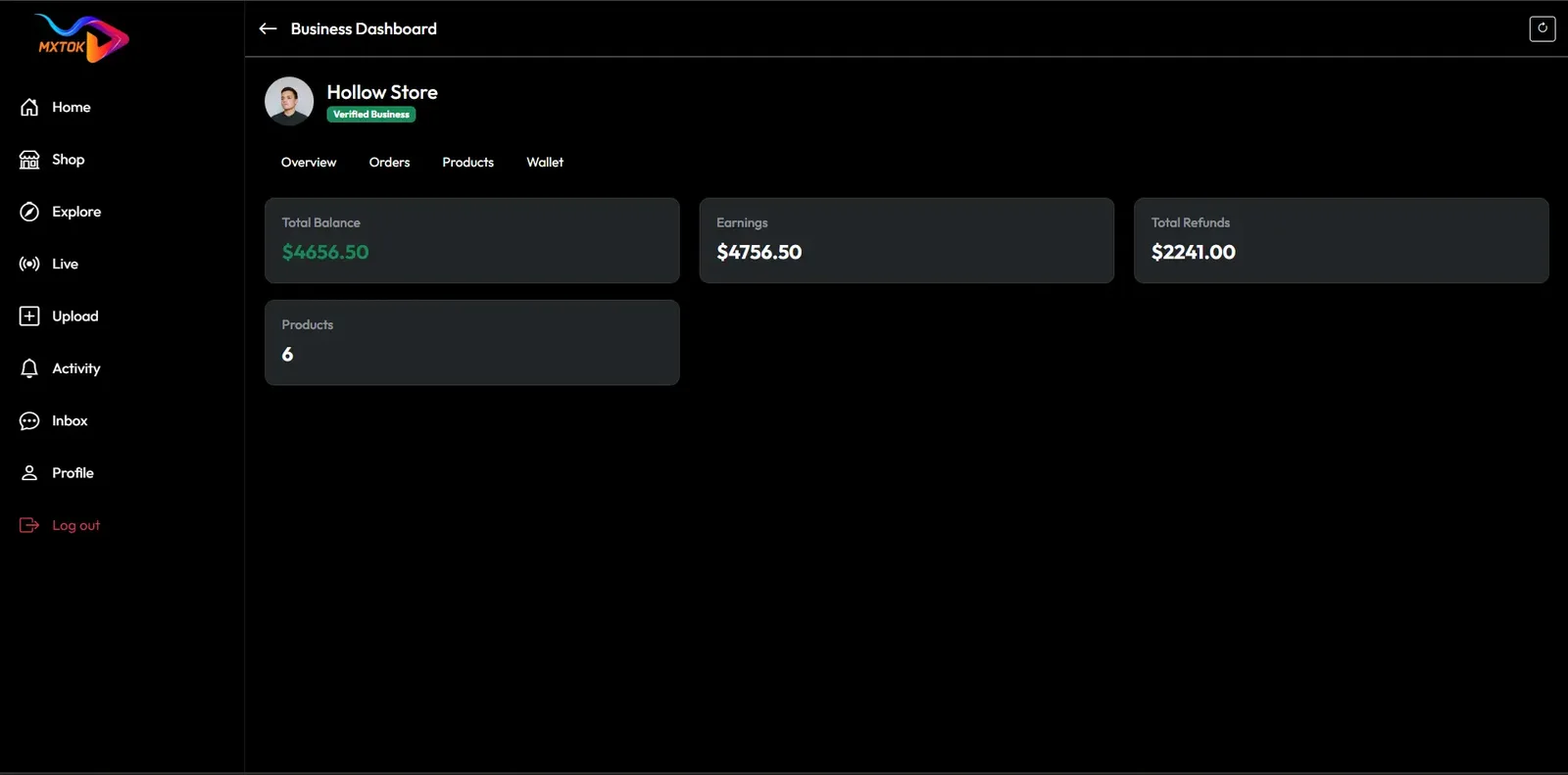
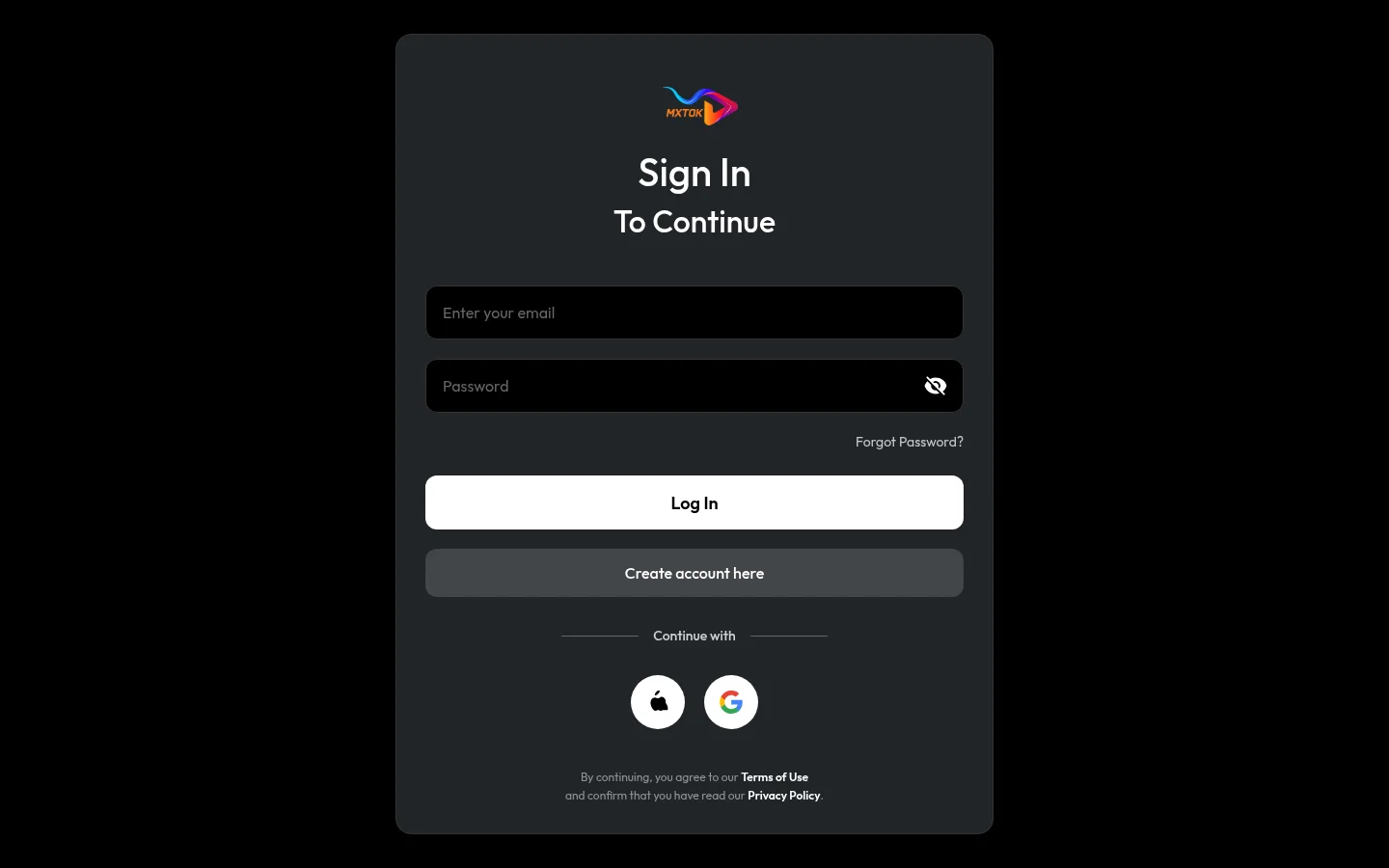
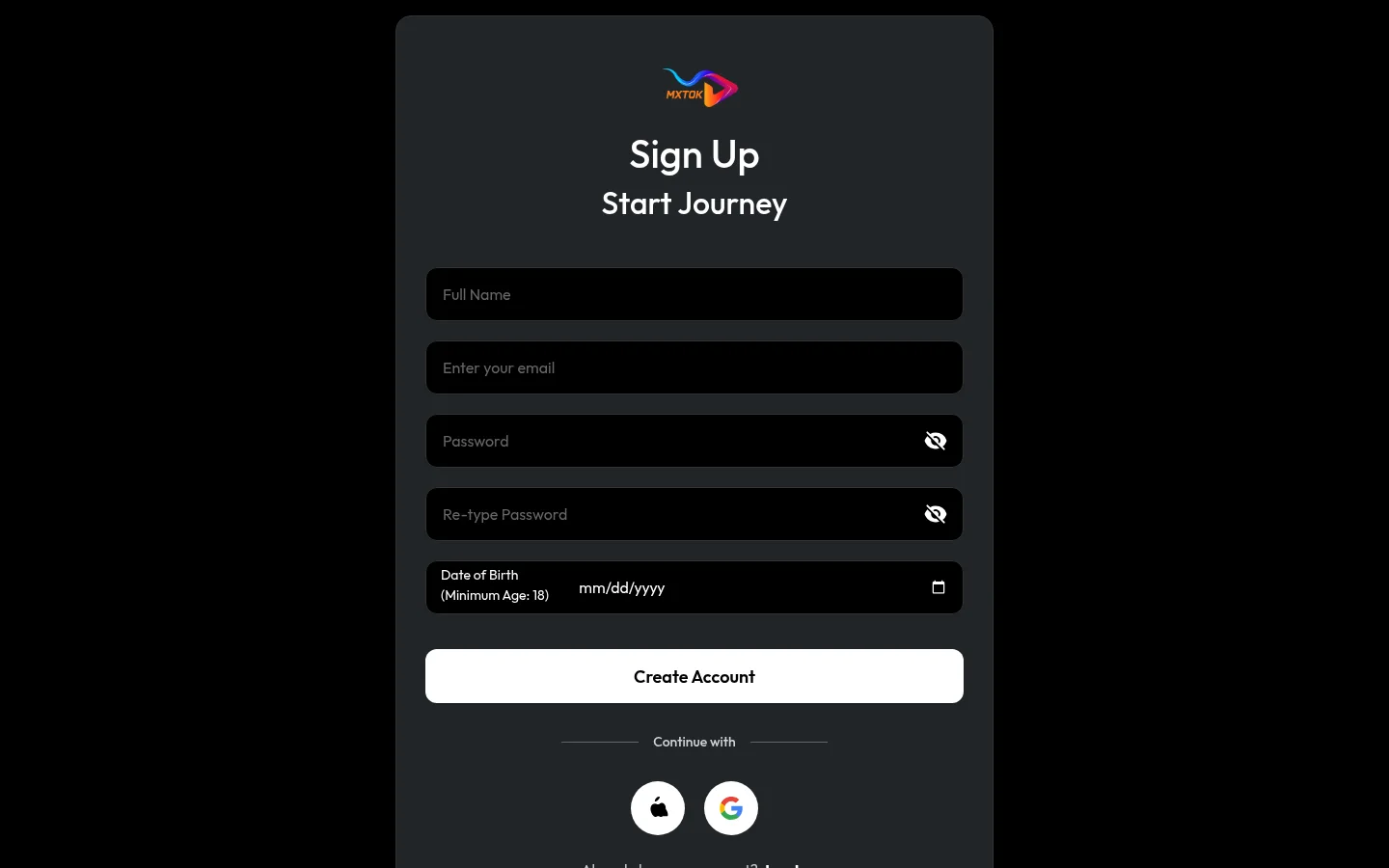
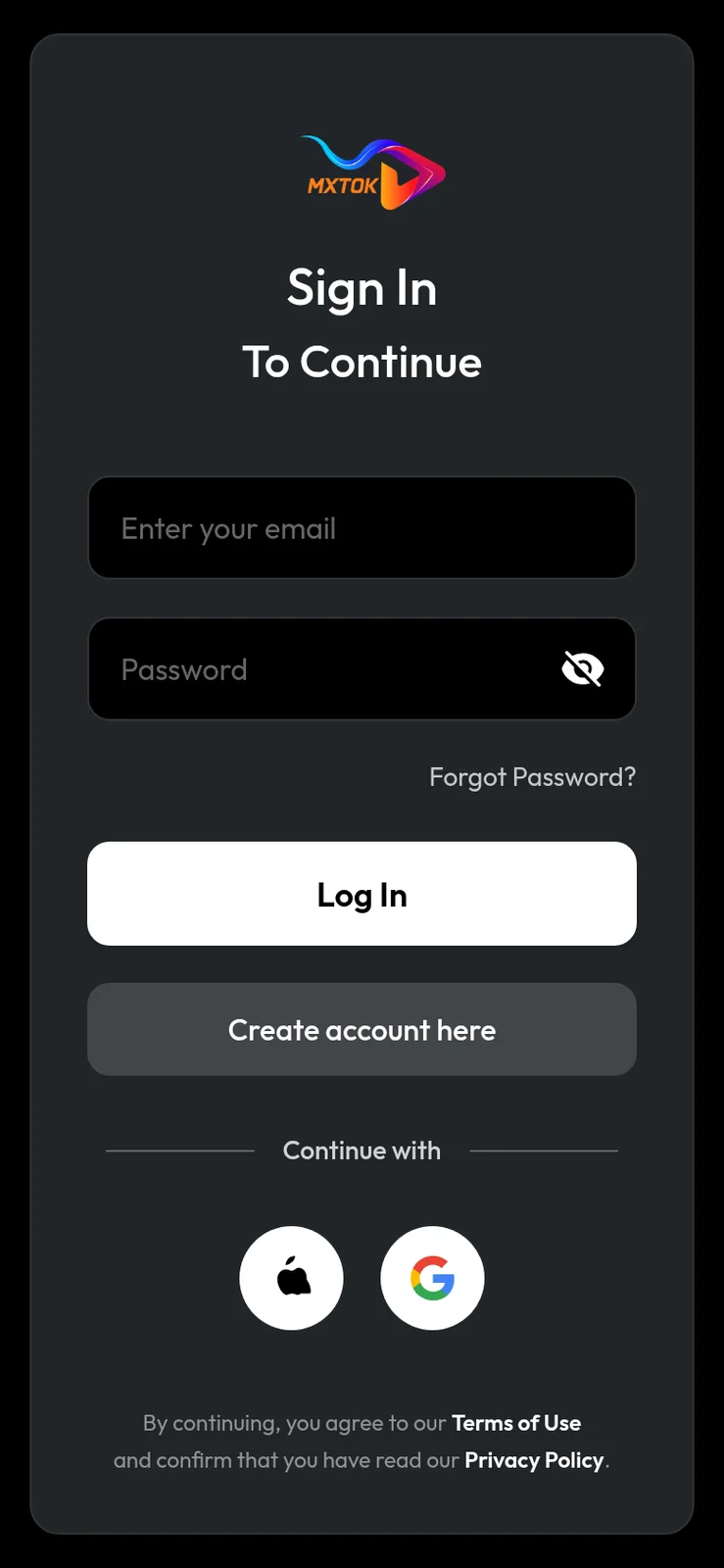
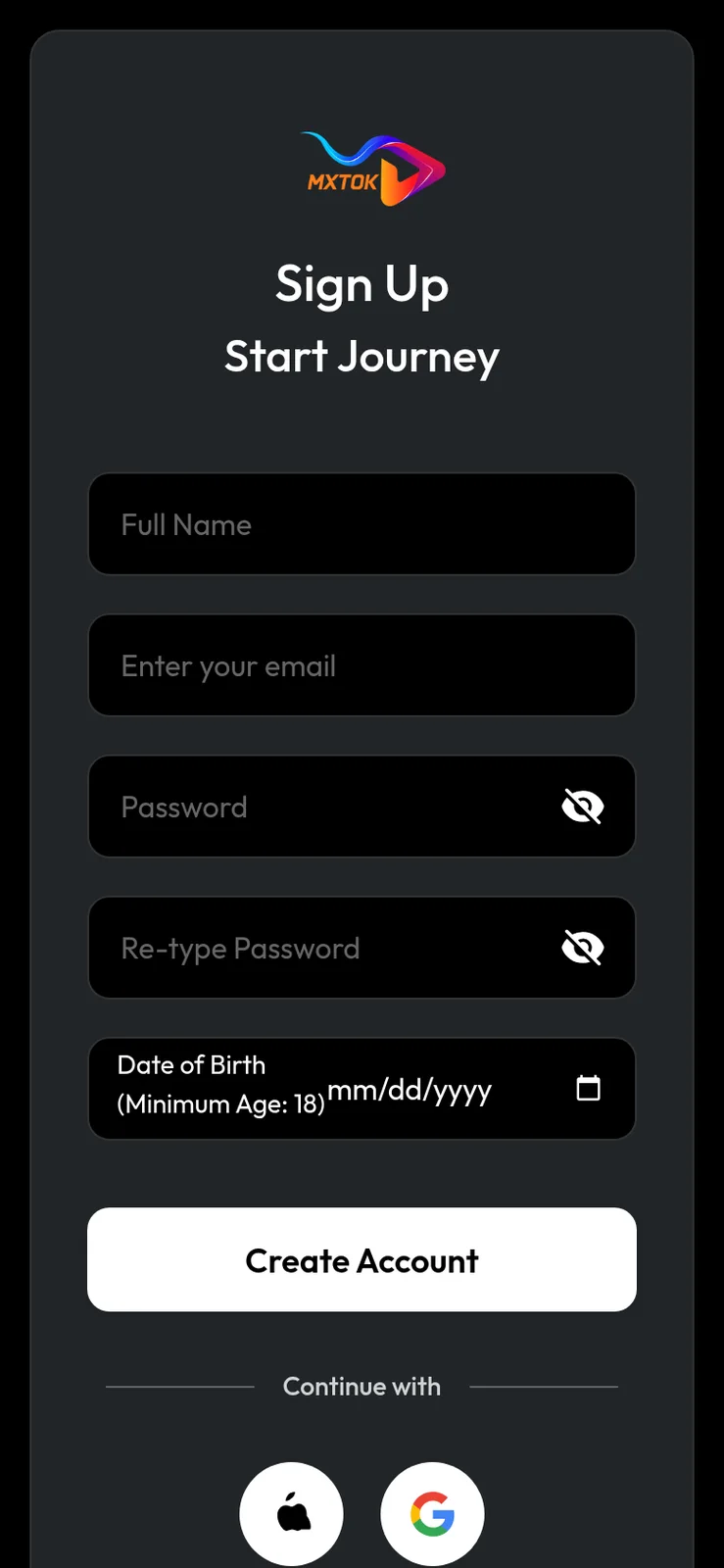
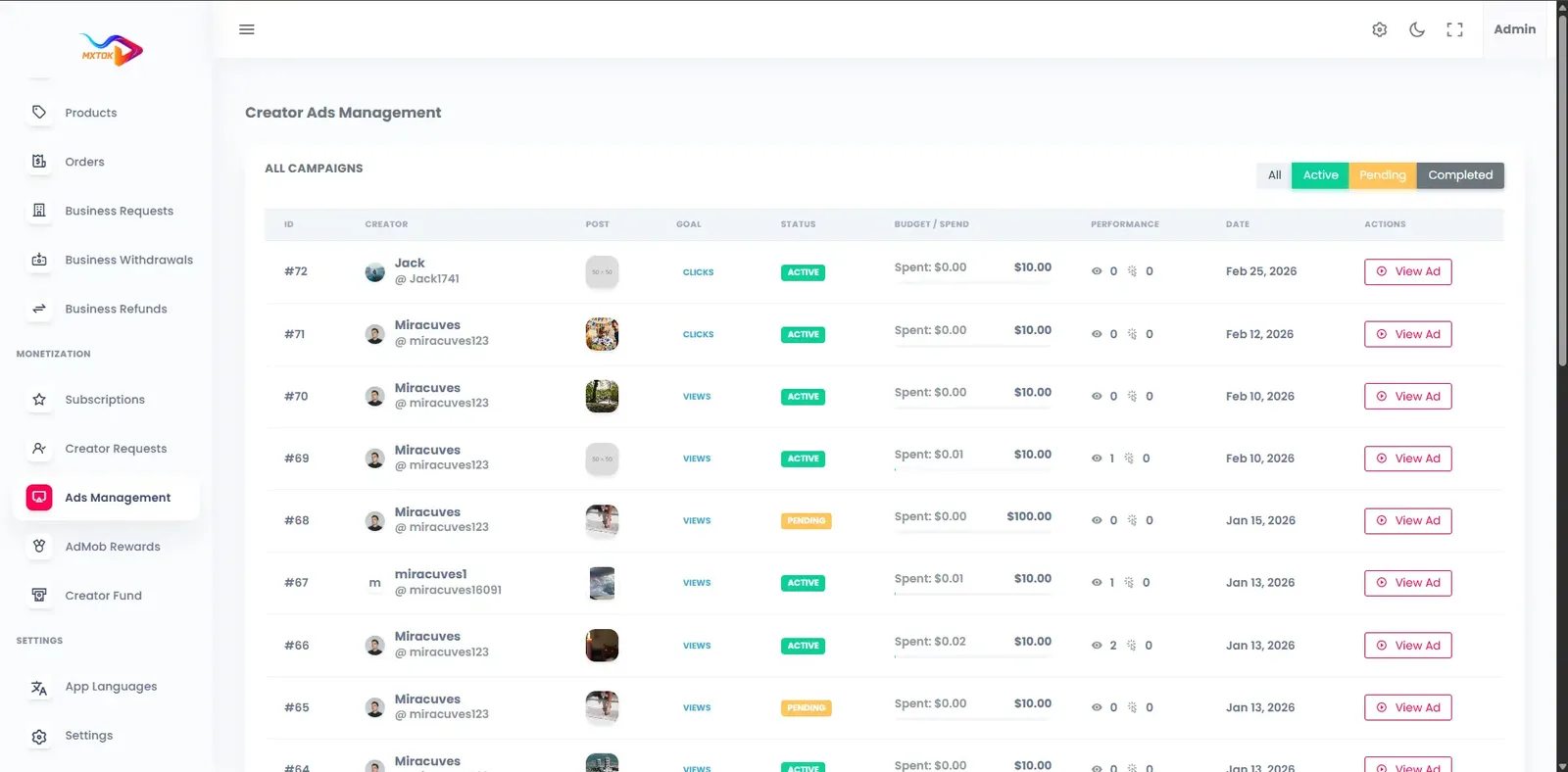
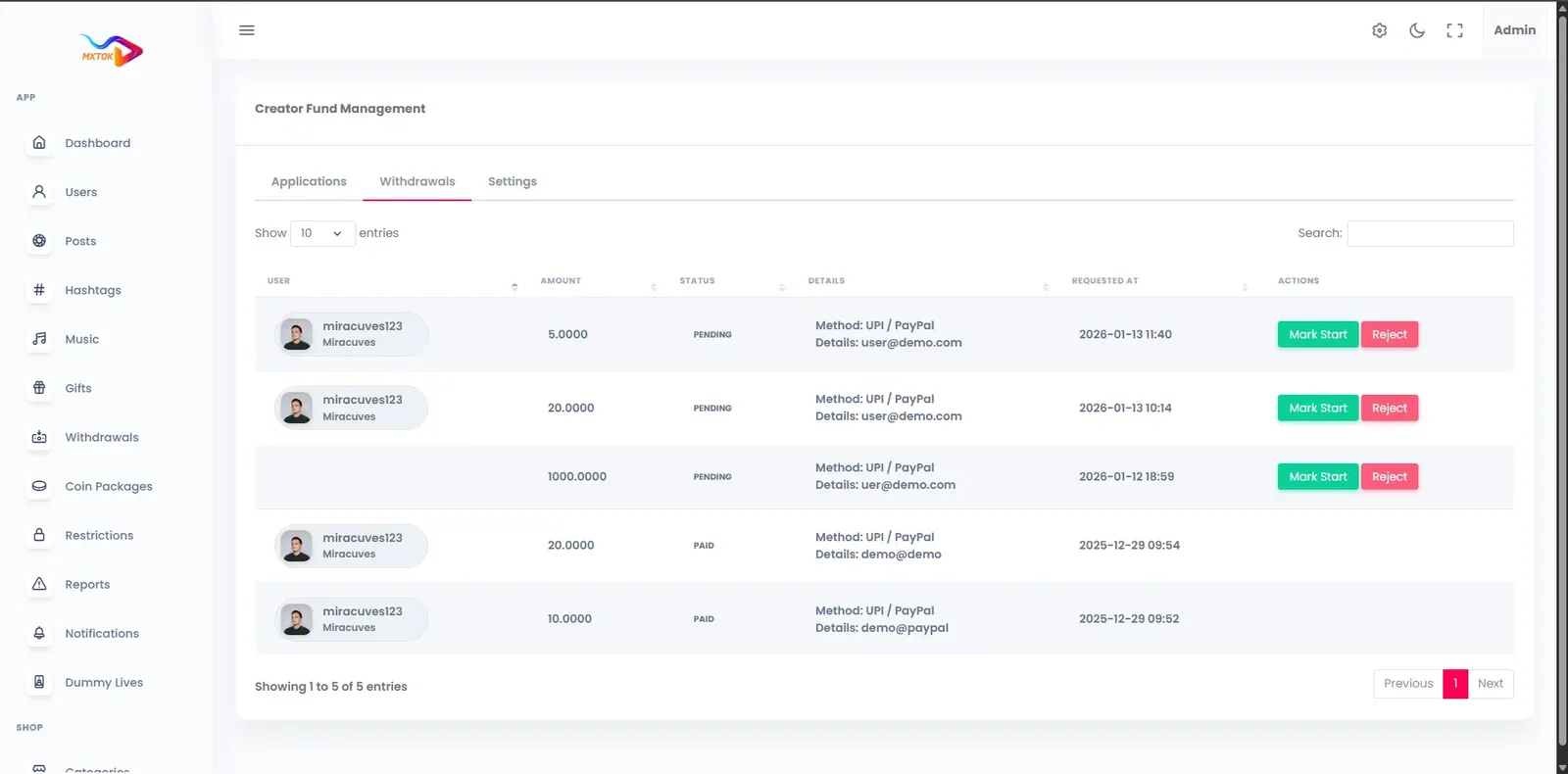
A Dubsmash-style app is the shared short video build from our TikTok product, wearing our demo branding, with the sound library and recording tools at the front. Use a browser for the web app and the admin panel, install the Android build, log in using the shared demo accounts and follow a sound from the picker to the finished clip and on to the catalog tools.
miracuves@yopmail.comUser_321miracuves@yopmail.comUser_321adminAdmin_$32157 features across 4 roles.
Sounds sit in groups for trend, mood and genre, which lets a performer locate a fitting line quickly.
The library can mix worldwide audio with sounds from one region, depending on what you connect and license.
Sounds from royalty-free sources can fill the library on day one, before any rights deal is signed.
Administrators add audio and assign categories in the panel without touching the apps.
When a member records a clip with their own audio, that audio is offered to everyone else as a sound.
A dedicated page gathers every clip made with one sound, which makes a good line easy to follow.
A single action on any clip opens the recorder with the same audio already loaded.
Members can hear a sound before picking it, which keeps the recorder uncluttered.
The start and end of a sound can be moved so the clip contains only the phrase being performed.
Playback can be slowed for practice or sped up for comic effect, then matched to the take.
Several recordings can be captured and compared before one is chosen for publishing.
Switch between selfie and scene views, which suits both solo mimicry and group sketches.
Segments can be cut and joined inside the app, so a longer sketch can be built from short pieces.
Unfinished clips are stored and reopened later, which helps with multi-step sketches.
A creator can post with their own audio instead of any library sound.
Filters change how a performer looks while they mouth the words, adding character to a plain take.
Playful overlays and skin smoothing are available at capture time and after the take.
Augmented reality effects add masks and scenes, supported as lens packs for fun, shareable takes.
A new clip plays beside an existing one so a reply, a harmony or a reaction sits next to the original.
Several clips are joined into a single story, handy for call and response sketches.
Text and tags are added before publishing so a clip is easy to discover.
A performer selects the frame that represents the clip on a profile grid.
Each clip can be public, shown to followers only, or kept private.
Contests gather clips under one tag, usually with one sound and one easy action to imitate.
Banners on the feed bring attention to a challenge, a sound or a sponsor.
Replying to a comment with a short video turns discussion into more clips.
Tagging a person in a clip or comment notifies them and invites them to join.
Standard social signals build the graph that shapes the feed and notifications.
Members can message each other, which helps friends plan a duet or a group clip.
Performers can go live with chat and gifts, using Agora, Wowza, WebRTC and FFmpeg for delivery.
Alerts about replies, new followers and campaigns bring people back to the app.
A recommendation feed learns from completion, replays, likes and shares to order what each person sees.
A new upload goes to a small group first, so fresh performers get a chance to be seen.
Browse trends, hashtags, sounds and creators without needing to know what to search for.
Look up creators, tags and sounds from a single search surface.
Language, interests and optional age and region settings shape early recommendations.
Subtitles assist people watching on mute or in their second language.
Labels and menus appear in multiple languages, and members pick a light or dark look.
The feed can lean toward local content for communities built around one country or language.
A member tops up coins, checks the balance and uses it for gifts throughout the app.
Gifts and stickers can be sent on clips and live sessions with a single tap.
Viewers can pay a performer on a recurring basis for premium access.
Members can block accounts and report clips, sounds, comments, profiles or live sessions.
Each video, profile and sound gets a public web page that crawlers can index.
The web app can be installed from the browser as a progressive web app.
Everything reported lands in one list for reviewers, whatever it was filed against.
Filters mark probable nudity, violence and copyright matches for a human to check.
Reviewers can warn, restrict, remove, strike or ban, and each action is logged.
Optional KYC and verification workflows confirm performers, brands or sellers.
Separate permissions keep content review, payments and analytics apart.
Administrators can protect panel access with a second factor.
Creators request withdrawals and an admin approves each one from a queue.
The panel controls the share you keep from gifts and other creator income.
Branded placements and creator campaigns are managed from the same panel.
Staff choose which hashtags, categories and sounds are highlighted.
Announce app versions, make updates mandatory and set region-wise availability.
Reports cover daily and monthly users, watch time, leading creators and income.
A member opens the library, searches by category or trend, or taps a sound spotted on someone else's clip.
They trim the audio to the line they want, record one or more takes, and add effects.
The clip enters the feed and appears on the sound's own page beside every other take.
Other members duet it, stitch it, reply or use the same sound for their own version, and gifts reach the creator wallet.
Admins add sounds, review rights flags and reports, and read engagement and revenue reports.
| Revenue model | How it works | Who pays | How you earn |
|---|---|---|---|
| Coins and gifts | Members buy coins and spend them as gifts on clips and live sessions; the value moves to the performer wallet after your commission. | Viewer | You keep the commission you set on every gift |
| Sponsored sounds | A brand backs a featured sound or challenge and receives a banner and a stream of entries from creators. | Brand | A negotiated placement or campaign fee |
| Creator subscriptions | A follower pays on a recurring basis for premium access to one performer. | Follower | A share of each recurring payment |
| In-app ads | Standard and rewarded ad units sit around the feed and are managed from the admin panel. | Advertiser | Ad revenue, as your ad partner reports it |
| Creator campaigns | Companies hire performers to make clips with a chosen sound, and the platform tracks results. | Brand | A fee for brokering or hosting the campaign |
| Paid live sessions | A performer charges for access to a live show or sells the recording afterward. | Viewer | A commission on ticket and replay sales |
| Sound packs | Themed audio collections, such as a language set or a comedy bundle, are sold as a purchase. Scope confirmed with us. | Member | The full sale price minus store fees |
Value travels in small hops. A member tops up coins, spends them while watching or performing, and each gift credits the performer once your commission is taken. A performer then requests a withdrawal for an admin to approve. Subscriptions share the same wallet. Secure APIs carry purchases, balances update as events happen and each payout leaves a log entry for your finance staff.
| Gateway | What it covers |
|---|---|
| Other | |
| Gateway of your choice | Plugs into the API layer using a merchant account in your name, in any region your processor serves. |
| Apple and Google billing | Coin purchases made in the apps pass through the stores, which keep a share you should price in. |
The product flags likely copyright matches, supports takedowns and accepts royalty-free sources, yet it cannot grant a license. Whatever you import, you must hold the right to use. Decide early whether creator audio, quotes and film lines are allowed, give rights holders a way to contact you and respond fast when a notice arrives. Keep a record of how each sound entered the library.
Lip-sync clips put one person's face with another person's voice. That is the charm of the format and also its main risk. Write a short rule on impersonation, parody and misleading edits, tell members what happens when a clip imitates a real person to deceive, and train reviewers to apply it the same way each time.
Reports on clips, sounds, comments, profiles and live sessions go to one queue, and Automated checks mark likely nudity, violence and copyright matches ahead of review. Warnings, removals, strikes and bans are logged. The software supplies the tools, while you supply the people, the written rules and a response time that members can trust.
Onboarding includes optional age and region choices, and verification workflows exist for performers and brands. Stricter age checks and country-specific access rules can be arranged as tailored work, with the scope confirmed with us. Which rules apply depends on where you operate, and meeting them is your responsibility as operator.
Every clip can be public, followers-only or private, members can block others, and the data sits in a database in your own cloud account rather than ours. Publish a privacy policy that matches what the app collects, explain how voice recordings are stored and set a retention period you can honor.
Secure APIs guard purchases and wallet changes, administrators can use two-factor login, and role-based access limits who can see payouts. Cloudflare or Akamai sit in front of the delivery layer. Keep software updated, rotate credentials after staff changes and review admin access at set intervals.
Anything reported, whether a clip, sound, comment or profile, goes to a review list where staff can warn, remove, strike or ban, and each step is recorded.
| Layer | Built with | Hosting note |
|---|---|---|
| Mobile apps | Flutter (Android and iOS) | Flutter builds for Android and iOS share most of their code. |
| Web app | PHP and Laravel, with optional PWA | Laravel serves the web app, the mobile apps and the admin panel from one codebase. |
| Backend and API | Laravel | |
| Database | MySQL or MariaDB | MySQL or MariaDB holds accounts, clips, sounds, wallets and moderation records. |
| Live and media | Agora, Wowza, WebRTC and FFmpeg | FFmpeg handles trimming, merging and encoding so clips and sounds play smoothly on many devices.Agora, Wowza and WebRTC carry live sessions to viewers with low delay. |
| Cloud hosting | AWS, GCP or DigitalOcean | AWS, GCP or DigitalOcean, set up by us in an account that belongs to you. |
| CDN and protection | Cloudflare or Akamai | Cloudflare or Akamai cache media near viewers and shield the origin from abuse. |
You run the platform in a cloud account of your own, so the bill and the control are yours. Sound-led video is watched repeatedly, which makes bandwidth the line item to watch. The rows below describe each layer and the technology used.
Sound is both the attraction and the main legal exposure of this format. The table lists common audio sources, who must agree to your using them, and how the product helps once they are in. It is orientation for planning, not legal advice, and local law may add duties.
| Audio source | Who must agree | What the product gives you |
|---|---|---|
| Royalty-free libraries | The library owner, under its stated terms | Import tool and categories to organize them |
| Film and show dialogue | Producers, studios and sometimes performers | Flags, removals and a logged review trail |
| Commercial music | Labels, publishers and collecting societies | Copyright match flags; licensing stays with you |
| Audio recorded by members | The member, under your terms of use | Reusable creator sounds with takedown controls |
| Brand jingles | The brand that owns the line | Challenges and featured placements |
| Spoken-word and podcast clips | The speaker and the publisher | Review queue and removal controls |
Because a lip-sync clip pairs one person's face with another's voice, moderators face questions that ordinary video apps rarely meet. Settle these points in writing before launch so reviewers decide the same way each time.
In a sound-led app the catalog is the product people see first. A thin or random library makes the recorder feel pointless, while a tight one with a clear theme makes a visitor want to try a line within seconds. Decide the theme, the languages and the tone before deciding on colors or icons, because those choices shape every sound page and every featured slot.
The catalog also sets your cost and risk. Royalty-free audio keeps both low and limits variety. Licensed audio widens appeal but needs agreements and records. Creator audio grows fastest and needs the most moderation. Most operators blend all three, starting safe and loosening gradually as review capacity grows, which keeps surprises small while the community is still young.
Ready-made, one-time
$3,999
Live in 6 working days from kickoff
Words appear on the recording screen in time with the sound, so performers can mouth the phrase without memorizing it.
Scope confirmed with usA form for rights holders to claim or contest a sound, with a review step for your staff.
Scope confirmed with usMembers find a sound by typing words from the line rather than only by category or title.
Scope confirmed with usPitch and voice changers for comic takes, applied to the creator audio track.
Scope confirmed with usTighter identity and age steps for markets with firm rules, built around your policy.
Scope confirmed with usSeveral performers share one live room, useful for sketch shows and panel battles.
Scope confirmed with usA login for sound suppliers to upload audio and read usage reports about their own sounds.
Scope confirmed with usPeople who search for this app expect a specific list of mechanics, so this table starts with the sound and performance tools and then moves to the modules around them. Each row states whether it ships, whether we set it up for you, or whether it needs scoping. Anything marked Included is part of the delivered product.
Audio sorted by trend, mood and genre, ready for members to browse.
Lets you open the library with audio that needs no separate rights deal.
Administrators add and categorize audio from the panel.
A member's recorded audio becomes a sound others can pick.
Cut the audio to one phrase and slow it for practice.
Several takes with either camera, then keep the best.
Face filters, stickers, beauty modes and AR lens packs.
Answer a clip side by side or join clips into one piece.
Contests around one sound, with featured banners on the feed.
Ranking learns from watching behavior and tests new uploads on small groups.
Members buy coins, send gifts, and creators track earnings.
Recurring payment for premium access to a performer.
Performers go live with chat and gifts to a watching crowd.
AI-assisted filters mark likely matches for staff review.
One queue for reports, with logged warnings, removals and bans.
Subtitles for viewers who watch without sound.
Text appears in time with the sound; we set it up for you.
Members find a sound by typing words from the line.
A structured way to contest a sound, with a staff review step.
Pitch and character voices applied to creator audio, built after scoping.
A login where sound suppliers upload and read usage reports.
What drives the cost of a sound-led video app is not the screen with the record button. It is the media pipeline behind it, the audio library and the people who keep that library lawful. Building from nothing means paying engineers to create recording, trimming, sound pages, a ranking feed, wallets and an admin console, and then paying again to test them on many phones. Renting a hosted builder is quick, yet it fixes the format and keeps the audience data on someone else's system. Owning a ready-made codebase moves most of the engineering spend into a single purchase and leaves you with the recurring costs that every video product carries.
| Factor | Scratch build | SaaS | GetFame |
|---|---|---|---|
| Time to launch | A long engineering project before any member sees it | Fast, inside the vendor's format | Ready-made build live in about 6 working days |
| Sound features | Library, trimming and sound pages designed from zero | Limited to what the vendor offers | Library, trim tools and sound pages already built |
| Source code | Yours, once written | Not provided | Full source delivered |
| Rights handling | Your team designs flags and takedowns | Vendor policy applies | Copyright flags and takedown tools in the panel; licensing stays with you |
| Audience data | Held in your systems | Held on the vendor platform | Held in your own database |
| Ongoing fees | Hosting plus a permanent team | Recurring subscription or revenue share | Hosting and services only, with no revenue share |
| Changing the product | Anything, at your own cost | Only through vendor settings | Modify modules yourself or have us scope tailored work |
Running costs. Plan separately for cloud hosting, file storage, delivery bandwidth, live streaming usage, fees charged by payment gateways, the store cut on coin purchases, Apple and Google developer accounts, audio licensing and moderation staff. The platform price does not include any of these, and several grow with viewing time rather than with the number of installs.
A lip-sync app looks like a simple recorder, but the pieces around the recorder are what take time. This table sets the effort of building each piece against what the ready-made product already gives you, using plain effort words rather than figures.
Build it yourselfSchema, categories, ingest tools and previews designed and tested over several sprints.
Ready-madeA categorized library with a staff import tool.
Build it yourselfAudio and video timelines that stay aligned across many phones, a specialist task.
Ready-madeTrim and speed control sit inside the recorder, so no outside editor is needed.
Build it yourselfAggregation of every clip per sound, with ranking and moderation hooks.
Ready-madePages that gather all takes of one sound.
Build it yourselfCamera handling, takes, effects and drafts for two operating systems.
Ready-madeMulti-take capture with filters and drafts.
Build it yourselfA ranking system that needs data and tuning before it feels right.
Ready-madeBehavior-based feed with test audiences for new clips.
Build it yourselfSide-by-side video compositing and merging on the device.
Ready-madeBoth formats are built into the recorder and ready to use from day one.
Build it yourselfLedger design, store billing rules and payout logic needing careful testing.
Ready-madeCoin purchases, gift sending, earnings tracking and admin sign-off on every withdrawal.
Build it yourselfMatching, review queues and takedown workflows built from scratch.
Ready-madeCopyright flags, a review queue and removal controls.
Build it yourselfA full back office for catalog, payouts, reports and roles.
Ready-madeA panel with eight control areas and role-based access.
Build it yourselfA real-time media stack with chat and gifting, usually a team effort.
Ready-madeLive rooms on Agora, Wowza, WebRTC and FFmpeg.
Dubsmash was a consumer app that let people film themselves over short audio clips. It closed in February 2022, so the comparison below is between that remembered model and a platform you would run today. It describes how the model worked and how yours would differ, with no figures about the original business.
| Aspect | The Dubsmash model | This platform |
|---|---|---|
| Core activity | Lip-syncing to clips of songs, films and quotes | The same activity, plus duets, challenges and live sessions |
| Who owns the audience | The company behind the app | You, in a database in your own cloud account |
| Sound catalog | Curated by the service | Curated by you, with staff imports and creator audio |
| Rights arrangements | Agreements held by the service | Agreements you make and manage yourself |
| Creator earnings | Set by the service | Gifts, subscriptions and campaigns on terms you write |
| Status today | Standalone app closed on 22 February 2022 | Launches new, on code that you hold |
| Branding | Its own name and design | Your name, logo and domain on every surface |
| Niche focus | A general entertainment audience | Narrowed to a language, a genre or a community |
Impressionists and sketch performers lip-sync famous lines and original gags, then watch other people remake them.
Learners copy a short phrase aloud, record it and compare their take with others using the same sound.
A library of local film lines and sayings, licensed by you, gives one community its own shared jokes.
Fans of a show, team or creator trade audio snippets and make clips that quote them.
A company releases a short jingle or tagline and invites people to perform it for a prize.
A general app competes with giants, so the strongest launches pick one audience that already loves quoting and imitating. These ideas show what each audience pays for and what to set up first.
Fans of local cinema enjoy acting out famous scenes. Viewers buy coins to reward the best impressions, and sponsors sometimes pay for featured lines. Start with licensed dialogue from willing studios and a single language, then grow the library as performers upload more.
Learners repeat short phrases in a new language and compare takes. They may pay for premium sound packs or a tutor's subscription. Configure categories by level and topic first, and recruit teachers who record original sounds that learners can copy.
Comedians lip-sync to their own routines and invite others to remake the joke. Fans tip with gifts, and clubs sponsor challenges. Turn on duets and challenges first, then give comics a creator wallet and a profile that links to their shows, so a laugh in the feed can become a ticket sale elsewhere.
Amateur singers perform to licensed backing audio. Audiences gift favorites and subscribe to regular performers. Settle the music licensing before launch, since backing audio is the costly part, add live sessions early so singers can perform to a crowd and use challenges to keep people returning each week.
Supporters mouth chants, commentary lines and player quotes around match days. Brands sponsor challenges tied to fixtures. Prepare the sound categories by team, plan a calendar of events around fixtures and assign moderators for the busiest hours, since match day traffic arrives in sudden bursts.
A company releases a short audio line and asks the crowd to perform it for a prize. The brand pays for the feature slot and the entries it collects. Set up a hashtag challenge, a featured banner and a reporting view before the campaign starts.
Anyone who wants lip-sync video has other routes than buying a white-label app. Each has a reasonable case, and which suits you turns on whether you aim to own an audience or rent one. Here is how the main options compare in plain terms.
Large public networks
Creators who want existing reach and no setup
You follow their rules and cannot own the audience
Feature inside a community site
Communities that already gather on that site every day
No separate brand or app, and its policies apply
Self-hosted code
Teams with developers who like to assemble parts
You build the sound tools, wallet and mobile apps
Subscription software
Quick experiments by teams that need little customization
Fixed formats and recurring fees without source code
Bespoke project
Companies with unusual requirements and larger budgets
Slow to start and costly to change
Buying a white-label platform makes sense for an operator who wants a lip-sync community of their own. You pick the sounds, write the rules, set the gift prices and keep the audience data. The cost is that you also take on moderation, rights and marketing, which no software removes. Choose it when a specific audience is the asset.
Begin with the catalog, not the code. A lip-sync app is only as inviting as the first thirty sounds a new member sees, so decide what those sounds will be before you configure anything. Pick a narrow theme, such as comedic movie lines in one language or football chants, and gather audio you are allowed to use.
Next, decide who performs. Recruit a small circle of performers who already enjoy mimicry or sketch comedy and give them early access. Their first clips teach newcomers what a good take looks like and populate the sound pages that visitors will land on from search.
Finally, set the rules before the crowd arrives. Write what happens with impersonation, copyrighted audio and offensive material, assign reviewers and publish a way for rights holders to reach you. The software supports every step, but a launch without these decisions turns into a cleanup job within weeks.
A song is long, owned by an artist and tied to a label. A sound clip is a few seconds of a film line, a quote, a joke or a hook. That difference changes the product. Clips are chosen for a punchline or an emotion, they are easy to repeat, and many are never meant to be heard as music at all.
It also changes the rights picture. Dialogue from a film or show belongs to its producers, the voice may belong to an actor, and music inside the clip may belong to someone else again. A short length does not make a clip free to use, so each source needs the same care as a full track.
For product design this means sound pages matter more than artist pages. Group clips by line, theme and language, show who made the original sound, and let members search by words rather than by singer. Searching by spoken words can be arranged once the scope has been agreed with you.
Treat the library as three layers. The first is royalty-free audio, which lets you open on day one without a rights deal. The second is audio you license on purpose, from publishers, studios or creators who agree in writing. The third is audio your members record, which carries the least cost and the most uncertainty.
Keep a simple register for every sound: where it came from, who agreed to its use, the terms and the date. When a complaint arrives you can then check the record in minutes. The admin panel lets staff import and categorize sounds, and flagged clips wait in the review queue, so the register and the tools work together.
Be honest with members about what is allowed. Spell out whether they may upload film audio, how a rights holder can object and how fast you respond. A clear policy does not remove every dispute, but it shortens each one and shows good faith to the stores that distribute your apps.
Growth in this format comes from imitation. One member films a clever take, another copies the sound, and a third adds a twist. Make that loop short: a visible use-this-sound action, a sound page with every take and a challenge that names the sound you want people to try this week.
Feed the loop with weekly themes. A Monday film line, a midweek song hook and a weekend language phrase give performers something to aim at and give viewers a reason to open the app on a schedule. Featured placements in the admin panel let you point attention at the right sound.
Measure by sound, not only by creator. The reports show which sounds produce the most takes and the longest watch time. When a sound performs, commission more of the same kind, thank the first performer and consider a sponsor for the challenge that follows.
Our packaged Dubsmash-style platform is a single $3,999 purchase that you host on your own servers. Standard launch time is about 6 working days. Extras such as line prompts for lip-sync are scoped with us first, and the size of that tailored work sets whether delivery stretches toward 2 weeks or 8.
No. Dubsmash was a lip-sync video service that launched in 2014. After Reddit acquired it in December 2020, the standalone app was closed on 22 February 2022. That is why people search for a clone: the format is popular, yet the original no longer exists to sign up for.
Yes. The product has a categorized library that you browse by trend, mood and genre, plus reusable audio from creators and an admin tool for importing sounds. You supply and license what goes in. Royalty-free sources are supported, so you can open with a safe catalog.
Yes. A creator can publish a clip with a voice track of their own, and that audio then becomes a sound other members can pick. This lets a catalog grow from the community instead of only from imports. Whether to allow it for everyone is a setting you decide.
Gifts bought with coins, subscriptions, sponsored challenges and advertising all pay performers. Money collects in a creator wallet, and an admin signs off every withdrawal. Operators set commission and payout rules in the panel, so the split between you and the performers is yours to write.
Uploads pass through AI-assisted filters that flag probable copyright matches, and flagged clips wait for review. Staff can remove clips and sounds, and takedown requests can be handled from the admin panel. Granting licenses is outside what any software can do, so securing rights stays with you.
Yes. The two mobile apps, the web app, its API and the admin console are all delivered as complete source. We take no cut of your earnings and charge nothing per seat, and your developers can alter modules or change cloud provider whenever they like.
No. Our company is independent of Dubsmash, which was a different brand and no longer operates. The name is only a search term for a kind of product. Your app ships under your own name and design, and it holds no trace of the old service, its users or its recordings.
Building an app on this kind of model is lawful, whereas borrowing the Dubsmash name, content or code would not be, and this product borrows none of it. The app runs under your brand and your content policy (see /disclaimer/). Rules on audio rights, minors and impersonation in your markets are your responsibility, and we supply tools rather than legal advice.
Dubsmash was a video app, founded in Germany and launched in November 2014, where people filmed themselves lip-syncing over short audio clips such as film lines, quotes and song sections. They could also upload their own audio. Reddit acquired it in December 2020 and closed the standalone app on 22 February 2022.
Short video audiences already understand the format, and a sound-led niche can give a community its own shared jokes and phrases. Nobody operates the original any more, so the space is open for a focused app. Success depends on a distinct audience and a well-kept catalog more than on the technology.
The tools work with any audio you load, including spoken lines. Whether you may use a given film line is a rights question for you to settle with the owner. The platform helps with flags, removals and a review queue, but it cannot give you permission to use another party's material.
Your staff can find the clip or sound in the admin panel, remove it, warn or restrict the member who posted it, and keep a logged record of the decision. You should publish a contact route and a target response time. Handling the legal side of a notice remains your job as operator.
Yes, at least with a starter set. We load the categories and your first audio during the launch week, and the import tool lets staff add more afterward. Open with royalty-free or licensed sounds, then let creator audio expand the catalog as members record their own.
Creator analytics list views, watch time, retention and earnings for every clip and time range, and operator reports show top creators and watch time across the platform. A report that ranks individual sounds by takes is part of the admin reporting scope we confirm with you at kickoff.
Yes. The interface supports multiple languages and region-aware recommendations, so a feed can lean toward one tongue or mix several. Because sounds are language-specific, plan a separate category set for each language and recruit performers who speak it natively.
It is. Videos, profiles and sound pages are public web pages that crawlers can index, which helps people find a particular line they remember. The web app can also be installed from the browser as a progressive web app, so some members never need a store download.
No. The standalone app was closed on 22 February 2022, and the web address now leads to Reddit. Videos not downloaded beforehand became inaccessible. This is why founders look for a clone: the lip-sync format remains popular, but the original no longer accepts new members or hosts clips.
A lip-sync app centers on short sounds of any kind, including spoken lines and quotes, so comedy and mimicry sit beside songs. A music video app centers on tracks and artists. The same technology can run either, but your catalog, categories and community rules should reflect which one you are building.
Yes. A creator can publish a clip with a voice track of their own, and that audio can then be picked by others as a sound. You decide how freely to allow this, since open uploads grow the catalog quickly but also raise the amount of review work.
Staff can feature sounds, hashtags and categories, and the explore area lets members browse by trend. Operators see top creators and watch time in reports. A view that ranks sounds by number of takes is something we confirm with you during kickoff, as part of reporting scope.
You need the right to use every sound you load. Royalty-free sources and audio you own or have licensed can go in on day one. Anything else should wait until the owner agrees. The software offers flags and removals, but it cannot create permission that you do not hold.
You can. Onboarding captures language and interests, the interface supports several languages, and recommendations can favor a region. A one-language app is easier to moderate and easier to fill with relevant sounds, so many operators start narrow and add languages once a community has formed.
The $3,999 platform price covers the Android, iOS, web and admin apps in your branding, the full source code, secure APIs, cloud setup help, publishing help and documentation. Hosting, store accounts, gateway fees, audio licensing and moderation staff are separate running costs that you pay to their providers.
The sound library is set up on the fourth day of the standard six-day launch, once you have supplied licensed or royalty-free audio. Delay usually comes from gathering permissions rather than from the software, so begin the audio sourcing while branding and hosting work is in progress.
Yes. The product supports hashtag challenges with featured banners on the feed, and the admin panel manages ad and campaign placements. A brand can back one sound, collect entries from creators and receive engagement figures, while you agree the fee and the rules of the contest with them.
Members can report clips, sounds, comments and profiles, and AI-assisted filters pre-flag likely violations. Reviewers use a single queue to warn, remove, strike or ban, and each action carries a recorded reason. The tools help, but written rules and active reviewers are what make a community feel safe.
→Start here
Share the platform and your market. You get a walkthrough of the live demo, the exact scope of what ships, and a fixed price in writing. First response in under 2 hours, Monday to Saturday, 10:00 to 19:00 IST.
This page uses the name Dubsmash to describe a type of platform. The product sold here is separate software, built independently, and Dubsmash has no part in it.
"Dubsmash clone" is industry shorthand that founders use when searching for software with a comparable business model. It names a category of product, not a copy of Dubsmash.
The platform is an original product designed and written by Miracuves. It contains no code, design, graphics or content originating from the Dubsmash website or applications, and it ships under your own brand.
Dubsmash and its logos are trademarks of their respective owner and are named here for reference only. GetFame is not affiliated with, sponsored by or endorsed by Dubsmash. Rights holders can write to legal@miracuves.com.
Operator responsibility. The operator of a launched platform is responsible for legal compliance in the markets it serves. Nothing on this page is legal advice.Read the full disclaimer
First response under 2 hours, Mon-Sat 10:00-19:00 IST
India+91 98300 09649 United States+1 516 202 3950