HeyGen Clone Development Company: Questions Before You Hire
Anyone can connect a generation API to a form. A partner worth hiring can explain how work is separated between clients, what happens when a render fails mid-campaign and how a plan limit is enforced before money is spent. Use this page as a checklist for any provider, ourselves included.
- 6 days
- to a live platform
- 9,000+
- projects delivered
- 6 months
- of priority fixes
On this page10 sections
- What to look for in an AI video platform builder
- Agency, freelancer or a ready-made platform from GetFame
- Questions to ask any provider
- The HeyGen Clone, on screen
- How a GetFame delivery runs
- Warning signs in a proposal
- What stays with you
- Try the live HeyGen Clone demo
- HeyGen Clone development company FAQs
- Explore the HeyGen Clone
What to look for in an AI video platform builder
The test is the layer around generation. Ask how clients are isolated, how jobs survive a busy week, how a failed translation is handled and where plan limits are checked. A team that has built these will answer in terms of tables, queues and states. A team that has only wrapped an API will talk about the editor screen. Ask to see the queue under load and a failed job being retried, which is the part a demo normally hides.
Then ask about ownership and honesty. You should receive the full source, the data model and documentation, and a written list of known gaps, including security hardening items. Because customer scripts, voices and faces pass through the system, a provider who plays down risk is more dangerous than one who lists it plainly. A written gap list also protects you, since it records what was disclosed before you took the system into production.
Agency, freelancer or a ready-made platform from GetFame
Each route suits a different buyer. An agency fits a product with a novel generation technique, a freelancer fits a narrow wrapper, and a ready-made platform fits operators whose edge is the market, the brand and the plans rather than the pipeline underneath.
| Aspect | Agency | Freelancer | GetFame |
|---|---|---|---|
| Time to launch | Many months of discovery and build | Variable, often longer than quoted | 6 working days to a branded deployment |
| Tenancy model | Built to spec, sometimes added late | Typically single-tenant | Workspace scoping across every business table |
| Render resilience | A queue if it is in scope | Rarely solved beyond a basic call | Redis workers with an inline fallback |
| Translation handling | Often a re-render | Usually out of scope | Its own job with status and retry |
| Governance surface | Grows over time at extra cost | Minimal or none | Eighteen admin tabs including audit logs |
| Source code | Usually yours, so check the contract | Usually yours, rarely documented | Full source with the documentation set |
| After handover | Retainer or a new contract | Depends on availability | Support, priority fixes and updates for set periods |
| Best fit for | A generation method nobody else has | A small wrapper around one provider | Operators who need the operating layer fast |
Questions to ask any provider
Put these to every candidate in a live session. The answers show whether they understand the problems of a multi-client generation product, and how candid they are about what is unfinished.
Is tenancy real or a filter?
Ask whether every project, asset, template, webhook and subscription belongs to a workspace in the data model. Tenancy added as a query filter tends to leak, and it leaks in front of a customer. A good answer names the tables.
What happens when a hundred renders arrive?
Campaign weeks are spiky. Ask what the queue does under load, whether there is a fallback and how workers are scaled. Synchronous generation inside a web request looks fine in a demo and fails the first time two people render together.
Is translation a separate job?
If localization simply regenerates the video, a failed translation can take the original with it. Ask whether it has its own status, worker and retry, so a failed market never harms another. A good answer lets you retry only the failed language while the finished ones stay available, and the customer sees the status on that job alone.
Where are plan limits checked?
Limits must be enforced by the platform before a job is queued and again at export. If they are only hidden in the interface, your margin is a hope and your upgrade lever does not exist. Ask them to demonstrate a free workspace trying to exceed its allowance by calling the interface directly, and watch whether the request is refused.
Can I see the audit trail?
Ask what a security reviewer would see: who generated what, in which workspace and when. This question decides enterprise deals, and a provider without a clear answer has probably not been through a review. A good answer shows the log, explains what it records and says how long entries are kept, so you can answer the same question from your own customers.
How do you test cross-tenant access?
Ask for regression tests that try to reach another workspace and fail. We can set up a uniform guard with such tests as part of hardening. A provider with no answer has not considered the question. A strong answer describes how a request carrying one workspace's token is refused when it names another's resource, and how that is tested on every release.
What is not finished?
Request the known gaps in writing, including how secrets, tokens and uploads are handled. A provider who claims none is not being straight, and you inherit the exposure. A useful list says which items are open, which are done and what closing the rest would cost, so you can decide what must be finished before a public launch.
What do I own on the final day?
You should receive full source for the web app, API and workers, plus migrations and documentation, and the right to host anywhere. Ask whether any module is obfuscated or tied to a license server. A product that phones home to check a license can be switched off by someone else, which defeats the point of owning it.
The HeyGen Clone, on screen
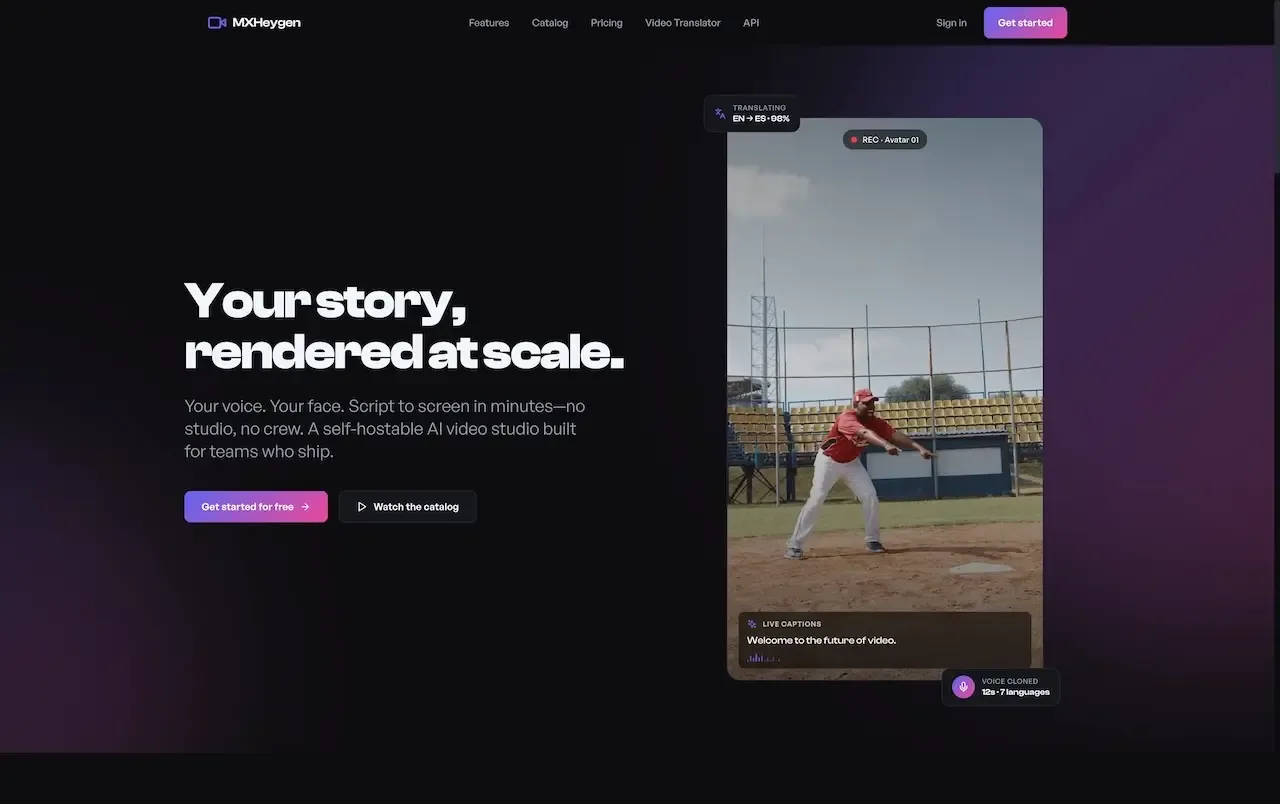
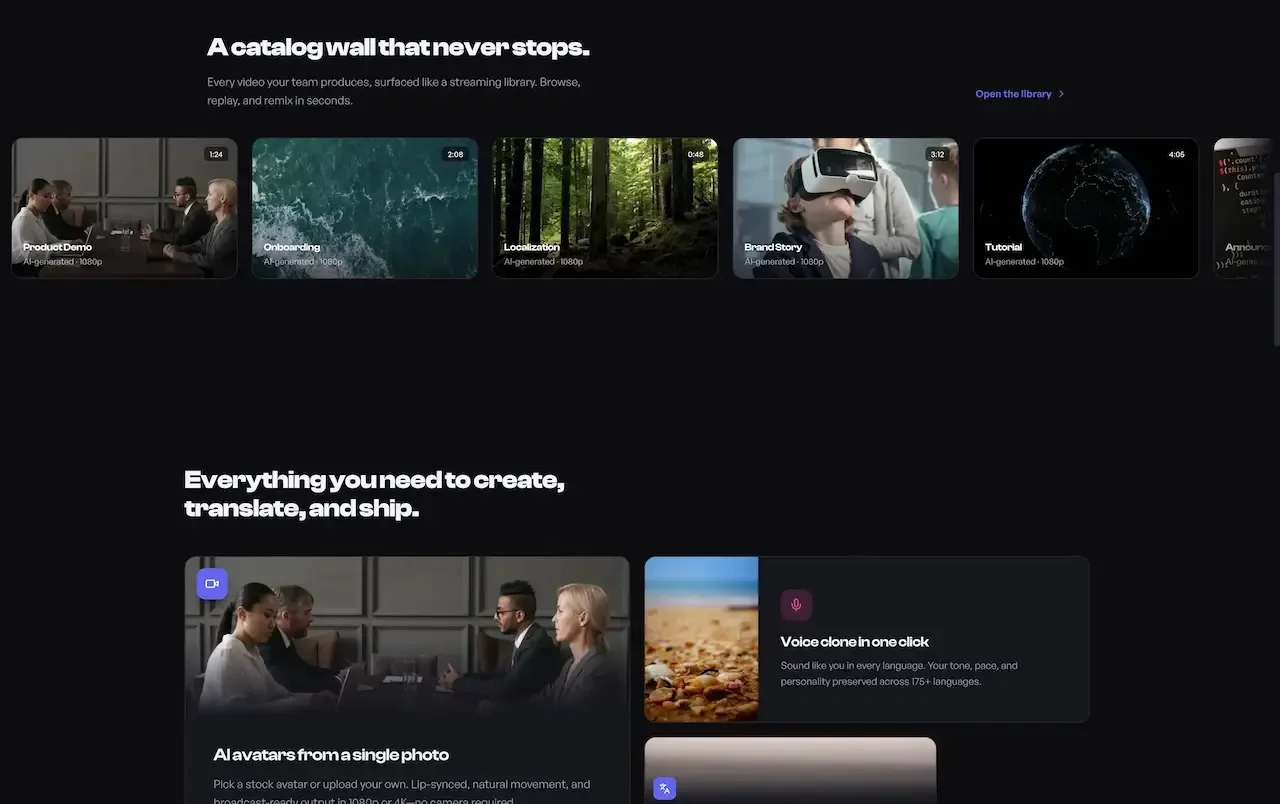
Real screens from the working product. Your platform ships rebranded with your name, logo and colors.
Web app 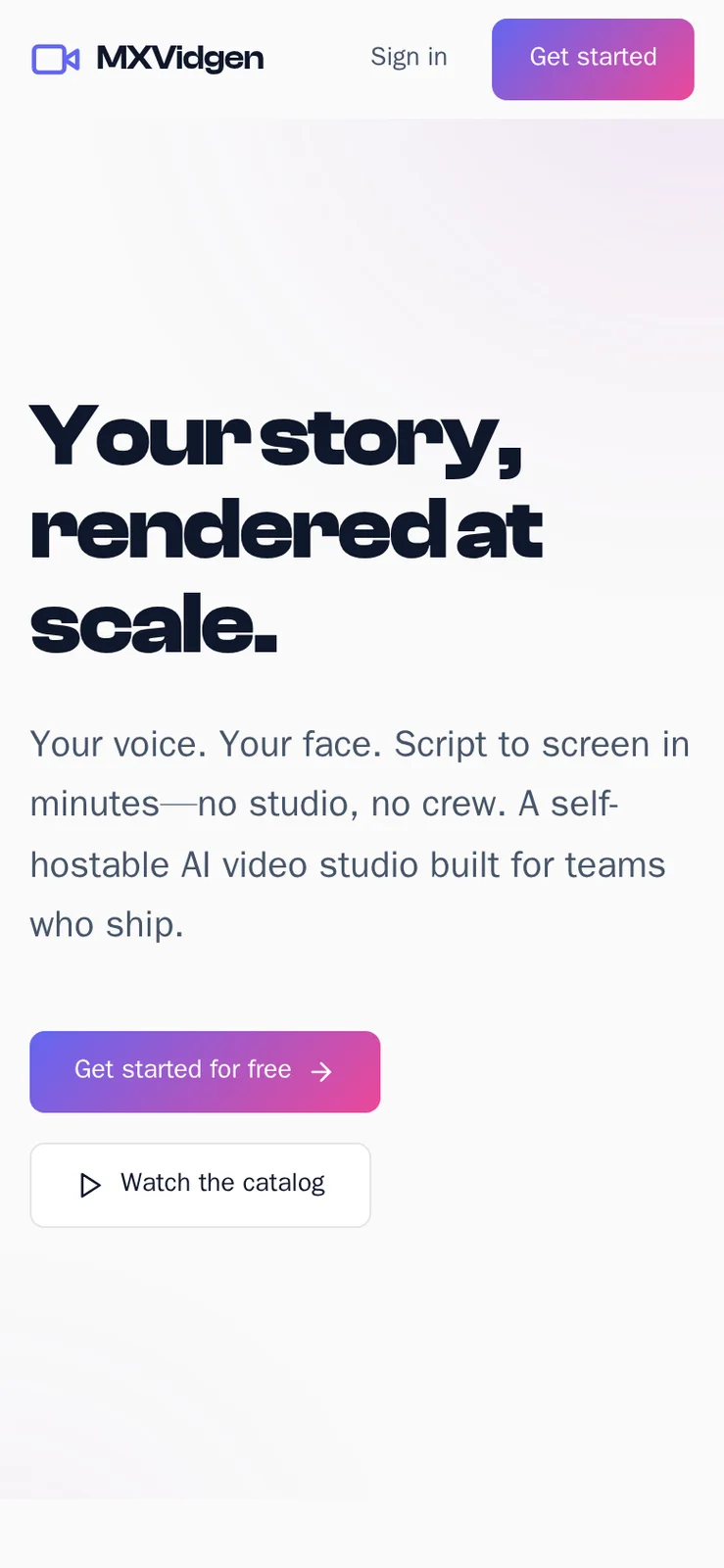
Overview 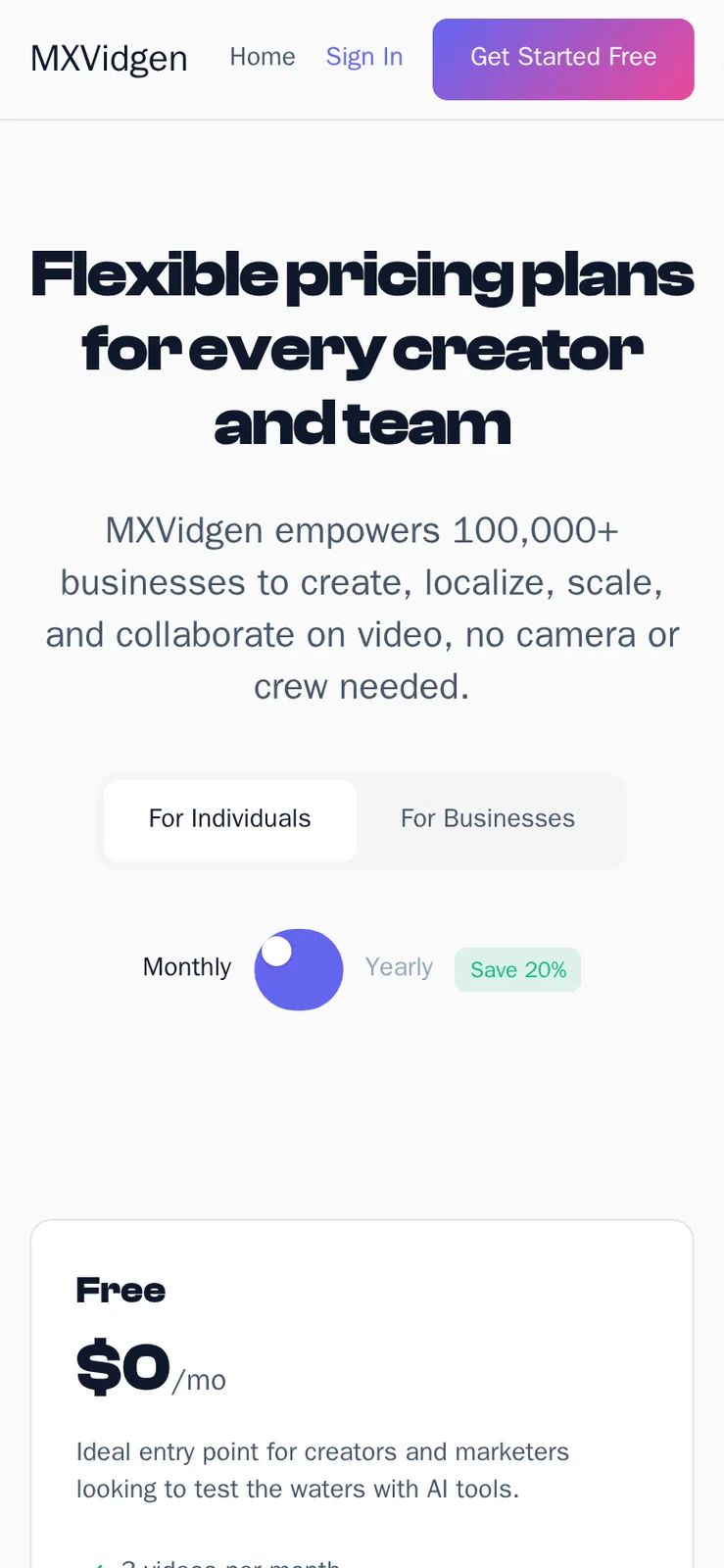
Web app Overview Web app
How a GetFame delivery runs
The platform exists already, so our six working days go on branding, provisioning and configuring. The items that run on other clocks, such as provider and payment approvals, proceed alongside.
-
Scope call and plan structure
We confirm identity, domain, launch languages and the plans you intend to sell, and ask which providers you will use. We recommend settling limits first, because pricing depends on them. Bring your expected provider rates to this step, since the allowances you pick should be checked against what a fully used plan would cost you before anything is built around them.
-
Branding and provisioning
We rebrand the platform and provision it on your infrastructure, migrate the database and bring up the Redis queue setup. You supply hosting access and decide whether media goes to local or S3-style storage. If you expect a large library, choose object storage now, since moving files later while customers are working is a delicate job.
-
Wiring your AI providers
We enter your provider credentials in the admin integration screens and test each pipeline for rendering, translation and export. Provider accounts usually take the longest to approve, so open them early. Because the console has save and test controls, you can later change a provider yourself and see at once whether the new credentials work.
-
Plans and workspaces
We define generation and export entitlements per plan, set up API metering and seed the template library. You decide plan names, limits and free allowances, and open your Stripe account if you will bill at launch.
-
Full quality pass
We test the user, creator, manager and admin flows, including queues and translation, and you run a script through to export with the demo roles. Notes from both sides are fixed before handover. Try to break it on purpose: submit several renders together, fail a translation and exceed a plan limit, and see whether the platform responds as your pricing assumes.
-
Handover and hardening list
We hand over the running platform with full source and documentation. You then complete the production hardening list, including secrets, origin rules, content security policy and monitoring, before opening to the public. Treat that list as a launch gate with an owner and a date, since the items matter most once real customers' scripts and faces are inside the system.
Warning signs in a proposal
On a multi-tenant generation product, failures stay quiet until they are severe. These signs appear in demos and quotes long before launch, so scan them while you can still walk away, and ask for evidence on any that seem to describe the offer in front of you.
- Generation done inside the web request, so it works for one user and fails for two.
- Plan allowances checked after the render, turning every overage into an unbillable provider cost.
- Higher resolutions hidden in the interface but not blocked in the export service.
- A product scoped to users rather than workspaces, which makes team pricing a rewrite.
- No answer on how cross-tenant access is tested and prevented.
- Localization coupled to the source video, so one failure damages both.
- No queue monitoring, so a backlog is discovered through a customer email.
- Source code offered only after final payment, with obfuscated modules or a license server.
- A promise of revenue or customers before anyone has seen your market.
What stays with you
AI video carries responsibilities that no software delivery can remove. These are the areas where we supply tooling or advice at most, and where the task stays with you or with a third party.
Provide AI model access
You open and pay for the provider accounts that render, speak and translate. We wire them in and test them, but we do not supply minutes or choose a provider for you.
Handle consent and likeness rights
The platform offers verification and audit tooling, but the consent process, the wording in your terms and the records are yours. Rights in a face or voice stay with the person depicted.
Write your content policy
You decide what customers may generate, who reviews reports and how fast, and when to disclose synthetic media. Suspension and audit tools support your policy but do not replace it. Write the policy before launch, name the person who enforces it, and publish it where customers can read it, since a rule nobody can find is hard to apply fairly.
Give legal or privacy advice
Obligations such as lawful basis, access requests and erasure depend on where you operate. Our role is tooling, and legal advice is outside it, so bring in a privacy adviser. Scripts, voices and faces are personal data in many places, so involve the adviser before you collect them, not after the first customer asks where their data lives.
Guaranteed approvals from vendors
Provider accounts, payment processors and hosting vendors each decide on their own terms. We connect what you obtain but cannot influence an approval. Open every account at the start and in parallel, because the slowest approval, often a payment processor or a generation provider, sets the real date for your first paying customer.
Choose hardening items with us
Items such as secret encryption, origin rules and uniform authorization are set up for your build, and scope is confirmed with us. We discuss which to take before you open publicly. Ask for the scope of each in writing, so you know what is done, what is open and what a customer's security review may find.
Try the live HeyGen Clone demo
The demo has four live logins, one for each role the platform defines: viewer, creator, workspace manager and platform admin. Sign in as each and the interface changes to match what that role may do. It carries our demo branding and sample content, so judge the workflow rather than the output.
-
Viewer
Open the Viewer demo- Login
test@example.com- Password
password123
Worth trying
- Browse the videos shared with this account
- Open a finished video and read its detail page
- Switch the interface language and watch labels change
- Check which menu items this role does not see
-
Creator
Open the Creator demo- Login
creator@mxvidgen.com- Password
creator123
Worth trying
- Write a script and look at its version history
- Pick an avatar and a voice for the project
- Start a generation job and watch its status
- Open the translation options for a finished video
-
Workspace manager
Open the Workspace manager demo- Login
manager@mxvidgen.com- Password
manager123
Worth trying
- Open the team list and the invitation roles
- Read the plan and the limits shown against it
- Look at the API keys and webhook screens
- Open workspace analytics and the export options
-
Platform admin
Open the Platform admin demo- Login
admin@mxvidgen.com- Password
admin123
Worth trying
- Walk through the eighteen admin tabs in order
- Open the integration settings and their test buttons
- Read the audit log for recent actions
- Look at active sessions and the revoke control
HeyGen Clone development company FAQs
Can my own engineers take over after delivery?
Yes. The stack is TypeScript on both sides, with React, Express, PostgreSQL, Redis and Docker, and you receive the schema, API collection and handbooks. The documentation set also describes known gaps, so a new team starts with an honest picture. Many operators keep us for updates and tailored work, while others work independently.
How do you handle a security review from a customer?
We supply the security handbook, the posture reference and the audit notes, which describe controls in place and gaps still open. If a customer wants a penetration test, we help you prepare and can scope closing the findings. Hardening items are confirmed with us, and we advise which to take before selling upmarket.
Is training included?
At handover we walk your team through the workspace and admin surfaces, including plans, integrations, sessions and the audit log. The documentation covers the same ground. Questions during the support window go through our normal channel, and first response is within two hours between Monday and Saturday, 10:00 to 19:00 IST.
Can you add a feature we need for our niche?
Yes, as tailored work scoped from a written brief, typically in two to eight weeks depending on the task. Examples include a new provider, a template workflow or an enterprise sign-in. You approve the figure before work begins, and you may decline or hand the work to your own engineers.
Do you sign NDAs?
Yes. We can sign a mutual non-disclosure agreement before you share business plans, customer details or partner terms. Mention it at the start and we will arrange it. The platform runs on your infrastructure with credentials you control, so your data stays in your own environment.
What if our market needs data to stay in one country?
Because you host the platform, you choose where the database, Redis and storage live. We can deploy to a provider in your chosen region. Which rules apply and whether a provider may process data abroad are questions for your adviser, and we help with the technical placement only.
Explore the HeyGen Clone
The overview and its companion pages answer the main questions in turn. Pick the one you need next.
-
HeyGen Clone
The overview: live demo, screens, price and everything in the box.
Back to the overview -
Features
Generating a clip is the easy part of an AI video product.
See the full breakdown -
Development cost
For an AI video business the software price is not the number that decides profit.
See exact pricing -
Business model
An AI video business has a tidy cost structure: each render costs you provider minutes, and each customer pays a plan.
See the playbook
→Start here
Tell us what you want to launch.
Share the platform and your market. You get a walkthrough of the live demo, the exact scope of what ships, and a fixed price in writing. First response in under 2 hours, Monday to Saturday, 10:00 to 19:00 IST.
Trademark and independence notice
This page uses the name HeyGen to describe a type of platform. The product sold here is separate software, built independently, and HeyGen has no part in it.
Why this name
"HeyGen clone" is industry shorthand that founders use when searching for software with a comparable business model. It names a category of product, not a copy of HeyGen.
Who built this
The platform is an original product designed and written by Miracuves. It contains no code, design, graphics or content originating from the HeyGen website or applications, and it ships under your own brand.
Trademarks
HeyGen and its logos are trademarks of their respective owner and are named here for reference only. GetFame is not affiliated with, sponsored by or endorsed by HeyGen. Rights holders can write to legal@miracuves.com.
Operator responsibility. The operator of a launched platform is responsible for legal compliance in the markets it serves. Nothing on this page is legal advice.Read the full disclaimer