Bigo Live Clone Features: Rooms, Gifts and Agency Tools

This page goes past the feature list and follows the platform the way money and people move through it: a host opens a room, a viewer spends, a battle raises the stakes, an agency takes its share and an operator signs off the payout. Below you will find what makes each step work, how the package compares with the alternatives, and what we set up around it.

15
live room formats
6
PK battle formats
6 days
to launch
On this page10 sections
  1. All 53 Bigo Live Clone features, by role
  2. One gift from first tap to host payout
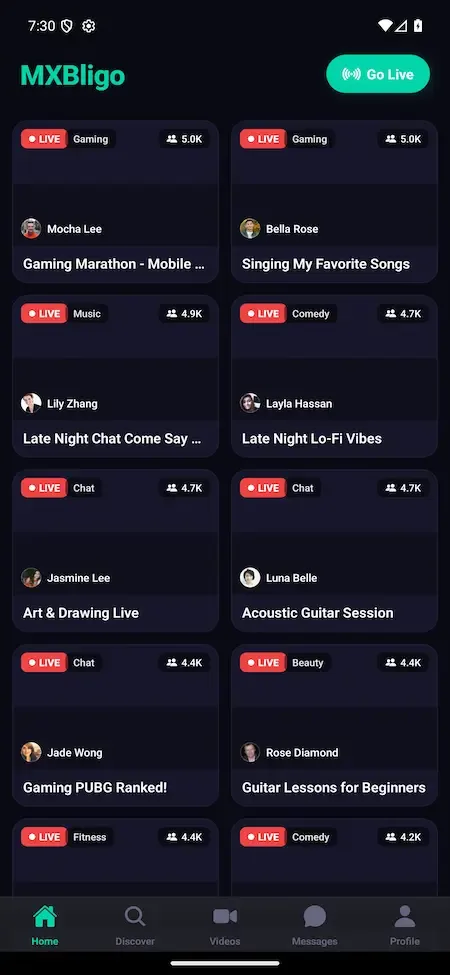
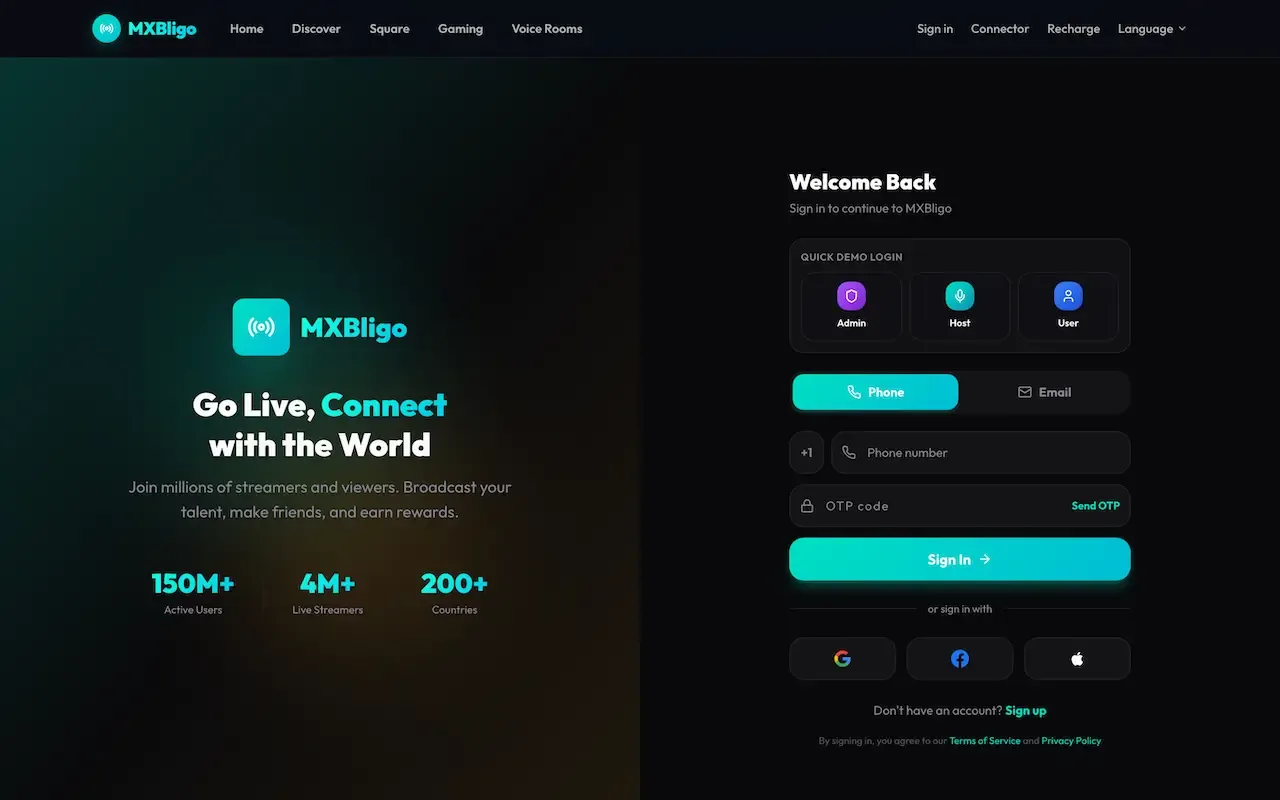
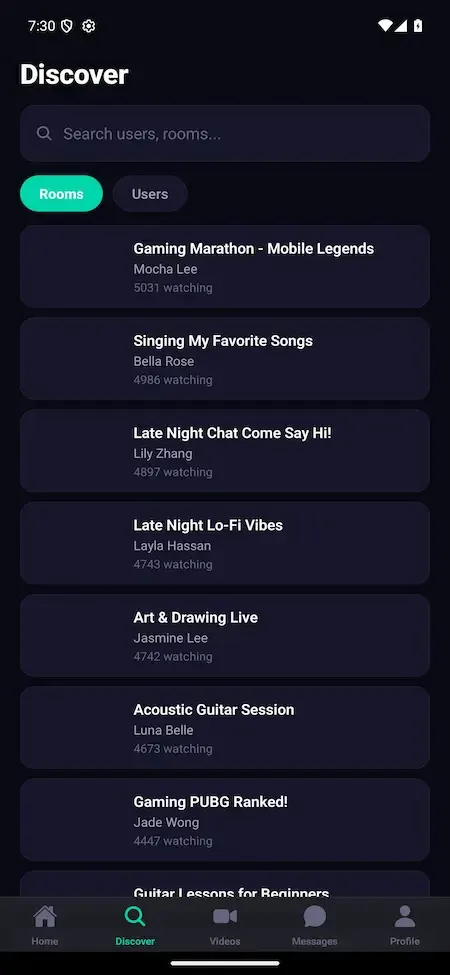
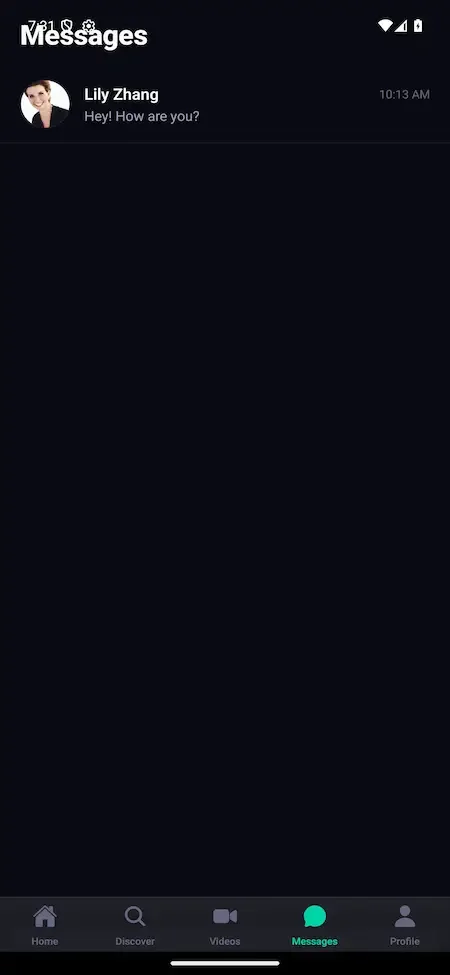
  3. The Bigo Live Clone, on screen
  4. Where this build earns its keep
  5. Bigo Live versus Bigo Live Clone versus building it yourself
  6. What the platform is built on
  7. What we set up around the platform
  8. Try the live Bigo Live Clone demo
  9. Bigo Live Clone feature FAQs
  10. Explore the Bigo Live Clone

All 53 Bigo Live Clone features, by role

The complete list, grouped by the person who uses each feature. Nothing is hidden behind a plan tier: this is what ships in the platform.

Agencies and families

14 features
Agency application
A prospective agency submits an application, and recruiting stays locked until an operator approves it, which keeps unvetted recruiters away from your host pool.
Agency suspension
Operators can suspend an agency at any time, which immediately stops it from recruiting while existing hosts and records remain intact.
Invite codes
Each agency invites hosts through a code, so every host can be traced back to the recruiter who brought them in.
Six member roles
Agency staff hold distinct roles, so a manager, a scout and a bookkeeper do not all share the same permissions.
Commission contracts
A host contract can pay the agency a percentage of earnings, which suits partners who share in upside.
Salary contracts
A host contract can instead be a fixed salary arrangement, for agencies that guarantee income to attract established talent.
Host transfers
A host can be moved from one agency to another, with the record kept so earnings history is not lost in the handover.
Sub-agency rates
Agencies can set rates for sub-agencies beneath them, which models the layered recruiter chains common in live entertainment.
Earnings tracking
Each agency sees what its hosts have earned and what it is owed, so no spreadsheet reconciliation sits beside the platform.
Family creation
A leader starts a family, with one family per leader, and members gather around a shared identity inside the app.
Three join policies
Families can be open, request-based or closed, so a leader decides how exclusive the group should feel.
Family roles
Leader, co-leader, elder and member roles give a family internal structure and a path for members to progress.
Treasury and contributions
Members contribute to a family treasury and their input is tracked, which gives loyal fans a visible scoreboard.
Group battles
Families and agencies can enter PK battles against each other, with scores aggregated across everyone gifting on their side.

Hosts

14 features
Identity-backed application
Applicants provide real name, ID, bio and specialties, and nobody broadcasts until staff have reviewed the submission.
Fifteen room formats
Solo, voice, multi-guest, co-host, panel, party, karaoke, gaming, talent, talk show, dating, private, subscriber-only and event rooms are available.
Per-type seat defaults
Each room format starts with sensible seat counts, so a six-seat voice room and a solo stream do not need manual setup every time.
Seat requests and approvals
Guests ask for a seat and the host accepts or declines, keeping the stage curated rather than open to anyone.
Lock and remove
Seats can be locked to stop new guests and occupants can be removed, giving hosts a quick answer to disruptive behavior.
Mic and camera control
Hosts mute or disable video for seat occupants without ending the room, which is essential for karaoke and panels.
Private and restricted rooms
Rooms can be private, age restricted and tagged with a language, so discovery sends each audience to the right place.
Six PK formats
One-versus-one, team, room, family, agency and tournament battles are scored on gift value received while the battle runs.
Revenge battles
A loser can request a rematch, which extends a competitive spike and gives viewers another reason to keep gifting.
Diamonds to beans
Received gifts accumulate as diamonds, which convert to beans at an operator-set rate before any cash-out.
Withdrawal requests
A host raises a request from beans, sees its status, and receives funds only after an operator approves it with the fee applied.
Short videos
Hosts post clips up to 200MB with captions, hashtags and music metadata, keeping their audience engaged between live sessions.
Square feed posts
The square accepts text, image, video and poll posts, which gives hosts a lightweight place to talk to followers.
Daily check-in and missions
Streaks, missions and a lucky wheel reward consistent behavior, which helps new hosts build a schedule.
Viewers

12 features
Guest browsing
People can look around before registering, which lowers the barrier for a first visit from a shared link.
OTP registration
Email or phone sign-up with a one-time passcode verifies accounts, with device binding for push notifications and session tracking.
Typed room discovery
Rooms are filtered by type, country and language, so a Spanish-speaking karaoke fan is not shown English gaming streams.
Nearby rooms
A distance calculation surfaces rooms close to the viewer, useful for regional operators with city-based communities.
Rate-limited chat
Room chat runs over Socket.IO with rate limits, so one noisy account cannot flood a busy stream.
Gift drawer
Eight gift categories, including combo and luxury items, are paid for in coins and animate for the whole room.
Coin recharge
Packages with bonus coins on larger bundles push viewers toward bigger purchases through Stripe.
VIP tiers
Free, Bronze, Silver, Gold and Diamond levels carry badges and benefits that make status visible inside rooms.
One-to-one calls
Audio and video calls between members include call history, which extends the product beyond public rooms.
Social graph
Follows, blocks, mutual followers, profile visitors and top fans by gift value give members reasons to return to specific people.
Search
Members find people and content by username and hashtag, which keeps discovery from depending only on the home feed.
Notification control
Six notification categories with quiet hours let members stay informed without feeling spammed.

Operators

13 features
KPI dashboard
Eight cards plus revenue, user growth, room type and top gift charts give the first view of platform health each morning.
User administration
Search the user base, ban or unban, verify accounts and change roles, with every action written to the audit log.
Host review queue
Applications arrive with identity and specialty details so reviewers can approve or reject without chasing information.
Withdrawal control
Every bean-to-cash request is approved or rejected by staff, which is the main defense against payout fraud.
Live room oversight
Staff watch active rooms, force-close one that breaks policy and feature rooms worth promoting on discovery.
Unified report queue
Reports on users, rooms, streams, messages, videos, posts and comments are resolved or dismissed from one place.
Strikes and appeals
Violation types, strikes and an appeal path give moderators a consistent process rather than ad hoc decisions.
Bans, mutes and shadow bans
Three levels of restriction let staff respond in proportion, from silencing a member to quietly limiting their reach.
Blocked keywords
A keyword list catches known abusive terms and spam patterns before they reach a live audience.
Gift catalog
Create and retire gifts across eight categories, setting price and animation type that viewers will see.
Game catalog
Full create, read, update and delete over the 45 modeled game types decides which games your audience can play.
Revenue and limits
Split percentages, withdrawal limits, live limits and feature toggles are settings, not code changes.
Audit and moderation logs
A paginated trail records operator actions and moderation decisions, so any dispute can be traced to a person and a time.

One gift from first tap to host payout

Follow a single gift across every role in the platform. The path shows why the pieces are built as one system: each step hands clean data to the next, and nothing has to be reconciled by hand afterwards.

  1. A host opens a room

    The host chooses a format, such as a solo video room, a voice room with seats, a karaoke night or a dating room. The backend creates the room and its seat records, then issues a media token so the broadcast path is authenticated rather than open to anyone holding a link.

  2. Viewers find the room and join

    Discovery filters by room type, country and language, and shows nearby rooms by distance. Inside the room, live chat, follows and the top fans ranking all read from the same session, so the room behaves like a small community rather than a video window with a comment box.

  3. Coins are bought through Stripe

    A viewer buys a coin package through Stripe on your own merchant account, with bonus coins on bigger packages. This is the only place real money enters the system, which is why coins are kept apart from everything a host later earns. Pack sizes and bonuses are operator decisions, and processor fees come out of each purchase, so price the packs with those fees already counted.

  4. The gift is split instantly

    When the gift is sent, one database transaction deducts the viewer, divides the value between platform, agency and host, and credits the host in diamonds. Because the split happens at the moment of the gift, a host can watch earnings land in real time and nothing needs month-end reconciliation.

  5. A battle raises the stakes

    During a PK battle, gifts received count toward a live score for each side. Winners are decided automatically and a revenge match can be offered. Viewers tend to gift in bursts around a close finish, which is exactly the pattern the battle formats are designed to create.

  6. Points feed every ranking

    Every gift also moves leaderboards for hosts, fans, families and agencies. A family or agency collects contribution points as its members are gifted, so a single gift pays the host, ranks a fan and strengthens the group that host belongs to. Rankings are what make gifting social: a fan who watches their name slip down the board in front of others often sends one more gift to hold the position, and agencies read the same boards to see which hosts deserve support.

  7. Diamonds become withdrawable cash

    The host converts diamonds to beans at a rate you set, then raises a withdrawal request. The fee is applied and the request waits in the operator queue until a staff member approves or rejects it, so no money leaves without a recorded human decision.

The Bigo Live Clone, on screen

Real screens from the working product. Your platform ships rebranded with your name, logo and colors.

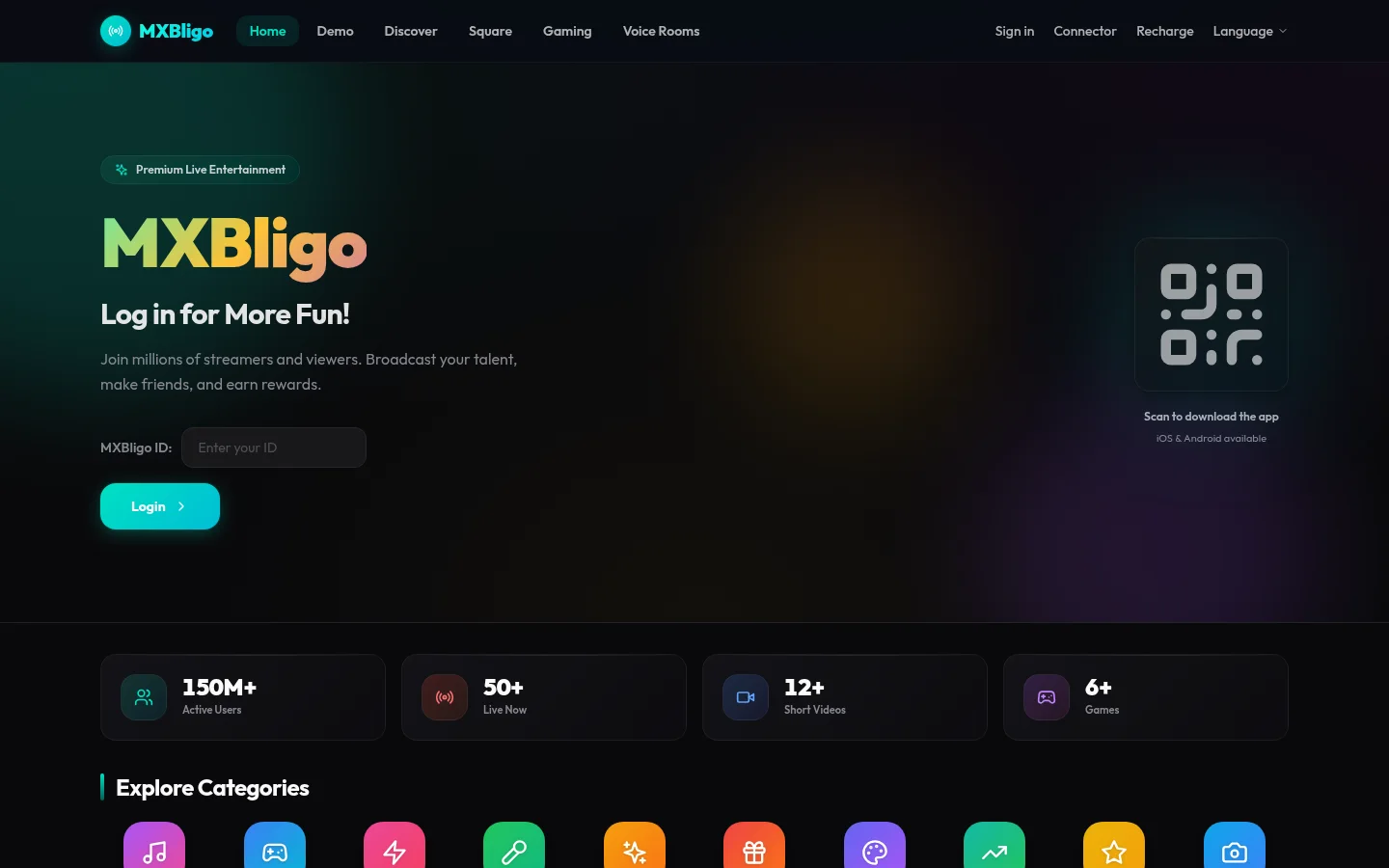
  • Dark web landing with a go live headline, audience stats and a sign-in form
    Web app
  • Phone discover screen with a search box, tabs and a list of live rooms
    User app
  • Phone messages tab with one conversation and a bottom navigation bar
    User app
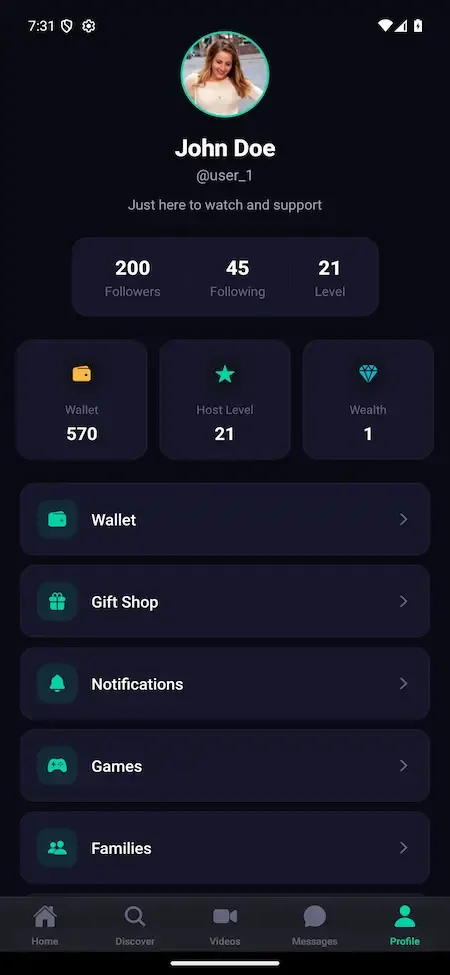
  • Phone profile with follower counts, wallet and level tiles and menu rows
    User app
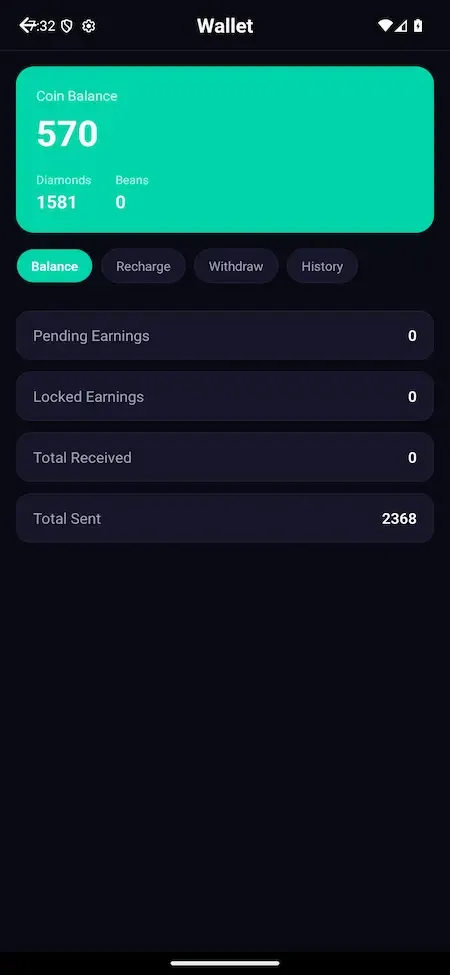
  • Phone wallet with a green coin balance card, diamond count and earnings rows
    User app

Where this build earns its keep

Plenty of live apps can show a camera feed and a gift button. These are the parts that take the longest to build properly and that decide whether hosts stay, viewers spend and your team can keep control of the money.

  • Four-currency ledger

    Coins are what viewers buy, diamonds are what hosts earn, beans are what can be withdrawn, and points drive ranking. Keeping them separate means you can discount a coin pack without changing what a host is owed, and auditors can trace every balance to its source. In practice a finance reviewer can open one host and reconcile what viewers paid, what the host earned and what was withdrawn without a spreadsheet.

  • Native agency layer

    Agencies apply, get approved, invite hosts by code, hold contracts by commission or salary, transfer hosts and set sub-agency rates. For an operator who plans to grow through partners rather than a single recruiting team, this is the commercial engine, and it is already wired to the payout path.

  • Fifteen room formats

    Voice, karaoke, panel, talk show, dating, gaming, talent, private, subscriber-only and event rooms attract different audiences and spending habits. Offering several formats lets you test which crowd pays in your market without commissioning a new module each time. Each format has its own seat defaults, so a karaoke night and a talk show do not make the host configure everything by hand, and you can watch which formats earn before investing marketing in one.

  • PK battles in six shapes

    Battles run one-versus-one, as teams, between rooms, between families, between agencies and as tournaments, each scored on gift value received during the contest, with a live scoreboard, an automatic winner and the option of a revenge match. Group formats matter commercially because they turn a loyal community into a spending bloc that defends its rank, and rivalry between two agencies gives both a reason to push their hosts harder.

  • Family treasuries

    Families have a leader, member roles, three join policies, contribution tracking and a treasury. They are the retention layer: a viewer who belongs to a family has a reason to return to a specific community instead of drifting between rooms. The treasury and contribution tracking give a leader something to manage, which turns a loose crowd into a group that recruits its own members.

  • Layered moderation

    Reports cover seven content types, with strikes, appeals, bans, mutes and shadow bans plus blocked keywords and an action log. Live content cannot be reviewed at leisure, so a proportionate response with a reviewable trail protects both your community and your decisions. Reports, strikes and appeals follow a documented path, so when a host disputes a ban you can show what was reported, what was decided and by whom.

  • Withdrawal approval queue

    Every cash-out request passes through an operator before payment. That single control is where fraud is stopped, and because the fee is applied in the same step, the most labor-intensive flow in the product also contributes to revenue. Operators can reject a request that looks wrong, and the decision stays in the audit log, which is the record you will want if a host or a payment partner ever asks why a payout was held.

Bigo Live versus Bigo Live Clone versus building it yourself

The comparison that matters for a buyer is between the second and third columns, since the original app is not something you can purchase or host. The first column describes the model you are likely benchmarking against, in terms that are widely understood about live gifting apps.

Bigo Live versus Bigo Live Clone versus building it yourself
AspectBigo LiveBigo Live CloneBuilding from scratch
Who owns it A product you use but cannot host, modify or rebrandFull source code, deployed on your servers under your brandYours entirely, once every module has been built
Time to launch Not applicable, since it is not for saleSix working days for the ready-made buildA long program for a senior team, measured in quarters
Gift economy Virtual gifts that broadcasters convert to earningsCoins, diamonds, beans and points in a separate ledgerUsually one balance that cannot express earnings
Host recruiting Known to rely on agencies that manage broadcastersAgency approval, invite codes, contracts and rates built inRarely built, so recruiting and agency tracking stay manual work
Revenue terms Set by the owner of the app and not open to youSplits you set, per room type, gift category and regionWhatever you design, tested only after launch
Room variety Several live and voice formats, chosen and limited by the ownerFifteen formats, each with its own seat management and defaultsTypically one, with more added as rewrites
Operator tooling Internal tooling that outside operators never get to see or useSeparate admin panel with approvals, settings and audit trailOften a thin back office added late
Mobile apps Polished native apps, built and published by the owner itselfExpo app for the core flows, with full parity set up for youWhatever budget allows, with every screen designed and built from zero

What the platform is built on

Nothing here is exotic. The stack is mainstream TypeScript on a standard relational database, which matters twice: your own engineers can extend it without relearning anything, and a technical buyer can audit exactly what they are paying for.

What the platform is built on
BackendNestJS 10 on Node 20 in TypeScript, organized in modules, with Swagger documentation and JWT authentication through Passport.
DatabasePostgreSQL 16 accessed through Prisma 5, with a schema of 74 models and 29 enums covering rooms, gifts, agencies and the wallet.
Web and adminNext.js 14 with React 18, Tailwind and Zustand, shipped as one app for viewers and hosts and a separate admin app for operators.
Mobile appsAn Expo SDK 50 application covering the core viewer and host flows, running against the same API as the web app.
Real-time mediaAgora RTC carries audio and video, while Socket.IO 4 with Redis 7 handles chat, seats and live updates.
Payments and messagingStripe for coin purchases, Twilio for SMS passcodes, Firebase Cloud Messaging for push and SMTP for email.
DeploymentDocker Compose, Nginx and MinIO storage, with a GitHub Actions pipeline, all runnable on servers you control.

What we set up around the platform

A package is only trustworthy if it states its edges. These items are real work that we set up around the ready-made platform, and we would rather you plan for them now than discover them in the week you want to go public.

  • Full mobile parity

    The Expo app covers the core viewer and host flows, while the web app is broader. If phones are your main surface, we bring the mobile app to full parity with the web as tailored work, with scope confirmed with us, and it should be planned early.

  • Automated test suite

    A testing roadmap exists in the documentation, and we write the automated test suite as tailored work, worth planning for before real members and real balances are on the platform.

  • Production hardening

    Demo credentials must be removed, the auth guard registered globally, admin tokens moved to cookies and payment webhooks verified. We schedule this hardening alongside launch, as a task we set up on top of the ready-made install.

  • Scale beyond one server

    The base setup is sized for a single instance. Running several instances needs the Socket.IO Redis adapter, connection pooling and clustering, which we set up when your audience calls for them.

  • Compliance and moderators

    We supply moderation tooling, but staffing a review team, writing policies and meeting local rules on payouts, minors and live content remain your responsibility and are not legal advice from us.

  • Your own host supply

    The software gives agencies a place to work, but it does not bring broadcasters. Recruiting the first hosts and agencies, and funding early gifts, is a business task that only you can carry out.

Try the live Bigo Live Clone demo

The demo is a running copy of the platform with demo branding and public sample accounts, so you can play every role without installing anything. Join a room as a viewer, go live as a host, then open the operator console and watch the same gift show up in the settlement and review queues.

  • Viewer and wallet

    Open the Viewer and wallet demo
    Login
    user1@mxbligo.live
    Password
    password123

    Worth trying

    • Browse rooms by type, country and language
    • Send a gift and watch the coin balance fall
    • Open the wallet and review recharge packages
    • Follow a host and check the top fans list
  • Host studio

    Open the Host studio demo
    Login
    host1@mxbligo.live
    Password
    password123

    Worth trying

    • Start a room and choose one of the formats
    • Open the seat controls for guests
    • Start a PK battle and read the score
    • Follow diamonds through to a withdrawal request
  • Operator console

    Open the Operator console demo
    Login
    admin@mxbligo.live
    Password
    password123

    Worth trying

    • Review a host application in the queue
    • Approve or reject a pending withdrawal
    • Open the revenue settings and the split
    • Read the audit log after your own actions
  • Android build

    Open the Android build demo
    Login
    user1@mxbligo.live
    Password
    password123

    Worth trying

    • Sign in with the viewer account
    • Join a voice room from the phone
    • Check the wallet on the device

Bigo Live Clone feature FAQs

Can hosts and viewers use the same account?

Yes. Any member can watch and gift, and applying to broadcast is a separate step that an operator must approve. Once approved, the same profile gains host tools, so a viewer who becomes a host keeps followers, history and wallet in one place rather than juggling two logins.

Do voice rooms need video to work?

No. Voice rooms with seats, karaoke and talk show formats run on audio alone, which suits markets with limited bandwidth or hosts who prefer not to appear on camera. Seat requests, approvals, locks and microphone control all work the same way as in video formats.

Can I switch off formats or games I do not want?

The operator settings include feature toggles and a game catalog you manage from the console, so you can launch with a focused set and add more later. Retiring a gift or a game does not require a code change, which keeps the early product simple.

How are viewers kept from sending gifts they cannot afford?

A gift only completes if the viewer's coin balance covers it, and the deduction, split and host credit run as one transaction. If any step fails, nothing is applied, so balances never drift out of step with each other.

Does the platform support private or paid rooms?

Private and subscriber-only room formats are part of the fifteen, alongside scheduled events. These let a host restrict access to chosen members or paying followers, giving you a second revenue path beside open rooms and public gifting.

Can viewers talk to hosts one to one?

One-to-one audio and video calls are included, along with follows, blocks and profile visitors. Calls give hosts and fans a closer channel, and they run on the same media service as the rooms rather than a separate system to maintain.

What can a family do that an agency cannot?

A family is a social group built around a leader, with join policies, member roles, contribution tracking and a treasury, and its purpose is retention. An agency is a business partner that recruits hosts and holds contracts. They overlap in battles but serve different goals.

→Start here

Tell us what you want to launch.

Share the platform and your market. You get a walkthrough of the live demo, the exact scope of what ships, and a fixed price in writing. First response in under 2 hours, Monday to Saturday, 10:00 to 19:00 IST.

We reply to every inquiry. No newsletters, no shared data. See our privacy policy.

Trademark and independence notice

This page uses the name Bigo Live to describe a type of platform. The product sold here is separate software, built independently, and Bigo Live has no part in it.

Why this name

"Bigo Live clone" is industry shorthand that founders use when searching for software with a comparable business model. It names a category of product, not a copy of Bigo Live.

Who built this

The platform is an original product designed and written by Miracuves. It contains no code, design, graphics or content originating from the Bigo Live website or applications, and it ships under your own brand.

Trademarks

Bigo Live and its logos are trademarks of their respective owner and are named here for reference only. GetFame is not affiliated with, sponsored by or endorsed by Bigo Live. Rights holders can write to legal@miracuves.com.

Operator responsibility. The operator of a launched platform is responsible for legal compliance in the markets it serves. Nothing on this page is legal advice.Read the full disclaimer