
HeyGen Clone Business Model: Running the Gap Between Plan and Render
An AI video business has a tidy cost structure: each render costs you provider minutes, and each customer pays a plan. Your margin is the gap between those two, and the platform is built to widen and protect it. This page explains the idea, each revenue source and the order in which to turn them on.
- 2
- built-in revenue surfaces
- 4
- queue domains for jobs
- None
- revenue share to us
On this page11 sections
- The idea: sell a plan, meter the compute behind it
- Where the money comes from
- The HeyGen Clone, on screen
- How the HeyGen model works, in general terms
- Which lever to use at each stage
- Three ways to run this platform as a business
- Monetization mistakes in AI video
- Where to begin
- Try the live HeyGen Clone demo
- HeyGen Clone business model FAQs
- Explore the HeyGen Clone
The idea: sell a plan, meter the compute behind it
Most software costs almost nothing to serve one more customer. A generated video does not work that way, because each one uses compute you pay a provider for. The business therefore has a real marginal cost, and the discipline is to make every plan priced and limited so that a heavy customer cannot cost more than they pay. Seen that way, a plan is a promise about how much compute a customer may consume, and its price is that promise's selling price.
That is why limits and pricing are the same decision. A plan states how many generations, which resolutions and which avatars a workspace may use, and the platform enforces those before any provider spend happens. When the enforcement is real, you can price confidently and offer a trial without fearing the month-end bill. The alternative is limits shown in the interface and checked nowhere, which lets a determined user spend your provider budget.
Governance then lifts the ceiling on deal size. A single creator will pay for a tool, while a company pays for control: roles, workspaces, an audit trail and an admin console. The same product serves both, and the second group is where larger plans and licensing deals come from. A marketing team with a brand template library and approval roles is buying governance, and will pay more for it than for the video itself.
Where the money comes from
These sources ship with the platform and are enforced by the same plan and metering layer. Each has a different payer and a different relationship to your render cost.
Workspace subscriptions
One active plan per workspace, with its status and billing cycle stored as the source of truth. The workspace owner pays on a cycle you define. It is the forecastable base of the business, and attaching plans to workspaces rather than to people matches how teams share a production pipeline.
Generation allowances
Each plan carries a limit on how much a workspace may generate, checked before a job is queued. The payer is the same owner, but the purpose is margin protection. A clear allowance also gives customers a reason to move up a plan when they approach it. Show the remaining allowance where the creator works, so the upgrade prompt appears at the moment of need and not in a billing email weeks later.
Export entitlements
Which resolutions and formats a workspace may download depends on its plan and is enforced in the export service. Quality is among the most natural upgrade triggers, because the need is obvious to the user at the moment they want a better file. A free preview at modest quality lets the customer judge the result, and the sharper file behind a paid plan becomes the clear next step.
Metered API access
Workspace keys record usage per endpoint per day, so a developer tier can be billed on use. The payer is a developer or a customer product, and the income grows with their growth and not with your marketing spend. Webhooks with retries make it practical to embed. Publish plain documentation and a sandbox allowance, since a developer who cannot try the interface in an afternoon will choose another one.
Seat expansion
Invitations and roles let a workspace add members, so seat-based or tiered team pricing is practical. Expansion inside an existing account is cheaper revenue than a new customer, provided your plan design rewards it. A plan that includes a few members and charges for more lets a growing team spend more without a new negotiation, and invites the manager role to take over administration.
White-label licensing
Because branding is configurable and you hold the source, agencies and resellers can run the platform under their own name, and pay you under terms you negotiate. No share of that income is owed to us. Reseller deals suit agencies serving many small clients, where one workspace per client keeps their scripts and assets separate while the agency manages billing.
The HeyGen Clone, on screen
Real screens from the working product. Your platform ships rebranded with your name, logo and colors.
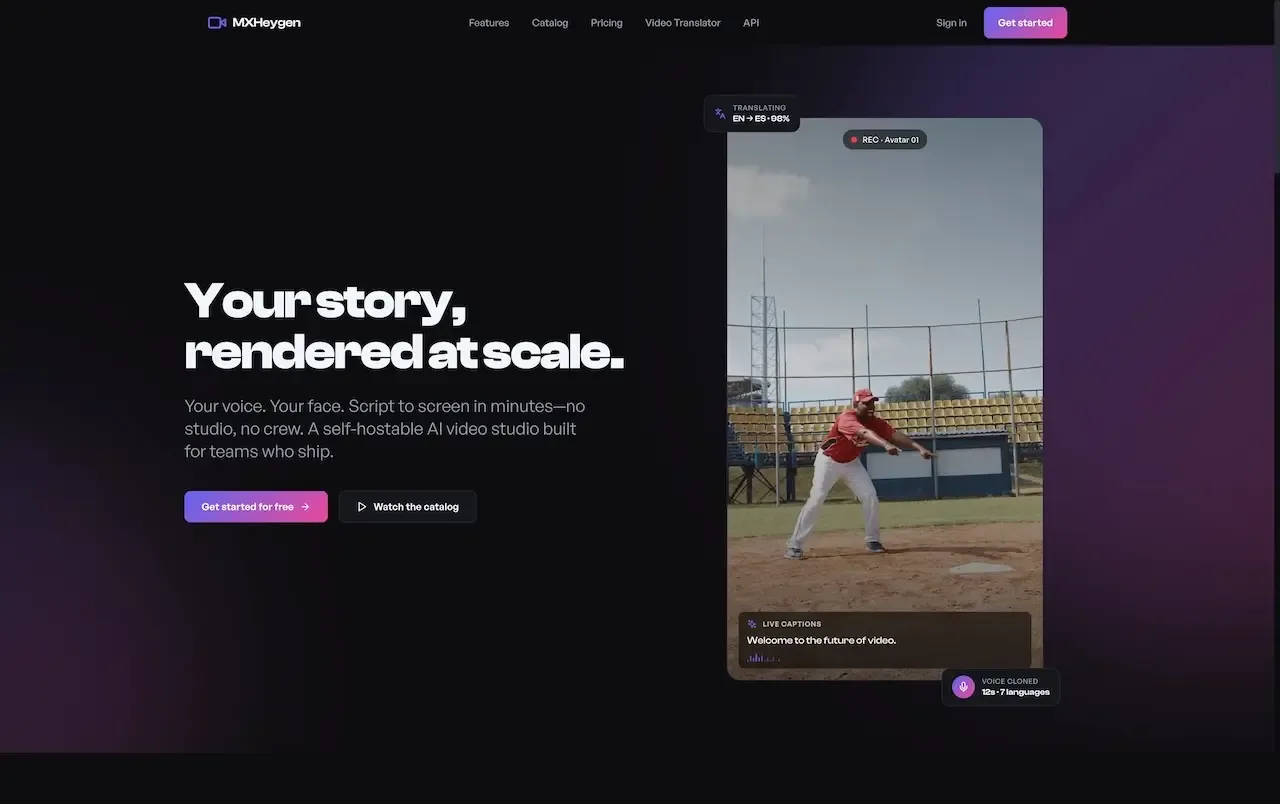
Web app 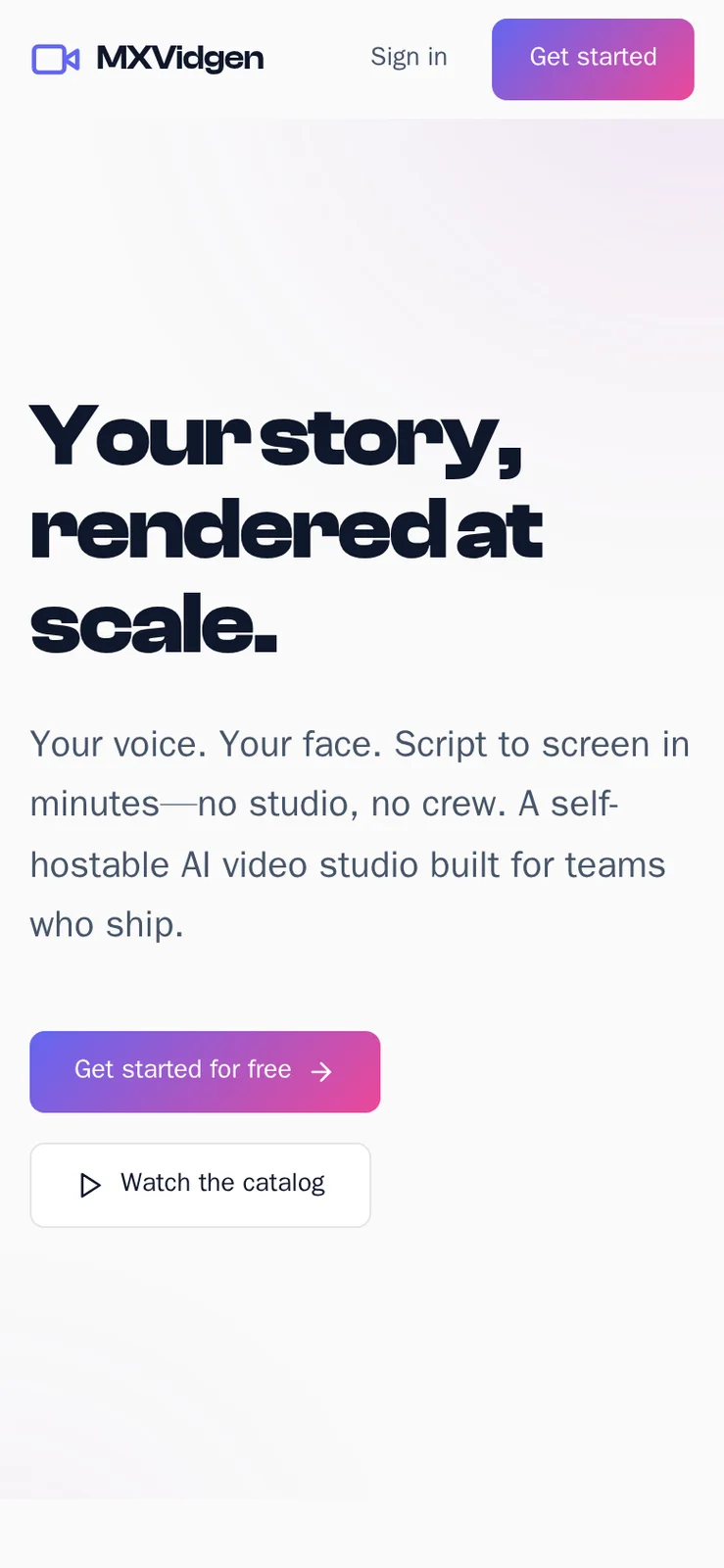
Overview 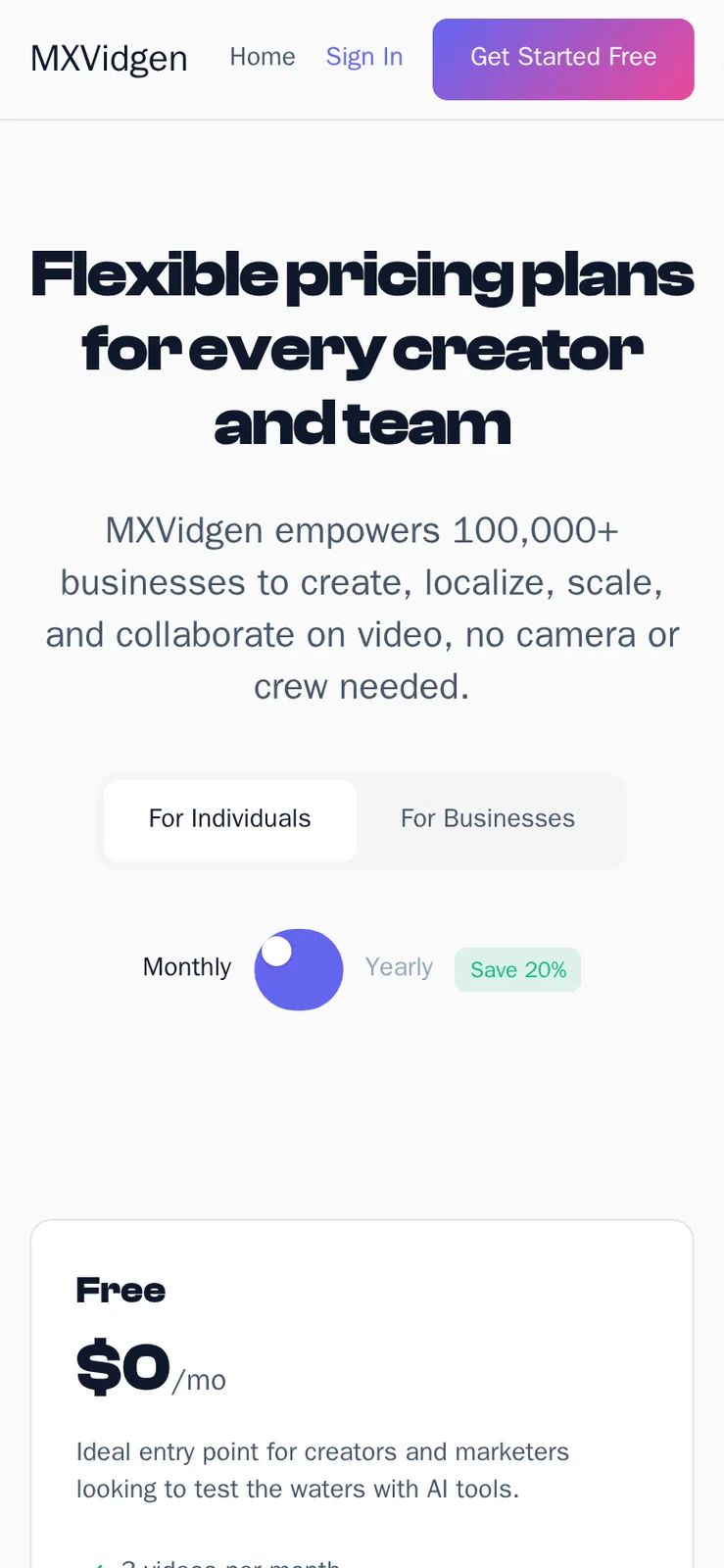
Web app Overview Web app
How the HeyGen model works, in general terms
HeyGen is widely known as an AI video service where a user types a script, picks a presenter and a voice, and receives a finished video, with translation and voice features alongside. It is run as a hosted service on plans and usage that the company sets, which is the commonly understood model of this category.
This is a general description only, and we make no claim about any company private figures or policies. The useful lesson is structural: a recurring plan, usage limits tied to compute cost, and quality or language features as the natural upgrades. The platform supports those mechanics under your own brand, while the AI providers are accounts you open.
Which lever to use at each stage
Order matters here because a mistake costs real provider spend per user, not just slow growth. This sequence follows how the mechanics depend on one another, and it is a judgment, not a forecast.
| Stage | Lever to use | Why |
|---|---|---|
| Before launch | Set generation and export limits per plan | Until limits are enforced you do not know what a workspace costs you, so you cannot price above it |
| Launch | Workspace subscriptions on two or three plans | A forecastable base is easier to run than many custom arrangements |
| First growth | Export quality and premium avatar gating | Customers who need better output have an obvious reason to upgrade |
| Proven pipelines | Open the metered API tier | Revenue that rides on a customer product is the cheapest kind to add |
| Upmarket | Governance sold with the audit trail and admin console | Larger accounts buy control, and you can show it rather than promise it |
Three ways to run this platform as a business
The same code serves different companies. Which one you are decides your plan design, the way you price compute and the people you need around the product, so read each profile against your own customers first.
Focused vertical product
You serve one industry or workflow, such as training videos or product explainers, with templates and languages tuned to it. Depth beats breadth, and a small library of strong templates does the selling. Plans are simple, and support is conversational. Marketing and a good template curator are your key people.
Multi-market localization service
You sell the ability to turn one script into many languages. Translation limits, voice choices and subtitle options are central, and the pipeline independence means a failed market never harms another. Provider cost per language drives pricing, so you need someone watching margins. A customer who localizes every video into several languages is your best case and your riskiest one, which is why the allowance per plan matters.
Agency or white-label platform
You host many client brands or license deployments to partners. Workspace isolation, audit logs and the admin console carry the offer. Deals are larger and slower, and security questions arrive early, so the hardening items matter most to this model. Expect questionnaires and a request to see how tenancy is tested, and have the answers and the regression results ready before the first meeting.
Developer-facing video platform
You sell programmatic access for other products to embed video. Metered keys, webhooks and documentation are the product. Support is technical, and reliability of the queues is what you are judged on, so monitoring comes first. Your customers' own customers feel an outage, so a clear status record and a quick reply to failed webhook reports are part of what you are selling.
Monetization mistakes in AI video
These are the errors that cost operators most, each with the setting or habit that avoids it. Read them before you publish a price list, since each one is far easier to design out than to correct after customers have signed up.
Selling unlimited generation
Your cost is per render, so unlimited is a bet that your heaviest customers stay light. They will not. Give every plan an allowance and let customers choose to move up as they grow. An allowance also gives you a natural moment to talk to the customer, when they approach it, about a larger plan before they feel blocked.
Pricing per seat only
Teams share one production pipeline, and a strict per-seat price punishes collaboration and invites shared logins. Price the workspace and let seats be a secondary dimension. Shared logins also defeat the audit trail, because the record of who wrote or approved a script becomes useless when five people use one account.
Treating translation as free
It is a separate stage with its own provider cost. Bundling it without limits quietly loses money on your best customers. Set a language allowance per plan. The customers who use it most are often the ones most likely to stay, so protect them with a sensible ceiling and a way to buy more, not with a surprise cutoff.
Competing on price with the vendor
Your advantage is deployment control, workspace isolation and an audit trail, and a hosted competitor cannot match those. Discounting against them gives away the one thing they lack. Sell to buyers who care about where scripts and faces are stored, and let price follow the value of that control instead of chasing the lowest hosted plan.
Leaving governance for later
Roles, audit logs and the admin console are what larger buyers examine first in any review. Deferring them caps your deal size at the low tier, so switch them on and learn to demonstrate them early.
Ignoring consent and policy
Likeness and voice rights stay with the person depicted. Write a content policy and a consent process before opening to the public, since a single misuse case can damage the brand. Decide who reviews reports and how quickly, and record that in the policy, because the first complaint arrives sooner than most operators expect and the response sets your reputation.
Where to begin
Start by deciding the limits, not the prices. Choose generation and export allowances for two or three plans, gate premium avatars and voices, and keep the free allowance small. Then price each plan above what a customer who uses it fully would cost you in provider minutes, using your actual provider rates. If a plan only breaks even when customers use half of it, raise the price or cut the allowance before you launch.
Launch workspace subscriptions first, because they give you a base to forecast. Add the metered API once the pipelines have run under real load, and sell governance to larger accounts after you can show the audit trail working. Change one lever at a time and read per-workspace usage in the admin console before the next step.
Try the live HeyGen Clone demo
The demo has four live logins, one for each role the platform defines: viewer, creator, workspace manager and platform admin. Sign in as each and the interface changes to match what that role may do. It carries our demo branding and sample content, so judge the workflow rather than the output.
-
Viewer
Open the Viewer demo- Login
test@example.com- Password
password123
Worth trying
- Browse the videos shared with this account
- Open a finished video and read its detail page
- Switch the interface language and watch labels change
- Check which menu items this role does not see
-
Creator
Open the Creator demo- Login
creator@mxvidgen.com- Password
creator123
Worth trying
- Write a script and look at its version history
- Pick an avatar and a voice for the project
- Start a generation job and watch its status
- Open the translation options for a finished video
-
Workspace manager
Open the Workspace manager demo- Login
manager@mxvidgen.com- Password
manager123
Worth trying
- Open the team list and the invitation roles
- Read the plan and the limits shown against it
- Look at the API keys and webhook screens
- Open workspace analytics and the export options
-
Platform admin
Open the Platform admin demo- Login
admin@mxvidgen.com- Password
admin123
Worth trying
- Walk through the eighteen admin tabs in order
- Open the integration settings and their test buttons
- Read the audit log for recent actions
- Look at active sessions and the revoke control
HeyGen Clone business model FAQs
Should I price by video, by minute or by plan?
Most operators sell plans with allowances, because customers prefer a predictable bill and you can enforce the allowance before spend. Per-minute pricing mirrors your cost most closely but is harder to sell. The platform stores plan, billing cycle and entitlements, so it supports either a plan-first model or a plan with metered extras.
How do I price translation?
As its own allowance or a separate line in a plan, since it has separate provider cost. A plan might include a number of languages per month, with more available at a higher tier. Because translation is its own job, it can be limited, retried and reported independently of the source video.
Can I sell to developers and teams on one install?
Yes. Teams use the visual product on a plan, while developers use workspace-scoped API keys that are metered per endpoint per day. You can price the two differently, and webhook tooling with retries supports event-driven use. They share the same workspaces, queues and admin console.
What stops a customer from abusing the service?
Limits stop cost abuse, and suspension, audit logs and session control help with misuse. You decide the content policy, and the admin can suspend a user or workspace and revoke sessions. Reviewing what customers generate, and handling reports, remain your responsibility, so plan staffing for it.
Do I need enterprise features to launch?
Not for teams and agencies. Roles, workspaces and the audit trail ship ready. Enterprise buyers may ask for single sign-on, a uniform authorization guard and a hardening review, which we can set up for you. Decide whether to sell upmarket first, and take those items only if you do.
Will you forecast my revenue?
No. Revenue depends on your niche, plan design, provider costs, language coverage and sales effort, and it varies widely. We can explain how each lever works and help plan a sequence, and the admin console shows usage per workspace so you can judge results from evidence.
Explore the HeyGen Clone
The overview and its companion pages answer the main questions in turn. Pick the one you need next.
-
HeyGen Clone
The overview: live demo, screens, price and everything in the box.
Back to the overview -
Features
Generating a clip is the easy part of an AI video product.
See the full breakdown -
Development cost
For an AI video business the software price is not the number that decides profit.
See exact pricing -
Development company
Anyone can connect a generation API to a form.
Compare options
→Start here
Tell us what you want to launch.
Share the platform and your market. You get a walkthrough of the live demo, the exact scope of what ships, and a fixed price in writing. First response in under 2 hours, Monday to Saturday, 10:00 to 19:00 IST.
Trademark and independence notice
This page uses the name HeyGen to describe a type of platform. The product sold here is separate software, built independently, and HeyGen has no part in it.
Why this name
"HeyGen clone" is industry shorthand that founders use when searching for software with a comparable business model. It names a category of product, not a copy of HeyGen.
Who built this
The platform is an original product designed and written by Miracuves. It contains no code, design, graphics or content originating from the HeyGen website or applications, and it ships under your own brand.
Trademarks
HeyGen and its logos are trademarks of their respective owner and are named here for reference only. GetFame is not affiliated with, sponsored by or endorsed by HeyGen. Rights holders can write to legal@miracuves.com.
Operator responsibility. The operator of a launched platform is responsible for legal compliance in the markets it serves. Nothing on this page is legal advice.Read the full disclaimer