ReelShort Clone Development Company: How to Choose One
A vertical player is easy for any studio to demonstrate, so a good drama platform partner is the one who can explain how a coin is spent, who decides whether an episode is open, and what is still unfinished before you pay. Use this page as a checklist for any provider, ourselves included.
- 6 days
- to a live platform
- 9,000+
- projects delivered
- 60 days
- of technical support
On this page10 sections
- What to look for in a drama platform builder
- Agency, freelancer or a ready-made platform from GetFame
- Questions that separate a platform from a skin
- The ReelShort Clone, on screen
- How a GetFame delivery runs
- Warning signs in a proposal
- What we do not do
- Try the live ReelShort Clone demo
- ReelShort Clone development company FAQs
- Explore the ReelShort Clone
What to look for in a drama platform builder
Judge a builder by the parts invisible in a demo. A player is easy to fake, so ask about the wallet, the way an unlock is recorded, how a disputed purchase is investigated and who owns the code afterward. A team that has built coin economies before will answer in specifics, and a team that has only built video sites will answer in features.
Then look at what happens after delivery. Drama services change prices, rewards and titles every week, so you want settings in a console, not changes in code. You also want the source, a documented schema and a support window long enough to learn the system. Ask for those terms in writing, and ask which parts are unfinished. A provider who can name the preview features and the open security items before you pay is easier to trust than one who has nothing to report.
Agency, freelancer or a ready-made platform from GetFame
The three routes suit different buyers. A bespoke agency build makes sense when your idea is genuinely unusual. A freelancer suits a narrow, well-specified task. A ready-made platform suits operators whose differentiator is the catalog and the brand rather than the software.
| Aspect | Agency | Freelancer | GetFame |
|---|---|---|---|
| Time to launch | Many months of discovery and build | Varies with the person and their workload | 6 working days to a branded deployment |
| Cost shape | Large project budget with change requests | Lower fee, with risk shifted to you | One fixed platform price, tailored work confirmed with us |
| Wallet design | Depends on their domain experience | Often a single balance field | Reward and purchased balances with a typed ledger |
| Clients delivered | Priced per client | Usually one, often web only | Web app, Flutter app and console on one API |
| Source code | Normally yours, check the contract | Sometimes limited or undocumented | Full source with documentation |
| Support after launch | Retainer or new contract | Depends on availability | 60 days of support and 1 year of updates |
| Readiness honesty | Varies by contract | Rarely written down | Unfinished items listed before purchase |
| Best fit for | Unusual products and heavy customization | Narrow add-ons to an existing system | Operators who want the platform live fast |
Questions that separate a platform from a skin
Put these to every provider before signing. The answers reveal whether they have built a coin economy or only a video site, and the follow-up questions show how candid they are about what is not finished.
Where is the unlock decision made?
It should be made on the server when an episode is requested, using the catalog lock, the free window, any pass and a stored unlock record. If each app decides for itself, the web and mobile versions will eventually disagree about what a viewer has paid for.
Are free and paid coins separate?
Ask to see two balances. A pooled balance means you cannot expire a promotion without confiscating money a viewer paid, which becomes both a support problem and a possible regulatory one. A good answer includes the order in which coins are spent.
Can you reconstruct a single spend?
Request a demonstration of one coin movement with its type and time. A wallet that only increments and decrements a number cannot resolve a dispute. Typed ledger entries are what allow support staff to answer a viewer with facts rather than guesses.
What stops a double charge?
A tap repeated on a weak connection should not buy the same episode twice. Ask about constraints in the database, not about response speed. A strong answer names a uniqueness rule on the unlock record rather than hoping the app behaves.
Is right-to-left really supported?
Ask to see Hebrew or Arabic on the mobile app and the console, not only on a marketing page. Retrofitting mirrored layouts later touches every screen, so a provider should either show it working or tell you honestly that it is extra work.
What is simulated, partial or unfinished?
Every platform has gaps, and a provider who claims none either does not know or is not telling you. Ask for the list in writing, including anything that is a preview in the demo, and check that the price quoted already accounts for closing the items you care about.
Who owns the catalog and its rights?
The answer must be you. A provider offering to supply licensed drama as part of a software sale is a warning sign. Ask how they would handle a takedown request and who answers for rights in each territory you sell into.
What do I own on the final day?
You should receive the full source for every client, the data model, the deployment configuration and the documentation, with the right to deploy anywhere. Clarify support terms, update terms and how tailored work is scoped, so you know the cost of changing your mind later.
The ReelShort Clone, on screen
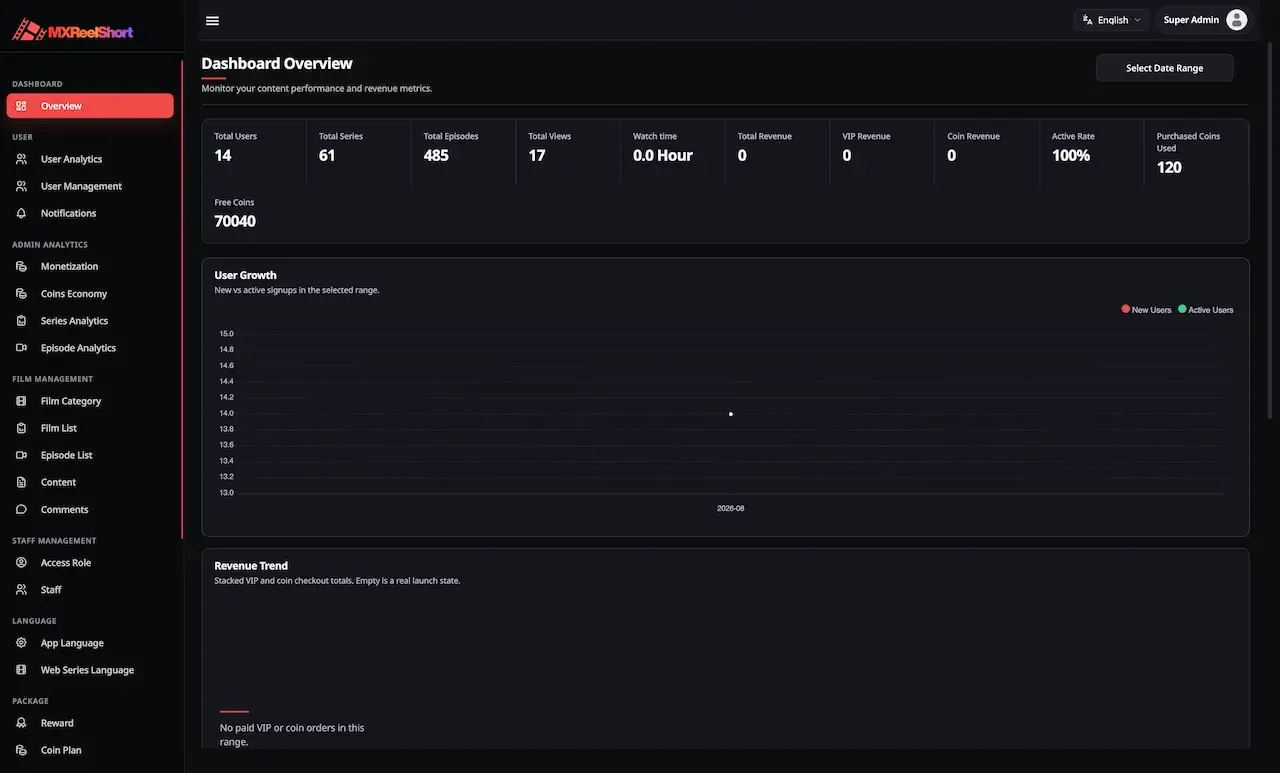
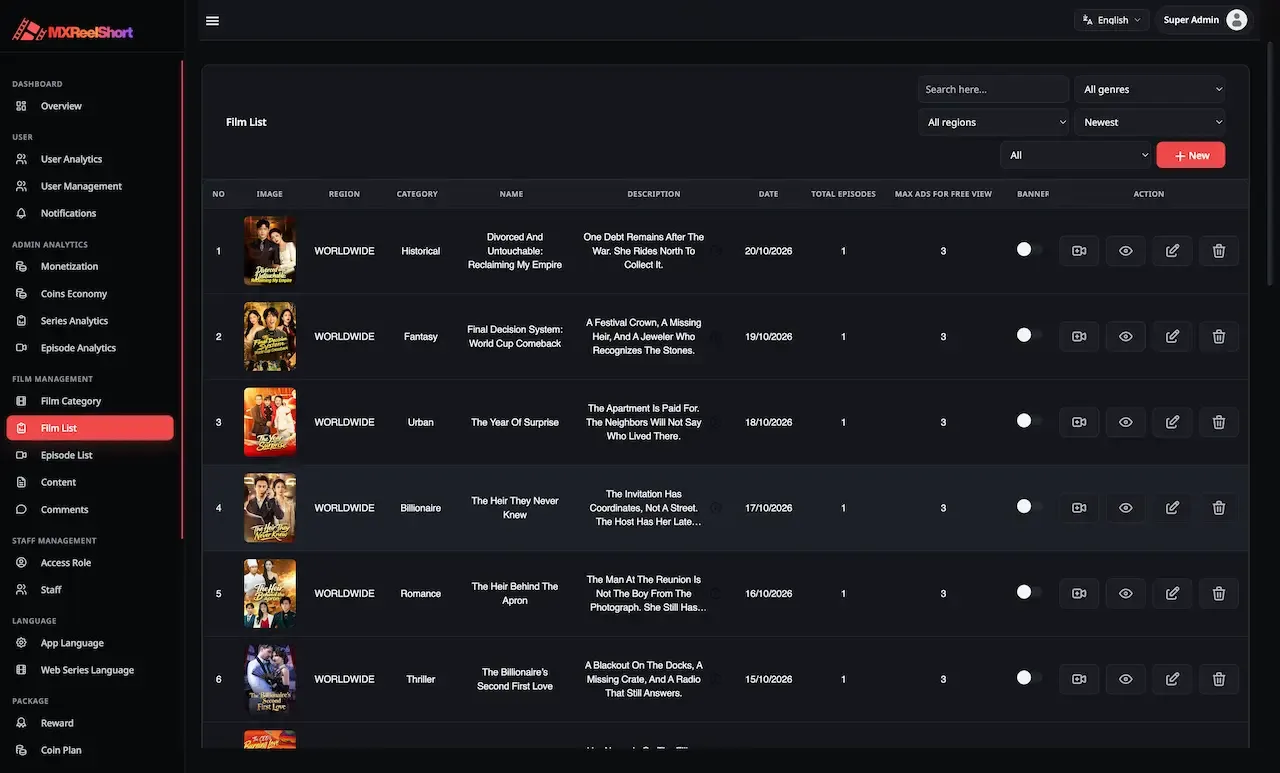
Real screens from the working product. Your platform ships rebranded with your name, logo and colors.
Admin panel 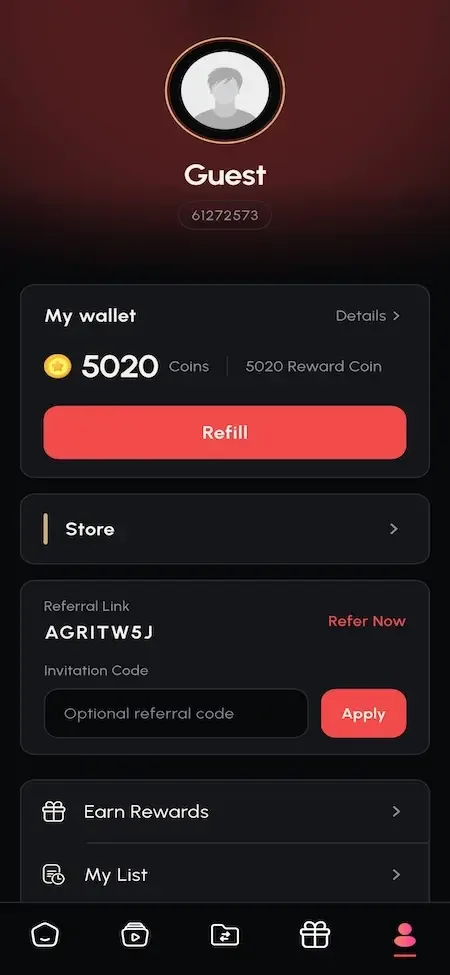
User app 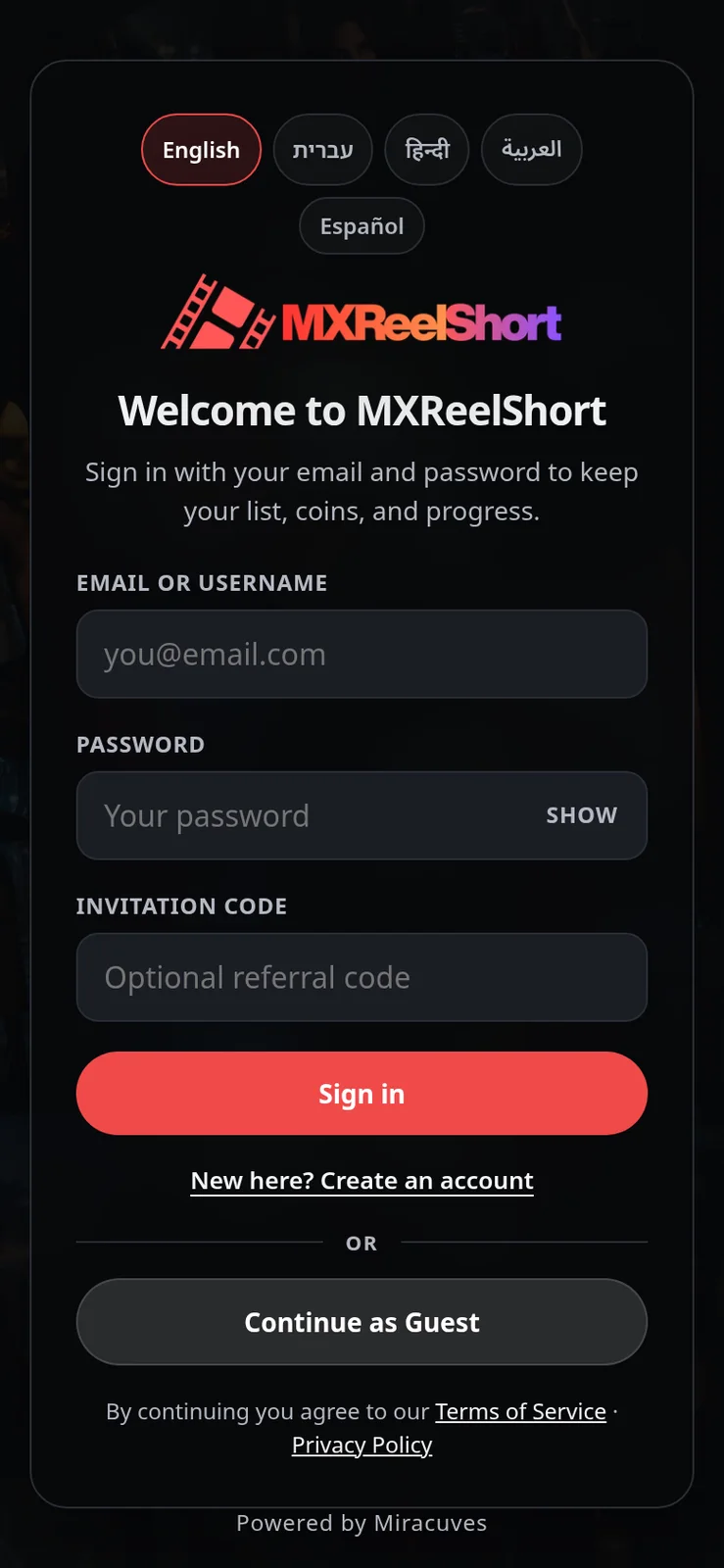
Web app 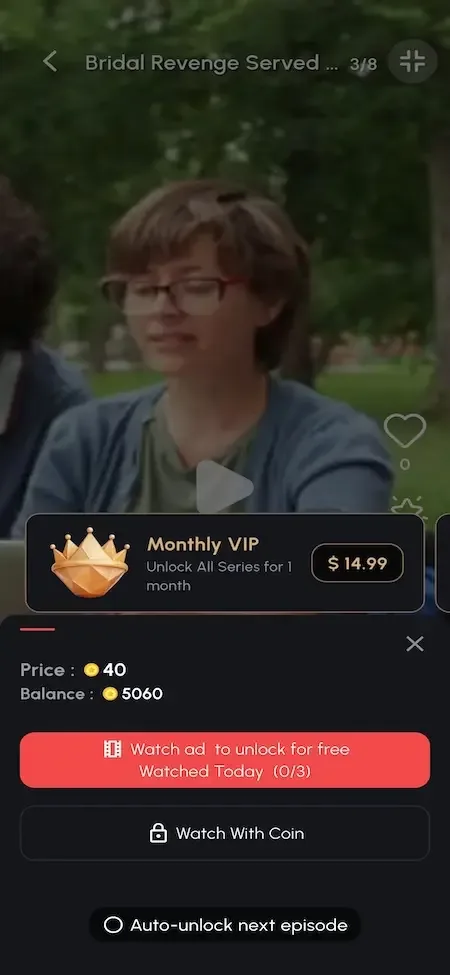
User app 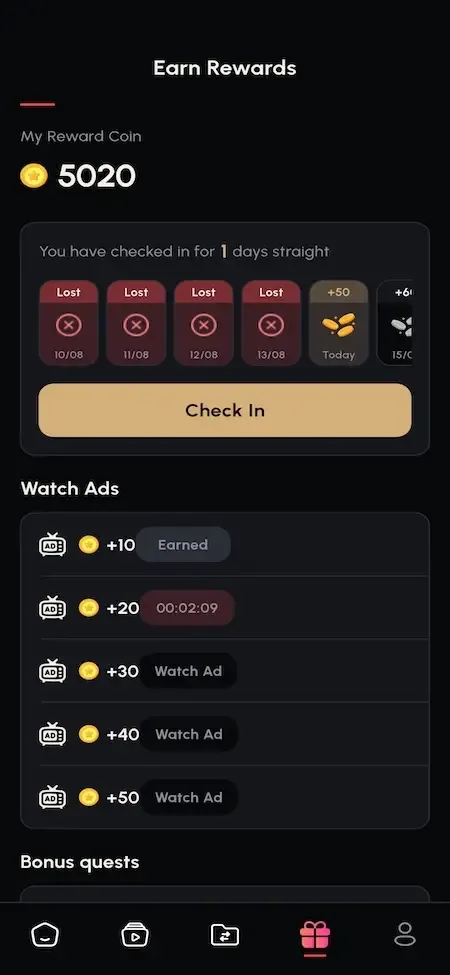
User app
How a GetFame delivery runs
The ready-made route is short because the product exists. Our six working days are rebranding, configuring, deploying and connecting your accounts. The items that run on other clocks, such as content and approvals, proceed beside it.
-
Kickoff and brand intake
We confirm your scope, collect your logo, colors and store names, and agree which gateway, storage and ad choices you will use. This is also the moment to be frank about your catalog: whether titles and rights are ready affects your public launch date more than any software task.
-
Branding and economy settings
We apply your identity across the web app, the store app and the console, then set locales, default currency, the free window and your first coin prices. You decide pack sizes and VIP plan lengths, and these can be changed later from the console.
-
Deployment to your own server
We deploy the web app, console and API to your server behind nginx and PM2 and seed the demo catalog so there is something to test with. You provide hosting access and any DNS changes the domains require.
-
Connecting your accounts
We wire storage, your payment gateway and your ad units, then run a purchase and a rewarded unlock end to end. Merchant keys and ad unit identifiers come from you, and approvals can take longer than the integration itself.
-
Catalog load and test pass
We help load your first titles and episodes and walk the unlock paths with real coins. Configuration problems found here are fixed, and you decide whether to close any items from the hardening list before launch.
-
Handover and store help
We walk your team through the console, hand over the code and documents, and begin app publishing support. After that, technical support runs for sixty days and updates are free for a year. Before the project closes, whoever will run the economy should change a price, issue a promotion and read a ledger entry unaided, because that day-two work is the part no handover document can do for them.
Warning signs in a proposal
These show up in quotes and demos long before any code is written. Finding two or three of them in one proposal is usually reason enough to keep looking.
- A single coin balance with no separation of promotional and purchased value.
- A wallet that changes a number but keeps no record of why it changed.
- Unlock rules living inside the mobile app instead of on the server.
- Right-to-left demonstrated on a landing page but not inside the product.
- Source code that is encrypted, obfuscated or licensed on an annual basis.
- A price given only as a range with no defined scope behind it.
- No written list of what is simulated, partial or still to be built.
- An offer to supply the catalog, with no clear answer on who holds the rights.
- Promises of a revenue figure before anyone has seen your titles or your market.
What we do not do
Being clear about boundaries is part of choosing a provider. These are the areas where we help with tooling or advice at most, and where responsibility stays with you or with the relevant third party.
Supply or license your drama
We sell software, not content. You produce or license every title, you hold the rights for each territory, and you answer for them. The demo catalog is seed material with royalty-free stills and is not licensed drama.
Provide legal advice
We can supply data export and deletion tools, and policy pages you can edit, but which laws apply depends on where you operate. Have an adviser review your terms, privacy notice, coin rules and any consumer protection duties.
Guarantee payment approval
Merchant accounts belong to you and each processor reviews applicants on its own terms. We connect approved keys and test the flow, but we cannot influence an approval, a reserve or a rate.
Guarantee store acceptance
We prepare the builds and help with submission, yet Apple and Google decide whether a listing is accepted and how coin sales must be billed. Review timing and requirements are outside our control.
Staff your moderation desk
The console gives moderators a queue, hide and block actions and a way to notify reporters. People to read it, and the rules they apply, are your responsibility, along with deciding what to do about content you are legally obliged to remove.
Promise audience or revenue
We do not market your service or forecast income. Results depend on your titles, pricing and acquisition. We can help you configure the levers and plan the order of experiments, but not the outcome.
Try the live ReelShort Clone demo
The demo runs the product end to end: a viewer app on the web and on Android, plus a view-only operator console. It carries our demo branding and a seed catalog of royalty-free stills, so use it to judge the unlock flow, the wallet and the console, not the content.
-
Viewer web app
Open the Viewer web app demo- Login
webuser@demo.com- Password
User_$321
Worth trying
- Play the free episodes, then hit the first locked one
- Open the wallet and read the history behind the total
- Claim the daily check-in and look at the quests
- Unlock an episode, then check the same title in the app
-
Operator console
Open the Operator console demo- Login
admin@demo.com- Password
Admin_$321
Worth trying
- Open a title and look at how episodes are numbered and priced
- Read the coin packs and VIP plans screens
- Browse revenue by series and by episode
- Notice that edits are refused: this login is view-only
-
Android viewer app
Open the Android viewer app demo- Login
webuser@demo.com- Password
User_$321
Worth trying
- Watch an episode in the fullscreen vertical player
- Open the comment sheet over a playing episode
- Open the quests tab and the referral history
- Switch the interface language, including a right-to-left one
ReelShort Clone development company FAQs
How many people are involved in a delivery?
A small team covers deployment, configuration and handover, with one point of contact for you so questions do not scatter. The platform is already built, so you are not paying a large crew to design it. Your side needs someone who can approve decisions and supply brand assets, hosting access and merchant keys without long delays.
Can I see the source code before I buy?
We can walk you through the running demo and discuss the structure, the data model and the documentation in a call. Full source is transferred at delivery. If you want an independent engineer to review the architecture first, we are happy to answer their technical questions, and to describe the stack and deployment layout.
Will my own engineers be able to take over?
Yes. The stack is Node, MongoDB, a React web app, a Next.js console and a Flutter app, which are common skills. You also receive the schema reference, an API collection and developer and security handbooks. Many operators keep us for updates and tailored work, while others hand the code to an internal team after the support window.
What happens if I want changes after the sixty days?
You can keep using the platform as delivered, ask us to scope tailored work, or give the code to another team. Updates remain free for the first year. Because you own the source and run it on your own infrastructure, a change of provider never needs our permission, and nothing is switched off when support ends.
Do you build under NDA?
Yes, we can sign a mutual non-disclosure agreement before you share business plans, catalog details or partner terms. Say so at the start of the conversation and we will arrange it. Deployments are on your servers, with credentials you control, so your data stays within your own environment.
Is an agency ever the better choice?
Sometimes. If your product is meaningfully different from a coin-unlock drama service, for example a new interaction model or heavy integration with systems of your own, a custom build may fit better. For an operator whose edge is titles, brand and market, a finished platform gets you to real viewers sooner and for less.
How quickly will you answer my questions during the project?
First response comes within two hours, Monday to Saturday, from 10:00 to 19:00 IST. Technical questions during delivery and for sixty days afterward go through the same channel. If something needs deeper investigation we say so and give you a time, rather than leaving a message unanswered.
Explore the ReelShort Clone
The overview and its companion pages answer the main questions in turn. Pick the one you need next.
-
ReelShort Clone
The overview: live demo, screens, price and everything in the box.
Back to the overview -
Features
Short drama looks like a video product, yet the hard engineering sits behind the lock: pricing a single episode, keeping coins honest, and making the web app and the store app agree about what a viewer owns.
See the full breakdown -
Development cost
The software for a coin-based drama service costs less than the things around it: titles, encoding, bandwidth and store fees.
See exact pricing -
Business model
A coin-unlock drama service earns from a decision that is small, fast and made at an emotional peak.
See the playbook
→Start here
Tell us what you want to launch.
Share the platform and your market. You get a walkthrough of the live demo, the exact scope of what ships, and a fixed price in writing. First response in under 2 hours, Monday to Saturday, 10:00 to 19:00 IST.
Trademark and independence notice
This page uses the name ReelShort to describe a type of platform. The product sold here is separate software, built independently, and ReelShort has no part in it.
Why this name
"ReelShort clone" is industry shorthand that founders use when searching for software with a comparable business model. It names a category of product, not a copy of ReelShort.
Who built this
The platform is an original product designed and written by Miracuves. It contains no code, design, graphics or content originating from the ReelShort website or applications, and it ships under your own brand.
Trademarks
ReelShort and its logos are trademarks of their respective owner and are named here for reference only. GetFame is not affiliated with, sponsored by or endorsed by ReelShort. Rights holders can write to legal@miracuves.com.
Operator responsibility. The operator of a launched platform is responsible for legal compliance in the markets it serves. Nothing on this page is legal advice.Read the full disclaimer