
Patreon Clone Business Model: How a Membership Platform Earns
A membership platform earns when supporters keep paying month after month and creators keep giving them reasons to stay. This page explains the idea behind the model, each stream and who pays for it, how the named service works in broad terms, and which lever to switch on first when you launch your own marketplace or a single-community site.
- 7
- ways to earn
- 3
- web panels included
- None
- revenue share to us
On this page11 sections
- The idea behind a creator membership business
- Revenue streams of a Patreon clone platform
- The Patreon Clone, on screen
- How the Patreon model works
- Which lever to use at each stage of growth
- Three ways operators run a membership platform
- Mistakes that damage a membership platform
- The first lever to switch on for your platform
- Try the live Patreon Clone demo
- Patreon Clone business model FAQs
- Explore the Patreon Clone
The idea behind a creator membership business
A membership turns a one-time fan into a recurring one. Instead of selling a single item to a stranger, the creator offers ongoing access, and the supporter pays every period for as long as the access feels worth it. That gives the creator income they can predict, and it gives your platform a revenue base that does not restart from zero every month. Each new member adds to a pool that largely carries over into the next period, so growth compounds rather than resetting.
Predictability changes how creators behave. A creator with a steady membership can plan content, invest in better equipment and spend time on supporters instead of chasing the next sale. Supporters in turn feel part of something, because their payment is tied to a person and a community. That mutual commitment is the reason this model has lasted where one-off tipping often fades. For you as operator, steady creators produce steady content, and steady content is what keeps members from cancelling.
The model also depends on retention more than on acquisition. Winning a member is only the start, and most of the lifetime income lies in keeping them. The operator's job is to make cancelling fair, make posting easy for creators, and give supporters reasons to stay, such as new content, personal contact and recognition. Platforms that retain well earn steadily. A creator who goes quiet is the usual cause of cancellations, so watching posting frequency tells you where retention is at risk.
Revenue streams of a Patreon clone platform
Subscriptions carry the model, but several other streams sit beside them. Each one below shows who pays, when the money arrives and where your own earnings come from as the operator.
Recurring subscriptions
Supporters pay a fee each period for access to a creator's locked posts, and a creator can run more than one tier. This is the base of the business and the number operators watch most closely. Your earnings come from the fee structure you set for creators. A modest percentage on a large number of renewing members is steadier than a larger cut on a few, which is worth remembering when you decide what to charge.
Tier upgrades
Supporters move to a higher plan to unlock more, which raises the recurring amount without a new customer. Upgrades are a sign that a creator has built a sensible ladder, and they are worth encouraging through clear descriptions of what each plan includes. The cheapest growth in a membership business is often an existing member moving up one step, since no acquisition cost is involved.
Pay-per-view posts
A single post can be priced on its own, outside every plan. Supporters who do not want a plan can still buy what interests them, and creators can price special material without distorting their tiers. Income follows how much premium content is published. A creator who releases an occasional special piece gives lapsed members a reason to return, and you earn your fee on each sale.
Tips
Supporters send money as a thank-you with no plan required. Tips are unpredictable, but they reward moments of goodwill and cost the creator nothing extra to enable. They often spike after a popular post or a live event. Because nothing is promised in return, tips are best treated as a bonus on top of the plan income, not as something to forecast against.
Custom content requests
A supporter asks a creator to make something to their brief and pays an additional fee. It creates a personal product that scales with the creator's time, and it lets your most devoted members spend more without changing the plan structure. Creators can decline requests that do not suit them, so the stream stays voluntary on both sides and cannot overload anyone's schedule.
Paid private messages
A conversation with a creator can come with a fee attached. This turns attention into income for creators who receive many messages, and it helps filter conversation toward people who really value a reply. The supporter sees the price before sending, and the creator decides which conversations are worth opening for a fee.
Platform fees
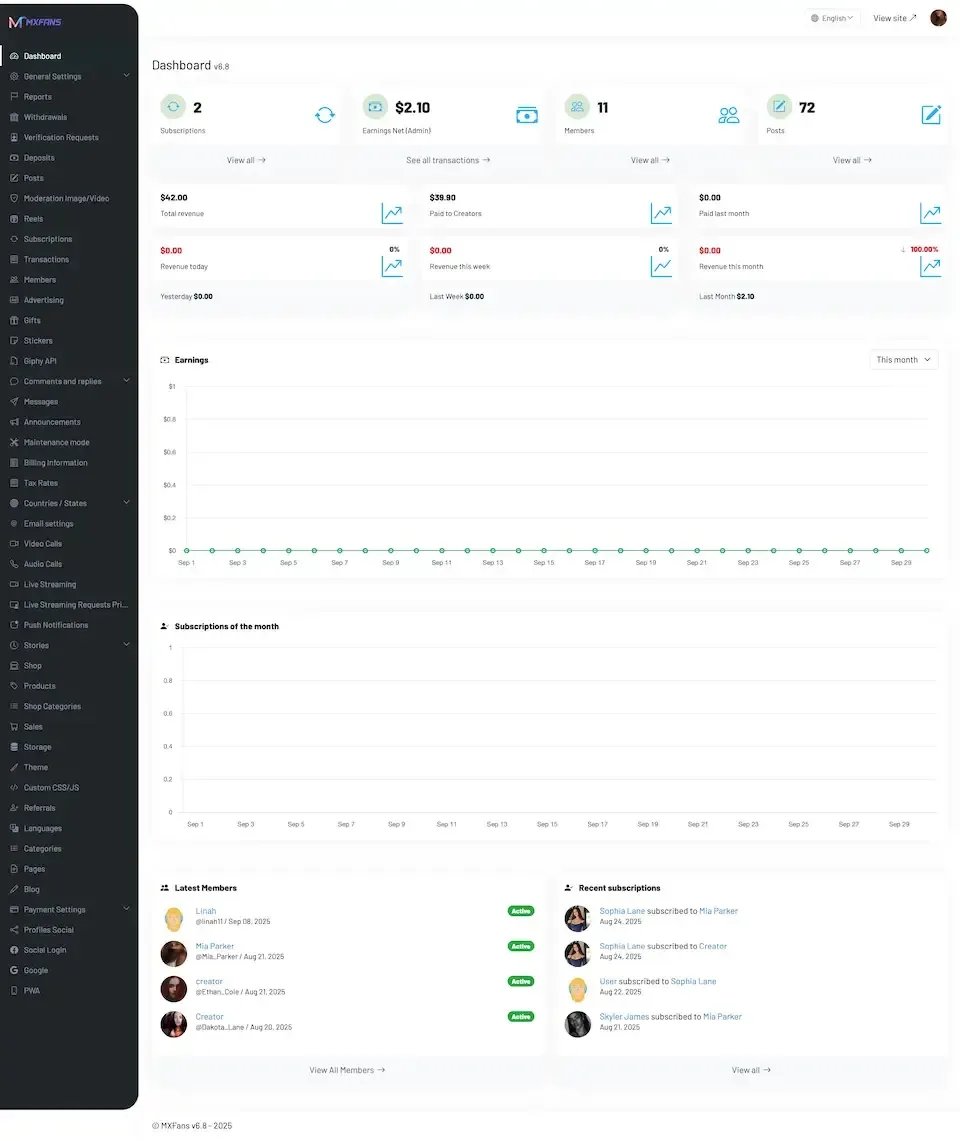
As operator you track subscription earnings and transaction fees from the admin panel and manage payouts. How much you take, and on which streams, is your decision, so you can set terms that suit your market and the creators you want to recruit. Lower fees help in recruiting well-known creators, while higher ones suit a platform that offers services creators cannot easily get elsewhere.
Referral rewards
A referral and affiliate program rewards members who bring new users to the platform. It spreads acquisition across your community and turns happy supporters into a sales channel, with rewards you design to match your margins. Rewarding a referral only once the new member has paid protects you from paying for sign-ups that never turn into income.
The Patreon Clone, on screen
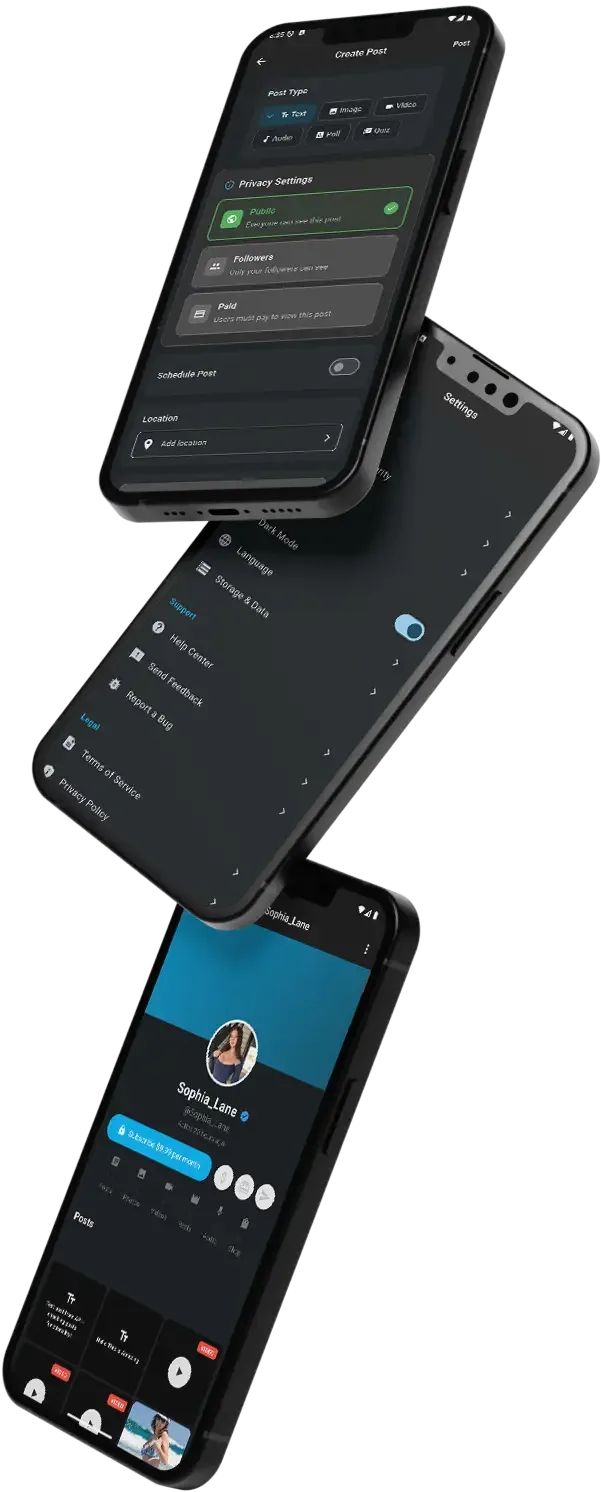
Real screens from the working product. Your platform ships rebranded with your name, logo and colors.
Admin panel 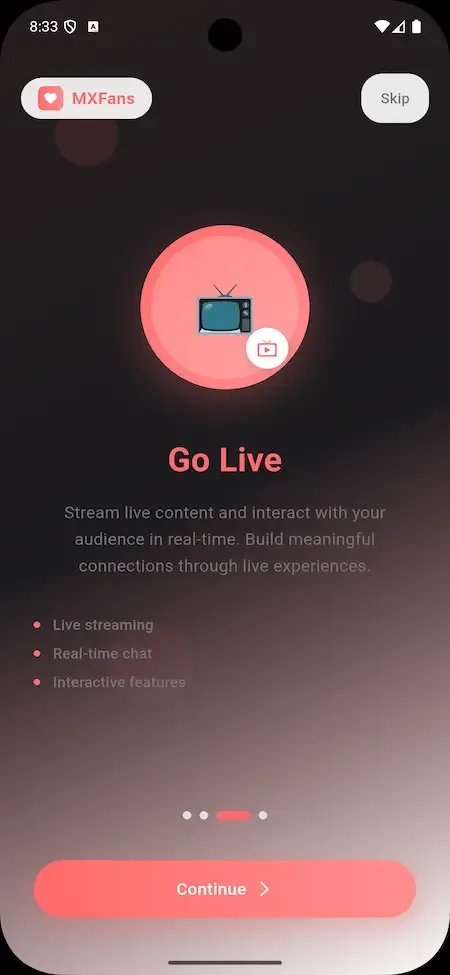
Fan app 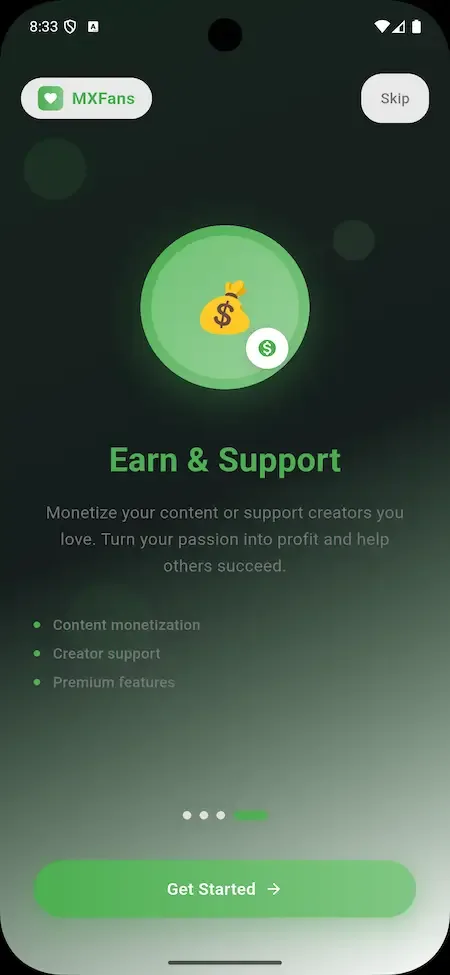
Fan app 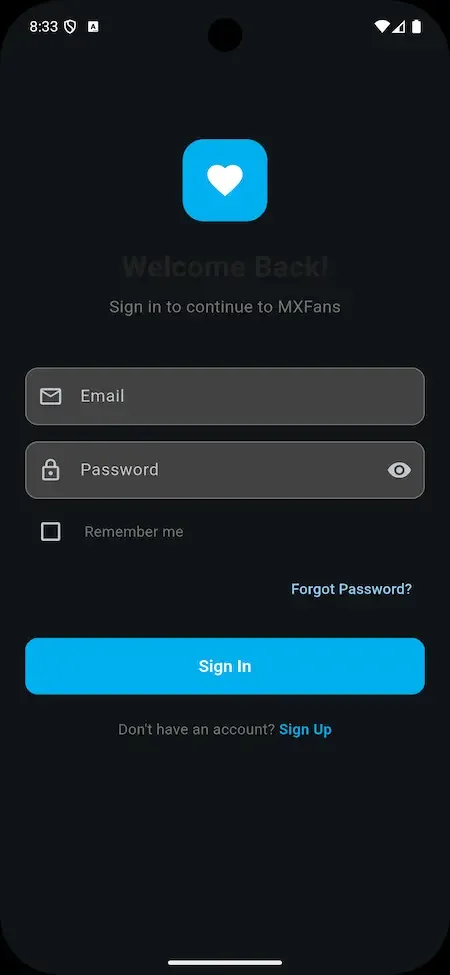
Fan app 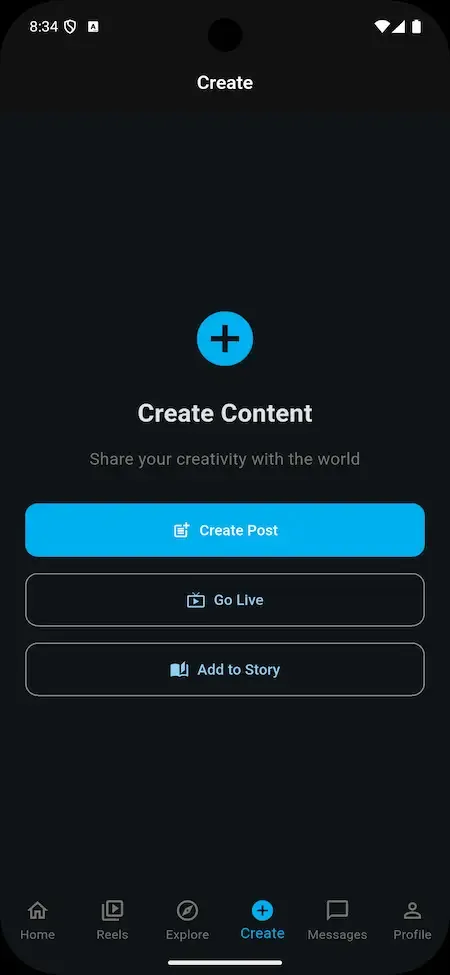
Creator studio
How the Patreon model works
Patreon is widely known as a service where creators charge supporters a recurring fee and publish to them in return. Supporters usually choose among tiers, and each tier unlocks different content or perks. The service sits between the two sides, processes the payments and applies its own terms, fees and content rules to every creator who uses it.
That arrangement is what this product lets you reproduce under your own name. We have no affiliation with the service and make no claims about its business or results. If you build on this platform, your own marketplace has your policies, your fee structure, your supporter data and your brand, and the whole product runs on servers you control.
Which lever to use at each stage of growth
A new membership site needs different emphasis from an established one. The table suggests where to concentrate as your community matures, with a reason you can check against your own numbers.
| Stage | Lever to use | Why |
|---|---|---|
| Launch | One clear plan per creator | Simple choices convert first-time supporters faster than a menu |
| First members | Tips and pay-per-view posts | Extra spending captures fans who are not ready to subscribe |
| Growing | Tier ladders and discounts | More price points raise membership and reward early supporters |
| Established | Custom requests and paid messages | Personal products let loyal members spend beyond the plan |
| Scaling | Referral program and platform fees | Community-led growth and fee income that grows with the marketplace |
Three ways operators run a membership platform
The same software supports quite different businesses. These are the main shapes operators describe, each with its own priorities for configuration, fees and moderation.
The multi-creator marketplace
You recruit many creators, set fees and earn from transactions. Priority goes to discovery, creator onboarding, fair fee terms and moderation, because the marketplace lives on the variety and reliability of the creators it attracts. Your growth depends on creators finding audiences quickly, so the quality of search and profile pages matters, and the approval queue should never become a bottleneck.
The single-community site
You run one community around a subject, with your own rules and tiers. Branding, tight policies and a strong sense of belonging matter more than discovery, and a small, loyal membership can sustain the platform. A club for one craft or one kind of music can charge for the sense of being among peers, and members who stay for the people rarely leave over price.
The white-label provider
You deploy the platform for a client under their brand and hand over operations. Domain control, documentation and clear boundaries between your access and theirs matter most, and the source code lets the client carry on independently. Agree in writing who owns the store accounts and the server logins, so the handover is a transfer of credentials rather than a negotiation.
Mistakes that damage a membership platform
Most failures here come from decisions about people and terms rather than technology. These patterns appear repeatedly, and each can be avoided with a choice made before launch.
Overcomplicating the plans
Many tiers with fuzzy differences confuse supporters and stall decisions. Start with a small number of clear plans, explain what each unlocks and add more only when supporters ask for them. If a visitor cannot say in one sentence what the middle plan adds over the lowest one, the ladder is too blurry and the difference needs rewriting.
Making cancellation hard
Supporters who struggle to leave dispute charges and tell others. Keep cancellation simple and keep access until the cycle ends, which is fair and cheaper than handling complaints. A supporter who leaves on good terms may return later, while one who had to fight to cancel never will and may warn others away.
Recruiting creators without a plan
A marketplace with many empty profiles looks abandoned. Bring in a small group of active creators first, help them publish and promote, and open the doors wider only when there is something worth finding. A visitor who lands on a profile with no posts leaves at once, and one bad impression costs you a supporter you paid to attract.
Changing fees after creators earn
Raising your share once creators depend on the income damages trust quickly, and your best creators have the most alternatives. Settle your terms before recruiting, publish them plainly and explain any later change well in advance.
Ignoring moderation until there is trouble
Content problems arrive without warning, and a marketplace that ignores them early loses good creators first. Write your policies before launch, assign someone to review submissions and apply the suspension tools consistently so that every decision looks fair to the people affected.
Treating subscriptions as the only income
Tips, pay-per-view posts, custom requests and paid messages add spending that a plan alone misses. Enable several streams from the beginning, watch which ones your audience actually uses and keep the useful ones in front of supporters, while quietly dropping the rest.
The first lever to switch on for your platform
Begin with recurring subscriptions and one clear plan per creator. A single, well-described offer is easy for a supporter to understand and easy for you to measure, and it exercises the whole money path from payment to payout. Recruit a small set of active creators, help them publish regularly and watch how many supporters stay past the first cycle.
Once subscriptions are working, add tips and pay-per-view posts, which capture spending that a plan misses without adding complexity. Then introduce extra tiers and discounts, and later custom requests and paid messages. Switch the referral program on when you have members who enjoy the platform enough to recommend it, because that is when it pays off.
Try the live Patreon Clone demo
The demo is a live deployment of the membership product with demo branding, so you can see the supporter side, the creator side and the operator side before deciding anything. Use the app logins to behave like a supporter and a creator, then open the admin address to see where your own team would work. Sample accounts are public.
-
Supporter app
Open the Supporter app demo- Login
user@demo.com- Password
User_321
Worth trying
- Browse a creator page and compare what each plan unlocks
- Open a locked post and see how the paywall presents
- Look at where an active subscription can be managed
-
Creator app
Open the Creator app demo- Login
creator@demo.com- Password
Create_321
Worth trying
- Check how a post is published and attached to a plan
- Find where plans, discounts and prices are configured
- Open the earnings and withdrawal screens
-
Subscriber and creator web panels
Open the Subscriber and creator web panels demoWorth trying
- Sign in with either demo account and compare web to app
- Follow a subscription from plan choice to checkout
- Check what a creator sees in the browser panel
-
Admin panel
Open the Admin panel demoWorth trying
- Look for account verification, suspension and content approval
- Open revenue, fee and payout management screens
- Find the policy and platform configuration settings
Patreon Clone business model FAQs
How should I price a first membership plan?
Creators set their own prices, and we do not publish a recommended number because the right level depends on the audience and the market. A sensible approach is to begin modestly, describe the benefits plainly, watch conversion and retention, then adjust. Discounts can help early supporters feel rewarded.
Do I need many creators to start?
No. A small group of active creators is enough to learn from and is easier to support than a crowd. What matters is that they publish regularly and bring an audience, because supporters judge the platform by the creators they already follow.
Can I charge creators a monthly fee instead of taking a share?
Fee structure is your decision as operator. The admin panel tracks subscription earnings and transaction fees, and the platform is yours to configure. If you want a particular fee model built exactly as you describe it, tell us on the scoping call so it is written into the scope.
How do I keep members from cancelling?
Retention comes from regular content, personal contact and clear value from each plan. The platform supports posts, live streams, messages and requests, and push notifications bring supporters back. Review cancellations to learn which creators retain well, and help the others with ideas.
Is a membership model suitable for educators?
Yes, it suits anyone who publishes regularly to a committed audience, including teachers who share lessons and live sessions. Plans can unlock different levels of material, and offline viewing in the apps helps learners. We can build niche flows around courses for your plan.
What content is allowed on my platform?
You decide. The admin panel lets you write platform policies, content guidelines and community rules, and your team approves submissions and acts on activity. You are responsible for legal compliance in your market, and we do not give legal advice, so take local advice on rights and acceptable content.
Explore the Patreon Clone
The overview and its companion pages answer the main questions in turn. Pick the one you need next.
-
Patreon Clone
The overview: live demo, screens, price and everything in the box.
Back to the overview -
Features
A membership platform succeeds when supporters understand what each plan gives them and creators can see what they will be paid.
See the full breakdown -
Development cost
The ready-made membership platform costs $3,699 once, including full source code, two mobile apps, three web panels and deployment on your servers.
See exact pricing -
Development company
Choosing who builds a creator membership platform is mostly about payments, mobile apps and long-term maintainability, because a membership runs for years and the code has to be changed by someone.
Compare options
→Start here
Tell us what you want to launch.
Share the platform and your market. You get a walkthrough of the live demo, the exact scope of what ships, and a fixed price in writing. First response in under 2 hours, Monday to Saturday, 10:00 to 19:00 IST.
Trademark and independence notice
This page uses the name Patreon to describe a type of platform. The product sold here is separate software, built independently, and Patreon has no part in it.
Why this name
"Patreon clone" is industry shorthand that founders use when searching for software with a comparable business model. It names a category of product, not a copy of Patreon.
Who built this
The platform is an original product designed and written by Miracuves. It contains no code, design, graphics or content originating from the Patreon website or applications, and it ships under your own brand.
Trademarks
Patreon and its logos are trademarks of their respective owner and are named here for reference only. GetFame is not affiliated with, sponsored by or endorsed by Patreon. Rights holders can write to legal@miracuves.com.
Operator responsibility. The operator of a launched platform is responsible for legal compliance in the markets it serves. Nothing on this page is legal advice.Read the full disclaimer