ShortMax Clone Business Model: Paying for Retention in Coins
A growth-led drama service earns in a particular order. Acquiring a viewer costs cash and keeps getting dearer, while bringing one back can be paid in coins you issue at a price you set. This page explains that arithmetic, each revenue source, and the order in which to switch the levers on.
- 7
- typed ledger codes
- 4
- reward settings tabs
- None
- revenue share to us
On this page11 sections
- The idea: a coin is cheaper than a click
- How money moves in a retention-led service
- The ShortMax Clone, on screen
- How the ShortMax pattern works, in general terms
- Which retention lever to use at each stage
- Three ways to run a growth-led service
- Retention mistakes that burn coins
- What to switch on first, and in what size
- Try the live ShortMax Clone demo
- ShortMax Clone business model FAQs
- Explore the ShortMax Clone
The idea: a coin is cheaper than a click
Buying a new viewer through advertising costs money, and the price rises as more operators compete for the same audiences. Bringing an existing viewer back costs only the value of the coins you hand over, and those coins buy episodes that are already produced. A reward ladder is therefore a way of swapping an external, rising cost for an internal one you control. The coin is cheap to mint and only costs you something when it is spent on content you already own.
The model works only if you can see it. When every coin movement carries a type, you can tell coins sold for money from coins given for a habit, and compare each with the episodes later unlocked. Without that separation a balance is just a number, and nobody can say whether the ladder paid for itself. A viewer with a hundred coins is a different business situation depending on whether they bought them or earned them, and the ledger records which.
It also explains why reward values are settings. The first weeks of real behavior will show a ladder that is too generous or too thin, and the person running the business must be able to correct it quickly. Sound retention economics are less about the first design than about how cheaply you can adjust it. Treat the first month as measurement, change one value at a time, and keep a note of what each change did.
How money moves in a retention-led service
Some sources bring cash in, and others only make the cash sources cheaper to fill. Keeping the two apart in your thinking, and in the ledger, avoids paying for a loop you cannot justify.
Coin packs
The primary cash source. Viewers buy bundles through hosted checkout or store billing, with bonus coins and an offer price you set. The purchased balance does not expire, and the ledger keeps it apart from every coin given away. Returning viewers are the ones most likely to buy.
VIP windows
A plan with a validity window opens locked episodes while it lasts. On a growth-led launch it usually follows the reward loop, since a pass offered too early can move your best payers onto your cheapest way of watching. The plan price is collected at purchase and renewal.
Rewarded ads
A third way to open an episode for viewers who rarely spend, under a daily cap per title. The advertiser pays through your ad network account, and the live route runs in the store app. Treat it as a supplement and compare it with coin sales. In a retention model it also doubles as a reward: a task that pays coins for watching an ad lets a viewer earn the next episode, so keep the two uses from competing on the same screen.
Campaign-driven spend
Reaching existing viewers is the cheapest selling you will do. A scheduled campaign about a new series or an expiring balance writes an inbox row for each viewer and lifts repeat purchases without any acquisition cost. Statistics show what was delivered, so timing can be learned. Keep a record of which template went to which audience and when, so the next send repeats what worked instead of guessing again.
Referral growth
Not income, but an acquisition channel paid in coins. A referred viewer arrives at a lower cost than a bought one, provided the reward is sized against what that viewer is worth. The referral history screen keeps the loop visible, which keeps it used. Measure the stream by the spending of referred viewers over their first weeks, not by the number of invitations sent, since an invitation that never converts costs nothing but also earns nothing.
Ladder and task rewards
Check-ins, quests, follow bonuses and the email bonus pay in coins and bring people back on day four. They produce no revenue directly. Their value is measured by return visits and later purchases, which the ledger makes visible. Follow bonuses for social accounts also carry a second return, a larger audience on channels you own, so count that when judging whether the coins spent on them were worth issuing.
The ShortMax Clone, on screen
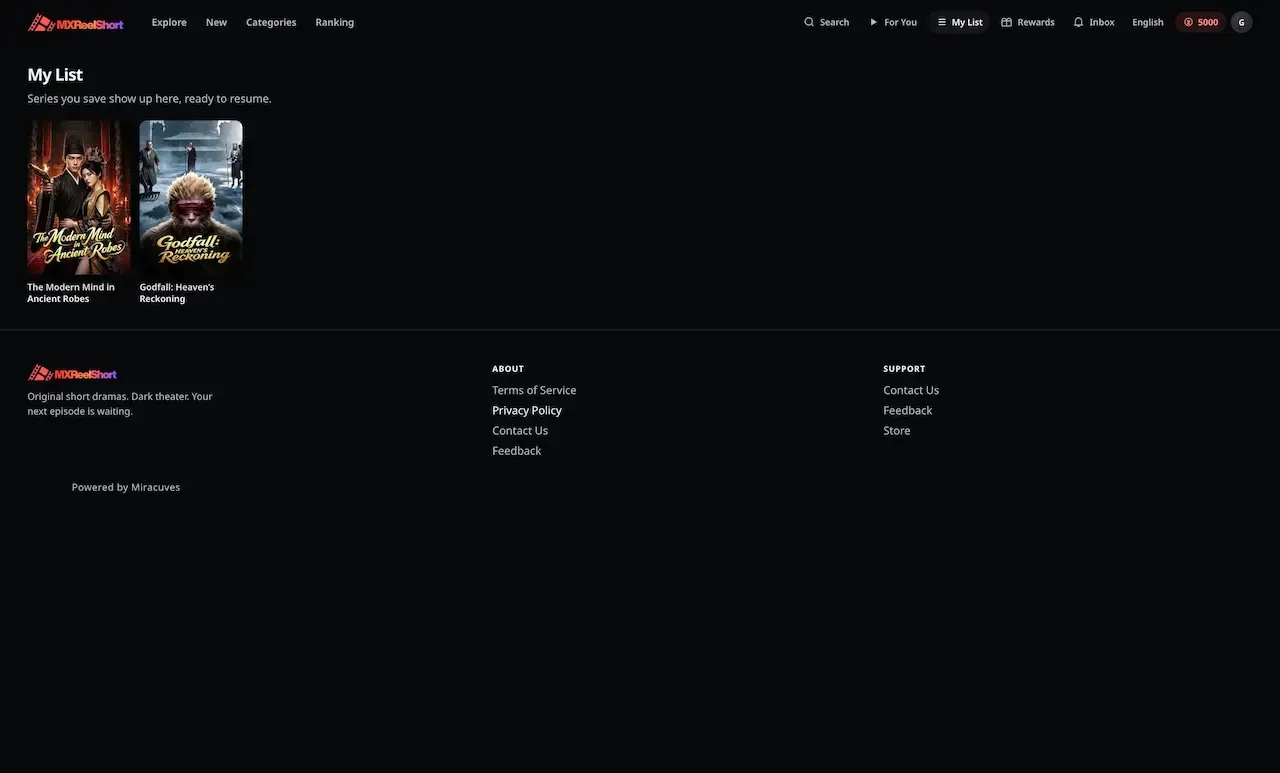
Real screens from the working product. Your platform ships rebranded with your name, logo and colors.
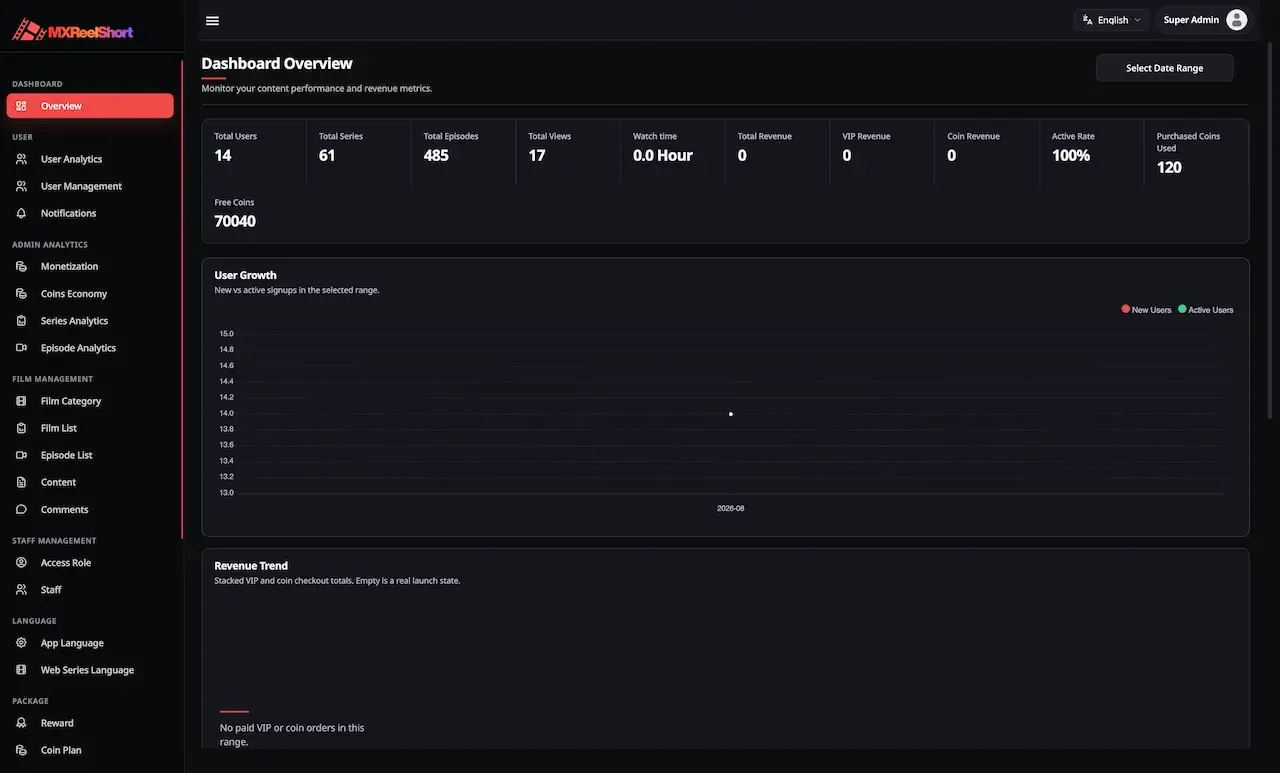
Admin panel 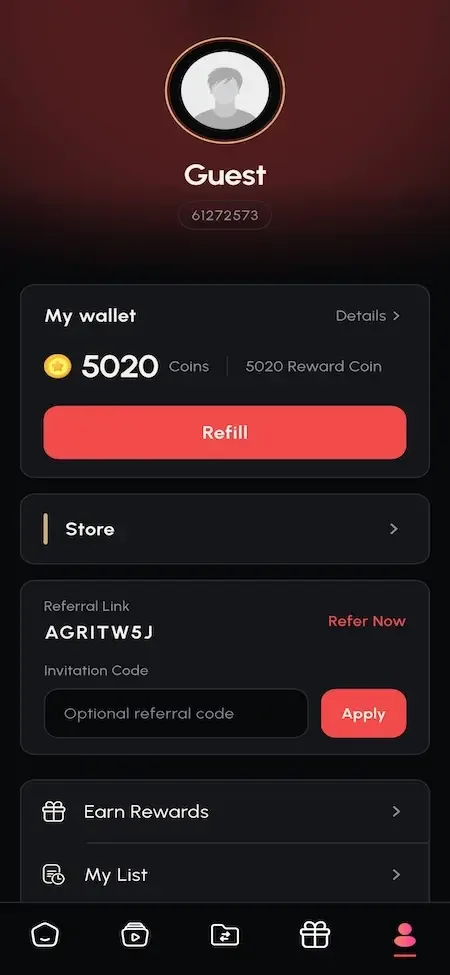
User app 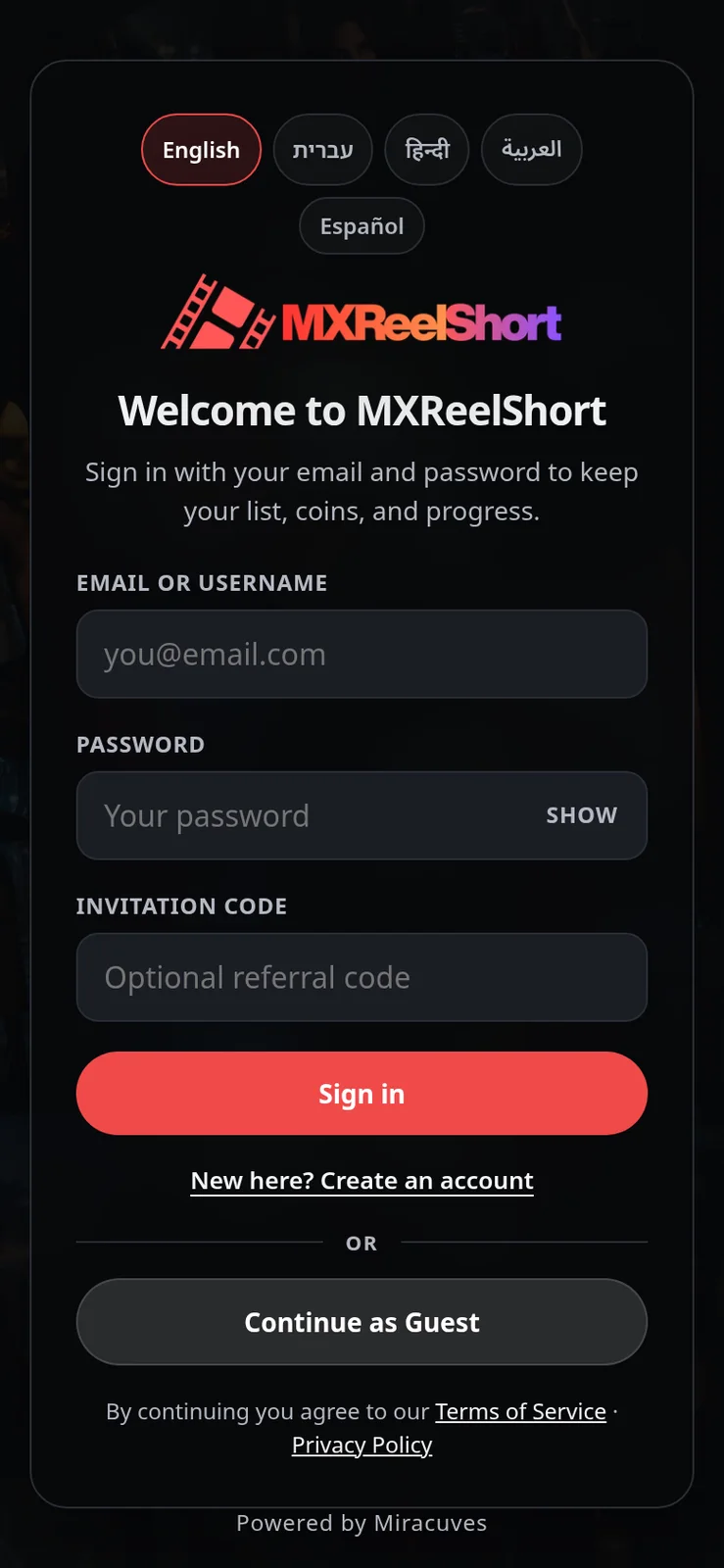
Web app 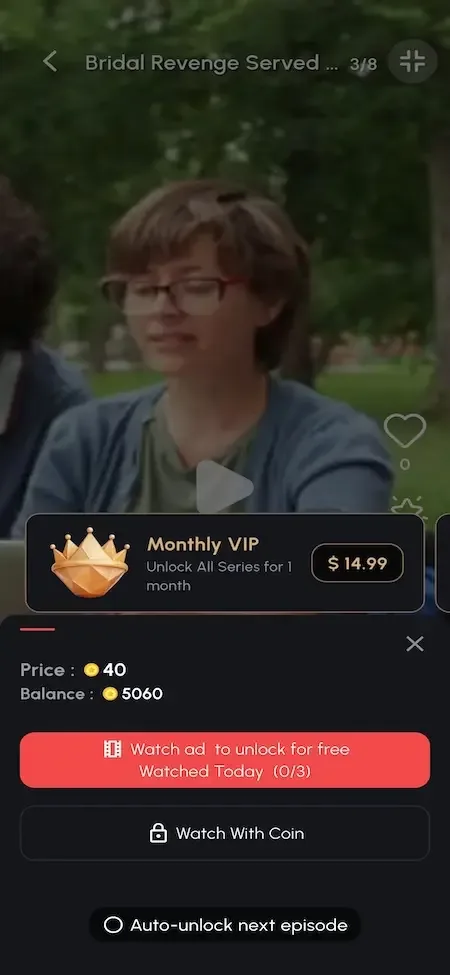
User app 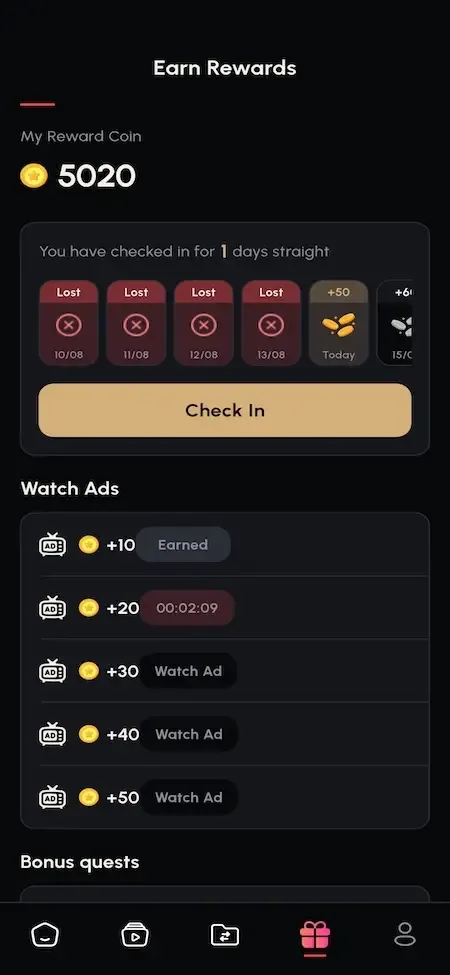
User app
How the ShortMax pattern works, in general terms
ShortMax belongs to the vertical drama category, where apps commonly open with free episodes and offer later ones through coins or passes. Rewards are a familiar feature of this type of app, including daily bonuses, free episodes earned by viewing ads and invitations that credit both sides. We describe those mechanics as widely seen in the category, not as figures or internal facts about any one company, and none of this implies a relationship with the brand.
This is a general description of the category only. We make no claim about any company numbers or private mechanics. The operator takeaway is the logic of the pattern: attention is bought partly with inventory, a viewer is encouraged to return daily, and friends are invited with a shared incentive. The software here supplies those mechanics, while the catalog is yours.
Which retention lever to use at each stage
Turning on every reward at once makes it hard to tell which one worked. This sequence follows how the loop feeds itself, and it is a judgment based on the mechanics, not a promise. Your market will move it.
| Stage | Lever to use | Why |
|---|---|---|
| Launch | A login bonus, the check-in ladder and a free window | A viewer must reach the lock invested, and the first coin should arrive at once |
| First month | Reward tasks under tight daily caps | You learn how fast viewers earn before widening any limit |
| Early traction | Referral credit and the campaign desk | Satisfied viewers invite others, and messages recover those who drifted away |
| Growth | Rewarded ads on the store app | Viewers who will not pay can still earn for you without displacing packs |
| Maturity | VIP windows for heavy viewers | A pass fits people who binge, once you can identify them in the reports |
Three ways to run a growth-led service
The same code serves different businesses. Which you are decides how much to rely on rewards, how tightly to cap them and what skills to hire for, so choose the profile closest to your plan before you change a setting.
Habit-first consumer app
The service is built around daily return. Check-ins, quests and the inbox carry the product, with coin packs as the main cash source. The risk is reward inflation, so the operator watches the issued-versus-sold split closely and tunes caps weekly. A retention analyst is the key hire. Their routine is simple: read the coin analytics on Monday, adjust one reward value, and read the effect the following week.
Paid-acquisition buyer operator
The operator buys traffic and relies on rewards to convert and keep it. Attribution is set up around the platform, with measurement tools beside it. The economics hinge on whether a viewer returns often enough to recover the acquisition cost, which the ledger helps to answer. A generous first-day reward helps conversion but raises the break-even point, so the ladder and the ad budget have to be planned together.
Community and referral builder
Growth comes from invitations and social follows, with campaigns keeping the audience warm. Referral rewards and follow bonuses carry the model, so abuse controls and clear rules for fair use matter more than elsewhere. A moderator and a community manager are the key people. Publish the referral rules in plain words, because viewers who understand what counts are less likely to dispute a credit that did not arrive.
Retention mistakes that burn coins
Reward systems are easy to start and hard to unwind. These are the errors that cost operators most, with the setting that prevents each.
Paying rewards before the story hooks
A viewer who collects coins but never starts a series has not been retained, only rewarded. Pair early rewards with strong opening episodes and a sensible free window, and judge the ladder by return visits and purchases, not by claims.
Loose daily caps
Viewers earn as fast as the rules allow, and a generous cap turns into a large issue of coins within days. Start tight, read the analytics and widen only when issued coins are producing later purchases.
A referral reward larger than the viewer
If an invited viewer is worth less than the credit paid, growth loses money on every success. Size the reward against realistic spend and watch for accounts created only to collect it. A quick test is to compare the average spending of referred viewers after their first few weeks with what the referral credit would have bought in episodes, and cut the credit if the second figure is larger.
Over-messaging the inbox
Frequent campaigns train viewers to ignore the channel. Send fewer, more specific messages, vary the template and use the delivery statistics to find the timing that works for your audience. A message tied to something the viewer did, such as stopping mid-series, earns more attention than a general announcement, and the inbox row remains available when a viewer wants to look again.
Mixing given and sold coins
Treating every coin alike hides the real cost of retention. Use the ledger codes and the two balances, and report issued and sold coins as separate lines in your planning. When a single total goes into the monthly review, an overgenerous ladder looks like healthy usage until the sold figure stalls and the gap can no longer be explained.
Ignoring the catalog
Rewards cannot rescue weak stories. The platform is the mechanism for returning, and the drama is what viewers return for. Plan content supply alongside the reward design. A viewer who claims the daily bonus and finds nothing new to watch has been paid to be disappointed, which teaches them that returning is not worth the effort.
What to switch on first, and in what size
Begin with the free window, a login bonus and the seven day ladder at modest values, plus two or three coin packs. This gives viewers a first coin immediately, a reason to return tomorrow and a simple way to spend money when they are ready. Leave referrals, follow bonuses and ad tasks off until the base behaviors are measurable.
After a few weeks of data, add the campaign desk and read what it does to return visits, then introduce referral credit at a conservative amount. Change one setting at a time and give each change several days. The coin analytics by ledger code tell you whether each step cost more than it returned. If a step did not pay back, reverse it, note the result and move on to the next lever instead of piling changes on top of each other.
Try the live ShortMax Clone demo
The demo is best used for the growth loop: claim a check-in, watch a reward task credit the wallet, follow the referral link, then schedule a campaign from the console. It carries our demo branding and a seed catalog of royalty-free stills, so judge the mechanics rather than the titles.
-
Rewards in the viewer app
Open the Rewards in the viewer app demo- Login
webuser@demo.com- Password
User_$321
Worth trying
- Claim the daily check-in and watch the streak advance
- Complete a reward task and see the wallet credit
- Open the referral screen and read the reward
- Open the wallet history and read each entry type
-
Campaign desk and analytics
Open the Campaign desk and analytics demo- Login
admin@demo.com- Password
Admin_$321
Worth trying
- Read the campaign templates and the audience options
- Look at the four reward settings tabs
- Open the coin economy analytics by ledger code
- Try to save a change and see the view-only role refuse
-
Android viewer app
Open the Android viewer app demo- Login
webuser@demo.com- Password
User_$321
Worth trying
- Open the quests tab and claim a finished quest
- Open the inbox and read a campaign message
- Unlock an episode with a rewarded ad
- Compare the wallet history with the web app
ShortMax Clone business model FAQs
Do rewards reduce coin sales?
They can if they are too generous, since a viewer with free coins has less reason to buy a pack. Reward coins are spent first and expire on a window you set, which limits the effect. The practical test is whether later purchases rise among viewers who use rewards, which you can read from the ledger and orders.
How should I size a referral reward?
Compare it with what an invited viewer is likely to spend and with the cost of reaching a viewer another way. Start low, since you can raise it later but cutting it disappoints people. Watch for accounts that exist only to earn credit, and set the rules you will enforce before launch.
Can I run ads and rewards together?
Yes. Ad reward tasks and the rewarded ad unlock both run on the store app through your own ad units and are capped per day. The risk is that ads substitute for coin purchases, so keep caps tight at first and view ad income and coin income as separate lines.
Is a loyalty program the same as retention?
Not quite. A ladder can raise visits without raising spending, so measure what viewers do after claiming. The goal is a returning viewer who eventually buys, not one who only collects. The ledger and the orders report together show whether visits convert.
What if viewers farm referrals?
Expect some. Reward size, daily caps and the visible history help, and the ledger lets you find accounts that earn without watching. Stronger device checks and review queues are possible as tailored work. Decide at launch what you will do when you find abuse, including reversing credits.
Will you forecast my retention?
No. Retention depends on the stories, the pacing, your messages and the audience, so any figure we gave would be a guess. We can explain how the mechanics interact and help you plan a sequence of experiments, with the analytics to read the outcome.
Can I license a configured version to partners?
Yes, because you own the source and run it on your infrastructure, so you can hand a configured deployment to another operator under terms you negotiate. Your content licenses decide what you can pass on, and no share of that income is owed to us.
Explore the ShortMax Clone
The overview and its companion pages answer the main questions in turn. Pick the one you need next.
-
ShortMax Clone
The overview: live demo, screens, price and everything in the box.
Back to the overview -
Features
The costly number in short drama is the price of bringing a viewer back.
See the full breakdown -
Development cost
With a retention-led product, the figure that matters most after launch is not the software.
See exact pricing -
Development company
A reward system looks simple in a demo and becomes expensive when it leaks.
Compare options
→Start here
Tell us what you want to launch.
Share the platform and your market. You get a walkthrough of the live demo, the exact scope of what ships, and a fixed price in writing. First response in under 2 hours, Monday to Saturday, 10:00 to 19:00 IST.
Trademark and independence notice
This page uses the name ShortMax to describe a type of platform. The product sold here is separate software, built independently, and ShortMax has no part in it.
Why this name
"ShortMax clone" is industry shorthand that founders use when searching for software with a comparable business model. It names a category of product, not a copy of ShortMax.
Who built this
The platform is an original product designed and written by Miracuves. It contains no code, design, graphics or content originating from the ShortMax website or applications, and it ships under your own brand.
Trademarks
ShortMax and its logos are trademarks of their respective owner and are named here for reference only. GetFame is not affiliated with, sponsored by or endorsed by ShortMax. Rights holders can write to legal@miracuves.com.
Operator responsibility. The operator of a launched platform is responsible for legal compliance in the markets it serves. Nothing on this page is legal advice.Read the full disclaimer