Threads Clone Business Model: The Graph Is the Asset
In a social product the asset is the graph of members and the relationships between them, and both belong to whoever runs the infrastructure. This page explains the three revenue levers built into the Threads clone, who pays for each, why a text-first model is cheap to run, and the order in which most operators switch them on.
- 3
- Revenue levers built in
- 4
- Distinct feed variants
- 0%
- Revenue share to us
On this page11 sections
- Why the Graph Beats Rented Reach
- The Three Levers in the Threads Clone
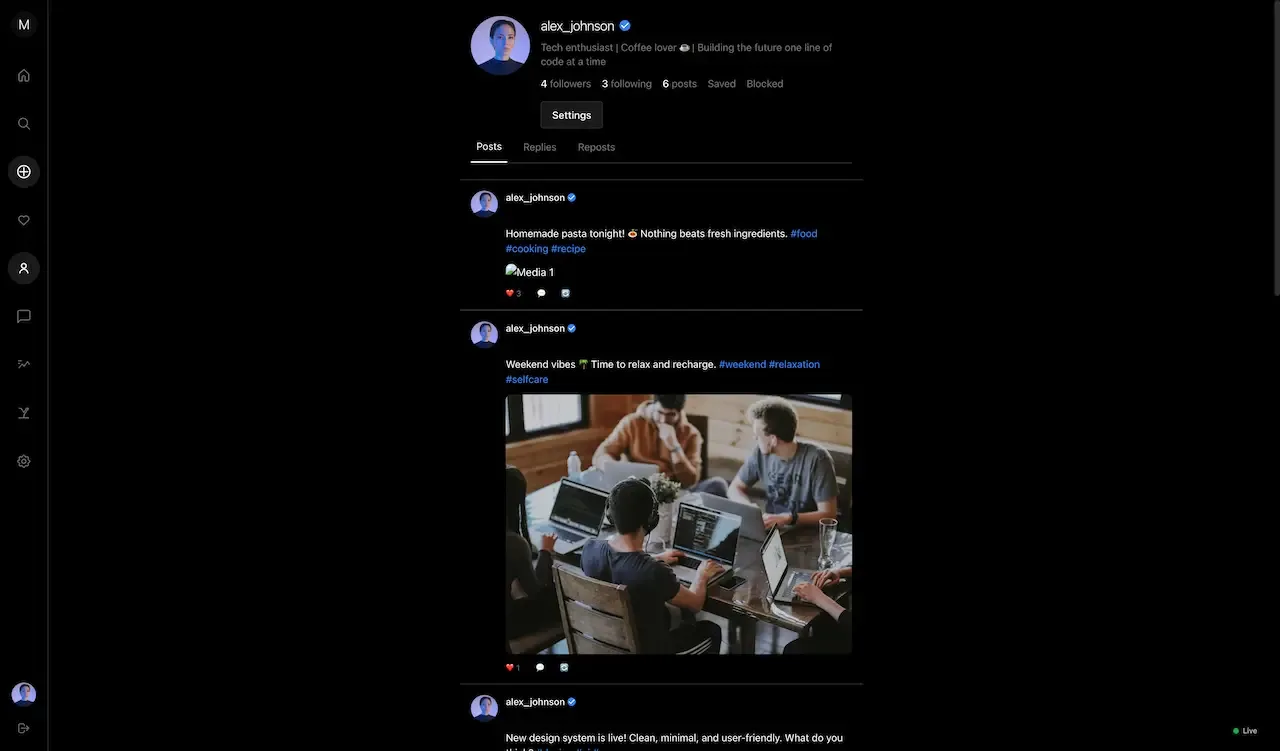
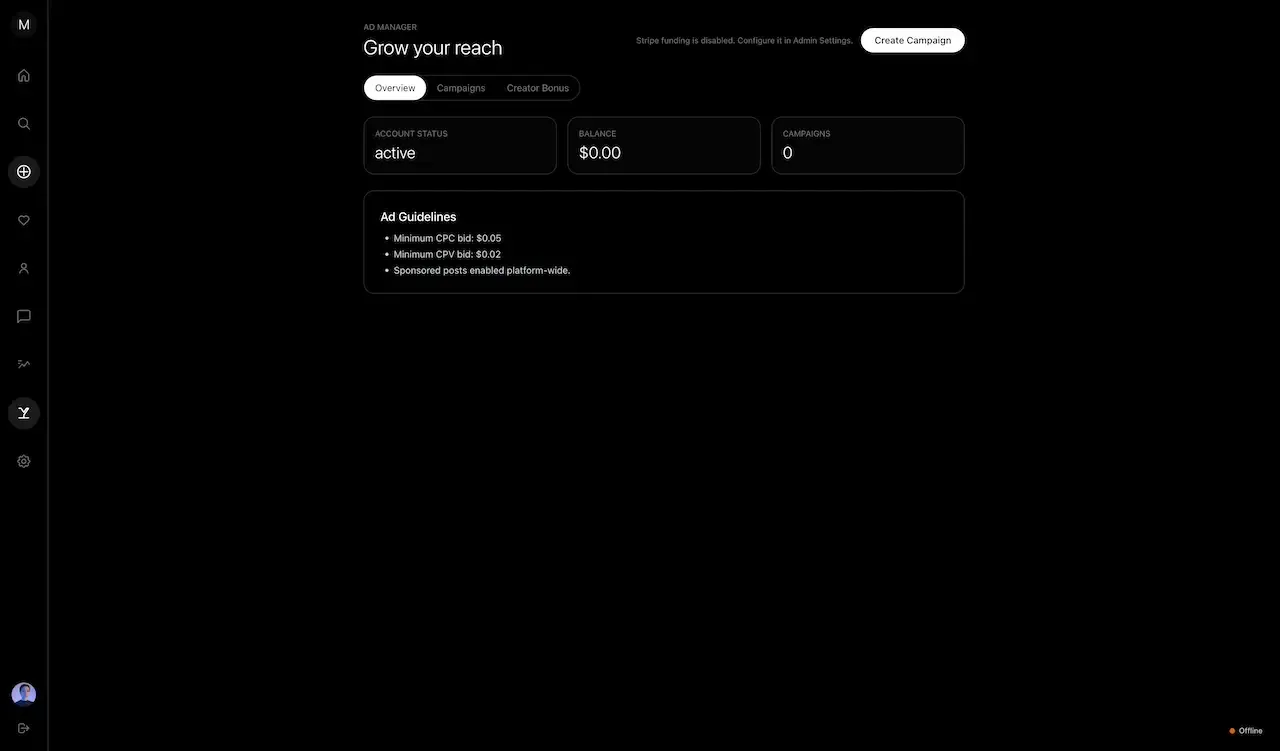
- The Threads Clone, on screen
- How Threads Itself Makes Money
- Which Lever to Use as the Network Grows
- Three Ways Operators Run a Threads Clone
- Common Monetization Mistakes on a Text-First Network
- The Threads Clone Lever to Switch On First
- Try the live Threads Clone demo
- Threads Clone business model FAQs
- Explore the Threads Clone
Why the Graph Beats Rented Reach
Operators who build on someone else's network rent their audience. Reach, rules and monetization stay subject to another company's decisions, and a policy change can undo years of work. Running your own text-first network means the members, the content and the relationships sit in your database, under terms you set and can change when the community needs it. Ownership of that relationship is the asset you are really building.
Text-first economics help. There is no transcoding pipeline, no storage curve driven by video and no bandwidth bill that rises with watch time, so the marginal cost of an engaged member is small. A modest paying share of the community can therefore fund the operation, which is rare in social products and makes a niche network viable. Costs that stay flat while engagement rises leave more of each membership payment as margin.
The codebase and schema are yours and run on standard PostgreSQL, so there is no proprietary format to unwind and no vendor to renegotiate with. That exit option is part of the value: you can change hosts, change developers or license the platform to a partner without asking permission. A business that can move freely is also easier to value, insure and finance than one tied to a supplier it cannot replace.
The Three Levers in the Threads Clone
Each lever is paid for by a different party, which is what makes them complementary instead of three prices for the same thing. One of the three is really an expense, and understanding that difference prevents most planning errors.
Verification plans
Sold to members through recurring plans in Stripe, with pricing, tiers and lifecycle states set by you and a billing portal so members manage their own subscription. It is the one lever that works at small scale, because a community can fund itself with a modest paying share, so it is the natural launch lever.
Ad campaigns
Sold to advertisers, who create an ad account, fund it and build campaigns with creatives and targeting. Spend is counted per event under click or view economics with price floors you configure, and every campaign passes your review before it goes live. You keep the revenue, though the lever needs scale before buyers care.
Creator bonus program
Paid to creators, not collected from them, with enrollment and payout records tracked on their own. It is a growth expense that buys supply, and it earns its keep by attracting the attention the ad platform later monetizes. Treat it as an investment you meter, not as income.
Promoted placement
The campaign and creative model supports paid distribution inside the feed surfaces, so advertising is not a banner bolted to the side. Where placements appear, and what they cost, are settings you tune as demand reveals itself. Native placements read like part of the conversation, which advertisers value, while your own rules about labeling keep members from feeling tricked by what they see.
Revenue sharing settings
Ad configuration exposes a split between the platform and creators, so the share is policy rather than code. You can change it in response to creator supply, competitor offers or your own margins without a release. A generous share attracts creators while the audience is small, and you can narrow it later once the network has enough momentum that creators stay for the reach.
White-label licensing
Because branding, media policy and ad economics are runtime settings, one deployment can serve a partner under its own name. You own the source, so whether and how you license it is a commercial decision of yours. Candidates include a company wanting a private community or an association wanting a network for its members, and each can be priced as a setup fee, a service fee or both.
The Threads Clone, on screen
Real screens from the working product. Your platform ships rebranded with your name, logo and colors.
Web app 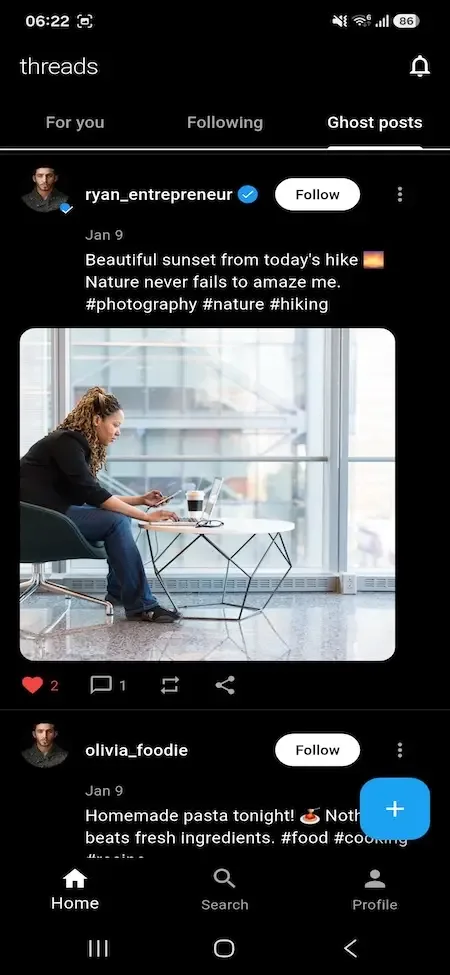
User app 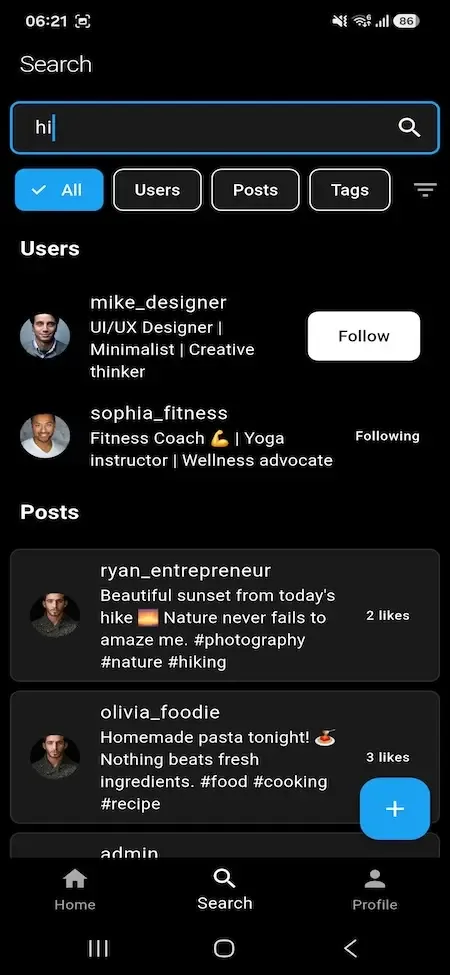
User app 
User app 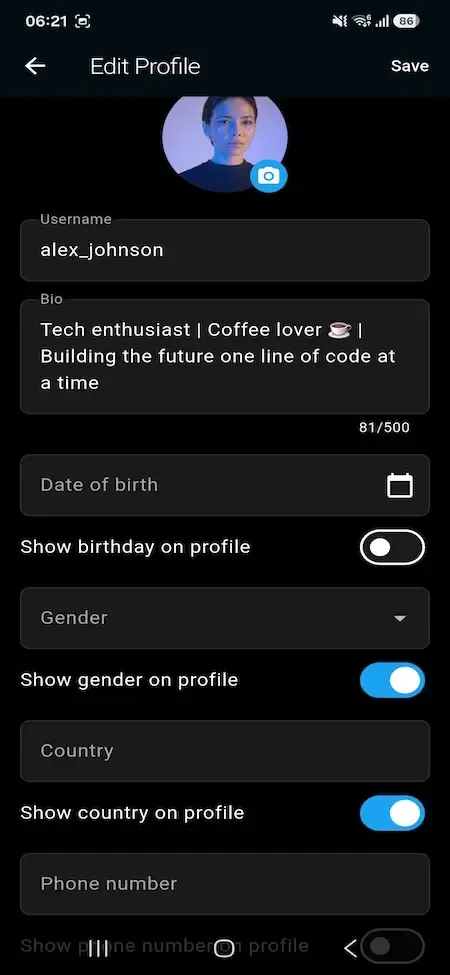
User app
How Threads Itself Makes Money
Threads comes from the company behind Instagram, and it launched with no advertising at all, adding revenue only once its audience existed. That sequence is worth noticing: attention came first, and monetization followed an established ad business that could sell against it. Advertising remains the lever you would expect from a network of that origin. A newcomer has no such sales machine waiting, so its sequence must lean harder on the member-funded levers.
The comparison with your own network is mostly about order. Their ad business was already in place, so adding ads was straightforward. Yours is not, so advertising is the last lever to switch on, not the first. The platform ships ready for it, but a smaller network earns sooner from verification plans while it builds an audience that advertisers will want.
Which Lever to Use as the Network Grows
Read this as a sequence rather than a rulebook. The order follows what each lever needs to work, and it keeps your costs lower in the early months, when moderation workload matters more than any single line of income.
| Stage | Lever to use | Why |
|---|---|---|
| Launch | Verification plans | They work with a small paying share and need no buyers |
| Creators emerge | Creator bonus program | Pay for supply only once you can see who drives conversation |
| Audience grows | Ad campaigns, with review on | Buyers appear once attention is large enough to measure |
| Demand is real | Tune ad price floors | Floors set revenue per impression without a deployment |
| Mature network | License to partner operators | Runtime branding lets one deployment serve several brands |
Three Ways Operators Run a Threads Clone
The same platform can power different kinds of business. These patterns are descriptions of how revenue tends to arise at each stage, and none is a forecast, because actual results depend on your market, your ad rates and how many members convert.
The niche community
A focused group of members funds the operation through verification plans while the ad platform sits dormant until the audience justifies advertiser interest. Moderation is manageable because the rules are shared, and consent-gated messaging protects members while the community is still small and close. The risk is staying too small to matter, so set a target for how many active members you need before the next lever opens.
The creator-led network
Creators are recruited first, and the bonus program buys supply while analytics help you see who is worth rewarding. Advertising starts to monetize the attention that supply attracts, and subscriptions compound as members seek the status and tools creators use. Treat the bonus program as an investment with a review date, and keep paying only for accounts whose posts bring conversation.
The regional platform
A product for a whole market, with a language, rules and commercial terms of your own. Advertising becomes the main engine once demand exists, price floors set the economics, and verification plans provide a steady high-margin base underneath. Local advertisers who cannot afford global campaigns are the natural first buyers, and you can set prices that suit their budgets.
Common Monetization Mistakes on a Text-First Network
Most revenue trouble on a social product comes from timing rather than from software. These five mistakes are cheap to avoid before launch and expensive to reverse once a community has formed habits and expectations.
Launching with advertising first
Advertisers need scale before they are interested, and every campaign needs a human reviewer. Early on it earns almost nothing and costs from day one, while a verification plan can work with a small community. Hold the ad desk until you can describe your audience in terms an advertiser recognizes, and until you have staff to review each creative before it runs.
Letting moderation lag growth
Communities consolidate where the experience stays usable. A network that turns unpleasant at scale loses the graph it spent a year building, and the graph was the asset. Staff the queues before you open registration. If reports begin to wait longer than your own promise, pause invitations until the team catches up, since growth that outruns moderation is borrowed from future retention.
Paying bonuses before measuring
Buying creator supply is legitimate, but paying blind means rewarding accounts that contribute nothing and would have stayed regardless. Use analytics first, then pay for the voices that actually drive conversation. Define in advance what a good month looks like for an enrolled creator, so that every payout can be explained by a measurable result instead of a hunch.
Turning off the consent gate
Removing message requests looks like a friction fix and arrives as a spam problem. By the time the complaints reach you, the members it drove away have already gone and are slow to return. Keep the gate on, and improve the request screen instead, so that wanted contact feels easy while unwanted contact still stops at the door.
Selling verification as status only
A plan that grants a badge and nothing else has a low ceiling. Bundle something a member would notice missing, such as reach, analytics or tools, or accept the conversion rate that a mark alone earns.
The Threads Clone Lever to Switch On First
Launch verification plans first. A plan can be sold to a community of modest size, whereas an advertiser cannot be sold to at that scale, so subscriptions come first regardless of which lever you expect to dominate later. Price the plan so that it includes something members notice when it is gone, and use the billing portal so cancellation is easy, which builds trust.
Open the creator bonus program once you can name the creators who drive conversation, and activate advertising when the audience is large enough that demand exists and you have people to review campaigns. Because the entities are already in the schema, each step is configuration and a staffing choice, not a development project, and you can pause or adjust at any point.
Try the live Threads Clone demo
The demo is the shipped build running with demo branding, with a working login for every role so you can follow one thread of activity across the whole product. Publish a post, send a message request, launch an ad campaign and resolve a report, each from the account that would really do it.
-
Member app
Open the Member app demo- Login
alex@example.com- Password
password123
Worth trying
- Compose a thread with media and a poll
- Compare the For You and Following feeds
- Reply, repost, quote and save a post
- Restrict who may reply to your post
-
Messaging and groups
Open the Messaging and groups demo- Login
mike@example.com- Password
password123
Worth trying
- Sign in as lisa@example.com in a second browser
- Send a message request and accept it
- Start a group chat and add reactions
- Watch typing and delivery signals update live
-
Creator tools
Open the Creator tools demo- Login
emma@example.com- Password
password123
Worth trying
- Open post and profile analytics
- Review the verification plan options
- Open the KYC submission form
- Check enrollment status in the creator bonus program
-
Ads manager
Open the Ads manager demo- Login
alex@example.com- Password
password123
Worth trying
- Open an ad account and review funding
- Build a campaign and attach a creative
- Set targeting for the campaign
- Look at event-based spend records
-
Admin console
Open the Admin console demo- Login
admin@demo.com- Password
Admin_$321
Worth trying
- Work a report from pending to resolved
- Approve or reject a KYC submission
- Review an ad campaign before it runs
- Open branding, media and payment settings
-
Android app
Open the Android app demo- Login
alex@example.com- Password
password123
Worth trying
- Download the build from the app portal
- Sign in with any member login above
- Compose a post and open messages
Threads Clone business model FAQs
Is the creator bonus program revenue or a cost?
It is a cost. Creators are paid, not charged, and the program exists to buy supply of content and attention. It still belongs in the model, because the attention it attracts is what the ad platform later monetizes. Budget it as growth spend and measure what it returns.
How are ad prices set?
Spend is counted per event under click and view economics, with price floors that you configure in settings. You can raise or lower the floors as demand appears, without a deployment, which lets you respond to advertisers within an afternoon rather than waiting for a release.
Can I run several brands from one deployment?
Name, tagline, logo, favicons, media policy and ad economics are runtime settings, so a deployment can be licensed to a partner under its own identity. You own the source, so how you structure such an arrangement is a commercial decision for you to make.
Do verification plans need a Stripe account?
Yes, your own. Plans link to Stripe prices, subscription state follows webhook events and members manage billing in a portal. Verifying webhook signatures is a deployment requirement, so we complete it with you instead of leaving it as an assumption.
What does KYC have to do with earning?
Creators who want payout eligibility submit identity details, which flow into an operator review queue with approve and reject outcomes and a stored rationale. The standards you apply to who may be paid or verified are your own policy, supported by the records.
Is there a revenue projection I can rely on?
No. We do not publish revenue or market-size figures for this product because they would depend entirely on your market, your ad rates and how many members convert. The model describes where income comes from at each stage, and leaves the numbers to your own research.
Explore the Threads Clone
The overview and its companion pages answer the main questions in turn. Pick the one you need next.
-
Threads Clone
The overview: live demo, screens, price and everything in the box.
Back to the overview -
Features
Text-first publishing looks simple from the outside and runs on a tightly sequenced pipeline underneath: identity, publishing, distribution, private conversation, earning and governance.
See the full breakdown -
Development cost
A text-first network has friendlier economics than a video platform, because there is no transcoding pipeline and no bandwidth bill that grows with watch time.
See exact pricing -
Development company
Any developer can show a feed of short posts.
Compare options
→Start here
Tell us what you want to launch.
Share the platform and your market. You get a walkthrough of the live demo, the exact scope of what ships, and a fixed price in writing. First response in under 2 hours, Monday to Saturday, 10:00 to 19:00 IST.
Trademark and independence notice
This page uses the name Threads to describe a type of platform. The product sold here is separate software, built independently, and Threads has no part in it.
Why this name
"Threads clone" is industry shorthand that founders use when searching for software with a comparable business model. It names a category of product, not a copy of Threads.
Who built this
The platform is an original product designed and written by Miracuves. It contains no code, design, graphics or content originating from the Threads website or applications, and it ships under your own brand.
Trademarks
Threads and its logos are trademarks of their respective owner and are named here for reference only. GetFame is not affiliated with, sponsored by or endorsed by Threads. Rights holders can write to legal@miracuves.com.
Operator responsibility. The operator of a launched platform is responsible for legal compliance in the markets it serves. Nothing on this page is legal advice.Read the full disclaimer