
Twitter Clone Business Model: Five Ways a Public Network Earns
A public network rarely earns from one source, because no one can predict which side of the market will fill first. This page explains the revenue levers built into the platform, who pays for each, and the order in which operators usually switch them on as the audience grows.
- 5
- Revenue levers built in
- 3
- Ad campaign types
- 0%
- Revenue share to us
On this page11 sections
- Why a Twitter Clone Needs More Than One Income Source
- The Revenue Levers in the Twitter Clone
- The Twitter Clone, on screen
- How Twitter Itself Has Earned Money
- Which Lever Fits Each Stage of Growth
- Three Ways Operators Run a Twitter Clone
- Monetization Mistakes on Public Networks
- The First Twitter Clone Lever to Switch On
- Try the live Twitter Clone demo
- Twitter Clone business model FAQs
- Explore the Twitter Clone
Why a Twitter Clone Needs More Than One Income Source
The hard truth about a new network is that you cannot choose your revenue in advance. Advertisers only arrive after attention does. Creator subscriptions only sell if fans follow their favorite voices there. Developers only build once the place is worth building on. Each lever depends on a different condition being met first. Planning a business around a lever whose condition has not yet been met is the most common way a young network wastes its first year.
That is the reason the platform ships with several levers instead of betting on one. The tiers, the campaign records, the creator relationships and the API keys are all present from day one, so switching one on is a pricing and policy decision. It does not require a new release or a developer on call. You can watch which condition arrives first in your community and move to the matching lever as it does.
One thing no configuration can fix is an empty network. Every lever below assumes you are bringing a niche, a community or a distribution channel with you. The software makes it possible to charge people, to meter advertisers and to credit creators, but it does not supply the people who would pay. Plan your first recruitment effort before you plan your price list, because the order of those two jobs decides how quickly the rest starts to matter.
The Revenue Levers in the Twitter Clone
Each lever is paid by a different party and depends on a different condition. Together they let the income mix follow the community you actually get, rather than the one you forecast.
Paid tiers
Members pay for a Premium or Pro plan, and the server checks the plan before any gated action runs, so a tampered client unlocks nothing. This lever needs only members, which makes it one of the earliest to work, and repricing needs no release. Decide what the paid tier adds, such as longer posts, a badge or priority in replies, and keep the free tier genuinely useful so that people stay long enough to consider upgrading.
Ad campaigns
Advertisers pay for reach through promoted posts, banners and sponsored placements. Each has a total budget, a daily limit and targeting keywords, and a reviewer approves it first. You keep all of it, but it only becomes worthwhile when attention is worth buying. Early buyers are usually local businesses or community projects, and a small number of well-targeted campaigns teaches you more than a broad launch.
Creator subscriptions
Fans pay a creator for a paid following, and subscriber ids sit on the creator record. You take a share of money that moves between two members, so the operator funds nothing and the lever scales with creator success. The work is recruitment: a handful of creators with real followings does more than hundreds of unknown accounts, so approach them personally before you open to the public.
Tips
A member sends a creator a one-off payment from a post or profile. There is no plan to choose and no commitment, which is why it suits a newcomer and is usually the first lever operators enable. A tip also gives a creator immediate feedback that something they posted was valued, which encourages them to post again and gives the network a reason to keep them.
Verification
A badge is granted after review, so it can be bundled into a tier or priced on its own. Because every approval is recorded, you can explain why one account has it and another does not. A badge becomes more valuable the more members care about trust, so it suits communities of professionals, publishers and brands more than purely casual conversation.
Developer access
Outside builders pay for scoped keys with generous or tight limits, depending on your pricing. It is the slowest lever to pay, but it changes what the network is, because other products start to depend on it. Expect little revenue from it at first, and treat the early keys as a way to attract tools and bots that make the network more attractive to members.
The Twitter Clone, on screen
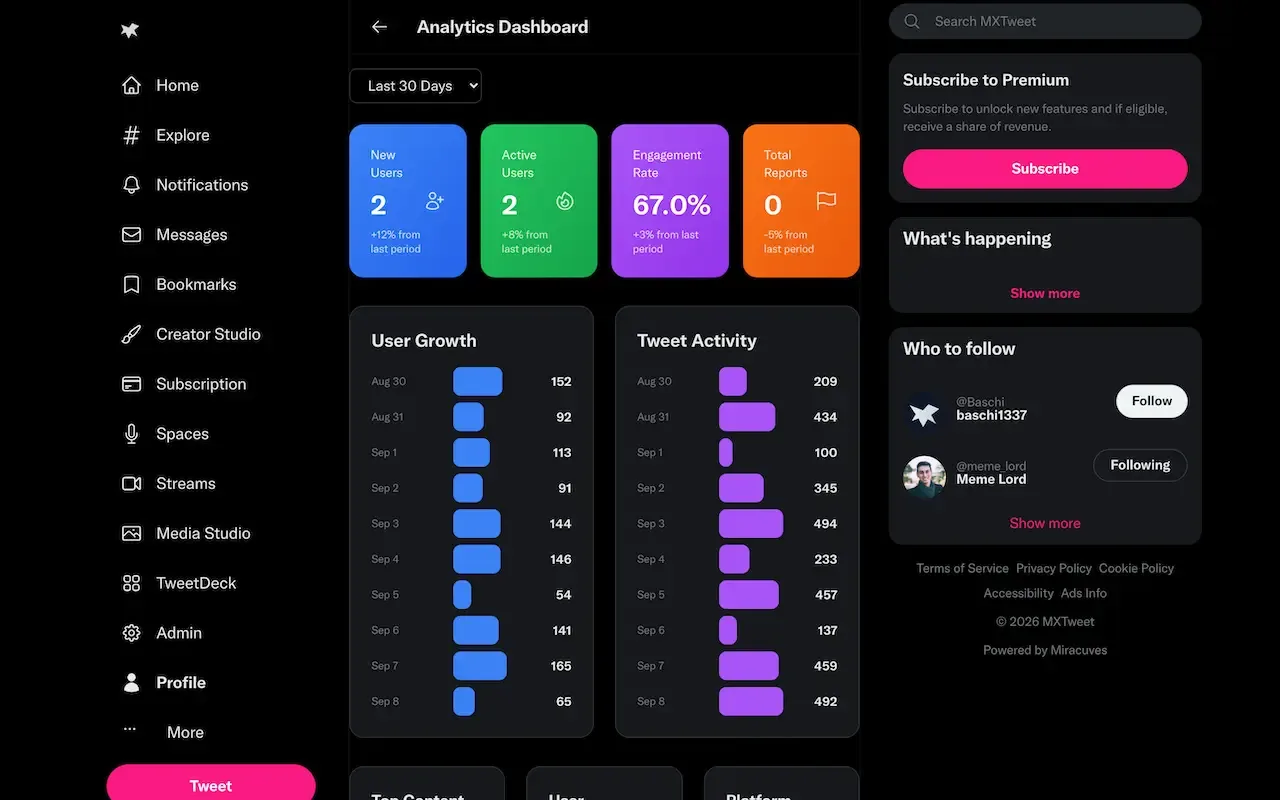
Real screens from the working product. Your platform ships rebranded with your name, logo and colors.
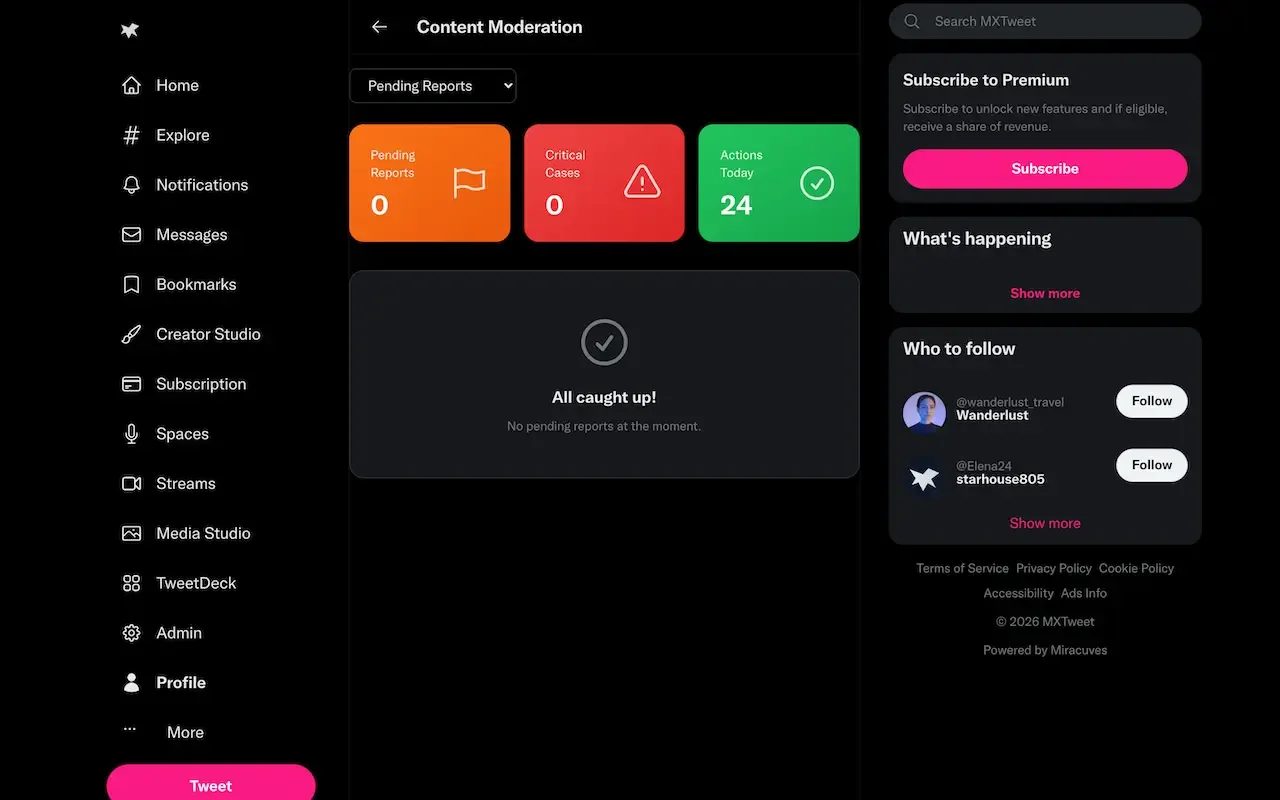
Admin panel 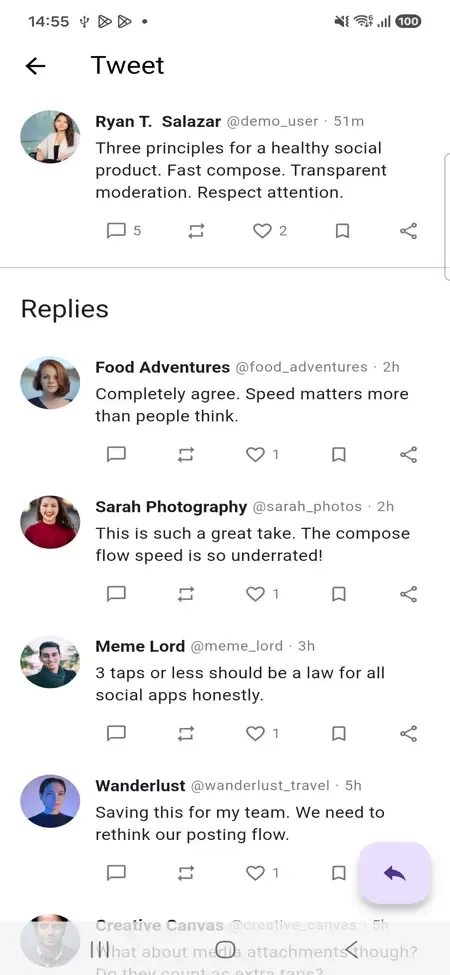
User app 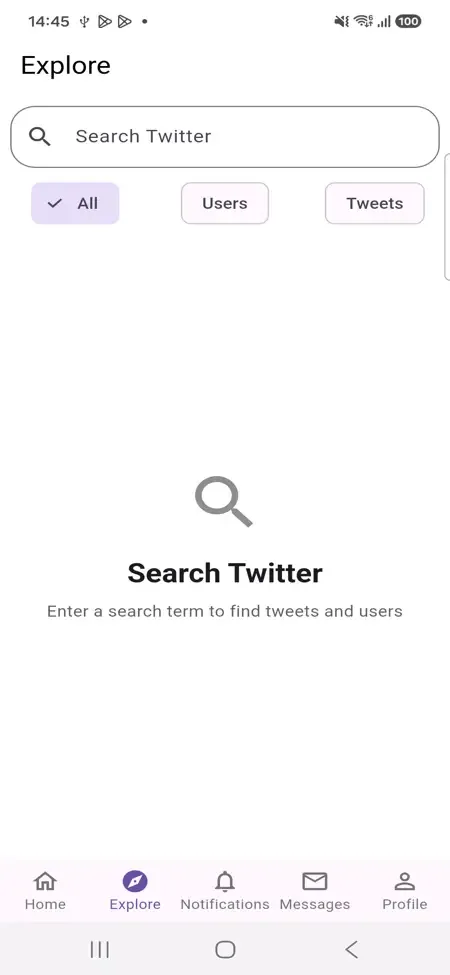
User app 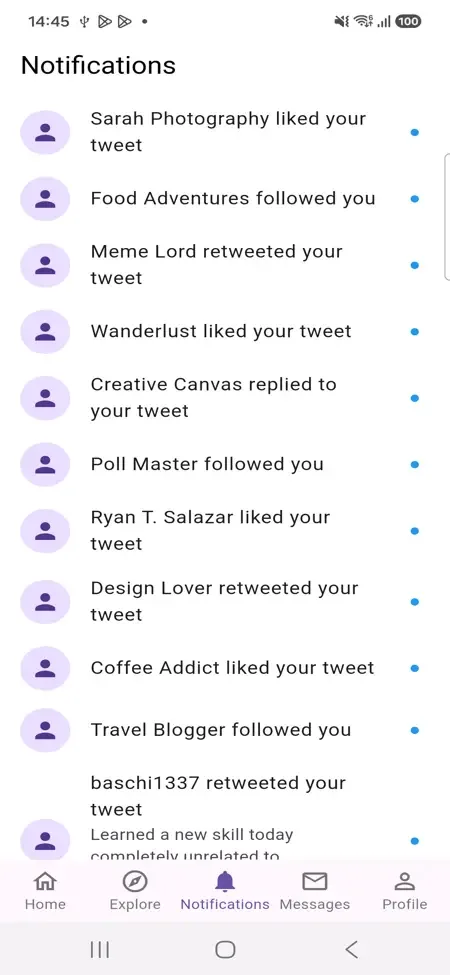
User app 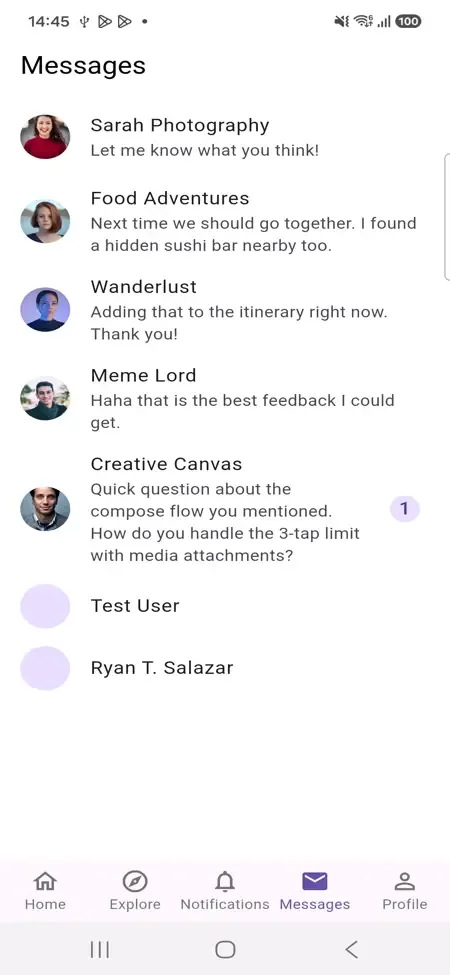
User app
How Twitter Itself Has Earned Money
Twitter is widely known for selling advertising against attention, with promoted posts and sponsored placements sold to marketers. It has also offered paid subscription plans, and it has charged developers for API access at various times. Those are the same families of income this platform models, which is why they are a useful reference point for anyone planning their own network and deciding which to prioritize.
What differs is who holds the controls. At Twitter a single company sets ad prices, subscription terms and developer rules. On your own network, you set them, you keep the revenue, and you can change them without waiting on anyone. Your constraint becomes audience size, not permission. That freedom is real, but it also means every policy choice, from what a tier unlocks to what an advertiser may promote, is yours to defend.
Which Lever Fits Each Stage of Growth
Use the table as a sequence rather than a rulebook. The point is to match each lever to what has actually arrived on your network, and to move to the next one only when its condition is met.
| Stage | Lever to use | Why |
|---|---|---|
| Launch | Tips, with one paid tier ready | Asks nothing of a newcomer and needs only two members |
| Early community | Paid tiers with a clear upgrade reason | Plan checks are server-side, so repricing is simple |
| Creators arrive | Creator subscriptions with a share | You earn on money you did not have to fund |
| Attention worth buying | Promoted posts, then banners | Budgets, daily limits and spend tracking already exist |
| Established network | Developer access and verification | Others now have reason to build on and badge themselves here |
Three Ways Operators Run a Twitter Clone
The same codebase can serve different businesses. These patterns describe how operators usually combine the levers, and none of them is a promise about results.
The niche public square
A profession, region or interest gets its own conversation space. Tips and a single paid tier carry early revenue, while ads stay off until a defined audience exists. Moderation is policy-heavy because the community knows what it expects. A tight audience makes an advertiser's message relevant, so once the community reaches a steady size, a small number of targeted campaigns can be sold at a better price than general reach.
The creator-led network
Creators are recruited first, with subscriptions and tips placed at the center. Fans follow them in, tiers add recurring income and the operator takes a share of each transaction, so growth in creator earnings becomes growth for you. Your promise to a creator is simple: your fans can find you and pay you here, so show them the earnings screen and how a payout request works before they commit.
The publisher or brand community
A media house or brand moves reader conversation onto a platform it controls. It sells its own ad inventory directly to sponsors it already knows and uses verification to mark staff and guests. Because the audience arrives from the publisher's own channels, the network needs less marketing, and the conversation around each story stays under the brand's own rules and voice.
Monetization Mistakes on Public Networks
Most revenue problems on a social product come from sequencing, not from the software. These are the errors that are cheapest to avoid and most expensive to reverse after a community has formed.
Selling ads to an empty room
Advertisers want attention they can measure. Launching the ad desk first earns nothing and adds a review workload, while a tier or tip line could have started earning immediately. Wait until members visit daily and you can describe them to a buyer, then open campaigns to a small group of known advertisers before you invite everyone else.
Locking the free tier too tightly
If people cannot enjoy the network before paying, they will not stay long enough to see why they should. Equally, a free tier that already feels complete leaves no reason to upgrade. Choose one or two limits that matter to heavy users, and leave everything casual members need open, so each group has an honest reason to stay.
Treating moderation as a later phase
Abuse arrives with the first real members. A network that earns slowly but stays pleasant keeps its audience, while one that is unpleasant loses them faster than any revenue lever can recover. Publish your rules before launch and let your first moderator test the queue with a real report, so the first genuine complaint finds a working process.
Opening the developer API too early
Outside integrations add load and support duties before the audience justifies them. Open it when there is something worth building on, and keep limits tight at first. A rush of low-value bots can fill your feeds with noise, so start with a short list of approved builders and widen access once you have seen how they behave.
Offering a badge with nothing behind it
Verification that confers only a mark has a low ceiling. Tie it to a tier, a review standard or a visible benefit, and publish the standard so members understand what it means. A badge that anyone can obtain loses value fast, and one granted inconsistently invites accusations of bias that are costly to answer.
The First Twitter Clone Lever to Switch On
For most operators the answer is tips, followed closely by a single paid tier. Both need nothing more than the members you already have. Tips ask for no commitment from someone who joined yesterday, and a tier gives your most engaged people a way to back the network and unlock something in return. Switch both on in the first weeks, watch who pays and what they pay for, and let that guide the next lever.
Hold the ad desk, the creator share and the developer keys until their conditions arrive. Because every lever is already present as data and permissions, waiting costs nothing, and moving later is a configuration change. Let the network tell you which lever to open next, and keep a record of what the early members actually pay for.
Try the live Twitter Clone demo
The demo runs the shipped build with demo branding on live infrastructure. Two member accounts let you talk to yourself in a private window, and the operator console shows the same activity from the moderator side. An Android build sits on the same API as the web client.
-
Member app (web)
Open the Member app (web) demo- Login
demo@mxtweet.com- Password
Demo@123
Worth trying
- Compose a thread and attach a poll
- Switch between For You, Following and Bookmarks
- Bookmark a post and find it again
- Open a profile and follow it
-
Second member
Open the Second member demo- Login
test@mxtweet.com- Password
Test@123
Worth trying
- Reply to and quote the first account
- Open a direct message and send audio
- React to a message and watch read receipts
- Report a post for the console
-
Operator console
Open the Operator console demo- Login
admin@demo.com- Password
Admin@123
Worth trying
- Open the report queue and resolve one
- Read the audit log for your own action
- Review an ad campaign and its spend
- Check login history for a member
-
Android app
Open the Android app demo- Login
demo@mxtweet.com- Password
Demo@123
Worth trying
- Install the build from the app portal
- Sign in with the member account above
- Compare the feed against the web version
Twitter Clone business model FAQs
Can I sell ad space directly to sponsors?
Yes. Campaign records carry a type, a budget, a daily limit and targeting keywords, and a reviewer approves each one before it runs. That suits direct sales to a few sponsors who value your specific audience, well before any self-serve advertiser traffic exists.
Who sets the tier prices and names?
You do. Tier boundaries are entitlements the server enforces, so changing what a plan unlocks or what it costs is a settings and policy change. Because the checks run on the server, the same rule applies on the website and on the phone.
How do creators get paid out?
The platform records who subscribed to whom and which tips were sent. Moving money to creators, handling payout schedules and tax duties is operational work set up on your payment accounts. We scope that with you, since it depends on your market and processor.
Do I need an ad sales team?
Not at first. Until your audience is attractive to marketers, direct outreach by the founders is usually enough. A sales team makes sense only after campaigns are regularly running and the review step is a real daily task.
Can I price developer access?
Yes. Keys have per-key limits and scopes, so you can offer a low limit for free and higher ones for paying integrators. Because keys are hashed and attached to the owning user, you can also revoke one account without disturbing others.
Is selling member data part of the model?
No. It is not a lever the platform supports and not one we would help build. Trust is what a network runs on, and member data held in your own project is a reason for people to join, not an asset to trade.
Explore the Twitter Clone
The overview and its companion pages answer the main questions in turn. Pick the one you need next.
-
Twitter Clone
The overview: live demo, screens, price and everything in the box.
Back to the overview -
Features
A feed is the easy part of a microblogging network.
See the full breakdown -
Development cost
Quotes for a public microblogging network from scratch are open-ended, because moderation, advertising and a developer platform each become their own project.
See exact pricing -
Development company
Any developer can show you a scrolling feed.
Compare options
→Start here
Tell us what you want to launch.
Share the platform and your market. You get a walkthrough of the live demo, the exact scope of what ships, and a fixed price in writing. First response in under 2 hours, Monday to Saturday, 10:00 to 19:00 IST.
Trademark and independence notice
This page uses the name Twitter to describe a type of platform. The product sold here is separate software, built independently, and Twitter has no part in it.
Why this name
"Twitter clone" is industry shorthand that founders use when searching for software with a comparable business model. It names a category of product, not a copy of Twitter.
Who built this
The platform is an original product designed and written by Miracuves. It contains no code, design, graphics or content originating from the Twitter website or applications, and it ships under your own brand.
Trademarks
Twitter and its logos are trademarks of their respective owner and are named here for reference only. GetFame is not affiliated with, sponsored by or endorsed by Twitter. Rights holders can write to legal@miracuves.com.
Operator responsibility. The operator of a launched platform is responsible for legal compliance in the markets it serves. Nothing on this page is legal advice.Read the full disclaimer