Ready-made, one-time
$3,999
ChillChat Clone
Live in 6 working days from kickoff
- Full source code
- White-label under your brand
- 60 days of technical support
- 1 year of free updates
- App publishing support
Voice room and live app
Voice rooms first, with streaming, gifts and games on top
A white-label social audio platform where the voice room is the core product. Members drop into live or scheduled rooms, raise a hand to speak, go live with PK battles, message each other and send gifts that convert into withdrawable earnings. XP, missions and an AI companion keep them returning. Web, Flutter apps and an operator console come with full source code.
The facts a buyer checks first, in one place. Everything on this page is the product as it ships.
| Product type | White-label social audio app with live streaming, gifting and gamification |
|---|---|
| Surfaces | Next.js web app (42 routes), Flutter app for iOS and Android (46 screens), 18-section operator console |
| Price | $3,999 once, and nothing taken from coin sales or creator earnings |
| Launch time | Deployed in 6 working days once you hand over brand files and access |
| Source code | Full monorepo across NestJS, Next.js and Flutter, plus Docker and Kubernetes files |
| Backend | NestJS with 24 feature modules and about 190 route patterns |
| Database and cache | PostgreSQL 16 with 28 entities, and Redis 7 |
| Media and payments | Agora RTC for audio and video, Stripe on web, RevenueCat for mobile purchases |
| Hosting | Your cloud, with Docker images, Kubernetes manifests and autoscaling configuration |
| Support and updates | Two months of technical support, then a year of free updates |
A ChillChat clone is a ready-made social audio and live entertainment app. Members join voice rooms, go live on video, scroll a feed with 24-hour stories, send direct and group messages, and give gifts that turn into earnings for the recipient. It replaces the usual patchwork of one app for voice, another for streaming and a third for payouts.
The difficult layers are a presence system that stays correct as people join and leave, a gift ledger that holds up when a payment webhook arrives twice, and a moderation queue that a non-engineer can run. Those are the parts already built, along with the gamification loop that carries members past the first week.
It is delivered as a monorepo with three surfaces on one API: a 42-route Next.js web app, a 46-screen Flutter app for iOS and Android, and an 18-section operator console. The backend has 24 NestJS modules and about 190 route patterns, and you own the full source.
ChillChat is a name used by more than one app, so it helps to describe the product by what it does. A social audio platform lets people drop into a room, listen to a conversation and, when they want to speak, ask the host for the microphone. Around those rooms sit the things that make people return: live streams, a feed, messages, gifts, levels and small games.
A clone here means a platform in that category that you run under your own brand. You decide who the community is, what the gifts cost, how large the platform fee is and what the rules are. The same space is served by apps such as Clubhouse and Yalla, and by features inside bigger products, so the real choice is whether you want to join one of those or own the room.
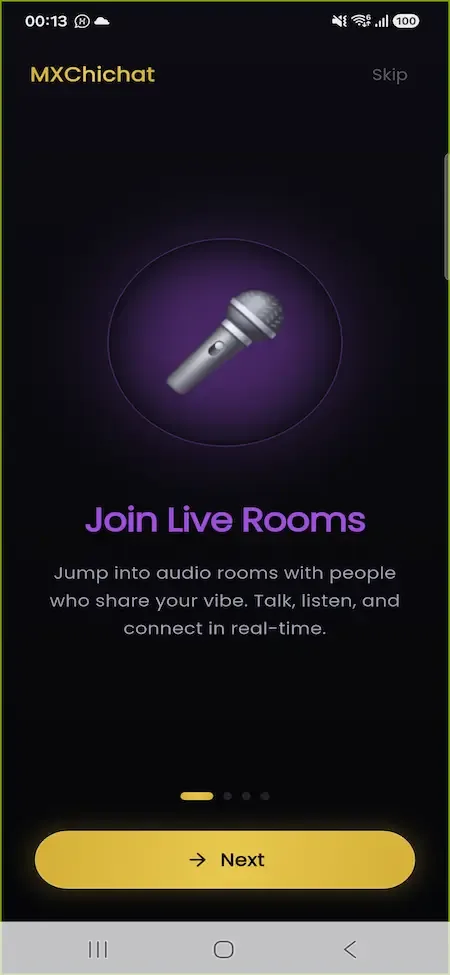
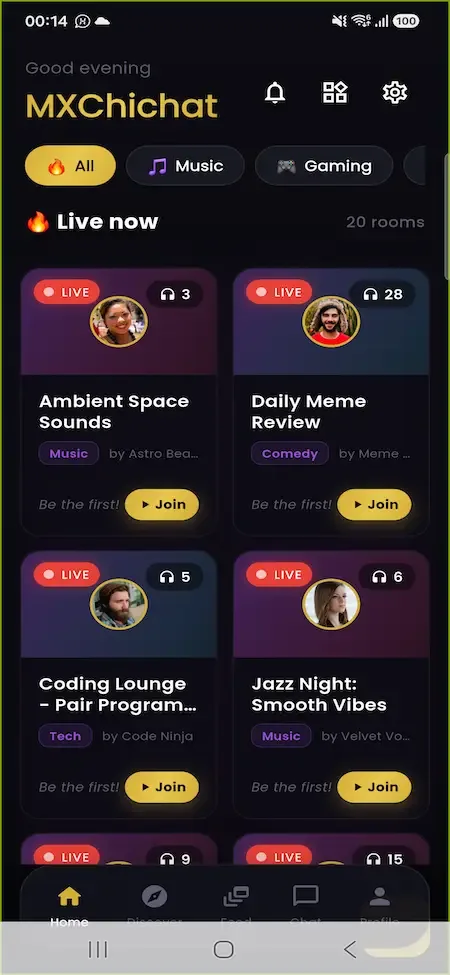
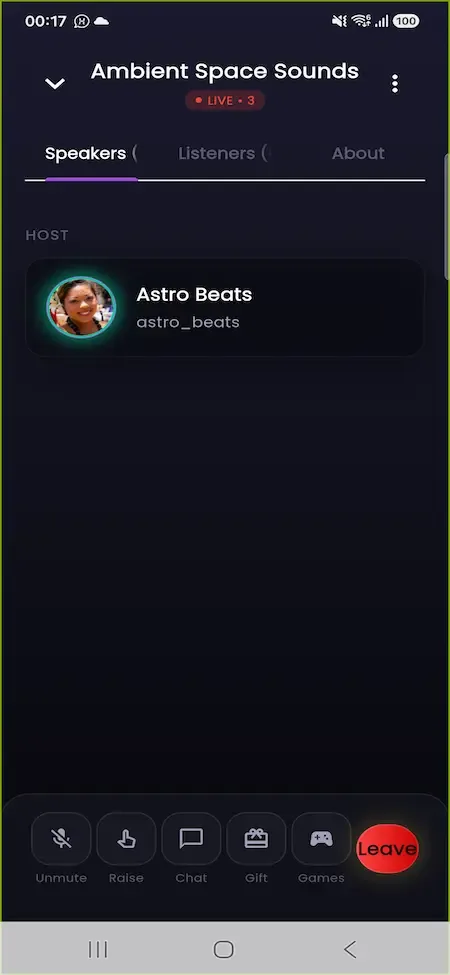
Each role works in its own side of the same product. The screens come from the working demo.
A member opens the app, sees which rooms are live right now, and drops in. Nothing needs a scheduled appointment. They can listen quietly, raise a hand to speak, move to a private conversation, scroll the feed or talk to an AI companion when rooms are quiet.
Broadcasting here starts with one action and no application queue to wait in. A broadcaster goes live, collects viewer votes in head-to-head battles, receives gifts that become diamonds, and then withdraws once their balance clears the minimum. The earnings path stays inside the app.
Most social apps lose people when novelty fades. This layer exists to prevent that, giving every session a small goal and every day a reason to return. It runs quietly in the background and the operator can adjust almost all of it from the console.
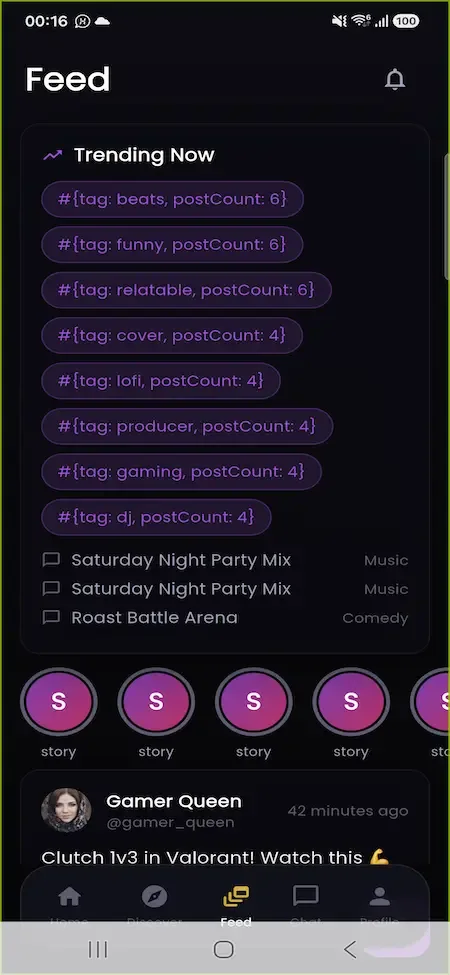
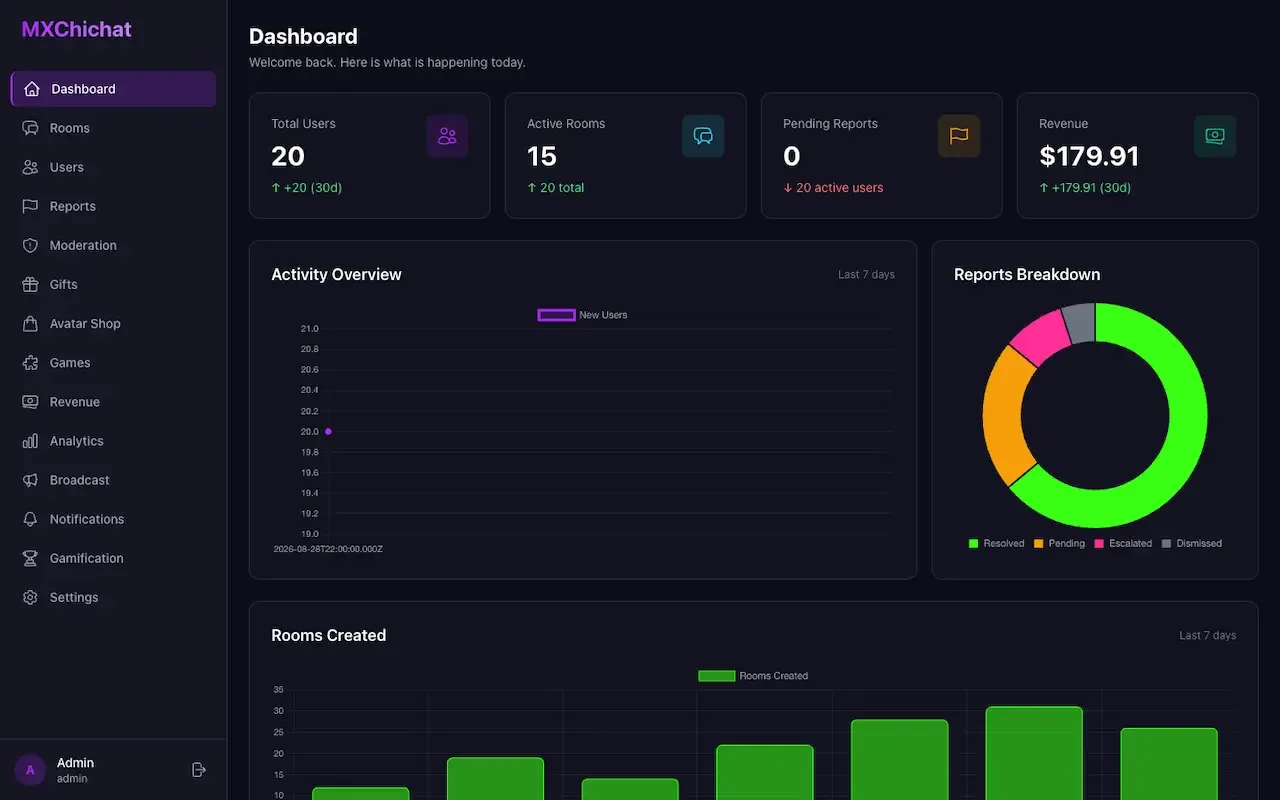
The operator console is organized around daily jobs: who is on the platform, which rooms are running, what has been reported, how much money moved. It also controls the economy and the gamification rules, so tuning does not require a developer or a deployment.
27 screens from the working demo, grouped by where they live. Your platform ships rebranded with your name, logo and colors.
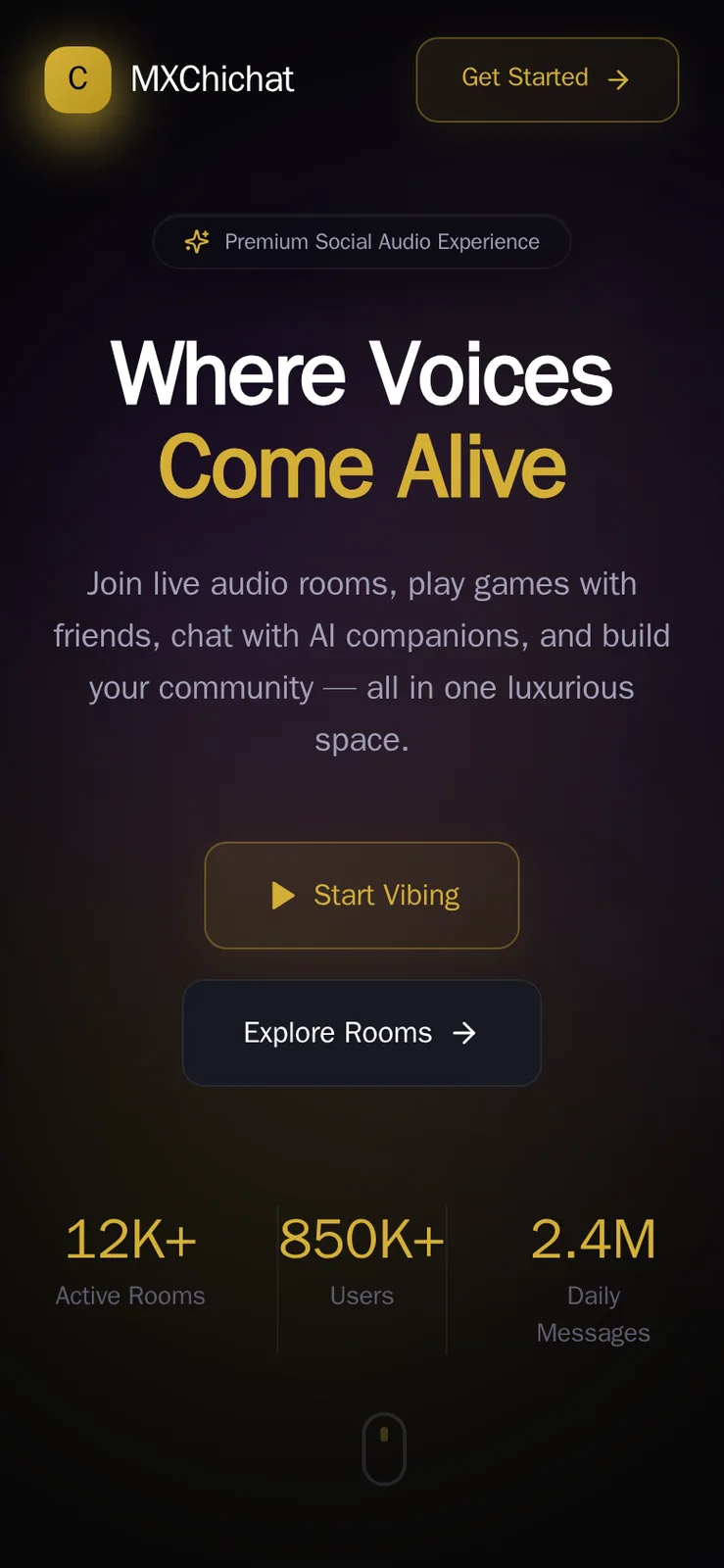
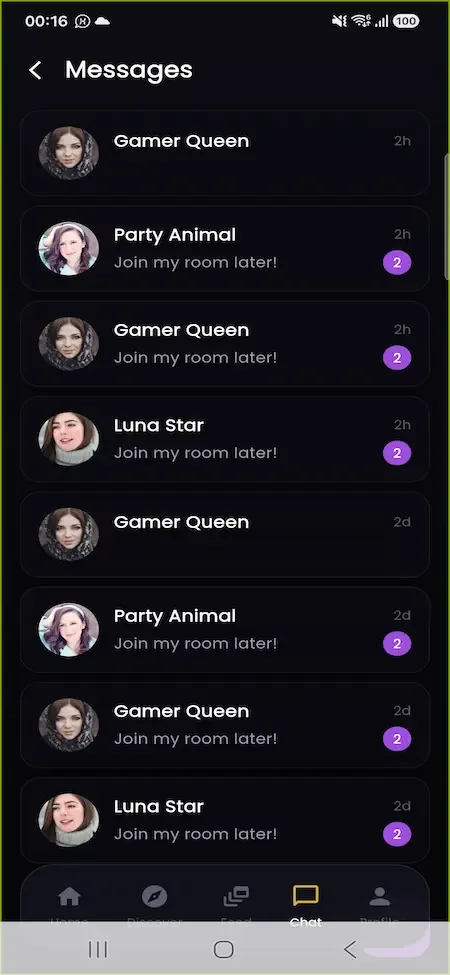
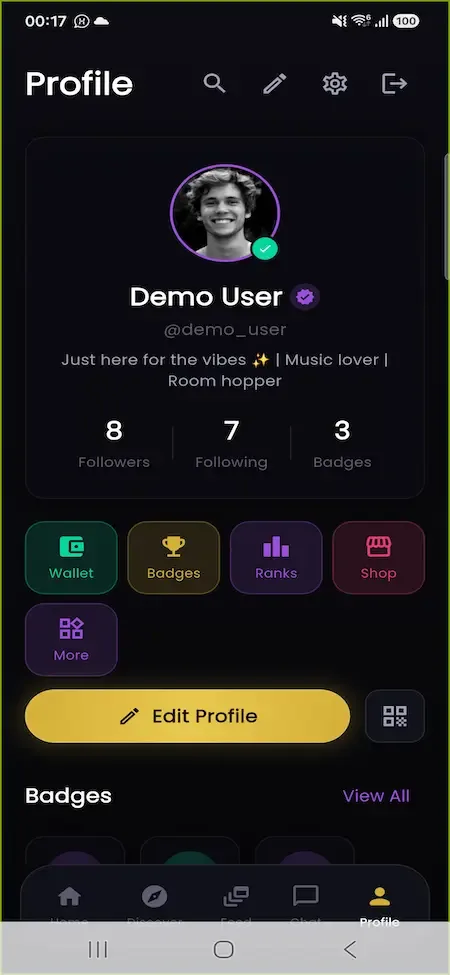
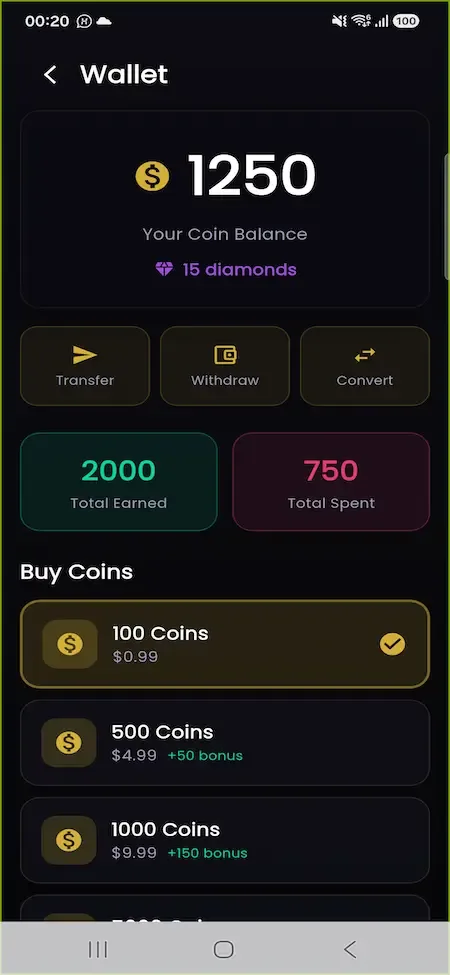
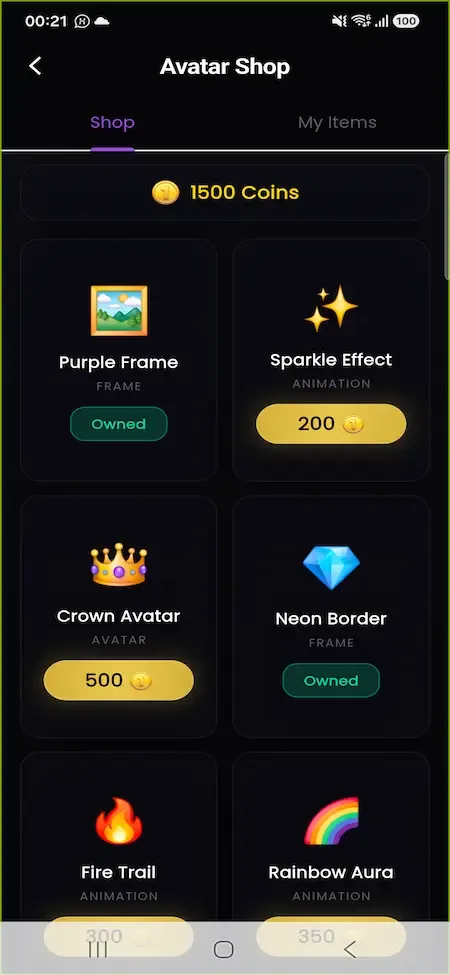
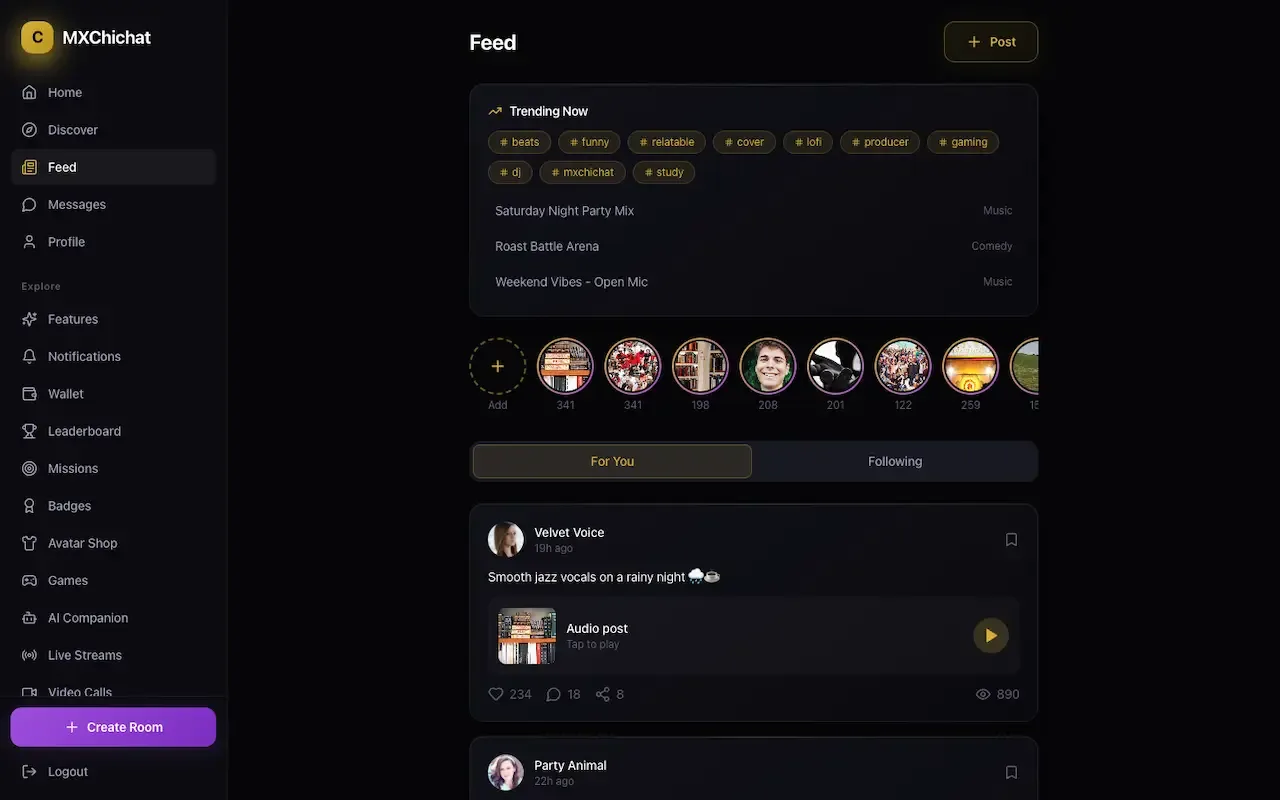
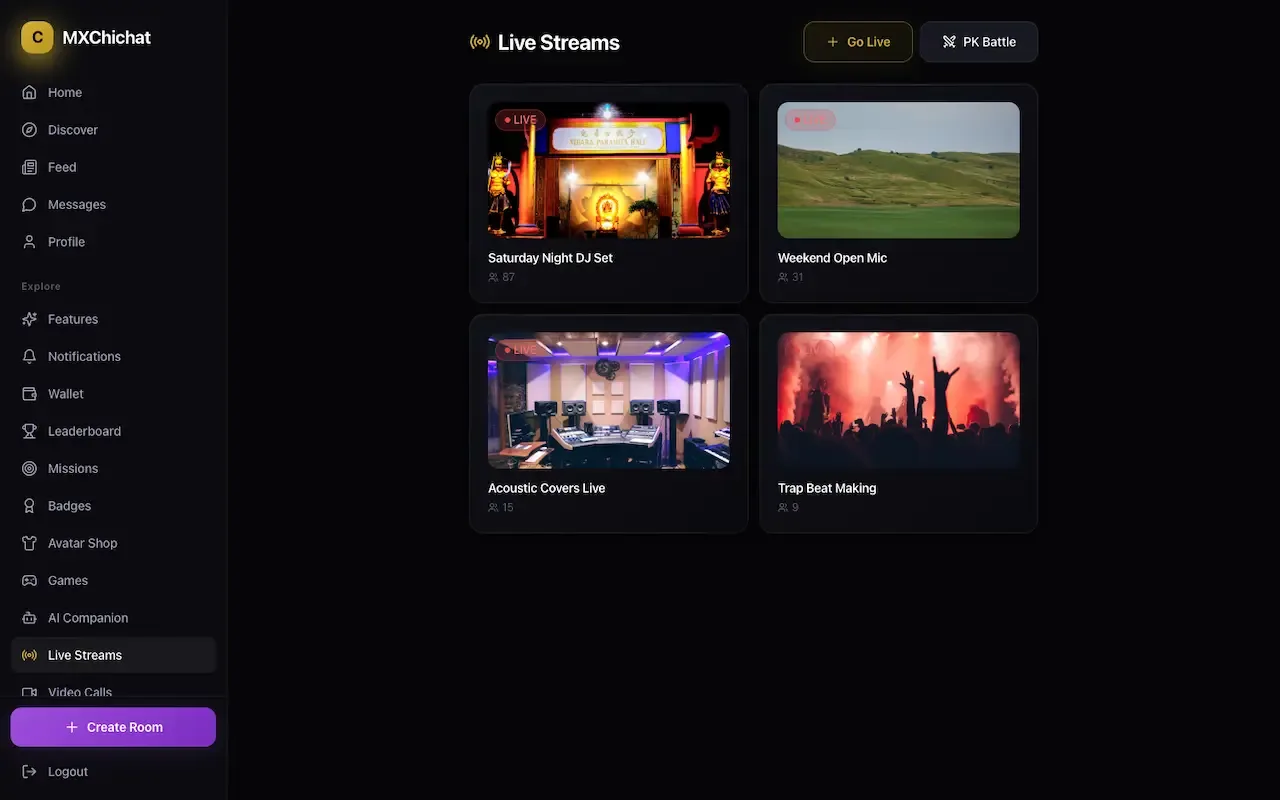
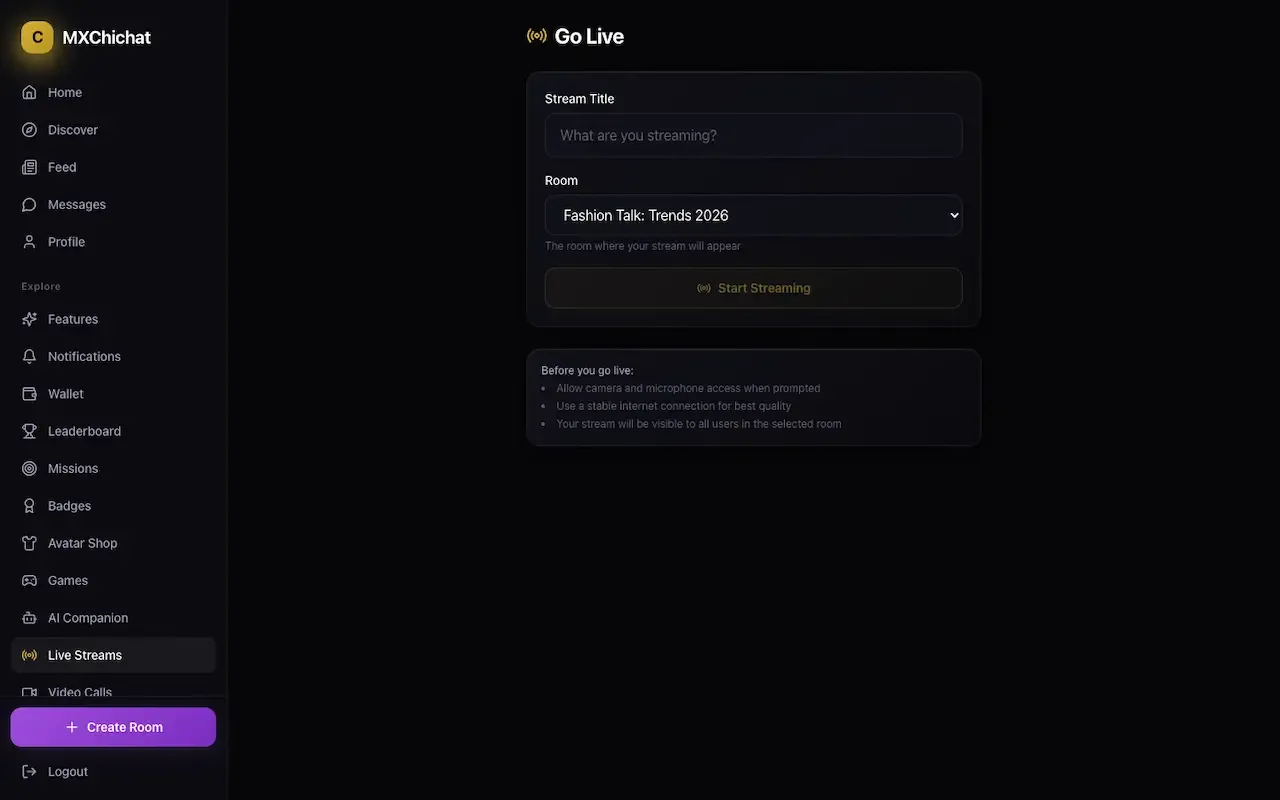
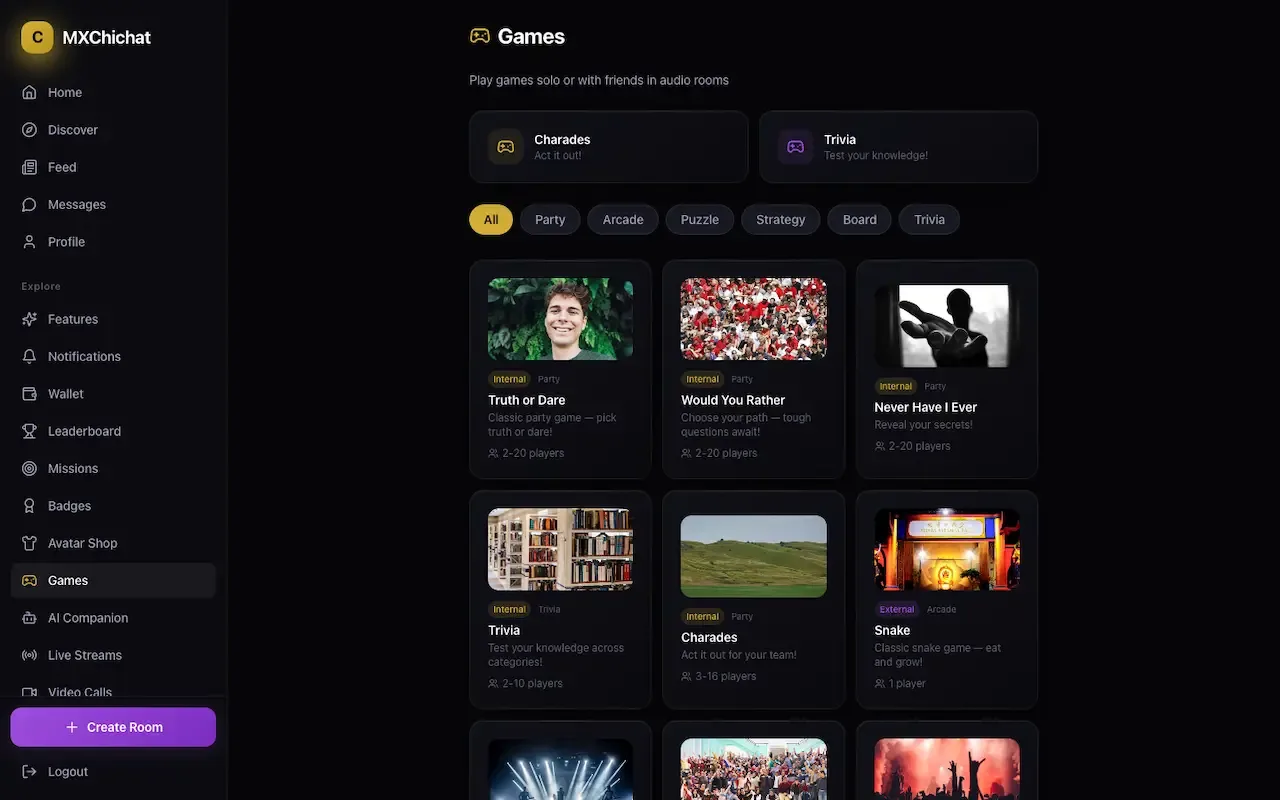
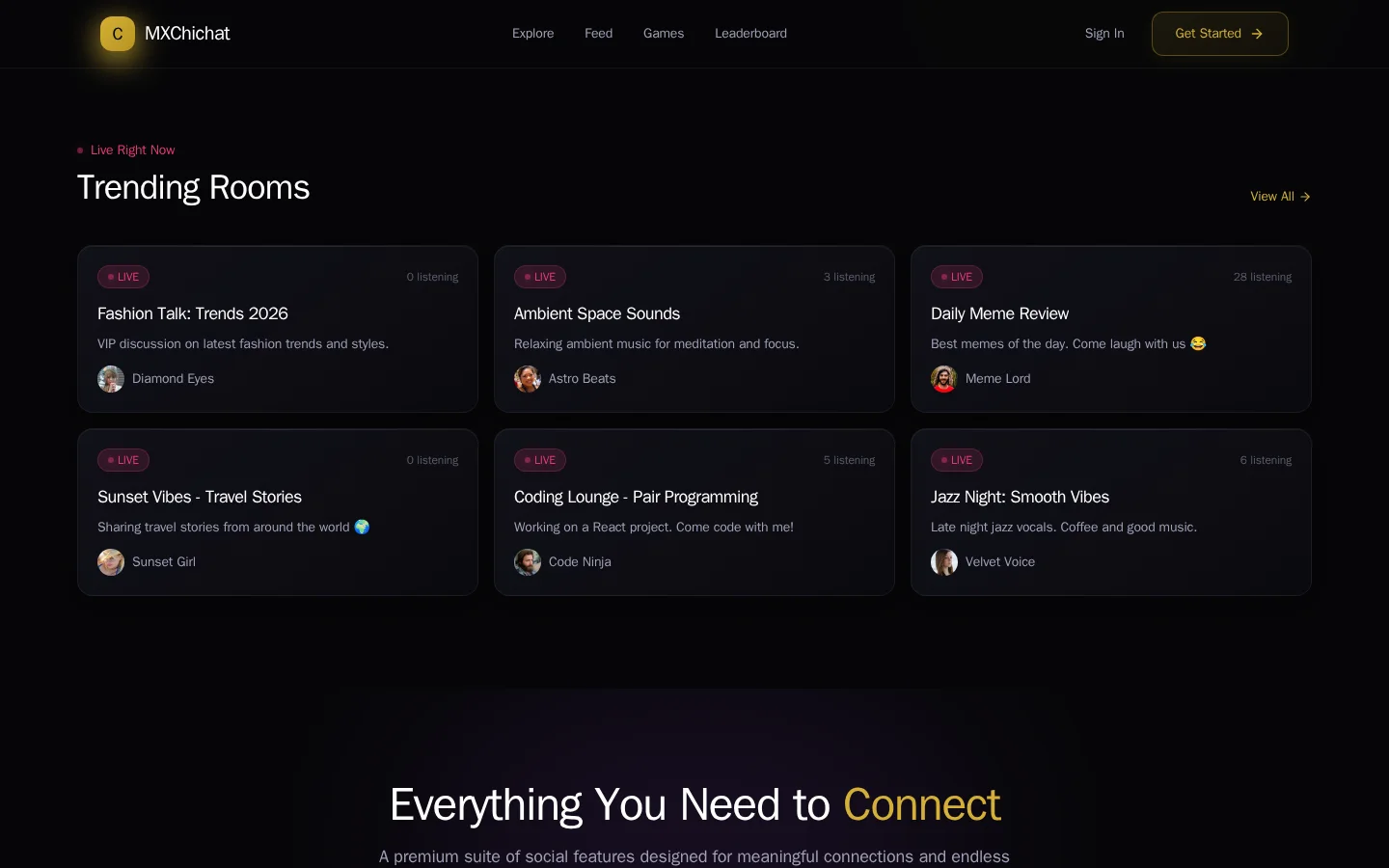
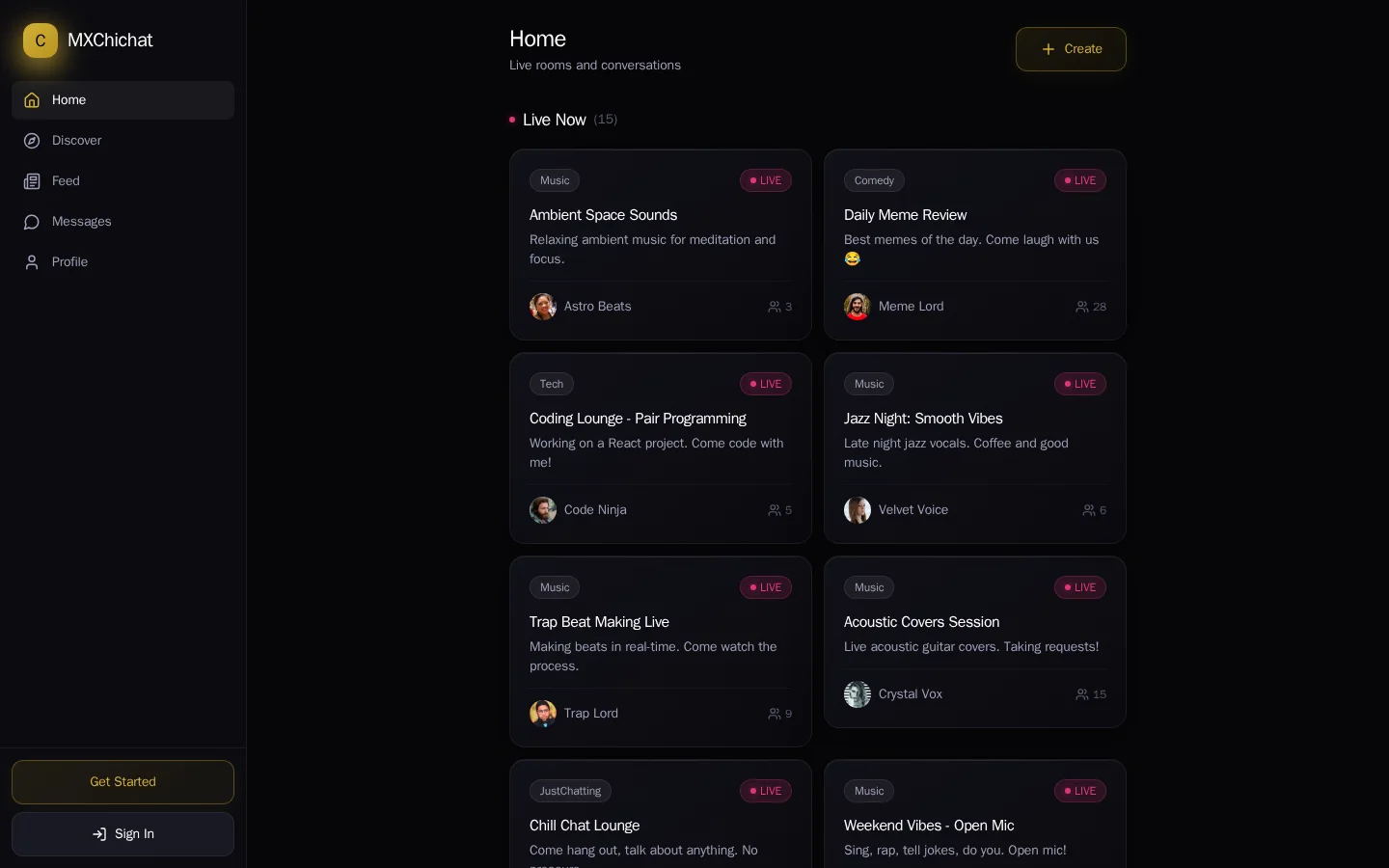
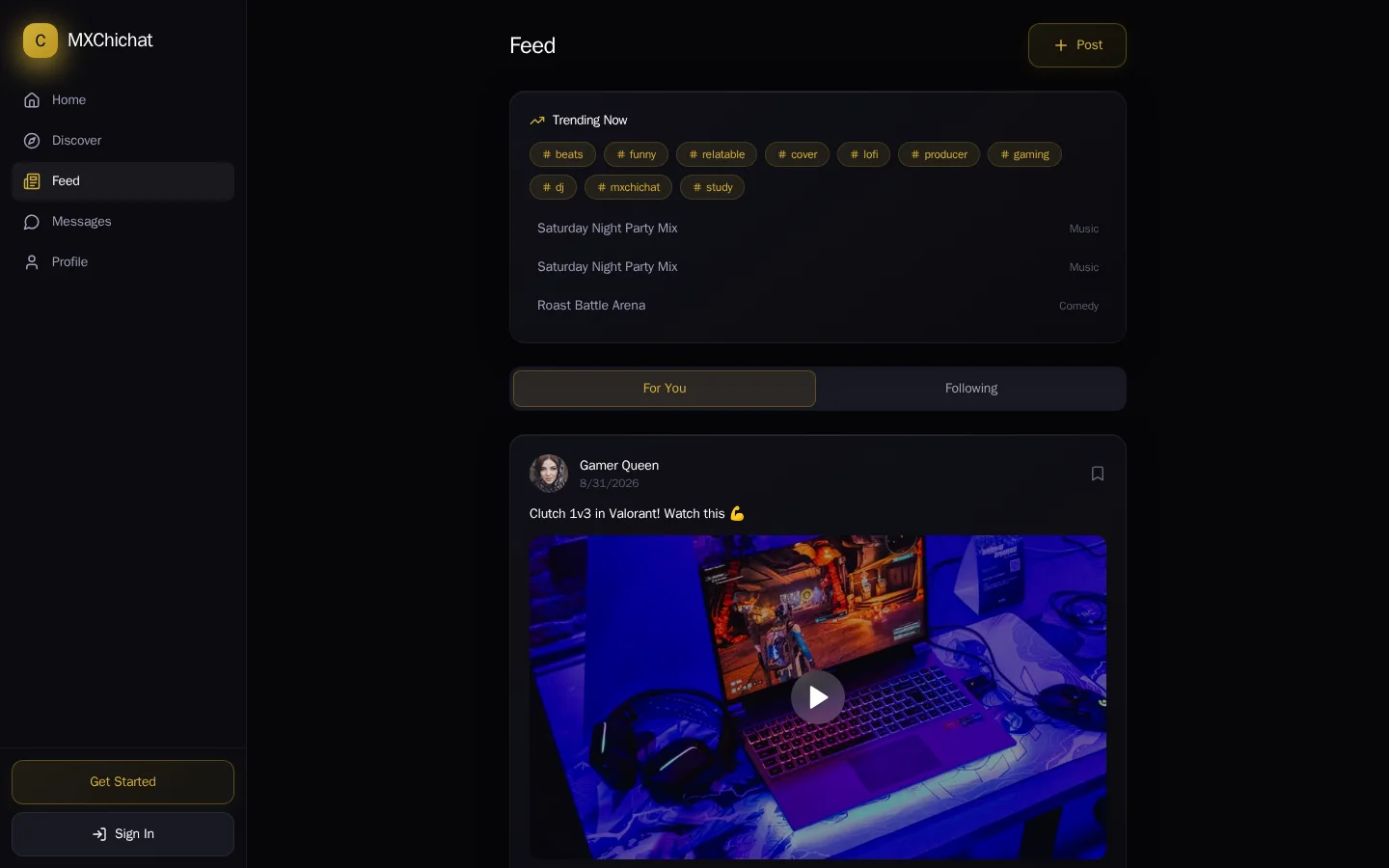
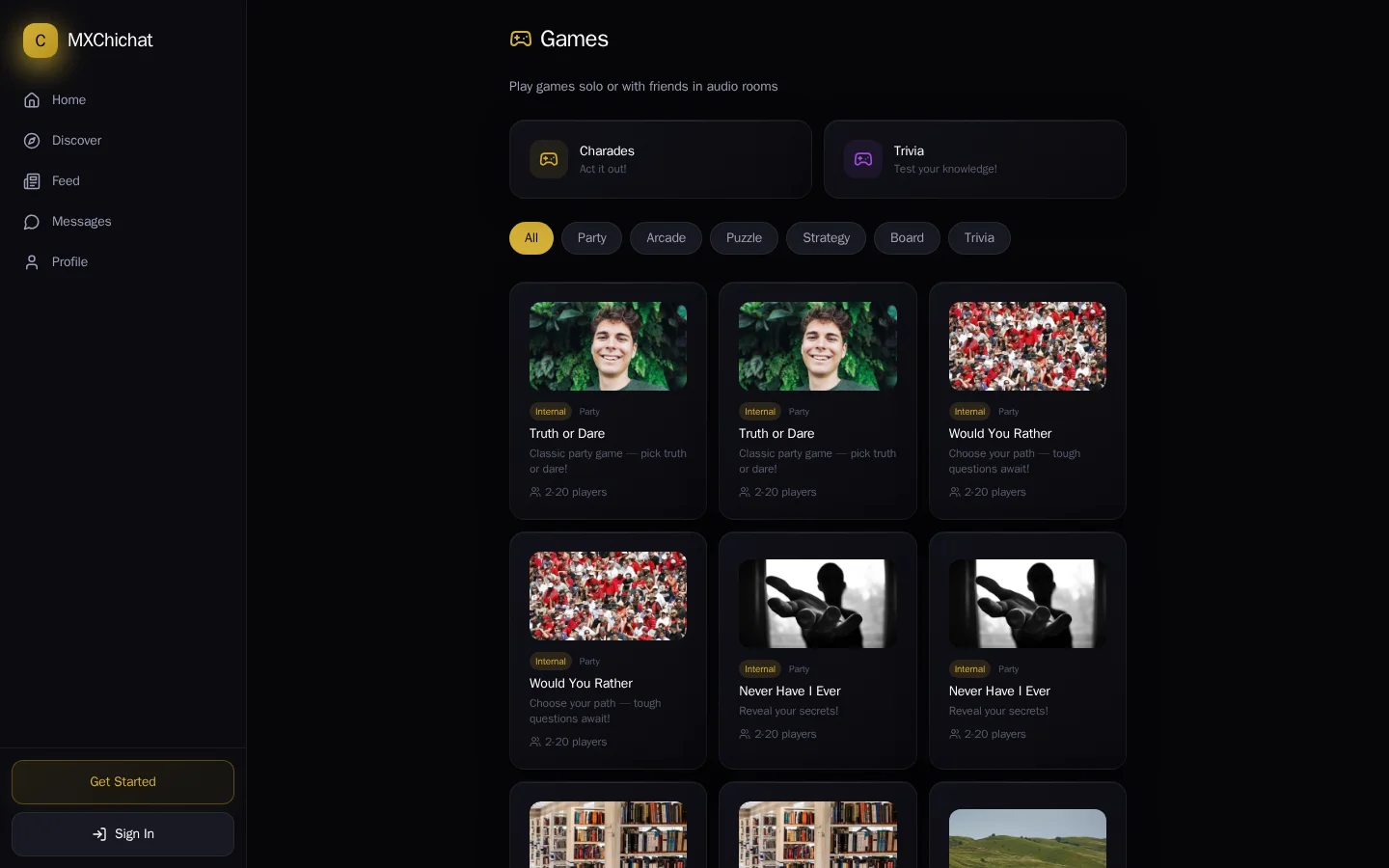
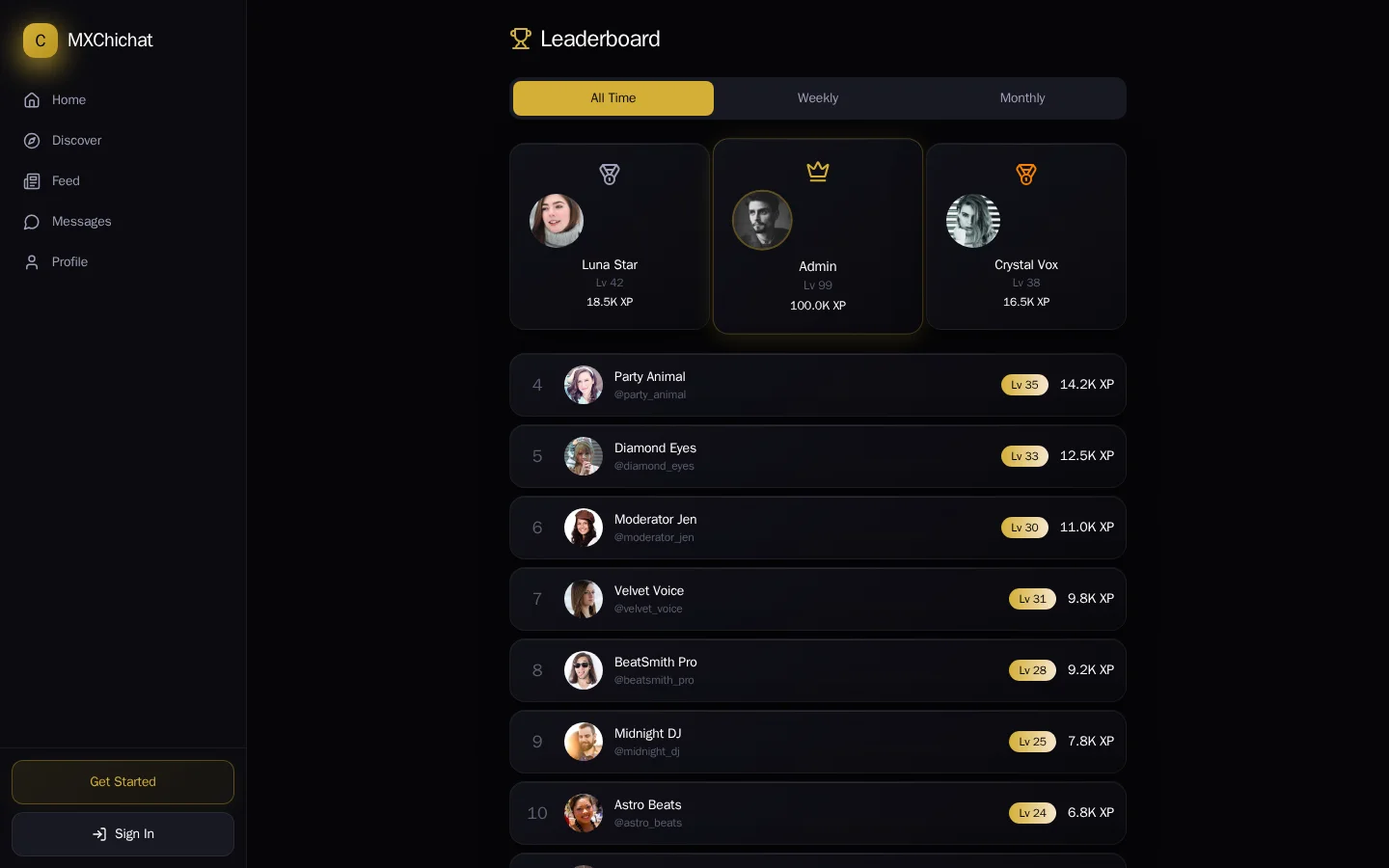
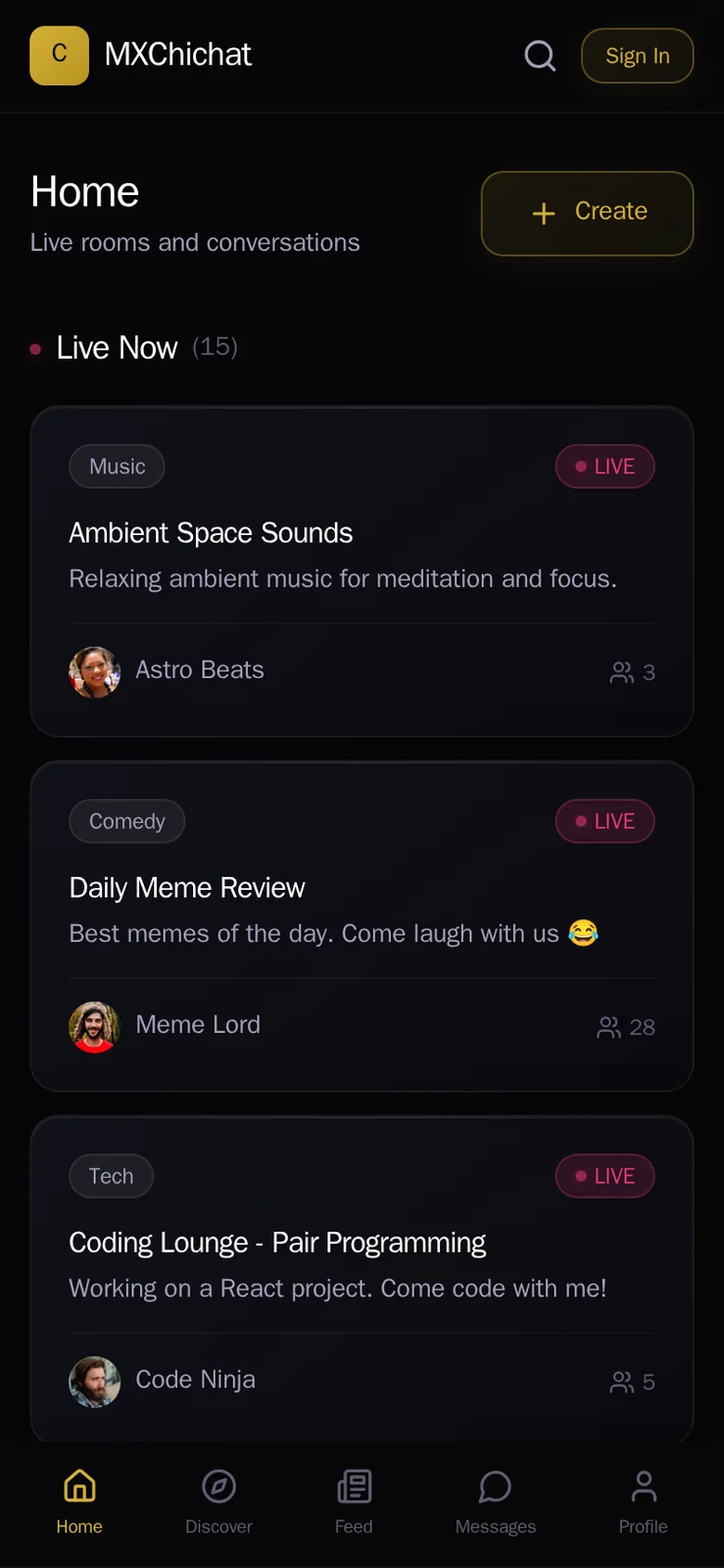
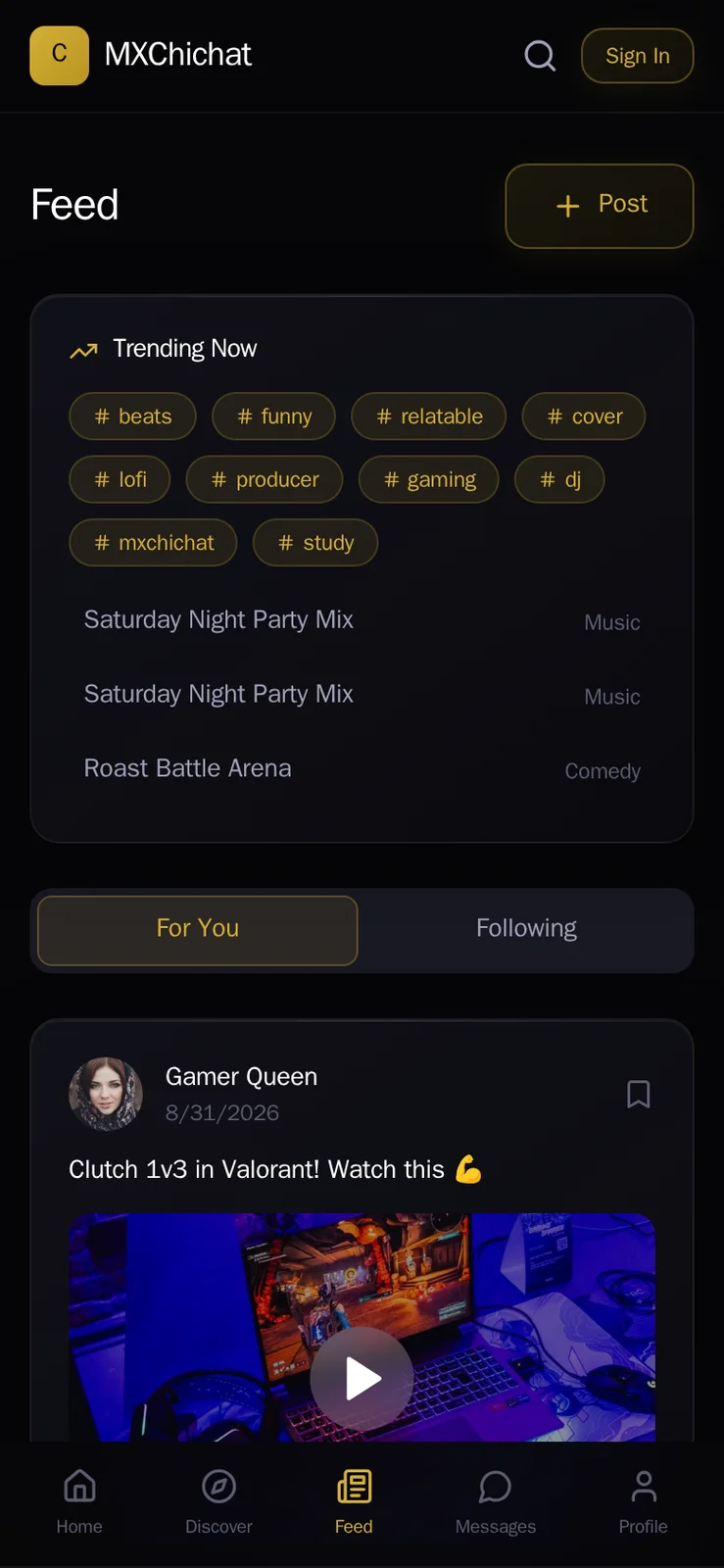
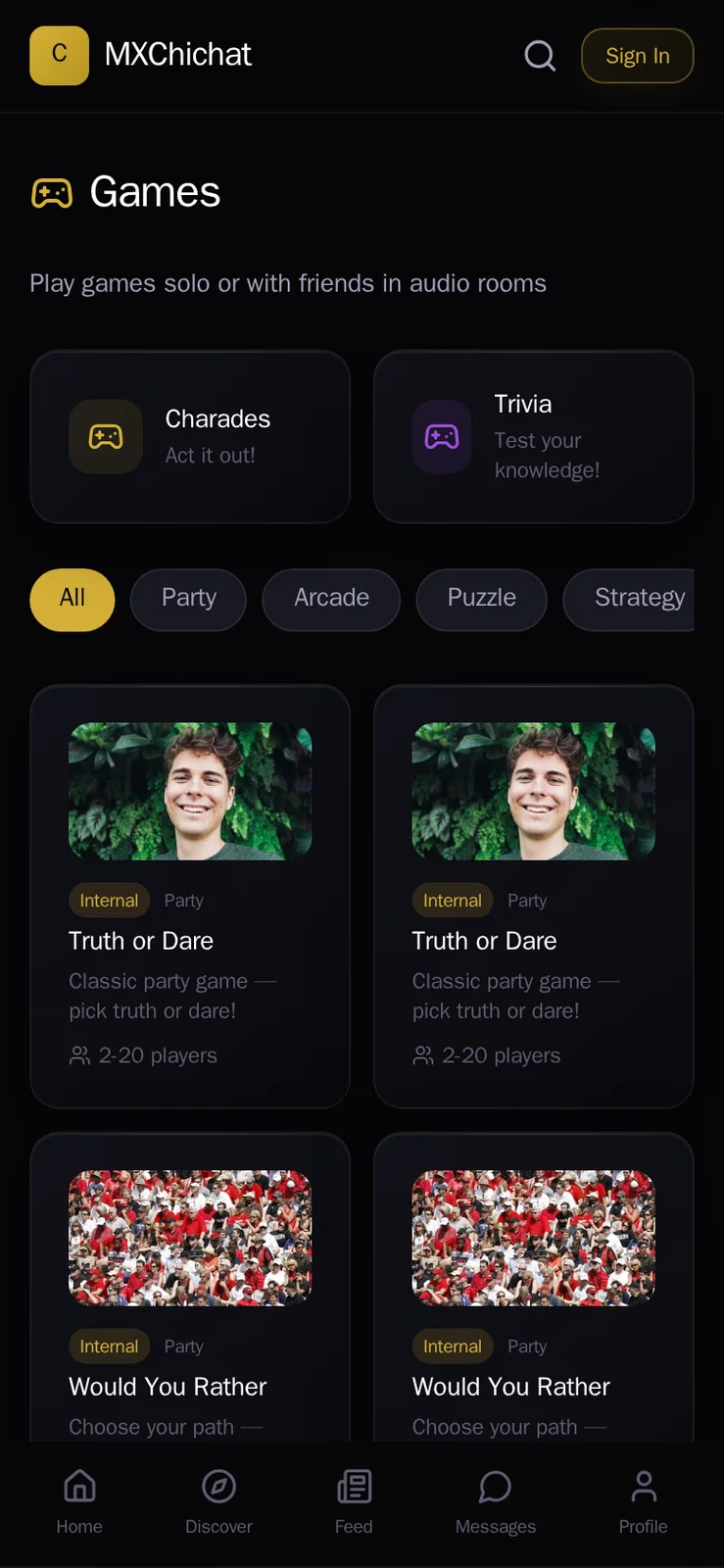
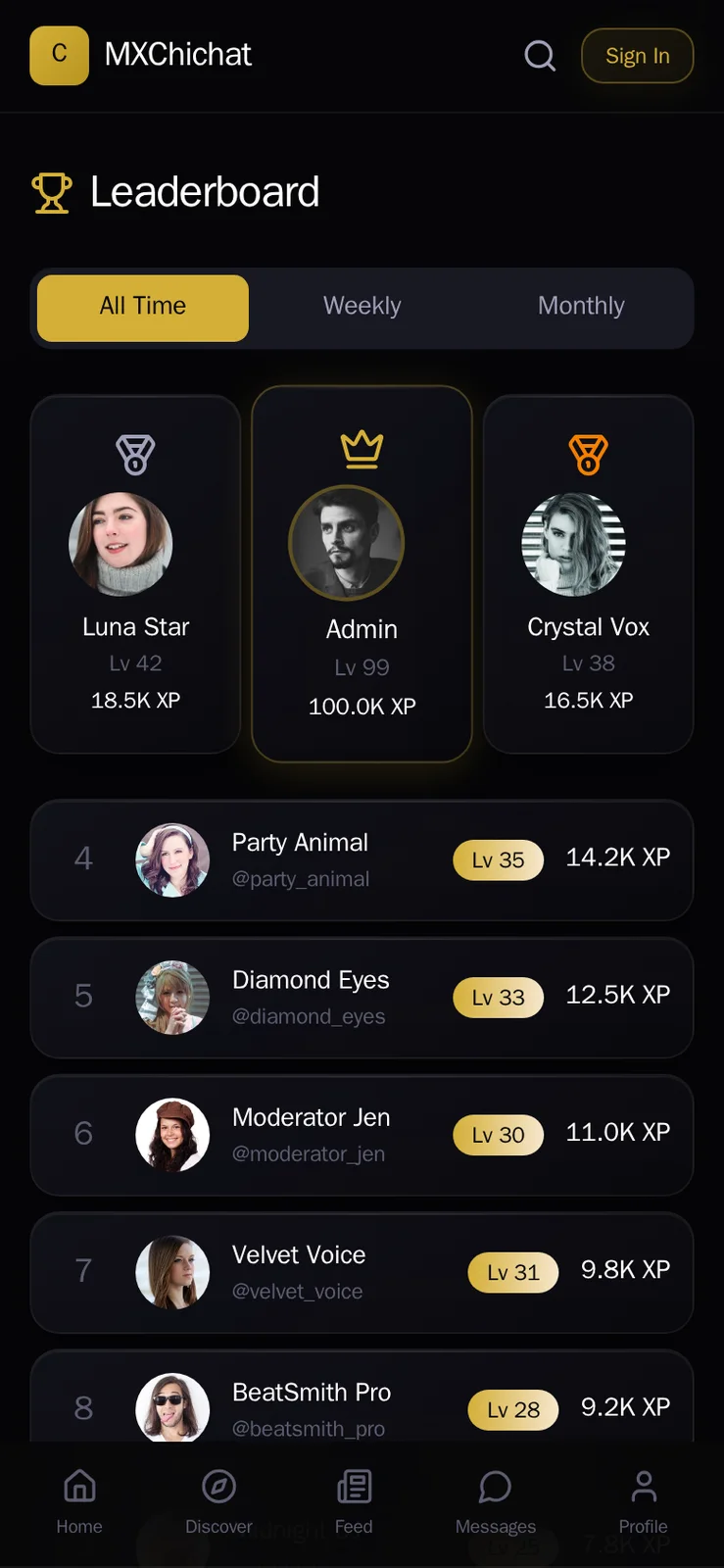
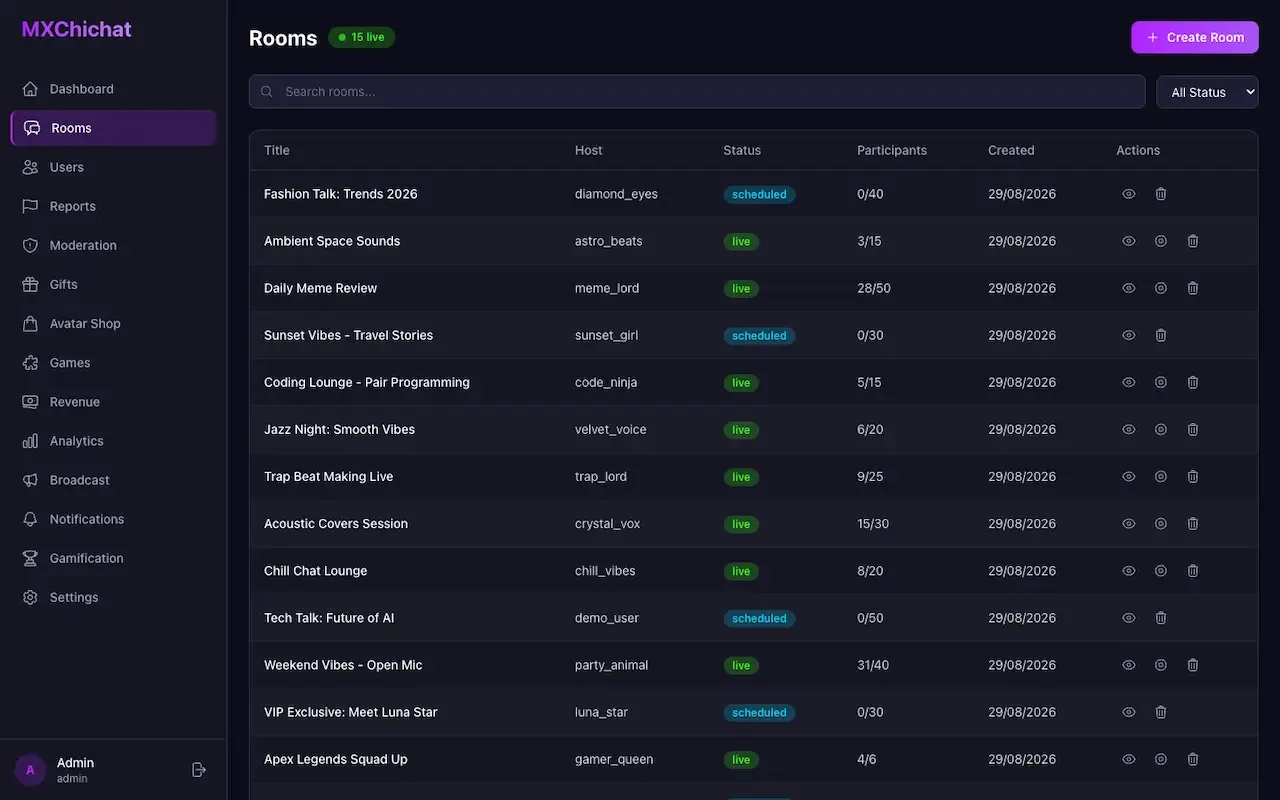
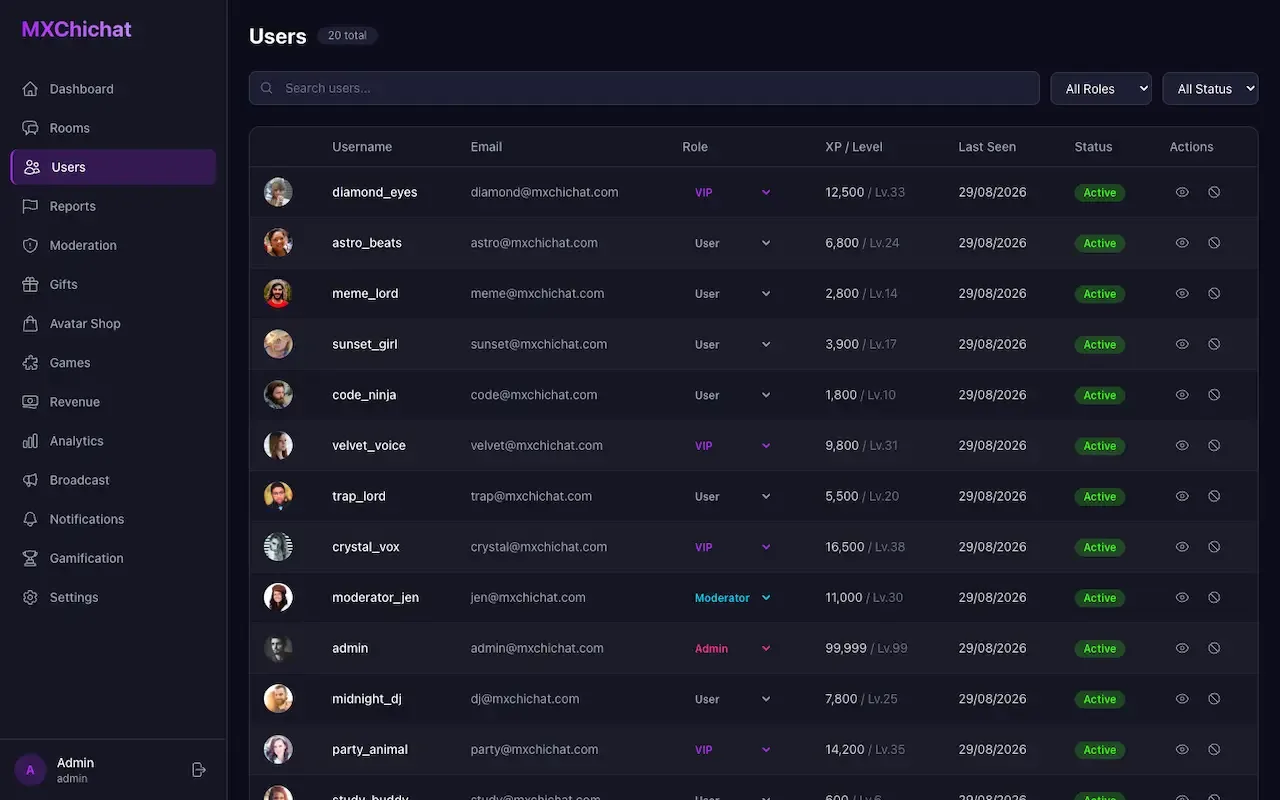
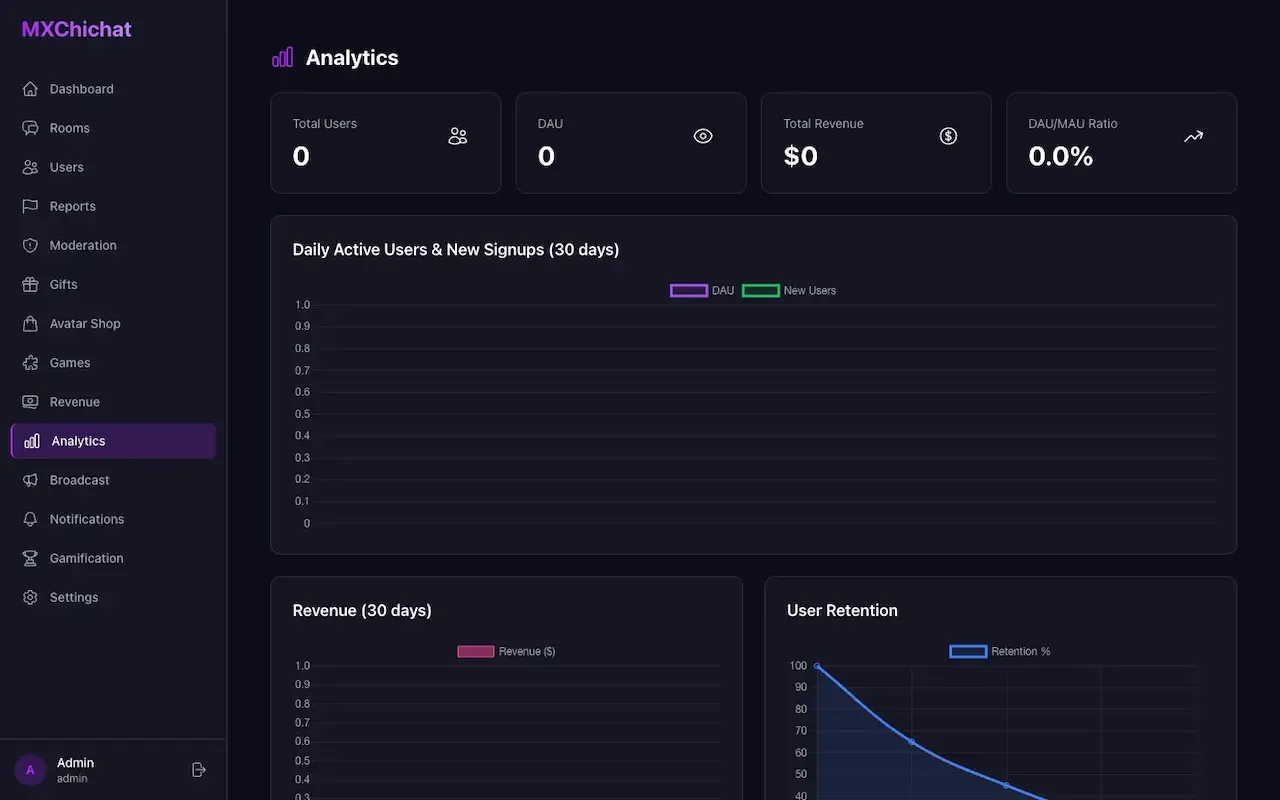
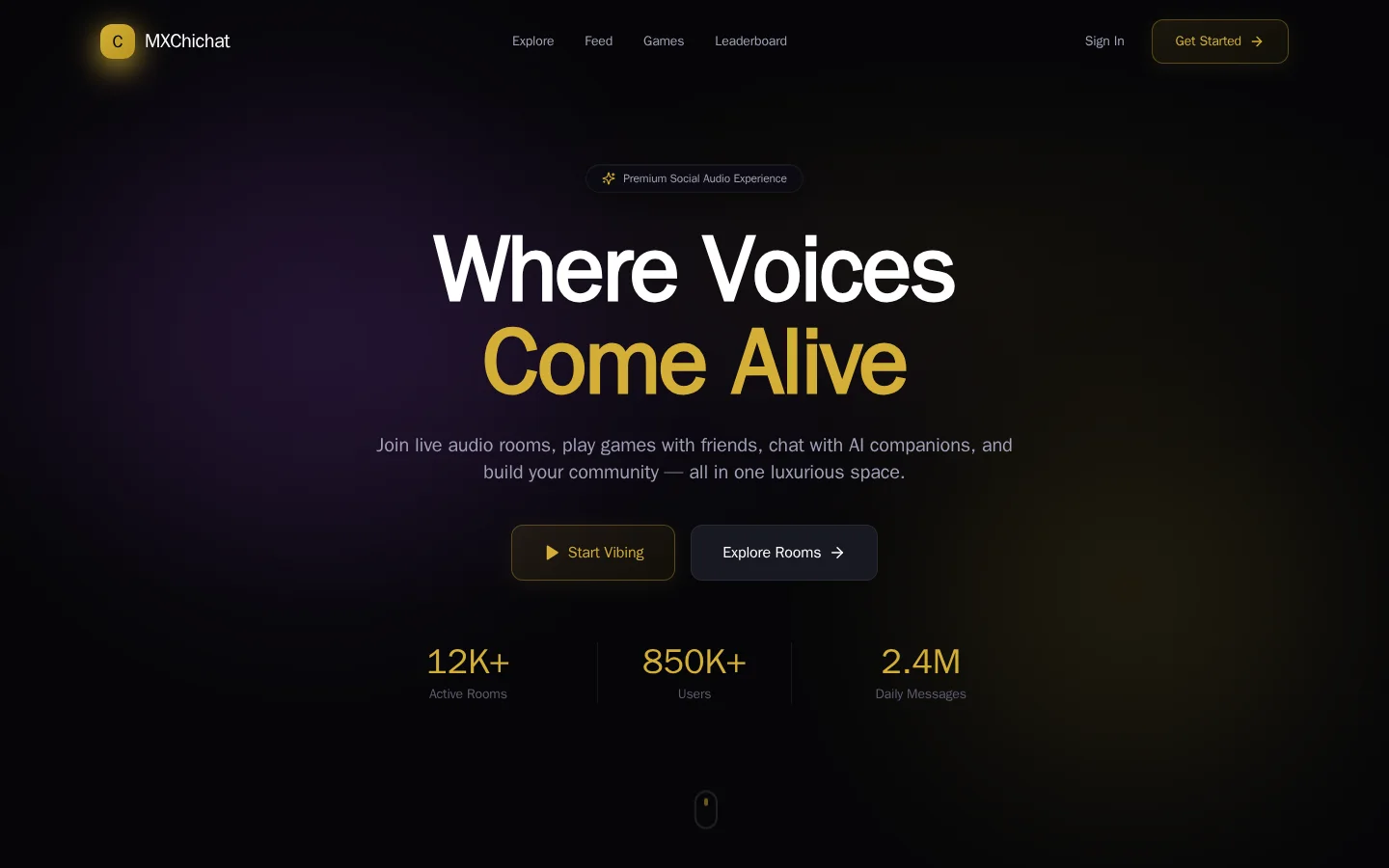
The demo is a running copy of the platform with demo branding and public sample accounts. Sign in as a member to join a voice room, send a gift and watch coins move, then open the operator console in a second tab to see the same activity appear in reports, analytics and revenue. An Android build runs against the same API.
demo@mxchichat.comPassword123!admin@mxchichat.comPassword123!admin@mxchichat.comPassword123!51 features across 4 roles. The first six of each role are here and the full list is one click away. Nothing is held back for a sales call.
Rooms can start immediately or be set for later, so communities can announce a weekly event and members can plan around it.
Each participant holds a role that controls whether they can speak, and the host can change it during the room.
A listener raises a hand, the host sees it, and promoting that person to speaker is a single action for everyone.
Mute and unmute states are broadcast to every connected participant, so the room always agrees on who is audible.
A room can hold between 2 and 500 participants, which covers a private chat and a large town hall alike.
The full room state is sent on entry, so someone arriving halfway through sees the same speakers and settings as everyone else.
7 more Members features are in the full list.
Starting a stream creates the room and the Agora token on the server, which removes setup steps for the broadcaster.
Counts update for every client in real time, which helps broadcasters see whether a topic is landing.
Separate feeds list active streams and active battles, so viewers can jump straight to the action.
One broadcaster challenges another, the second accepts, and the battle begins with a shared scoreboard.
Viewers vote during the battle and the tally is pushed to everyone instantly, which gives spectators a way to take part.
From a one-coin heart up to a 5,000-coin castle, the range lets small gestures and spectacular moments both have a price.
6 more Broadcasters features are in the full list.
Platform activity earns experience points that count toward levels, so ordinary use feels like progress.
A long ladder of levels gives early members quick wins and committed members something distant to aim for.
Every level gained credits 50 coins, which seeds the wallet and invites a first small gift.
Short recurring tasks award XP and coins, creating a reason to open the app every day.
Longer goals reward members who return across the week, which supports habit formation beyond a single visit.
Consecutive-day tracking rewards consistency, and breaking a streak creates a gentle pull to come back.
7 more Engagement features are in the full list.
Search with role and status filters, then open a detail view showing XP, level, coins, diamonds and reports filed.
Ban, unban, change role or reset a password directly from the member page, with no database access needed.
A paginated room list with status filter opens into a live participant list that refreshes without a page reload.
Start, end or delete a room and remove a participant, which answers a disruption while the session is still running.
Reports target three object types and move through three states, with the activity log and target card in one view.
Actions sit on the same screen as the evidence, so a moderator does not have to jump between tabs.
7 more Operators features are in the full list.
The path through the product, in the order it happens for the people using it.
A member signs up with email and password, receives a JWT access token with a revocable refresh token, and gets one of four roles.
Rooms are filtered by status and topic. Joining as a listener happens over REST, then a socket join pushes full room state so late arrivals see what everyone sees.
A raised hand reaches the host, who promotes the member to speaker. Mute state, chat and in-room games update live for every participant.
A gift moves coins from sender to recipient inside one transaction. Activity earns XP, missions and streaks that lift the member through levels.
Coins convert to diamonds, the operator-set platform fee applies, and withdrawals leave through the configured method with a transaction history for reconciliation.
Every earning route built into the product you receive: how it works, who pays and where the operator earns.
| Revenue model | How it works | Who pays | How you earn |
|---|---|---|---|
| Coin package sales | Six packages priced from $0.99 to $99.99 with bonus tiers, bought on web through Stripe or on mobile through verified purchases. | Member | The most direct line: money enters the economy when a package is bought. |
| Platform fee on earnings | An operator-set percentage is taken from creator earnings before payout and can be changed at runtime without a deployment. | Broadcaster | Scales with gifting volume, so it grows as engagement does. |
| Conversion margin | Coins turn into diamonds at 100 to 1, and the reverse direction costs a 10 percent fee. | Member or broadcaster | The exchange path itself carries margin beside the platform fee. |
| Avatar shop | Cosmetics across five categories and four rarity tiers are priced in coins and bought by members who want visible status. | Member | Digital inventory with no fulfillment cost behind each sale. |
| Premium segment | A VIP role already exists and notification targeting segments by it, so a paid tier is a configuration step. | Member | Recurring revenue and a defined audience for announcements. |
| Gift volume in battles | PK battles and room events concentrate gifting into short moments where viewers support a side. | Viewer | More gifts per session raises coin sales and the platform fee together. |
| White-label licensing | The deployment can be offered under a partner brand with its own integrations and catalogs. | Partner | A licensing business alongside your own operating product. |
The flow of money, the gateways you can connect and how payouts are handled.
Members buy coins on the web through Stripe, and on iOS and Android through purchases that RevenueCat verifies. Coins are spent on gifts, games and avatar items. Recipients accumulate diamonds, and every balance change runs inside a database transaction, so a payment webhook that arrives twice cannot double-credit a wallet. The operator sets the platform fee, which is applied to creator earnings before payout, and the revenue panel shows gross revenue, fee and creator payout side by side.
| Gateway | What it covers |
|---|---|
| Card | |
| Stripe | Handles coin package purchases on the web app, on your own merchant account. |
| Other | |
| RevenueCat | Verifies in-app purchases on the iOS and Android apps so store-billed coins reach the right wallet. |
You operate the platform, so legal compliance in each market you serve is yours. This is the tooling that ships in the product. It is not legal advice.
Passwords are hashed with bcrypt at cost factor 12, access tokens are JWT, and refresh tokens are stored per session with rotation and revocation on logout. Four roles separate ordinary members from moderators and admins, and a dedicated guard protects every admin route. Sockets are checked for a valid token when they connect. You still need to rotate every default secret and set strong admin credentials before any public launch.
A global validation pipe whitelists properties and rejects unknown ones, class-validator rules cover every DTO, and TypeORM queries are parameterized. Responses pass through a serializer that strips excluded fields, and user text arriving over sockets is sanitized. Uploads are checked by their magic bytes instead of their file extension, and request bodies are limited in size to blunt abuse.
Members can report people, rooms and content, and moderators work a queue with an activity log and resolve, dismiss or ban actions. Banned words and auto-ban thresholds are settings. Real-time text moderation is available through the AI layer, but audio is harder to screen, so you will need moderators who can join rooms and a clear escalation path for harmful behavior.
Requests are limited per IP, with tighter limits on registration, login, room chat, direct messages and video call initiation. Block relationships remove follows in both directions. Distributed rate limiting backed by Redis across several pods is available as hardening we set up, so a single deployment is covered today and a large cluster gets that extra step with scope confirmed with us.
Balance changes are transactional, and the payment layer is separated so a regional method can be added without touching consumer screens. Because coins can convert into withdrawable earnings, you should set withdrawal minimums, review a sample of payouts early and keep the platform fee visible to creators. Provider keys for Stripe and RevenueCat stay under your control, along with liability for the accounts.
A developer and security handbook and a VAPT compliance document ship with the build, mapped against the OWASP API Top 10 and marked implemented, partial or absent. Immutable audit logging, Redis-backed distributed rate limiting and migrations in place of schema sync are planned as pre-launch hardening. Legal and data protection duties in your market remain the operator responsibility.
Immutable audit logging, Redis-backed rate limiting across pods, migrations in place of schema synchronize and SSO are available as pre-launch work we set up, with scope confirmed with us.
The layers of the product as delivered. You receive the full source code for every one of them.
| Layer | Built with | Hosting note |
|---|---|---|
| Web app | Next.js 14, React and TypeScript with Tailwind CSS | The web app and the admin console each run two replicas behind the same ingress. |
| Backend API | NestJS with TypeORM and TypeScript, 24 modules, Swagger and OpenAPI | |
| Data layer | PostgreSQL 16 and Redis 7 (28 entities, 30 or more indexes) | |
| Real-time and RTC | Socket.IO across three namespaces and Agora RTC 4.20 | Socket.IO across three namespaces for rooms, streaming and AI, with a Redis adapter for broadcasting across pods. |
| Mobile apps | Flutter for iOS and Android, Firebase Cloud Messaging, RevenueCat | |
| Deployment | Docker, Kubernetes with autoscaling, GitHub Actions and Sentry | |
| Containers | Docker images are provided for each service, so the same artifacts run in development and production. | |
| Orchestration | Kubernetes manifests include horizontal pod autoscaling for the API between three and ten pods. | |
| Database | PostgreSQL 16 with 30 or more indexes on feed, follow, gift and notification queries, plus JSONB for room settings. | |
| Media and files | Uploads go to S3 or Cloudinary and are served through a CDN, keeping large files off the application pods.Agora RTC carries streams, while the backend only generates tokens with your app certificate.GitHub Actions pipelines publish images to GHCR, and Sentry plus health probes cover runtime visibility. | |
The platform is built to run on your own cloud. Services are containerized, the API tier holds no session state, and the real-time layer works across several instances once the Redis adapter is in use. That lets you start on a single node for a closed beta and grow into an autoscaled cluster later.
A voice room is a live conversation with an audience. A host opens a room with a topic, either right away or at a scheduled time, and decides who may join: everyone, or only people who know a password. Members who enter start as listeners. They can hear everything, see who is speaking and use the text chat, but their microphones are off.
To join the conversation, a listener raises a hand. The host sees the request and promotes the member to speaker, which turns the microphone on for them. The host can mute a speaker at any moment, and every change shows for everyone in the room as it happens. Gifts arrive in the same flow: a listener spends coins, and the host or speaker earns diamonds. When the room ends, the chat is kept so people can see what was said.
Behind that simple experience are two jobs. One carries the sound itself, and the other keeps a shared picture of the room: who is in it, who may speak and who is muted. They are separate on purpose, which is why a room can stay consistent even when someone has a weak connection.
Social audio is easy to like and hard to sustain. A direct look at its strengths and weak points helps you decide whether it suits your community, and how to plan around the problems that appear once a platform is live.
Competing guides often reduce this to a vendor name. In practice several layers cooperate, and each fails in its own way. Knowing them helps you ask better questions of any provider, including us.
| Layer | What it does | What goes wrong without it |
|---|---|---|
| Audio transport | Carries voices between participants through a real-time media service | Delays and dropouts that make conversation feel broken |
| Presence | Tracks who is in the room, who speaks and who is muted, over live sockets | Members see different rooms and talk over each other |
| Room roles | Enforces host, speaker and listener powers on the server | Anyone can grab a microphone or enter a private room |
| Chat storage | Keeps messages after a room ends | Context disappears and moderators cannot review what happened |
| Gift ledger | Moves coins and diamonds in one safe step and ignores duplicates | Balances drift, and creators dispute their earnings |
| Text moderation | Checks messages as they arrive and queues reports for people | Abuse spreads before anyone sees it |
| Operator settings | Lets staff change fees and rules without a deployment | Every small change needs a developer and a release |
One fixed price for the ready-made platform, published here so you can plan before you talk to us.
Ready-made, one-time
$3,999
Live in 6 working days from kickoff
The engineers who deploy your platform stay with it once it is live.
Need more? We tailor the platform to your plan, typically in 2-8 weeks, and confirm the scope with you before work starts. App store review times are set by Apple and Google.
Everything here is available around the ready-made ChillChat clone. We confirm the scope with you before any price is agreed.
Sizes your Agora minute plan and region settings against projected concurrency, since this is the largest ongoing cost on a platform built to keep rooms open.
Confirm with usExtends the existing text moderation to images and audio uploads when user-generated media volume justifies the added cost.
Confirm with usShips an append-only trail of operator actions to immutable storage, which regulated markets and enterprise reviews often require.
Confirm with usConnects an identity provider to the enum-based role model for deployments that sit inside a corporate directory.
Confirm with usStreams the twelve tracked event types into a warehouse so your growth team can ask questions the console does not answer.
Confirm with usAdds a market-specific payment method through the existing payment abstraction, with its own onboarding and testing.
Confirm with usInternationalizes the web and mobile interfaces, which are single-language by default, for operators launching in more than one market.
Confirm with usAdds scheduled, segmented campaigns and A/B testing on top of the existing notification and segment broadcast layer.
Confirm with usInstead of three packages with feature counts, this is one plain matrix. Most of the platform ships ready, and the rest is set up around your plan. Where a status says Included, the product documentation or the demo shows it working.
Rooms open with a free-form topic and can be planned ahead as well as started instantly.
Three tiers of participation, with listeners promoted to speaker by the host.
Members ask to speak; hosts mute individuals and everyone sees presence update live.
Password entry is checked on the server, not just hidden in the interface.
Video broadcasting on Agora with viewer counts and stream discovery.
Two broadcasters compete head to head for viewer votes in real time.
Posts with For You and Following tabs, plus stories that expire after a day.
Direct and group chat, with one-to-one, group and random-match video calls.
Coins in, ten gift tiers, diamonds out, conversion and withdrawal once a minimum is met.
Levels, daily and weekly missions, streaks, achievements and leaderboards.
Cosmetic items across rarity tiers, with inventory and operator-managed catalog.
Casual game sessions with readiness and scoring, from an operator-managed catalog.
Persona-based chat with history and matchmaking suggestions that operators can turn off.
Users, rooms, reports, analytics, revenue, catalogs and broadcast notifications.
A web app and a Flutter mobile app running on the same API and socket layer.
Screening of images and audio at scale, which we set up on top of the text moderation already in the build.
We size real-time capacity for very large rooms or launch spikes with you.
Local wallets and bank methods that we connect alongside the standard payment providers.
For corporate or partner communities that sign in through their own identity system; we connect it for you.
A VIP role exists in the data model; we set up the paid tier and its benefits for you, with scope confirmed at kickoff.
The model is gifting and avatars; we design and build sponsorship tooling with you, with scope confirmed with us.
Four pages go deeper on the questions buyers ask most about the ChillChat Clone. This page stays the overview.
Most social apps bolt audio onto a feed.
See the full breakdownSocial audio platforms can be bought ready-made, built from scratch or rented as a service, and the cost shape of each is different.
See exact pricingA social audio platform earns when members feel something worth paying for inside a room.
See the playbookA social audio platform is a real-time system with a payment ledger inside it, and the provider you hire decides whether it holds up when a room fills.
Compare optionsFrom kickoff to a live ChillChat clone under your brand: what we do each day, and what we need from you.
1Day 1
2Day 2
3Day 3
4Day 4
5Day 5
6Day 6
For a social audio app, the build is usually a smaller line than the cost of keeping rooms open. The platform price pays for presence, chat, gifting, gamification, an AI layer and an operator console you would otherwise design from scratch. After launch, three costs keep growing with success: real-time media minutes, moderation people, and the effort of keeping a community active. A custom build adds the risk of underestimating the real-time layer, which tends to drift under load until someone rebuilds it.
| Factor | Build from scratch | Rent a SaaS | Own it with GetFame |
|---|---|---|---|
| Time to launch | Identity, rooms, RTC, feed, messaging, economy and mobile have to be sequenced over a long programme. | Quick for chat, slower for gifting and payouts. | Six working days to deploy the finished platform on your cloud. |
| Real-time layer | Presence, mute state and promotion must stay correct across instances, which is hard to test. | Hidden behind the vendor, with limits you cannot change. | Three socket namespaces with a Redis adapter for broadcasting across pods. |
| Retention mechanics | Missions, streaks and levels are usually deferred until after launch. | Rarely included, or sold as a separate product. | XP, 47 levels, missions, streaks, badges and leaderboards are already built. |
| Mobile apps | A second codebase and its own release process. | Often a wrapper around a web view. | A 46-screen Flutter app sharing the same API and sockets as the web app. |
| Factor | Build from scratch | Rent a SaaS | Own it with GetFame |
|---|---|---|---|
| Recurring platform fees | None, but engineering salaries continue. | Often per member or a share of gifting, which grows with you. | None; you pay your own infrastructure and provider accounts. |
| Operator tooling | Admin screens are commonly built last and left unfinished. | Limited to what the vendor exposes. | 18 sections covering moderation, analytics, revenue, catalogs and settings. |
| Ownership | Yours once finished. | Never yours. | Full source for NestJS, Next.js and Flutter on standard PostgreSQL. |
Running costs. Expect ongoing bills from Agora for media minutes, from Stripe and the app stores for payment processing, and from any AI provider you enable. Cloud hosting, storage and CDN, push and email services, and the app store developer accounts are also yours. Staff matter too: moderators for live rooms and someone who reviews payouts. Hardening items such as audit logging and distributed rate limiting are set up with scope confirmed with us.
A room list and a microphone button look simple. The hard work sits in keeping every participant in agreement about who is speaking, in money that must survive duplicate payment notices, and in a moderation queue a non-engineer can use. Here is the comparison, module by module.
Build it yourselfTracking joins, leaves, speakers and mute state so all participants see the same room, a persistent realtime challenge.
Ready-madePresence over sockets already working, with role changes pushed live to everyone in the room.
Build it yourselfIntegrating a real-time audio SDK, issuing tokens and testing across devices and networks.
Ready-madeAgora token generation wired in for web and mobile, on your own account.
Build it yourselfDesigning speaker approval, host powers and what happens when the host disconnects.
Ready-madeHost, speaker and listener roles with hand-raise promotion built and shown in the demo.
Build it yourselfA coin and diamond ledger that stays correct when payment events arrive twice or out of order.
Ready-madeDual-currency economy with ten gift tiers and conversion, ready to configure.
Build it yourselfLevels, missions, streaks and badges tuned so that rewards motivate without bankrupting you.
Ready-madeProgression system with missions, achievements and leaderboards already connected to member actions.
Build it yourselfContent types, ranking tabs, expiry rules and comment threads for a social layer beside the rooms.
Ready-madeFeed, stories, comments, saves and trending tags included.
Build it yourselfA cross-platform app that mirrors the web experience screen by screen, usually a team for several months.
Ready-madeA Flutter app on the same API, branded for you.
Build it yourselfAdmin tools for users, reports, revenue and catalogs, often left until after launch.
Ready-madeAn eighteen-section console, including analytics and runtime settings, from day one.
Build it yourselfReport intake, banned words, automatic text checks and review workflows built before problems appear.
Ready-madeReport queue, banned-word controls and real-time text moderation in the build.
Build it yourselfConnecting model providers, keeping history, writing personas and handling provider outages.
Ready-madePersona chat with several provider options and per-member history already integrated.
Social audio apps of this kind let people join voice rooms, take part in live streams and send gifts that fund creators. This platform follows the same pattern as software you own and brand yourself. The comparison below describes the model, and the product is independent of any specific brand.
| Aspect | The ChillChat model | This platform |
|---|---|---|
| Who sets the economy | The app company decides coin prices, fees and payout terms. | You set packages, the platform fee and withdrawal rules from the console. |
| Room model | Drop-in voice rooms with speakers and listeners. | Host, speaker and listener roles, scheduled and private rooms, capacity up to 500. |
| Live and battles | Streams and competitive formats attract audiences and gifts. | Agora live streaming with challenge, accept and live viewer voting. |
| Retention | Levels, missions and badges keep members returning. | XP, 47 levels, missions, streaks, rarity badges and leaderboards you can tune. |
| Creator payout | Earnings from gifts convert to cash under the owner rules. | Diamond conversion, a minimum, an operator fee and a ledger you can export. |
| Moderation | Handled by the company behind the app. | Your team works the report queue and sets banned words and ban thresholds. |
| Member data | Held by the app owner. | Stored in your PostgreSQL database on your infrastructure. |
The founders and teams this product fits most directly, one line each. The launch ideas that follow turn these audiences into a first-week plan.
Founders launching a voice-first community who need rooms, presence, moderation and an economy at once.
Operators whose creators need gifting, payouts and gamification that keep earnings in the app.
Streaming apps adding social depth through room-based discovery and PK battles.
Groups that talk while they play and use in-room games and leaderboards between matches.
Teams serving a specific language or market with their own gift catalog and moderation policy.
Delivery partners extending a documented API across 24 NestJS modules.
Voice rooms work best where people already want to talk to one another in real time and where a recognizable community exists. These are directions to consider, with the audience, what they pay for and what to configure before opening the doors.
Communities who want conversation in their own language, such as diaspora groups or regional dialect rooms. Members pay for gifts and cosmetic items that signal belonging. Set room topics by language, seed a handful of friendly hosts, and write rules in the community language from day one.
Casual rooms for people who want company without the pressure of a camera. Revenue comes from small gifts and avatar items. Keep room capacities modest, enable missions and streaks so evenings become a habit, and watch moderation closely during the hours when rooms are busiest.
Singers, storytellers and comedians who perform for a listening audience. Fans send gifts and the performer converts them to earnings. Configure the platform fee carefully, publish how payouts work and use PK battles to give performers a competitive moment worth watching.
Players who want voice chat around games, tournaments or team practice. Use in-room games, private rooms with passwords and leaderboards by room. Decide early how rooms are organized so squads find each other, and keep the avatar shop themed to your game community.
Rooms for language practice, book talks, career advice or hobby groups, often scheduled in advance. Scheduled rooms and topic labels do the work here. Start with unpaid sessions to build habit, then switch on gifts and cosmetics once regular members have formed.
Quiet rooms for support, meditation or friendly chat, paired with the AI companion for moments when no one is online. This niche demands strong safety rules and clear disclaimers that the platform is not professional care. Plan moderators and escalation paths before launch.
Social audio has several shapes: standalone drop-in apps, rooms inside chat or video products, and builds on a developer toolkit. This list is neutral. It names well-known options and the trade-off each carries, so you can judge whether owning a platform is worth the added responsibility.
Drop-in audio app
People who want conversations among an existing network of speakers and listeners.
Your community lives on someone else platform, under their rules, branding and monetization.
Voice chat room app
Audiences in the regions and languages the app already serves.
You adapt to its features and economy rather than designing your own.
Rooms inside a community app
Communities already organized on Discord that want occasional audio events.
Audio is one feature among many, with no gift economy or payouts built around it.
Audio feature of a social network
Accounts with an audience on that network who want to host live talks.
Reach depends on the network, and the format, tools and policies are not yours to change.
Developer toolkit
Teams with engineers who want a custom product from first principles.
You get audio transport only; roles, ledger, moderation and apps all remain to be built.
A white-label voice room platform sits between joining an existing app and building from nothing. You keep the community, the data and the economy, and the hard real-time pieces are already assembled. In return you take on what a big network handles for its users: staffing moderation, paying creators accurately and meeting the rules of every market you serve.
Longer answers to the questions buyers of this model ask before they commit.
The biggest risk is an empty room list. Before launch, line up a small group of people who will open rooms at predictable times, and publish a schedule. Scheduled rooms are a feature you should use heavily at the start, because they give the app a rhythm and let members plan to come back.
Pick a narrow audience. A specific topic, language, hobby or region is easier to fill than a general product, and members are more likely to recognize one another. That recognition is what makes a gift or a follow feel meaningful later.
Keep monetization quiet at first. Run rooms, missions and levels, and let people settle in before you ask them to buy coins. If a community already exists on another chat tool, invite them in groups so rooms feel busy on the first day instead of waiting for a trickle.
Finally, appoint a few trusted people as moderators from day one. A room that stays friendly in the first weeks sets the tone for everything that follows, and it is far easier to protect a good culture than to repair a bad one.
Retention comes from small, repeatable goals. Daily missions create a reason to open the app, weekly missions reward people who return across several days, and streaks make a missed day slightly uncomfortable. Use all three together, and keep the daily task light so it feels like a nudge and not a chore.
Levels should feel earned but not distant. With a long ladder of thresholds, the first few levels should arrive quickly so a new member sees movement in their first session. The coin credit at each level gives them something to spend, which leads naturally into gifting.
Badges and leaderboards give status. Time-boxed rankings by week and month let newcomers compete, while rarity-tiered badges reward long-term members. Resist adding too many, because status only means something when it is scarce.
Review the analytics every week. Retention cohorts and DAU against MAU show whether the loop works, and you can change missions, rewards and room defaults from the console without a deployment, then watch whether returning behavior improves.
The common failure in social audio is trying to earn from an empty room. Members who find nothing there learn the app is not worth returning to, and no discount can fix that. Start with free rooms, XP and missions, and move to coin sales only when the same people return to the same rooms without prompting.
Introduce gifting when members recognize each other. A public gift means more when the receiver knows the sender. Keep the platform fee low while the first creators are earning small amounts, and raise it only when a percentage is worth taking for someone.
Add the avatar shop when people start personalizing profiles on their own. Cosmetics sell status, and status needs an audience to see it. The VIP segment comes later still, when a badge is noticed by people whose opinion the buyer cares about.
Treat white-label licensing as a separate business. It only makes sense when another community asks whether they can run their own version, and it should not distract from proving the core product first.
Voice is harder to moderate than text. Harmful speech disappears the moment it is said, and there is nothing to search afterward. That means prevention matters more: clear room rules, hosts who can mute quickly, and moderators who can enter a room when a report arrives.
Use the tools in layers. Banned words and auto-ban thresholds catch obvious abuse in text, real-time text moderation through the AI layer helps at volume, and the report queue gives members a way to speak up. Review the activity log in the queue so you can see patterns, such as the same member being reported repeatedly.
Think about private rooms and direct calls separately. They are less visible to staff, so decide in advance how reports there are handled and what you tell members about privacy. Publish those rules before launch.
Plan moderation hours around your audience. If most members are online in the evening, that is when staff must be available. Operator tooling saves time, but only people can decide edge cases.
Think of the running costs in four groups. Real-time media is the largest because it grows with how many people are in rooms and for how long. Payments come next, with fees from Stripe and the app stores. Infrastructure covers servers, storage, CDN and monitoring. People include moderators, support and whoever approves payouts.
Media minutes depend on behavior you control. Scheduled events concentrate attendance, long idle rooms burn minutes without earning, and capacity limits keep a single room from growing beyond what you can afford. Review your Agora usage after the first month to see which room types cost the most.
The AI layer is optional. Each provider bills by usage, so decide which personas and features to enable, and monitor consumption early. You can turn off features that do not earn their cost.
Build a simple model with your own assumptions before launch: average room size, hours per member per week, and share of members who buy coins. We do not publish projections because they would be invented, but the levers are all visible and adjustable.
The release notes as published by our parent company, Miracuves.
v2026.1Aug 2026
You get a 42-route web app, a 46-screen Flutter app for iOS and Android, an 18-section operator console and a NestJS backend with 24 modules. The package also covers the TypeORM schema, Docker and Kubernetes configuration, security documentation and full source code, all white-labeled under your brand.
The ready-made build costs $3,999, one time. Rebranding and deployment take 6 working days from our side. Brand assets, hosting access, your gift and avatar catalogs and Agora and payment accounts can extend the calendar, and tailored work takes 2 to 8 weeks.
Rooms can be live or scheduled, with host, speaker and listener roles. A listener raises a hand, the host promotes them to speaker, and mute and presence changes reach everyone over Socket.IO. Chat is saved and rate limited, private rooms check passwords on the server, and capacity runs from 2 to 500.
Streaming uses Agora RTC, and any member can go live in one action. Tokens are generated server-side with your app certificate, so credentials never reach the client. In a PK battle two broadcasters compete while viewers vote, and the tally updates live for everyone watching.
Members buy coins in six packages from $0.99 to $99.99. Gifts span ten tiers, and sending one moves coins from sender to recipient in a single transaction. Recipients convert coins to diamonds at 100 to 1 and withdraw from 1,000 coins upward, with your platform fee applied before payout.
Yes. The 46-screen Flutter app runs on iOS and Android against the same API and socket layer as the web app. It uses Firebase for push and RevenueCat for in-app purchase verification, and it has parity with the web app on every consumer module. We support publishing to the app stores.
The console covers user bans and role changes, room force-end, the report queue, analytics with retention cohorts, the platform fee percentage, avatar and game catalogs, segment broadcasts and moderation settings such as banned words and auto-ban thresholds. Settings are edited at runtime, without a deployment.
The API tier is stateless and runs under Kubernetes autoscaling between three and ten pods. Socket.IO uses a Redis adapter so any pod can broadcast to sockets on another. PostgreSQL carries 30 or more indexes on hot paths, and uploads go to S3 or Cloudinary behind a CDN.
You need Agora for audio and video, Stripe for web payments, RevenueCat for mobile purchases, SendGrid for email, Firebase for push and S3 or Cloudinary for storage. An AI provider key is needed only if you enable the companion. Each runs on your credentials.
Yes. The backend is 24 self-contained modules, each with its own controller, service, entities and DTOs, so adding a capability means adding a module. Roles are enum-based and settings use JSONB columns. Anything beyond the ready build is something we set up with you, with scope confirmed at kickoff.
The AI companion runs in its own socket namespace and uses provider credentials that you supply. Whether it is exposed to members is decided during setup, and we scope any removal with you. You choose which of the five supported providers to connect and pay for.
The AI layer supports OpenAI, Anthropic, Gemini, OpenRouter and NVIDIA. You bring your own keys and billing, and conversation history is stored per member and per companion. You are free to connect only one provider, and usage costs are billed directly by that provider.
Members register with email and password, so existing users would need to sign up or be imported through tailored work we set up for you. Because the schema is standard PostgreSQL, importing profiles and relationships is a data task we can plan with you, including how to handle passwords and verification.
Capacity is configurable per room between 2 and 500 participants. The audio and video itself is carried by Agora, so the limit that matters most is your RTC plan and your budget for media minutes, not the application servers.
Each level gained credits 50 coins to the member, so rewards do enter the economy. Missions also pay XP and coins. Because the mission set and the XP curve are adjustable, you can tighten or loosen rewards if the wallet fills faster than you intend.
The delivered interface is single-language. Adding more languages across the web and mobile apps is something we set up, because every screen and notification has to be translated and tested, and scope is confirmed with us based on the languages you need.
Your provider accounts and their usage fees, cloud hosting, store developer accounts, moderators and the community itself are not part of the price. Immutable audit logging, distributed rate limiting, single sign-on, warehouse streaming and extra payment rails are available, and we confirm scope with you.
Yes, in practice. Rooms, streaming, feed and games are separate modules that share one API and wallet, so a rooms-first launch is a configuration choice that we set up with you. Confirm which surfaces you want exposed on day one during the Day 1 brief.
You need audio transport, a presence layer, role rules, a gift ledger, moderation and apps, then people to fill the rooms. Building all of it takes a team a long time. Starting from a ready platform lets you configure those pieces and spend your effort on the community, the hosts and the rules that make your version different.
No. We are not connected to, sponsored by or endorsed by any product using that name. The term is used descriptively for a category of voice room platforms. The code and design are written by our team, and any trademarks belong to their owners.
Gifts and cosmetic avatar items fit the format because they thank a host or signal status without blocking entry. Charging at the door too early tends to empty rooms. Most operators switch on gifting first, add cosmetics once regular members exist, and consider paid memberships last.
Hosts can promote, mute and remove people inside their rooms, and any member can report a person or room into the operator queue. Operators then act from the console. The tools support hosts, but a policy and a team that reviews reports are still needed, especially at busy hours.
There is a web app and a Flutter mobile app that run on the same API, so a gift sent on a phone appears in the browser. The demo offers an Android build. Store listings follow each store rules, and we can help with publishing under your own developer accounts.
Yes. You receive the web app, the Flutter app, the backend and the operator console with full source, plus the technical documentation. There is no per-seat fee and no runtime license. Third-party services such as media, payments and push run on accounts that you hold.
Audio between many people must arrive within a fraction of a second, from many networks, or conversation breaks down. A specialist media service handles that transport so your own servers do not carry the audio. The build uses Agora for this, on your own account, and the backend issues access tokens.
Yes. Voice rooms suit small, focused communities, and room capacity is configurable. A small group with reliable hosts often outperforms a large empty platform. Start with scheduled rooms, a handful of dependable hosts and one or two revenue levers, and widen only when rooms stay busy.
A ready-made platform costs far less and reaches launch much sooner, because rooms, economy, apps and console already exist. A custom build is justified when your concept differs from voice rooms plus gifting at its core. Many operators launch ready-made and ask us for specific extras afterward.
It offers persona-based chat with history and can suggest matches, which fills quiet times when rooms are empty. It is not a substitute for people or professional help, and you should say so in your terms. Operators can turn it off if it does not suit the community.
→Start here
Share the platform and your market. You get a walkthrough of the live demo, the exact scope of what ships, and a fixed price in writing. First response in under 2 hours, Monday to Saturday, 10:00 to 19:00 IST.
This page uses the name ChillChat to describe a type of platform. The product sold here is separate software, built independently, and ChillChat has no part in it.
"ChillChat clone" is industry shorthand that founders use when searching for software with a comparable business model. It names a category of product, not a copy of ChillChat.
The platform is an original product designed and written by Miracuves. It contains no code, design, graphics or content originating from the ChillChat website or applications, and it ships under your own brand.
ChillChat and its logos are trademarks of their respective owner and are named here for reference only. GetFame is not affiliated with, sponsored by or endorsed by ChillChat. Rights holders can write to legal@miracuves.com.
Operator responsibility. The operator of a launched platform is responsible for legal compliance in the markets it serves. Nothing on this page is legal advice.Read the full disclaimer
First response under 2 hours, Mon-Sat 10:00-19:00 IST
India+91 98300 09649 United States+1 516 202 3950