ChillChat Clone Business Model: Earning From Voice Rooms
A social audio platform earns when members feel something worth paying for inside a room. This page explains the logic behind that, lists the revenue lines the platform includes, shows how the model shifts as a community grows and warns about the mistakes new operators make, using the product's own mechanics and no forecasts.
- 6
- revenue lines
- 10
- gift tiers
- 0%
- revenue share to us
On this page11 sections
- Why the room has to work before anything sells
- The six lines the platform can earn from
- The ChillChat Clone, on screen
- How the ChillChat style of model works
- How the right lever changes with the community
- Ways operators run a voice room platform
- Mistakes that stall a social audio platform
- Which lever to switch on first
- Try the live ChillChat Clone demo
- ChillChat Clone business model FAQs
- Explore the ChillChat Clone
Why the room has to work before anything sells
Nobody pays to enter a voice room, and charging at the door usually backfires, because an empty paid room is worth less than an empty free one. What members pay for is what they can do and be seen doing once inside: send a gift that the whole room notices, wear a rare cosmetic or hold a high rank on a leaderboard. Seen this way, a room is a stage with a live audience, and the product's job is to give people enough ways to be noticed that some will pay for it.
That makes status the product. Gifts are public, cosmetics are visible in the participant list and rankings are shared, so spending buys recognition from people who are actually present. Revenue therefore follows how lively the rooms are, and how many members feel known in them, far more than it follows the size of the member list. A member who has just reached a new level, bought a rare frame and sent a headline gift in the same evening is not three separate customers, but one person building an identity that needs an audience to matter.
Creators complete the loop. A host who can turn gifts into withdrawable money has a reason to keep rooms open and fresh, and rooms that stay interesting bring members back. The economy only works when each side of that loop trusts the other two, and the platform is built to keep them connected. That is why the withdrawal path matters even to operators who think of themselves as selling to members: creators leave quickly when payouts are unclear, and rooms with no host are worth nothing.
The six lines the platform can earn from
Each line is modeled on its own, so you can adjust one without disturbing the others. All six ship in the platform, and the rates, fees and prices are settings you control from the console rather than rules fixed in the code.
Coin packages
Members buy bundles of coins, through Stripe on the web and verified in-app purchase on mobile, usually with bonuses that grow with the size of the pack. Every other line is priced in coins, so this is the entry point where real money arrives, and package design shapes everything after it.
Platform fee
You set a percentage taken from creator earnings before payout, and you can change it at runtime without a release. It scales with how much gifting happens rather than how many members you have, which makes it the line that grows with a lively community. Changing it takes a settings edit, so you can run a lower fee while you recruit creators and raise it once rooms are busy, telling hosts in advance so the change never feels like a surprise.
Conversion margin
Coins turn into diamonds at a fixed ratio, and turning diamonds back into coins carries a fee. That means the act of converting currency is itself a source of margin, independent of the platform fee, giving you two separate levers on the same flow. Because members and creators experience conversions as simple steps, the fee is easy to overlook, but it should still be disclosed clearly so no creator feels caught out when they cash in earnings.
Avatar shop
Hats, glasses, backgrounds, frames and animations sell for coins across four rarity tiers. Cosmetics are close to pure margin because they cost nothing to produce per unit, and rooms with a visible participant list give them an audience that makes status worth buying. A rare animated frame gives a member something to show off to the whole room, and rotating limited items keeps the shop worth visiting without any extra development.
VIP segment
A VIP role already exists in the user model and in notification targeting, so a paid tier is mostly configuration. Subscribers can be offered perks, early access or targeted broadcasts, and the line adds recurring income beside the one-off nature of gifts. One simple test is a small group of loyal members offered early access to new cosmetics and a distinct badge, and you can measure whether they hold their subscription before widening the offer.
White-label licensing
Because the platform is deployed under any brand, you can offer it to partners who want their own audio community, each with its own integrations and catalogs. It suits operators with a sales relationship and turns the same codebase into more than one source of income. The effort comes from the sales relationship, not the software, so this fits an operator who already knows media companies, clubs or community leaders and can sell a branded audio space to them.
The ChillChat Clone, on screen
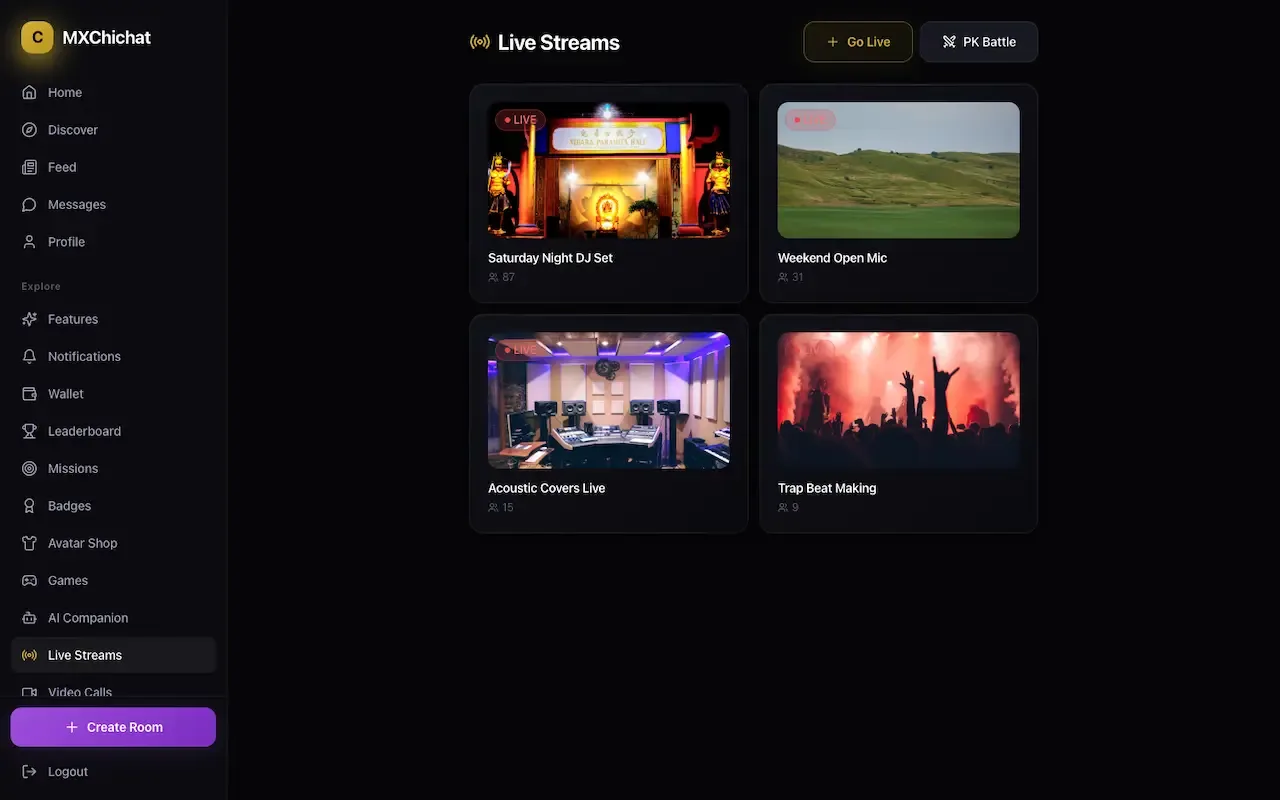
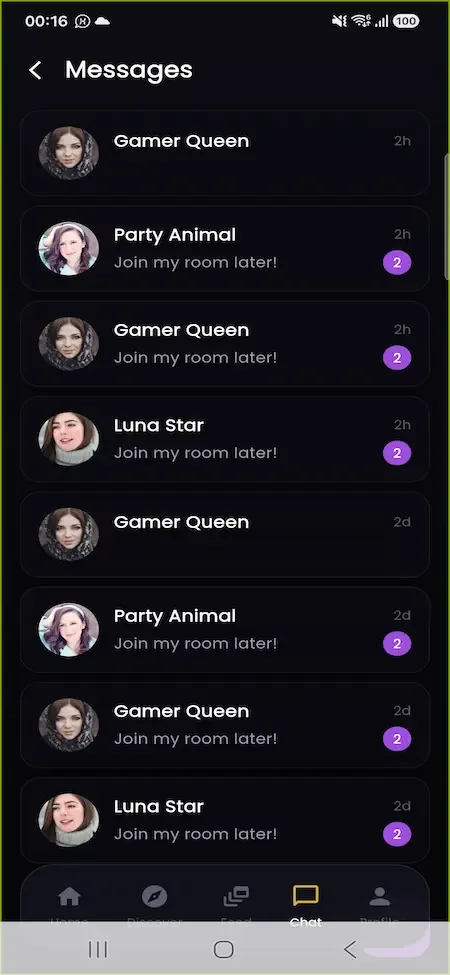
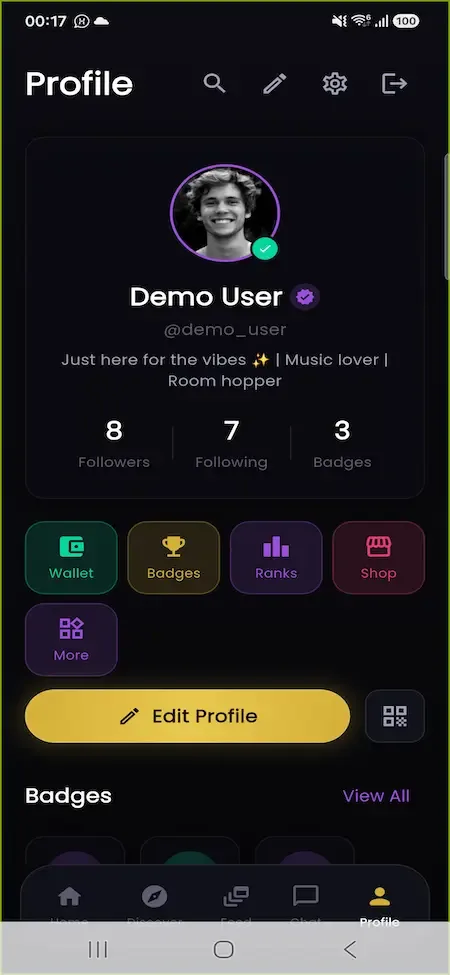
Real screens from the working product. Your platform ships rebranded with your name, logo and colors.
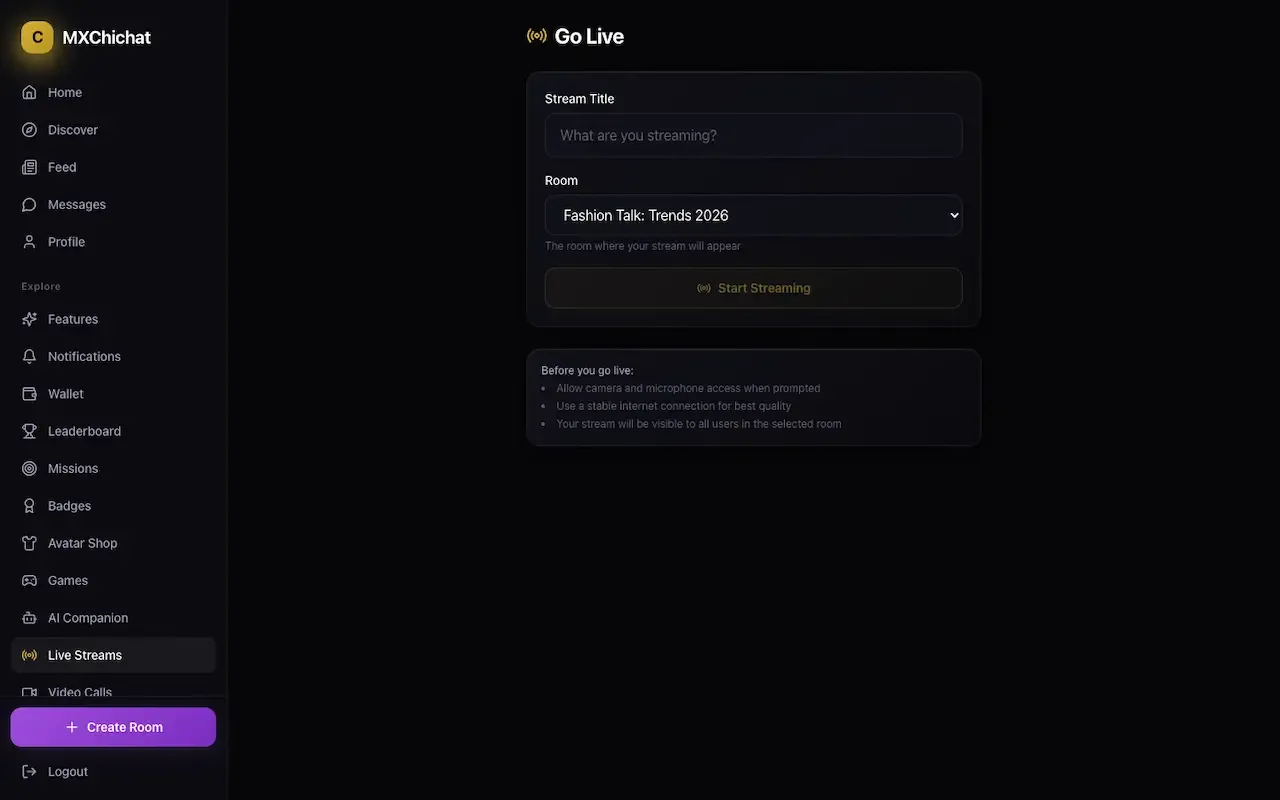
Web app 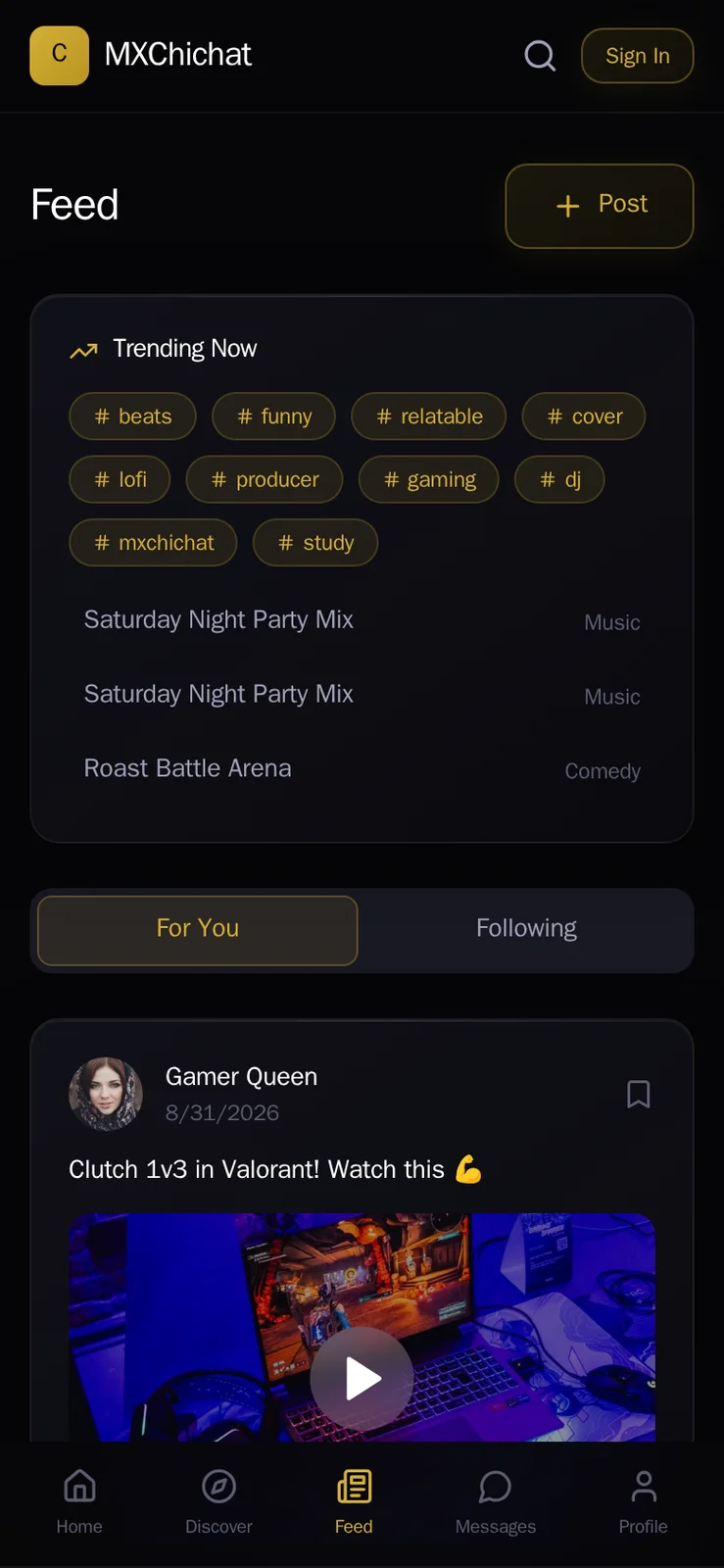
Web app 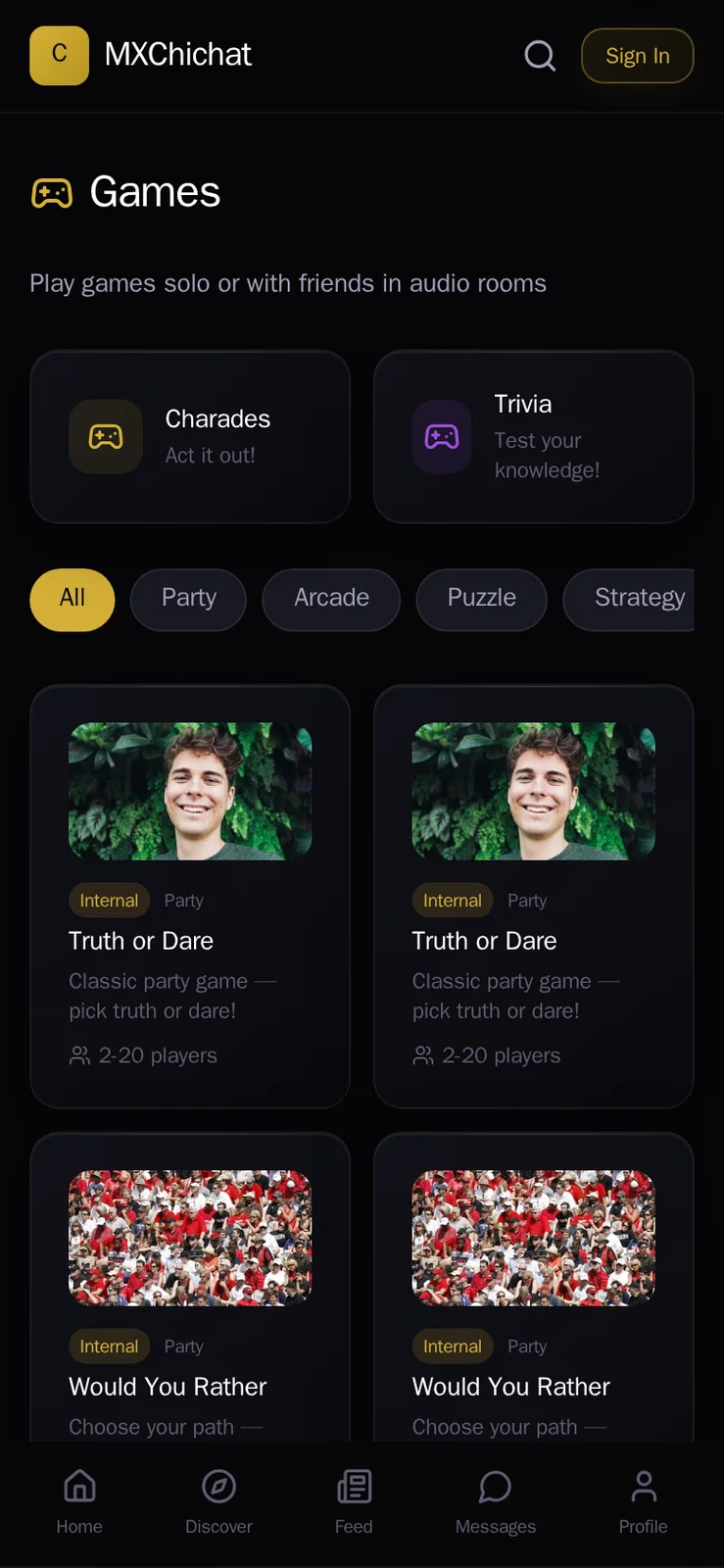
Web app 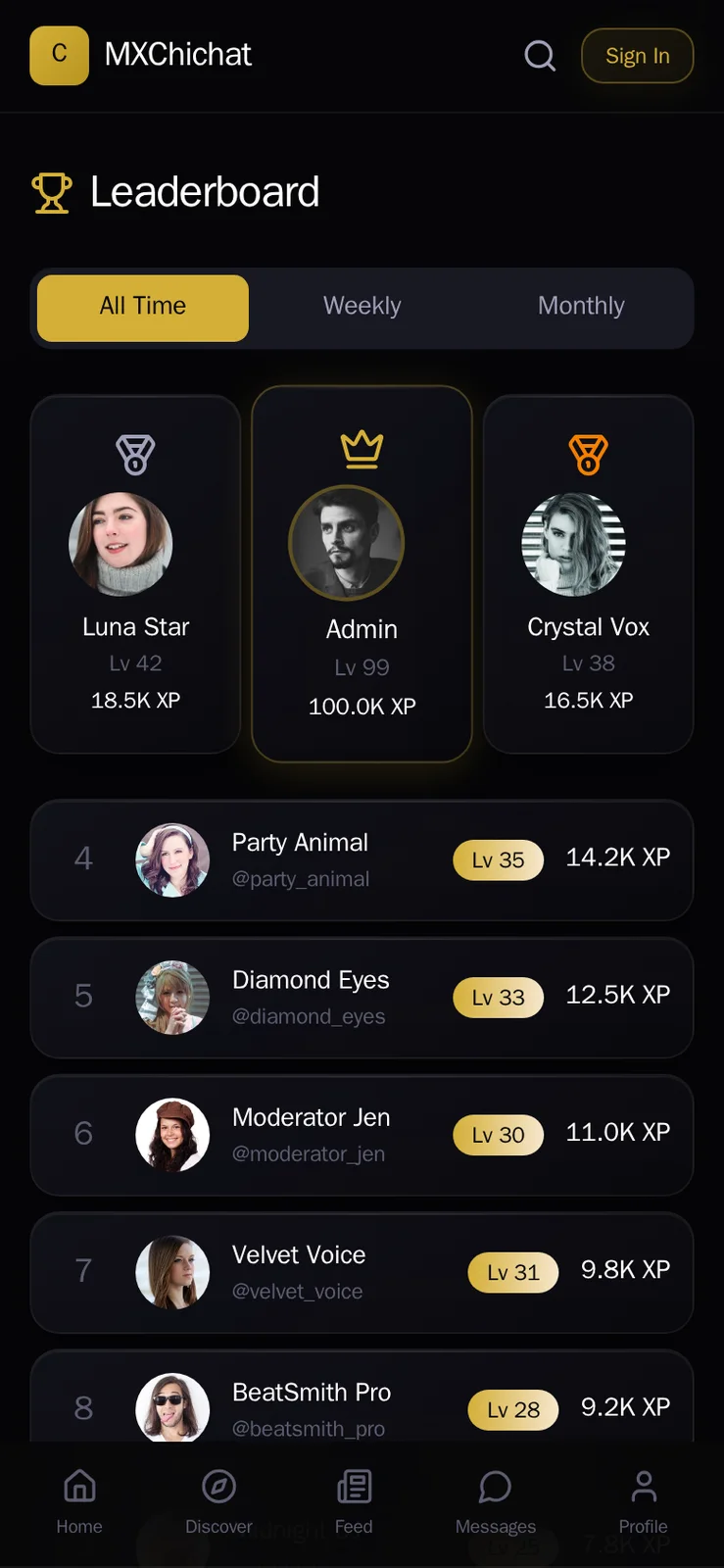
Web app 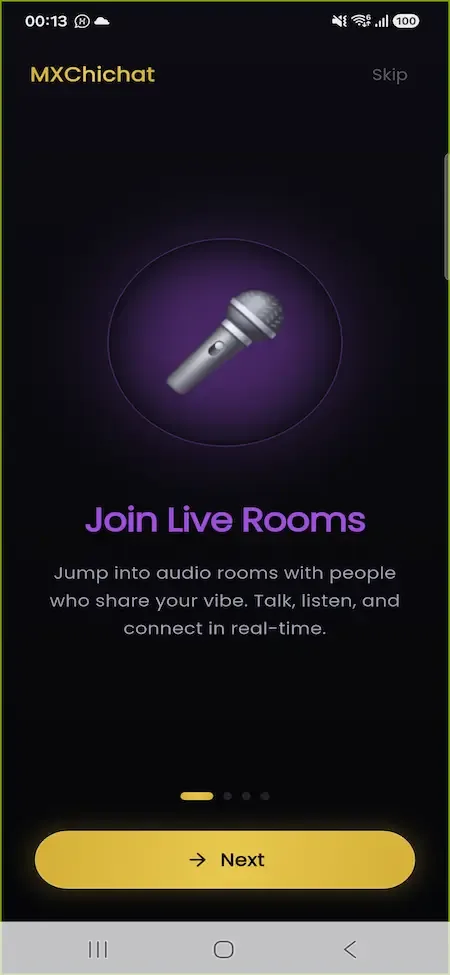
User app
How the ChillChat style of model works
ChillChat belongs to the family of social audio and live apps where members gather in voice rooms, talk with a host and send virtual gifts that creators can turn into earnings. Revenue in this family comes mainly from members buying virtual currency, and the operator keeps a share of what flows through the gifting economy. The model rewards a community that returns often, since each visit is another chance to send a gift, buy a cosmetic or climb a ranking.
A clone of this model runs under your own brand with your own terms. You choose the coin prices, the creator share, the gift catalog and the markets you serve. We make no statements about how ChillChat operates its own business, only about the mechanics common to platforms of this type. Doing so also means you carry the responsibilities of an operator, including moderation, payouts and support, which the ready-made platform equips you for but does not perform on your behalf.
How the right lever changes with the community
What you emphasize should follow how healthy the community is. Early on the task is to get rooms worth joining, and later it is to protect margin and keep members. The table suggests which lever fits each stage and why.
| Stage | Lever to use | Why |
|---|---|---|
| Launch | Coin packages and a light platform fee | Lively rooms matter more than margin, so keep creators happy |
| Early growth | Gift tiers and missions | Missions bring members back and visible gifts raise the room's energy |
| Community built | Avatar shop and leaderboards | Status items sell once members know each other and compare rank |
| Scale | Platform fee tuning and conversion margin | Creator economics need adjusting as volume grows |
| Mature | VIP segment and white-label partners | Recurring income and extra channels add stability once habits are formed |
Ways operators run a voice room platform
The same software supports different kinds of business. Which one you choose decides who your first creators are, what you promise them and which part of the platform you will lean on most in the early months.
Community-first niche platform
You build around a language, hobby or region and seed the rooms yourself with hosts you know. Revenue starts small but loyalty is high, and cosmetics and missions do most of the work because members care about their standing among familiar faces. A language-learning group, a regional fan community or a hobby club suits this route, because a shared interest gives rooms a natural topic and a reason to keep returning.
Creator-led performer network
You recruit performers and speakers who already have followings and give them a branded home with gifts and payouts. Broadcasting, PK battles and the withdrawal path matter most here, and the platform fee is the line that carries the business. A realistic first step is to invite a few established speakers, give them a clear payout schedule and promote their scheduled rooms, so the first members arrive for a known name.
Partner white-label model
You deploy the platform under several brands for partners such as media companies or clubs, each with its own catalogs and integrations. The code is shared, so the effort of each new partner is mostly branding and configuration. Each partner gets its own colors and catalogs, and you decide whether to charge a setup fee, a share of their gifting or both, since those terms are yours to agree.
Gaming and play focus
You lean on in-room games, voice chat while playing and leaderboards, positioning the app as the place a group talks between matches. Games fill quiet moments, and rank and cosmetic spending follow naturally from competitive habits. A group of friends waiting between matches, for example, can sit in a voice room with a shared game and a leaderboard, which gives them a habit the platform can build on.
Mistakes that stall a social audio platform
Failures in this category are usually business mistakes, not software ones. These are the errors operators make most often, and each can be avoided with a little planning before launch rather than a costly repair after it.
Charging for entry too early
Putting a price on rooms before the community exists leaves paying members in silence. Let rooms stay free to enter, and charge for gifts, cosmetics and status, where members choose to spend because they are already enjoying themselves.
Launching with empty rooms
A new member who opens the app and finds nobody talking will not return. Schedule hosts and events for the first weeks, so there is always a room worth joining at the times your audience is awake.
Ignoring creator trust
If creators cannot see what they earned or wait too long for withdrawals, they leave for an app that pays. Keep the payout path clear, the fee transparent and the approval queue staffed so the promise is believable.
Setting the fee once and forgetting it
A platform fee that suits a young community can be wrong once it is far larger. Review it regularly, using the runtime setting to adjust it, and tell creators about changes before they take effect. Raising it without notice is the usual way to lose your best creators, so set a reminder to look at fee and conversion settings each quarter.
Treating moderation as optional
Voice rooms attract abuse, and a single bad incident can scare away both members and payment partners. Build reporting, banned words and a response routine before you open the doors, not after the first complaint. Write down what a moderator does with a first, second and repeated offense, so decisions are consistent no matter who is on shift.
Copying another market blindly
Gift prices, creator expectations and room habits differ between countries. Adopting another market's settings without testing them tends to underperform, so start with modest assumptions and adjust based on what your members actually do. Run one market first, compare what members buy against your assumptions, and only then copy the settings elsewhere.
Which lever to switch on first
Start with coin packages and a small platform fee, and invest the early effort in making rooms worth entering. Coin sales are the line every other line depends on, and a light fee keeps creators generous toward the platform while you learn how members behave. Add the avatar shop only when members can see each other's cosmetics in busy rooms, because unseen status does not sell.
Leave the VIP segment, the conversion margin and white-label partners for later. They tune an economy that has to exist first, and each is easier to judge once you can read real balances and creator behavior. Introduce them one at a time so that whatever changes in the numbers can be traced to a single decision.
Try the live ChillChat Clone demo
The demo is a running copy of the platform with demo branding and public sample accounts. Sign in as a member to join a voice room, send a gift and watch coins move, then open the operator console in a second tab to see the same activity appear in reports, analytics and revenue. An Android build runs against the same API.
-
Member app
Open the Member app demo- Login
demo@mxchichat.com- Password
Password123!
Worth trying
- Join a live room and raise your hand to speak
- Open the feed and look at the stories row
- Send a gift and check the wallet balance
- Open missions and see which ones are in progress
-
Operator console
Open the Operator console demo- Login
admin@mxchichat.com- Password
Password123!
Worth trying
- Search the user list and open a profile
- Work through the report queue
- Read the analytics and retention cohorts
- Change the platform fee under revenue
-
Android build
Open the Android build demo- Login
admin@mxchichat.com- Password
Password123!
Worth trying
- Install the app and sign in
- Open a room from the phone
- Check that your wallet matches the web app
ChillChat Clone business model FAQs
Where does revenue start?
Revenue starts when a member buys coins, because everything else is priced in coins. Gifts then move those coins to creators, and your fee and conversion margin apply to the flow. Cosmetics and VIP perks add more reasons to buy coins.
Can I change the platform fee later?
Yes. The percentage is an operator setting edited from the console, and it takes effect without a deployment. New earnings use the new rate from that point, so you can adjust as the community grows, ideally with notice to your creators.
Do creators need agencies or managers?
No. Creators sign up, go live and earn directly. This build is organized around a community rather than an agency layer, so partners are not required, and you can still recruit creators through your own networks or sales team.
How do creators get paid?
They earn diamonds from gifts, convert them to a withdrawable balance after your fee and request a payout through the configured method. The platform keeps a transaction history for reconciliation, while the money itself moves through your own banking and payment arrangements.
Can I add subscriptions or ads?
A VIP role is already modeled, so a paid tier is configuration work. Advertising placements are available too: we can set them up for your plan, or a developer of yours can add them since you own the code.
Does gamification really affect revenue?
Indirectly, yes. Levels, missions and streaks bring members back more often, and members who return more often see more reasons to send gifts or buy cosmetics. The platform ties them to the same events as payments so the effect can be measured.
How do I avoid gift abuse?
Every balance change runs inside a database transaction, withdrawals pass through your configured process and reports feed a queue staff can act on. Tooling limits what a bad actor can do, but staff still need to watch for patterns and respond.
Explore the ChillChat Clone
The overview and its companion pages answer the main questions in turn. Pick the one you need next.
-
ChillChat Clone
The overview: live demo, screens, price and everything in the box.
Back to the overview -
Features
Most social apps bolt audio onto a feed.
See the full breakdown -
Development cost
Social audio platforms can be bought ready-made, built from scratch or rented as a service, and the cost shape of each is different.
See exact pricing -
Development company
A social audio platform is a real-time system with a payment ledger inside it, and the provider you hire decides whether it holds up when a room fills.
Compare options
→Start here
Tell us what you want to launch.
Share the platform and your market. You get a walkthrough of the live demo, the exact scope of what ships, and a fixed price in writing. First response in under 2 hours, Monday to Saturday, 10:00 to 19:00 IST.
Trademark and independence notice
This page uses the name ChillChat to describe a type of platform. The product sold here is separate software, built independently, and ChillChat has no part in it.
Why this name
"ChillChat clone" is industry shorthand that founders use when searching for software with a comparable business model. It names a category of product, not a copy of ChillChat.
Who built this
The platform is an original product designed and written by Miracuves. It contains no code, design, graphics or content originating from the ChillChat website or applications, and it ships under your own brand.
Trademarks
ChillChat and its logos are trademarks of their respective owner and are named here for reference only. GetFame is not affiliated with, sponsored by or endorsed by ChillChat. Rights holders can write to legal@miracuves.com.
Operator responsibility. The operator of a launched platform is responsible for legal compliance in the markets it serves. Nothing on this page is legal advice.Read the full disclaimer