Fansly Clone Development Company: Choosing a Partner
Any developer can ship profiles and a subscribe button. A discovery-led marketplace needs a taxonomy, tiers that enforce access, curation controls and moderation for content shown to strangers. This page lists what to ask a provider to demonstrate, how our process works, and which parts of the job remain yours.
- 2010
- building since
- 9,000+
- projects delivered
- 6 days
- ready-made launch
On this page10 sections
- What to look for in a Fansly clone partner
- Agency, freelancer or GetFame for a discovery marketplace
- Questions that expose a weak discovery build
- The Fansly Clone, on screen
- How a Fansly clone launch runs with GetFame
- Red flags when hiring a creator marketplace developer
- What we cannot do for a discovery marketplace
- Try the live Fansly Clone demo
- Fansly Clone development company FAQs
- Explore the Fansly Clone
What to look for in a Fansly clone partner
Check the parts that a demo video hides. Can a visitor who knows no creator names still find someone worth following? Does a post enforce which tiers may open it, even after a tier change? Can your team change what the front page features without a developer? Those answers separate a marketplace from a billing tool. Ask to see each of them live, with test data in place, rather than described on a slide.
Then check ownership and honesty. You want full source with no license server, a stack that your own developers can hire for, and a clear written scope. A provider who is plain about what ships ready, what is set up around your plan and what stays with you, such as payment approval, is easier to trust than one who says everything is included. Compare the written scope of every provider you consider, because the gaps in each quote are where later bills come from.
Agency, freelancer or GetFame for a discovery marketplace
Each route suits a different buyer. The comparison focuses on the traits that matter for a catalogue people browse, namely how quickly you launch, how discovery is handled and who controls the code afterward. It describes typical patterns and is not a statement about any single firm.
| Aspect | Agency | Freelancer | GetFame |
|---|---|---|---|
| Time to first subscriber | Long, with discovery often pushed to a later phase | Unpredictable, usually longer than the quote suggests | 6 working days for the ready-made platform |
| Cost shape | A project budget that grows with scope changes | A low quote with high variance | $3,699 one-time for the ready-made platform |
| Discovery tooling | Built only if the brief specifies it | Often just profiles reachable by link | Tags, categories, search and explore feed included |
| Free and paid tiers | Possible, scoped as extra work | Frequently a single flat subscription | Free level and several paid tiers per creator |
| Curation controls | Custom console, if you pay for one | Usually a direct database edit | Operator console for featured creators and ordering |
| Moderation for surfaced content | Depends on the brief you wrote | Rarely planned beyond a delete button | Queues, reports, takedowns and per-category review |
| Source code | Usually yours, so read the contract | Yours if properly documented | Complete source delivered at handover |
| Support after launch | Depends on the retainer you agree | Depends on one person staying available | 60 days of support and a year of free updates |
Questions that expose a weak discovery build
Put these to every provider on your shortlist, including us. Most are answered by browsing a live demo as a stranger and then opening the admin panel, which is a faster and more reliable test than reading a proposal.
Can a fan find a creator they have never heard of?
Open the demo without using any creator name you were given. If the only way in is a link that a creator shared, you are looking at a payment rail. Check category browsing, tag filters and the explore feed work as a visitor.
Are free tiers supported and useful?
Most scripts are paid-only. Ask to follow a creator for free, see what a follower can open, and watch the upgrade path to a paid level. Without it, the explore feed has little real content and every subscriber arrives already loyal.
Who decides what is featured?
You should be able to change featured creators, category prominence and explore order from the admin panel with no developer. Also ask whether those changes are attributable to a named staff member, because placement becomes money once you sell it.
What happens before content reaches explore?
Content shown to strangers needs a higher bar than content on closed profiles. Ask whether review before publication can be required per category, how reports are handled, and what record is kept of each moderation decision. Check that a second moderator can read the same history.
How does search scale as the catalogue grows?
A good answer is honest: database search suits a launch catalogue, and a dedicated engine can be introduced behind the same interface later. Be wary of any claim of intelligent recommendations that turns out to be a sort order. Ask what would trigger the upgrade.
Does a tier change take effect immediately?
Upgrade and downgrade a demo account and see what opens or closes. Access should be checked on each piece of content, so a fan never keeps something they should have lost, and creators never upload the same item twice. Try it with a creator who has several tiers.
What verification record is retained?
Ask to see a creator checked at onboarding, including age and identity steps, and where the decision and documents are stored. A year later, when a processor asks how an account was vetted, that record is your answer. Ask who can open the documents.
Is any part of the source code locked?
Ask about encrypted modules and license servers, and ask whether the discovery and curation logic is part of what you receive. In a business where the platform is the asset, a vendor kill switch is not an acceptable dependency. Request the answer in writing as part of the contract.
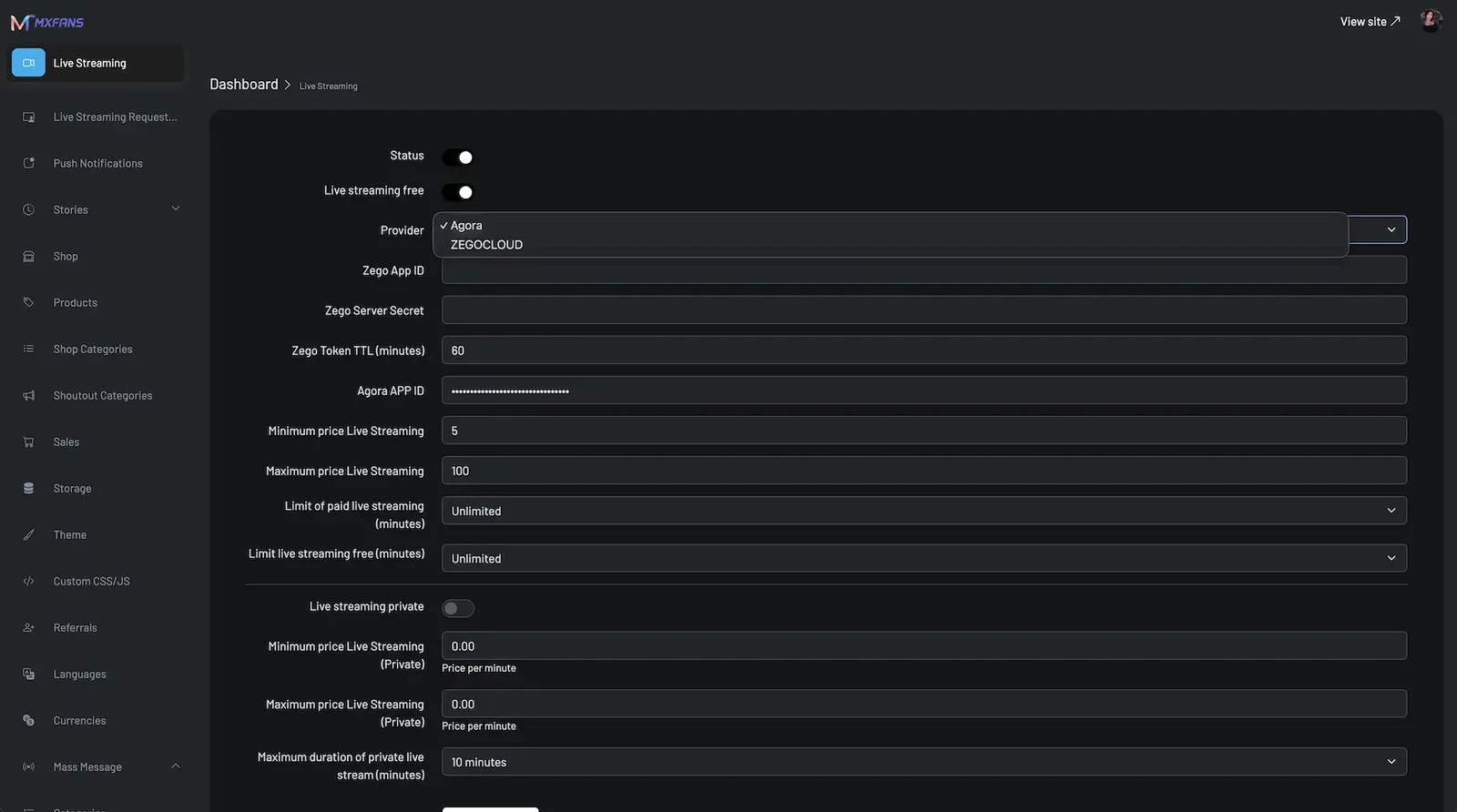
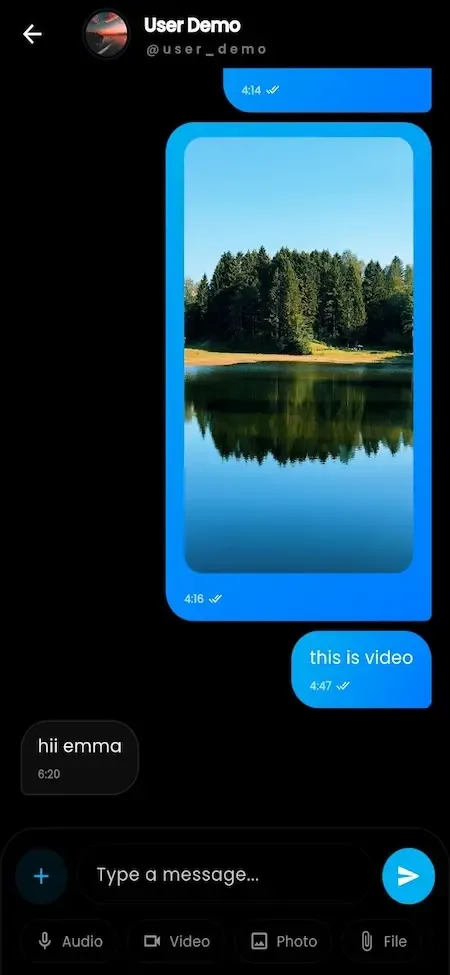
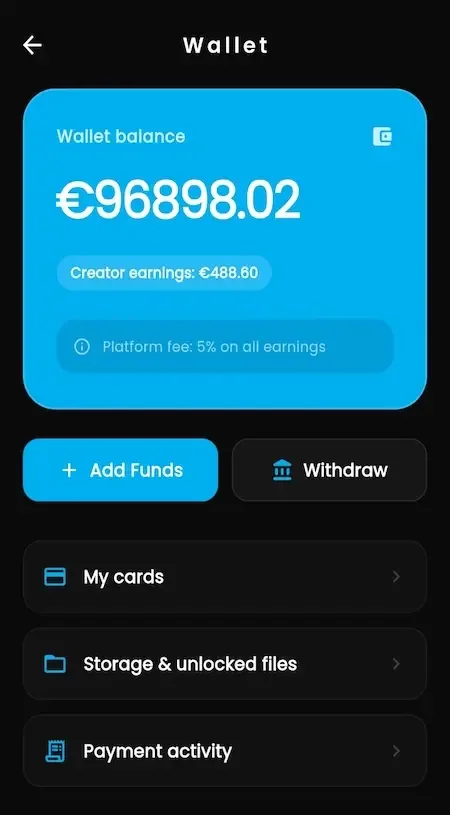
The Fansly Clone, on screen
Real screens from the working product. Your platform ships rebranded with your name, logo and colors.
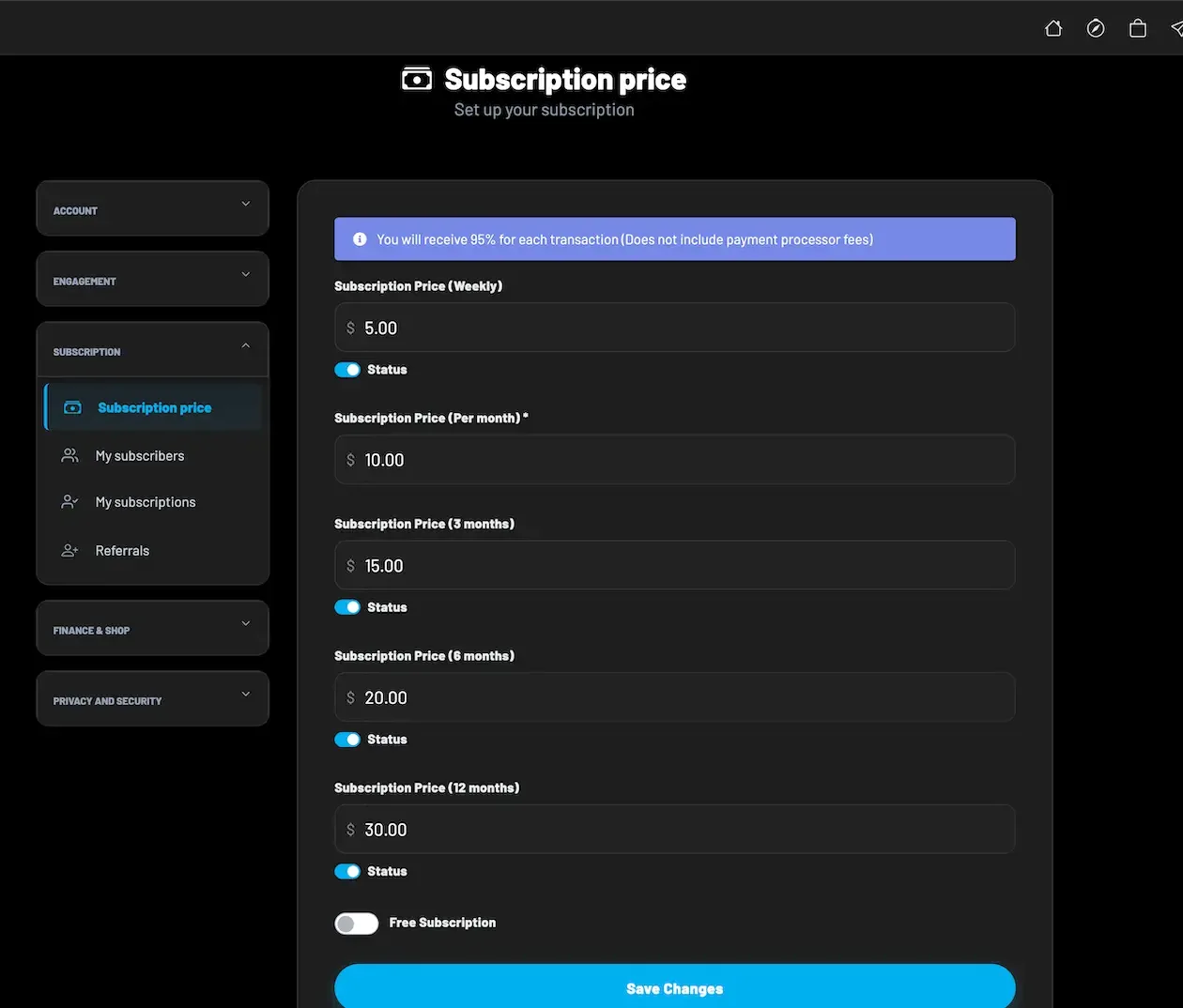
Creator studio 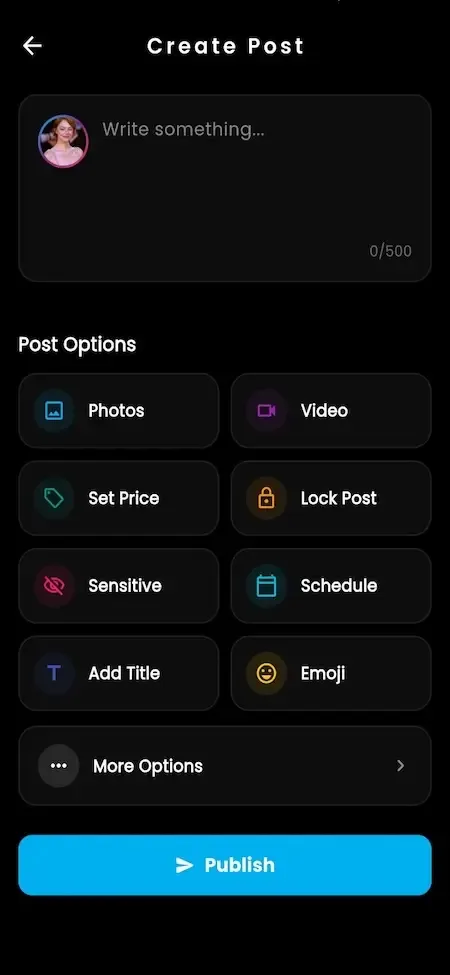
Creator studio 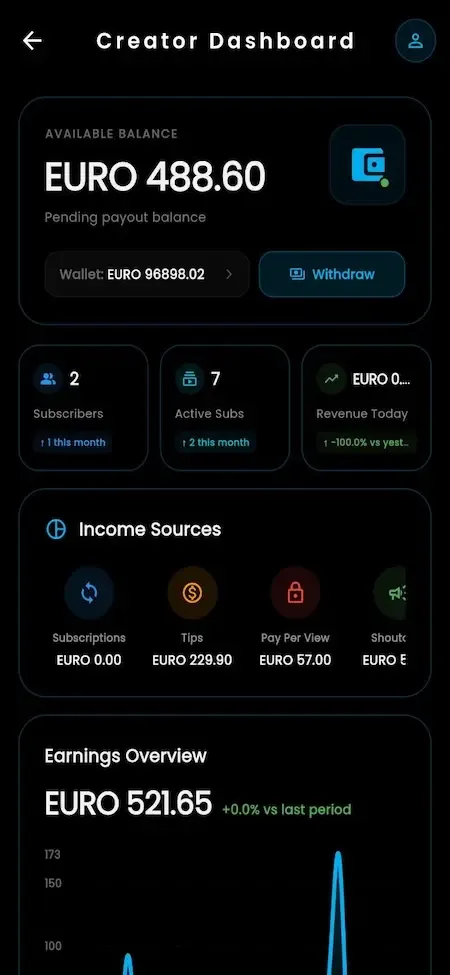
Creator studio 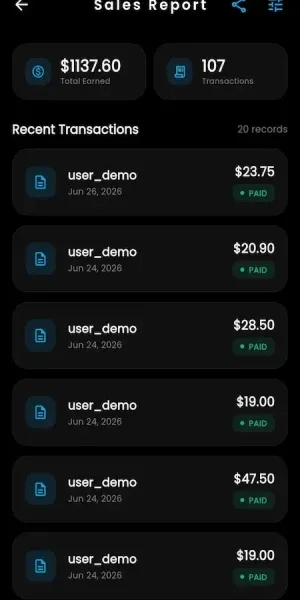
Creator studio 
Web app
How a Fansly clone launch runs with GetFame
The ready-made route is six working days of deployment, with a clear split between what we do and what you decide. Payment approval and creator recruitment run on separate clocks and should begin well before the first day.
-
Scope call and taxonomy design
We confirm your plan and brand assets, then work through your categories and tag rules with you. This is the one decision worth settling early, because restructuring a populated taxonomy means retagging content by hand later on.
-
Deployment on your infrastructure
We provision your cloud account, deploy the application, create the database and configure queues, real-time messaging and media storage. You provide access and domain details, and we document every setting so your team can maintain it.
-
Branding across apps and web
Your name, logo, colors, splash screens and icons are applied to the apps and web app, with branded email and public pages. You approve each build before anything goes near a store, and we prepare listing details at the same time.
-
Tier and commission configuration
We set up free and paid levels, billing periods, commission rates and wallet rules to match your plan. You decide which revenue lines open at launch, and we test a subscription, an unlock and a withdrawal from end to end.
-
Providers and curation rules
We wire in the payment, live and verification providers you contract, and configure moderation queues, review per category and territory rules. You name the staff who will curate and moderate, and we set their permissions. We test each connection with real credentials.
-
Walkthrough and handover
We trace a visitor from browsing to a paid tier, hand over the repository and documentation, and begin store submission support. You test as a fan, a creator and an operator, then sign off, and your 60 days of support start.
Red flags when hiring a creator marketplace developer
Any of the following should slow the conversation down, whoever says it. They tend to appear before a project goes wrong, usually because something expensive was left out of the scope and surfaced only after the first payment.
- You cannot find any creator in the demo without being given a direct link
- Subscriptions are paid-only, with no free follow level to build an audience
- Recommendations are described as powered by AI but no one can say what ships
- Featured placement is a database edit with no record of who changed it
- Everything goes live without review, with no per-category approval before publication
- Taxonomy is treated as an afterthought and nobody wants to discuss categories first
- Source code is released only after final payment, or part of it is obfuscated
- The supplier promises to secure your payment processor or store approval
- A client case study cannot be verified, or one endorsement quote is reused across several products
What we cannot do for a discovery marketplace
Honest limits are part of being a safe supplier. These are the areas where the ready-made package stops, and where you need other partners, staff or advisers around the platform from the first week of operation.
Winning payment approval
We integrate and test the gateways you choose, and the platform keeps verification and moderation records that reviewers ask about. Whether a provider accepts your business, and on what terms, is its decision, and we cannot influence or promise it.
Legal advice and compliance
We supply age-verification and moderation tooling, not legal advice. Terms, creator agreements and territory rules are yours to write with qualified counsel, and the operator is responsible for compliance in each market where the platform is available.
Curating and moderating for you
The console and queues are built in, but choosing what to feature and deciding on reports is human work. Plan named people with set hours, because a surfaced catalogue produces steady review volume as it grows.
Promising store approval
We prepare store-ready builds and support submission. Apple and Google decide what they accept in your category, and their policies change, so we cannot guarantee approval or a date. A web-first launch keeps you moving while a decision is pending.
Building your catalogue
We deliver the platform, not creators or fans. Recruiting people to fill your niche is your marketing work, and for a discovery model it is the activity that decides success. Budget time and money for it from the beginning.
Running operations after handover
Your team operates the platform once it is delivered. We provide 60 days of technical support and a year of updates, and extended maintenance or tailored work such as recommendations is available afterward under a written agreement.
Try the live Fansly Clone demo
The demo is the shared creator platform as delivered, with vendor demo branding still showing. It is the quickest way to judge how discovery feels: browse as a visitor, follow a creator, then switch to the creator and admin accounts to see where tiers, tags and placement are controlled. Your own branding replaces the demo identity at launch.
-
Fan app
Open the Fan app demo- Login
user@demo.com- Password
User_321
Worth trying
- Browse the explore feed and open a creator profile
- Search by category or tag and compare results
- Follow a creator, then look at what stays locked
- Fund the wallet and unlock a single post
-
Creator web app
Open the Creator web app demo- Login
creator@demo.com- Password
Creator_321
Worth trying
- Publish a post and attach tags and a category
- Set prices for several subscription periods
- Lock a post and choose what it costs to open
- Open the earnings screen and review recent sales
-
Admin panel
Open the Admin panel demo- Login
admin@demo.com- Password
Admin_$321
Worth trying
- Open the category settings and review how content is organized
- Check which creators are featured in discovery
- Read the commission settings and the payout queue
- Open the moderation queue and a reported item
Fansly Clone development company FAQs
Have you built creator marketplaces before?
We have built white-label platforms since 2010 and delivered more than 9,000 projects, and creator and fan marketplaces are a product line we maintain. We do not list client names here. You can judge the product directly in the live demo and ask us to walk through any area with data in it.
Can my team change the taxonomy later?
Yes. Categories and tag rules are managed from the admin panel, so you can add and adjust them without a developer. The caution is about restructuring a populated taxonomy, which means retagging existing content by hand. That is why we suggest a design session before launch.
What response time should I expect?
Our first response is under 2 hours, Monday to Saturday, between 10:00 and 19:00 IST. Technical support runs for 60 days after launch and covers configuration help, fixes and guidance on provider setup. After that window you can extend support with us or rely on your own developers.
Can you add recommendations after launch?
Yes, as tailored work scoped against your catalogue and traffic. We usually advise running on manual curation first, because recommendations need real behavior data to be useful. Scope is confirmed with us, and it typically takes 2 to 8 weeks, depending on what you want ranked and how.
Who hosts the platform?
You do, on your own cloud account, typically AWS, GCP or DigitalOcean. We set up the environment with you during launch week and hand over credentials and documentation. You pay the provider directly, which keeps the data, the media and the control with you.
What should I prepare before the first call?
A rough idea of your niche, the kinds of creators you want to attract and the territories you plan to serve. If a payment provider conversation has begun, mention it. You do not need a finished specification, because a walkthrough of the demo usually settles most scoping questions in one session.
Explore the Fansly Clone
The overview and its companion pages answer the main questions in turn. Pick the one you need next.
-
Fansly Clone
The overview: live demo, screens, price and everything in the box.
Back to the overview -
Features
Most creator scripts are billing tools with a profile page attached.
See the full breakdown -
Development cost
A discovery-led creator platform has an unusual cost profile.
See exact pricing -
Business model
A marketplace that only processes payments is capped by the audiences its creators already had.
See the playbook
→Start here
Tell us what you want to launch.
Share the platform and your market. You get a walkthrough of the live demo, the exact scope of what ships, and a fixed price in writing. First response in under 2 hours, Monday to Saturday, 10:00 to 19:00 IST.
Trademark and independence notice
This page uses the name Fansly to describe a type of platform. The product sold here is separate software, built independently, and Fansly has no part in it.
Why this name
"Fansly clone" is industry shorthand that founders use when searching for software with a comparable business model. It names a category of product, not a copy of Fansly.
Who built this
The platform is an original product designed and written by Miracuves. It contains no code, design, graphics or content originating from the Fansly website or applications, and it ships under your own brand.
Trademarks
Fansly and its logos are trademarks of their respective owner and are named here for reference only. GetFame is not affiliated with, sponsored by or endorsed by Fansly. Rights holders can write to legal@miracuves.com.
Operator responsibility. The operator of a launched platform is responsible for legal compliance in the markets it serves. Nothing on this page is legal advice.Read the full disclaimer