X Clone Development Cost: One Fixed Price for the Membership Layer
Building paid tiers, verification review and creator earnings from nothing is a long series of separate projects, each with its own edge cases. This page explains what the one-time price of a finished X clone covers, which extras we set up that can move the figure, and which running costs fall outside any build quote.
- $3,699
- One-time platform price
- 0%
- Cut of member revenue
- 6 days
- To a branded launch
On this page11 sections
- What the X Clone Price Covers
- Buy, Commission or Rent: Three Routes to a Membership Network
- Everything Inside the X Clone Price
- What Shapes the X Clone Budget
- The six-day X Clone launch, day by day
- The X Clone, on screen
- X Clone Running Costs a Build Quote Skips
- Why the X Clone Price Does Not Float
- Try the live X Clone demo
- X Clone cost FAQs
- Explore the X Clone
What the X Clone Price Covers
The price is $3,699, paid once, and it buys a membership network that already works: the web app, the Android-ready mobile app, the operator console, the API behind them and the Firebase configuration that holds the data. You are not funding research or a first draft, because the product exists and the work that remains is branding, deployment and handover. The result is a quote you can read once and file, without a list of assumptions underneath it.
It is therefore a purchase, not a subscription. No seat charge, no monthly license and no share of what your members pay you. Once the source is in your hands, later spending is a choice about extra features, and the paid tiers, badges and creator earnings you start with stay yours to price and keep. If your membership grows, the platform line in your accounts stays exactly where it was on the day you paid.
Buy, Commission or Rent: Three Routes to a Membership Network
A finished build, a custom commission and a hosted service can all put a paid-account network in front of members. They differ in who owns the result, how predictable the spend is, and how much of the membership logic you can bend to your own policy.
| Aspect | Ready-made with GetFame | Custom build | Renting a SaaS |
|---|---|---|---|
| Upfront cost | $3,699 one-time | Substantial and open-ended | Low entry fee |
| Time to launch | Six working days | Many months | Fast, inside a fixed template |
| Who owns the code | Full source, no encryption | Yours at final delivery | You never receive the code |
| Tier and badge logic | Included and server-enforced | Designed and tested by you | Limited to vendor options |
| Cut of member revenue | None | None | Often a percentage or tier fee |
| Recurring charges | Hosting and services only | Hosting plus a maintenance team | Recurring, rising with members |
| Price certainty | Fixed before work begins | Moves as scope changes | Moves when the vendor reprices |
| Policy control | Complete | Complete | Bound by vendor terms |
Everything Inside the X Clone Price
These items all arrive with the one-time payment. None is held back for a premium edition, and none is added to the invoice afterwards, so the figure you approve is the figure you pay for the platform.
- Complete source code for web, mobile, API and console
- Three membership tiers checked on the server
- The verification request and review workflow
- The Flutter app with an Android build supplied
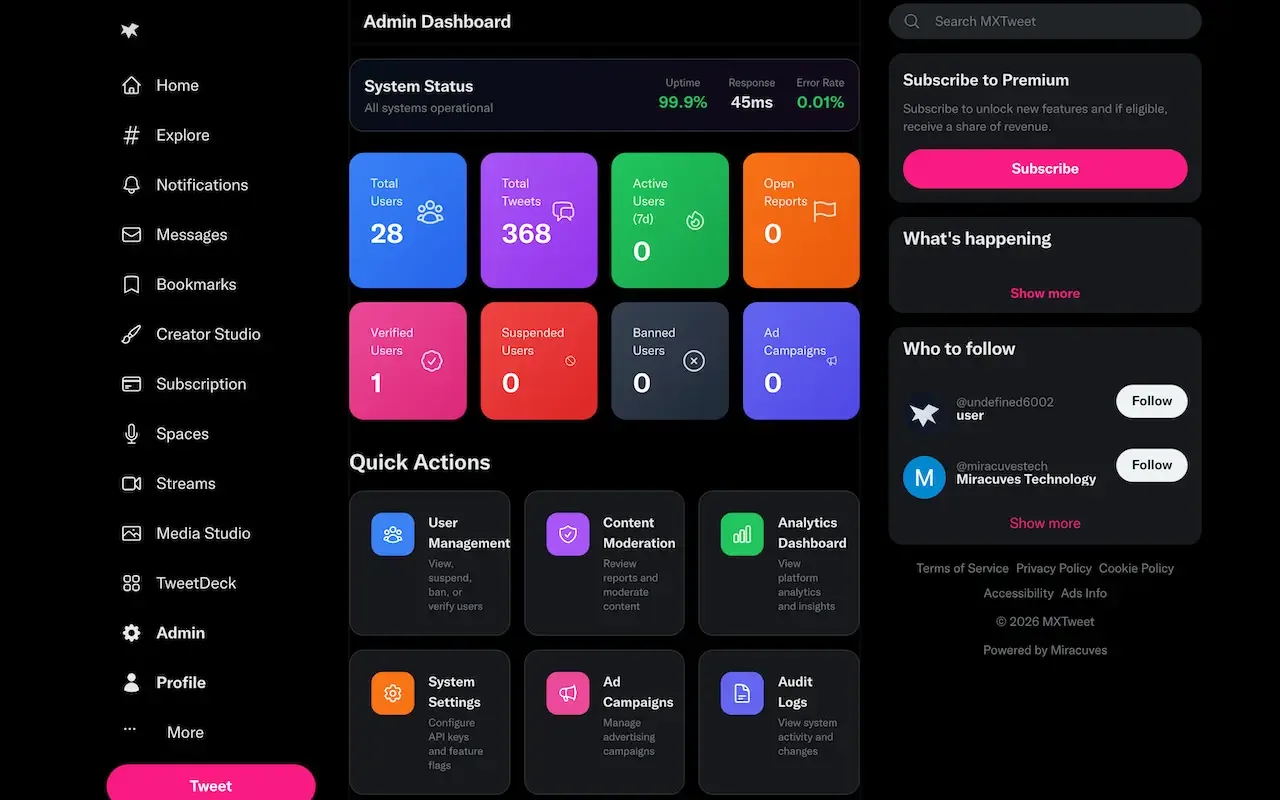
- The operator console on a separate admin login
- Creator subscription and tipping records
- Firestore rules, indexes and typed converters
- Schema, ERD, API collection and security handbook
- Your branding across every client
- Deployment onto infrastructure you control
- Guidance preparing the apps for store submission
- Sixty days of support and a year of free updates
What Shapes the X Clone Budget
The platform price stays put. The total can grow when a membership network needs more set up around the reference build, and these are the usual causes. Each one is described, sized and agreed in writing before any work is started.
Creator payout operations
Recording subscriptions and tips is built in. Paying creators on a schedule, across currencies and with the right paperwork is an operational flow connected to your own payment accounts, and the effort rises with the number of countries and payout methods your creators need.
Payment rails beyond the reference
The build references one processor. Adding others, regional wallets or bank transfers means integrating each against your merchant accounts, testing refunds and failures, and handling approvals from the providers, which can take longer than the code itself. Members in some countries cannot pay by card at all, so the markets you hope to serve should decide which payment methods you scope first.
Live audio rooms
The data layer anticipates spaces, but the interface and real-time audio are a new surface. If members are paying partly for live rooms, treat it as its own project with its own estimate, and decide early whether the first launch can wait without it.
Two-factor enforcement
The fields exist, and making second-factor sign-in mandatory for staff or for paying members involves configuration, recovery paths and support wording. It is modest work, but it is sized against how strict your own policy should be. Requiring it for administrators is simple and sensible, while requiring it of every paying member creates lockouts that your support team must be ready to resolve.
Moderation automation and video
Screening content automatically and preparing video for slow connections each need a vendor or pipeline. Both are worth planning before launch if you expect volume, and both carry running costs as well as building costs that you should compare before choosing. For a members-only network with modest posting, human review and plain uploads often suffice for a long time, and the upgrade is a response to evidence.
iOS, single sign-on and analytics
An iOS build, enterprise sign-on and deeper reporting are items we set up for you. Apple accounts and review cycles often dominate the schedule, so allow time for them even when the engineering is straightforward. Reporting beyond the console's own screens is worth specifying in advance: list the questions you want answered, such as which tier converts best, and the work can be priced against them.
The six-day X Clone launch, day by day
Launch takes six working days from kickoff. This is who does what on each day, so the schedule has no surprises on either side.
| Day | What we do | What you do |
|---|---|---|
| Day 1Set the membership model | We review your plan names, the entitlements each tier unlocks and the rules you want for verification. | Decide plan prices, what a badge requires and which revenue lines open first. |
| Day 2Brand every surface | We carry your brand identity across the browser client, the phone app and the console. | Supply brand files and the wording for plan descriptions and badge criteria. |
| Day 3Deploy to your host | We deploy the application, the Firestore rules and the indexes to your Linux host and Firebase project. | Give us the host access and create the Firebase project in your name. |
| Day 4Connect payments and sign-in | We connect Google sign-in, the referenced Stripe setup and push delivery using your credentials. | Open the processor and Google accounts and keep the credentials in your control. |
| Day 5Prepare the operator team | We create administrator accounts, tune the report queue and the verification queue and price the tiers. | Name the staff who will review badges and reports and confirm the policy they apply. |
| Day 6Walk the money path | We run signup, upgrade, tip, report and badge grant with your team, then transfer source and documents. | Upgrade a test account, grant a badge and approve the handover. |
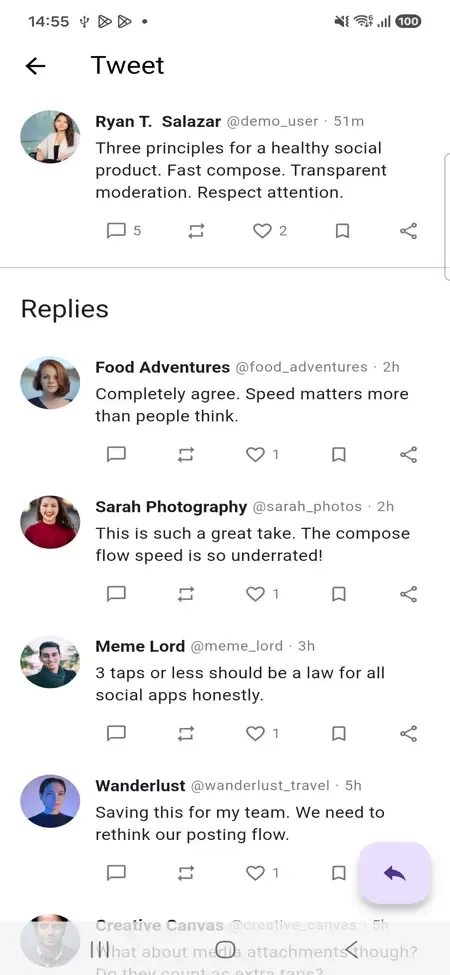
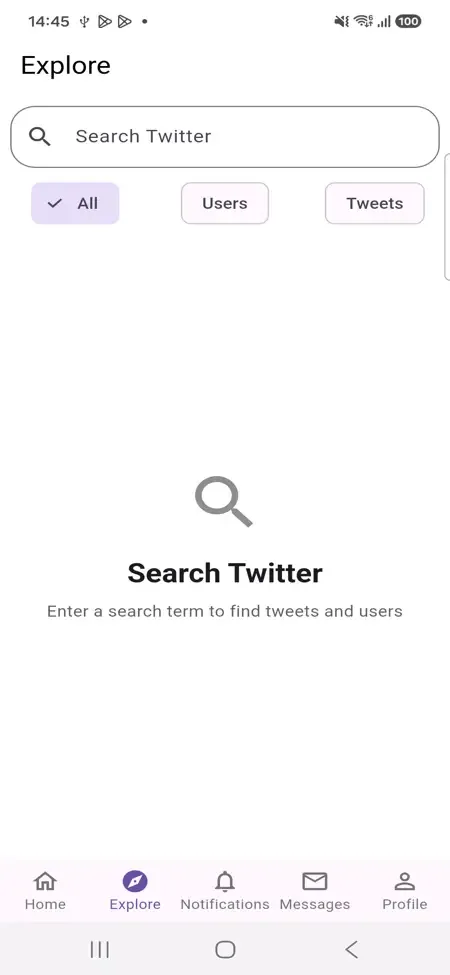
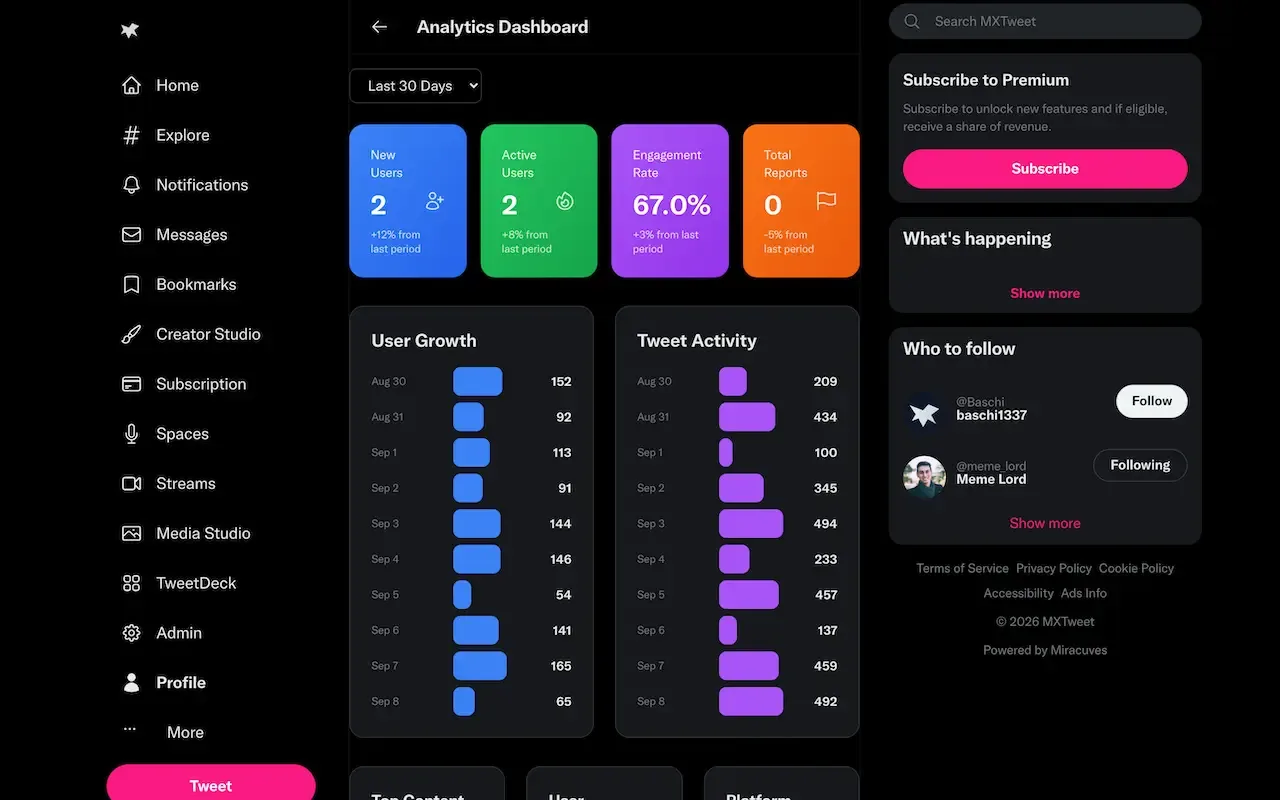
The X Clone, on screen
Real screens from the working product. Your platform ships rebranded with your name, logo and colors.
Admin panel 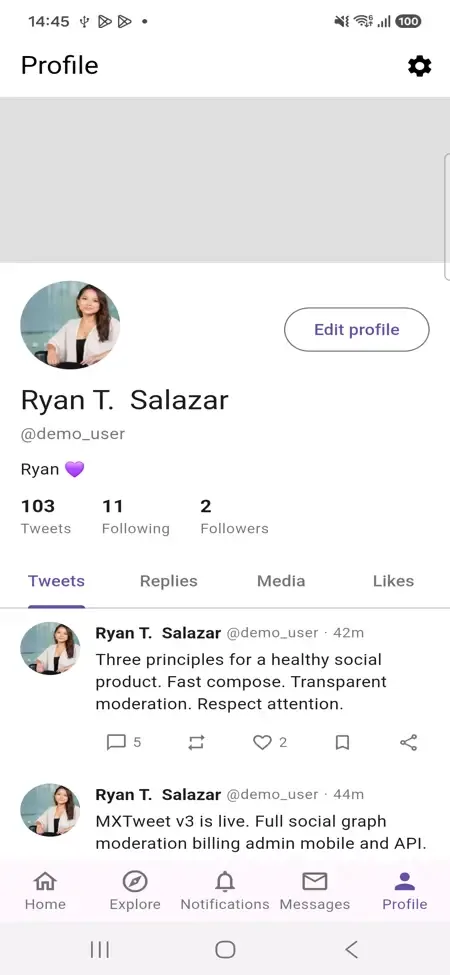
User app 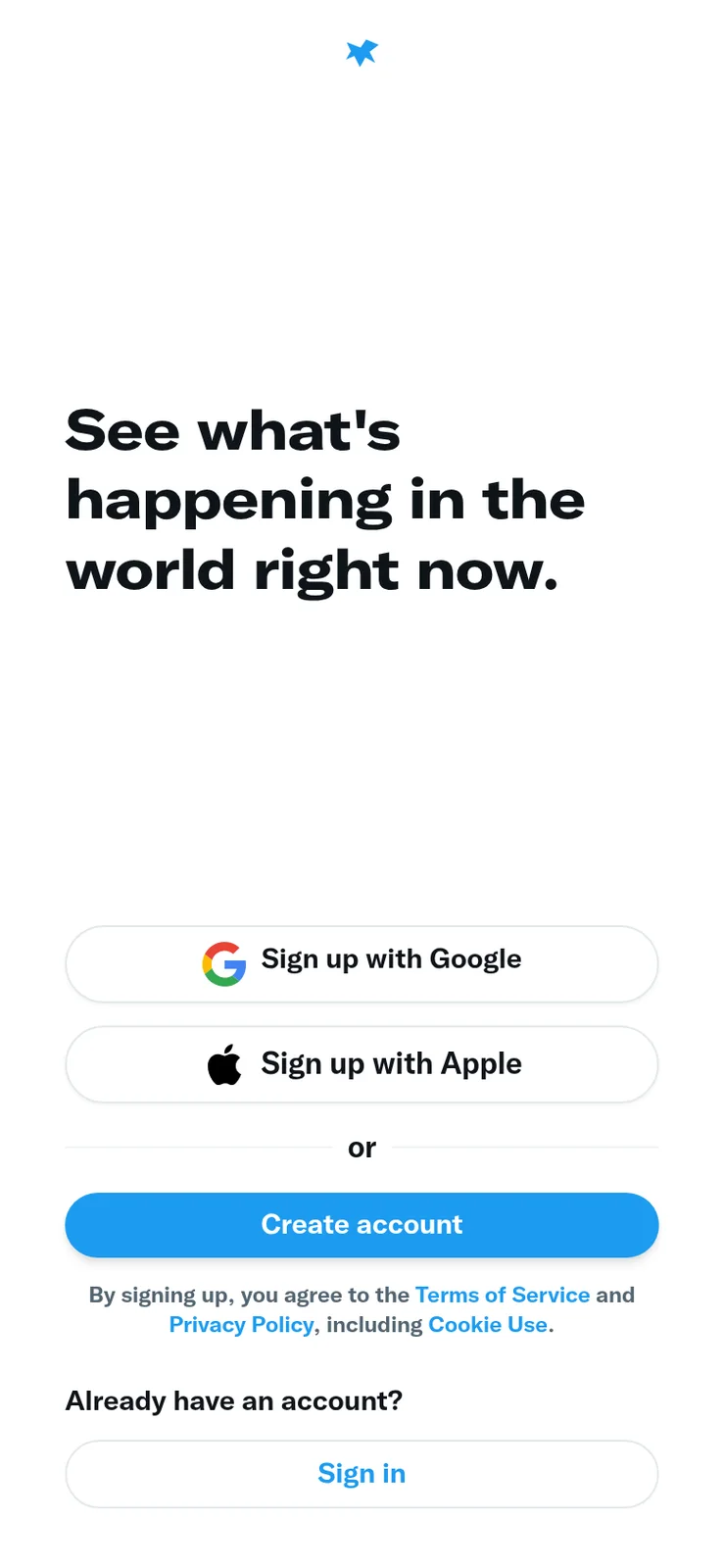
Web app 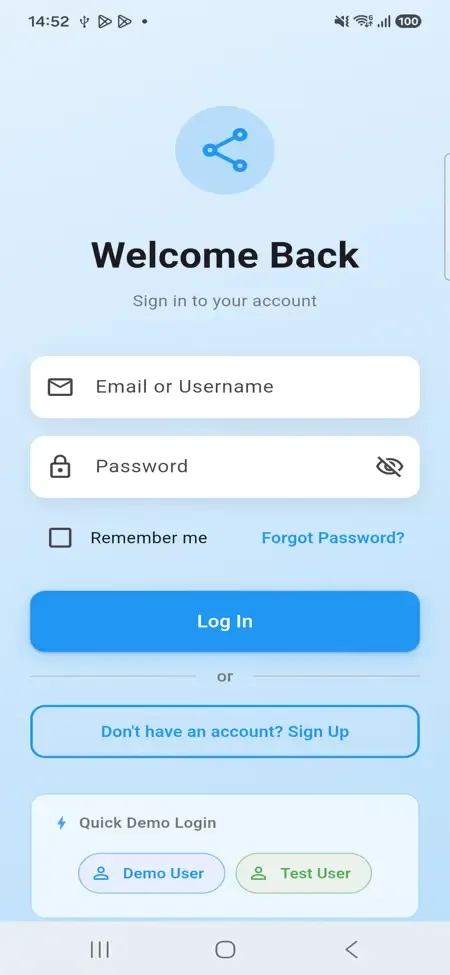
User app 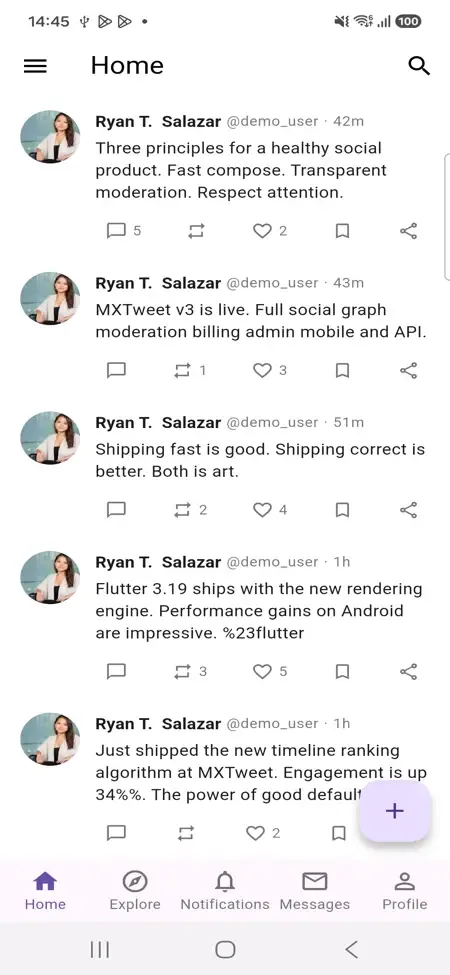
User app
Why the X Clone Price Does Not Float
Charging by the hour rewards the vendor for taking longer, which is backwards when the software already exists. What is being delivered is rebranding, deployment and handover of a finished product, and each of those has a clear end. A number you can plan around is the natural way to sell something with edges. You can set it beside any other quote and see at once what each of them actually includes.
The commitment has three parts. The price you approve is what you pay for the platform. Any extra we set up is named, scoped and priced in writing before work starts. And the support and update periods belong to the same purchase, so you are not asked to buy them again after launch. If something you want needs extra setup, we say so first and leave the decision with you.
Try the live X Clone demo
The demo is the shipped membership build running on live infrastructure under demo branding. The run worth doing is the account one: sign in, see what the account carries, then open the operator console and watch verification and account status from the side that grants them. A second member and an Android build use the same API.
-
Account holder (web)
Open the Account holder (web) demo- Login
demo@mxtweet.com- Password
Demo@123
Worth trying
- Set timeline and privacy preferences on the account
- Publish a post and bookmark another one
- Follow an account and open its profile
- Request a verification badge from settings
-
Second member
Open the Second member demo- Login
test@mxtweet.com- Password
Test@123
Worth trying
- Follow, list, block and mute the first account
- Open a direct message and send audio
- React to a message and watch read receipts
- Send a tip to the first account
-
Operator console
Open the Operator console demo- Login
admin@demo.com- Password
Admin@123
Worth trying
- Grant a verification badge and record the reason
- Change an account status with a stored reason
- Work the report queue with graded actions
- Read the audit log for the action you took
-
Android app
Open the Android app demo- Login
demo@mxtweet.com- Password
Demo@123
Worth trying
- Install the build from the app portal
- Sign in with the account holder login
- Confirm the plan and badge match the website
X Clone cost FAQs
Is the platform price a deposit or the whole amount?
It is the whole amount for the platform. There is no deposit that grows into a larger invoice, no per-seat fee and no monthly license. You then pay for your own hosting, Firebase usage, payment fees and any extra work you approve in writing.
Do you take a share of subscriptions and tips?
No. Everything members pay you belongs to you, aside from fees charged by your own payment processor. We do not meter members, count transactions or ask for a percentage, which is why the price is described as one-time instead of the start of a relationship.
How much should I set aside beyond the platform price?
Plan for hosting, Firebase usage, payment fees, push and email delivery, store accounts, and the people who will review badges and handle reports. Add anything we set up for you, such as another payment rail or an iOS build. We can help you list them on a call.
Are additions hourly?
No. Tailored work is scoped first and approved in writing, so you see a figure before anything begins. It usually takes two to eight weeks, depending on size, and you are not billed open-endedly while requirements change. If your plans shift during the work, the new request is written down and priced separately, so the original agreement stays clear and your budget stays under your control.
Can I launch without paying for features I will not use?
The package is a single product, so the price does not shrink if you leave features off. What you gain is flexibility: advertising, developer keys and other surfaces stay switched off until you need them, and turning them on later requires no purchase. Hiding a surface from members is a console decision, and showing it again later takes no developer time.
Why is a membership network cheaper to start than to scale?
Starting needs the software, which is fixed. Scaling needs people, support and payment operations that grow with your members. That is why the budget conversation we recommend focuses on running costs and moderation as much as on the original platform price. A membership network that keeps its promises to paying members needs a reliable team behind it, and that is where most of the later money goes.
Explore the X Clone
The overview and its companion pages answer the main questions in turn. Pick the one you need next.
-
X Clone
The overview: live demo, screens, price and everything in the box.
Back to the overview -
Features
Anyone can render a timeline.
See the full breakdown -
Business model
A new network cannot sell advertising to an audience it does not have yet.
See the playbook -
Development company
A feed is easy to demonstrate.
Compare options
→Start here
Tell us what you want to launch.
Share the platform and your market. You get a walkthrough of the live demo, the exact scope of what ships, and a fixed price in writing. First response in under 2 hours, Monday to Saturday, 10:00 to 19:00 IST.
Trademark and independence notice
This page uses the name X to describe a type of platform. The product sold here is separate software, built independently, and X has no part in it.
Why this name
"X clone" is industry shorthand that founders use when searching for software with a comparable business model. It names a category of product, not a copy of X.
Who built this
The platform is an original product designed and written by Miracuves. It contains no code, design, graphics or content originating from the X website or applications, and it ships under your own brand.
Trademarks
X and its logos are trademarks of their respective owner and are named here for reference only. GetFame is not affiliated with, sponsored by or endorsed by X. Rights holders can write to legal@miracuves.com.
Operator responsibility. The operator of a launched platform is responsible for legal compliance in the markets it serves. Nothing on this page is legal advice.Read the full disclaimer