
Alternatives and apps like
Apps Like Clapper: Alternatives for Community Video
Apps like Clapper sorted by community style: live-first, audio-first, group-first and web video, with what each offers, what it leaves open, how to choose.
Short answer
Apps like Clapper fall into four styles: live-first apps such as Bigo Live, audio-first apps such as Clubhouse, group-first apps such as Discord, and web video such as YouTube Shorts and Twitch. None combines short video, live rooms and adult-leaning conversation the same way, so the best match depends on which part you use most.
Key takeaways
- Clapper's own App Store listing describes three-minute videos, solo and duet live, audio radio rooms, groups, gifts and subscriptions, and an 18+ rating.
- Alternatives split by what they put first: live rooms, audio, groups or web video. Pick by the activity, not the name.
- Every app here has its own payout and moderation rules, and they change; read the current terms before you build an audience on one.
- A chronological feed gives predictability, a recommended feed gives discovery, and most community apps need both.
- Founders can win with a narrow community: one hobby, faith, fitness group or language, with published rules and reliable payouts.
On this page 10 sections
- What people want from a Clapper-style app
- Live-first apps
- Audio-first and group-first apps
- Web video alternatives
- Table: style, strengths, gap
- How the money works across these apps
- Feed choices: chronological or recommended
- Niche versions you could build
- What to check before joining any of them
- What to decide next
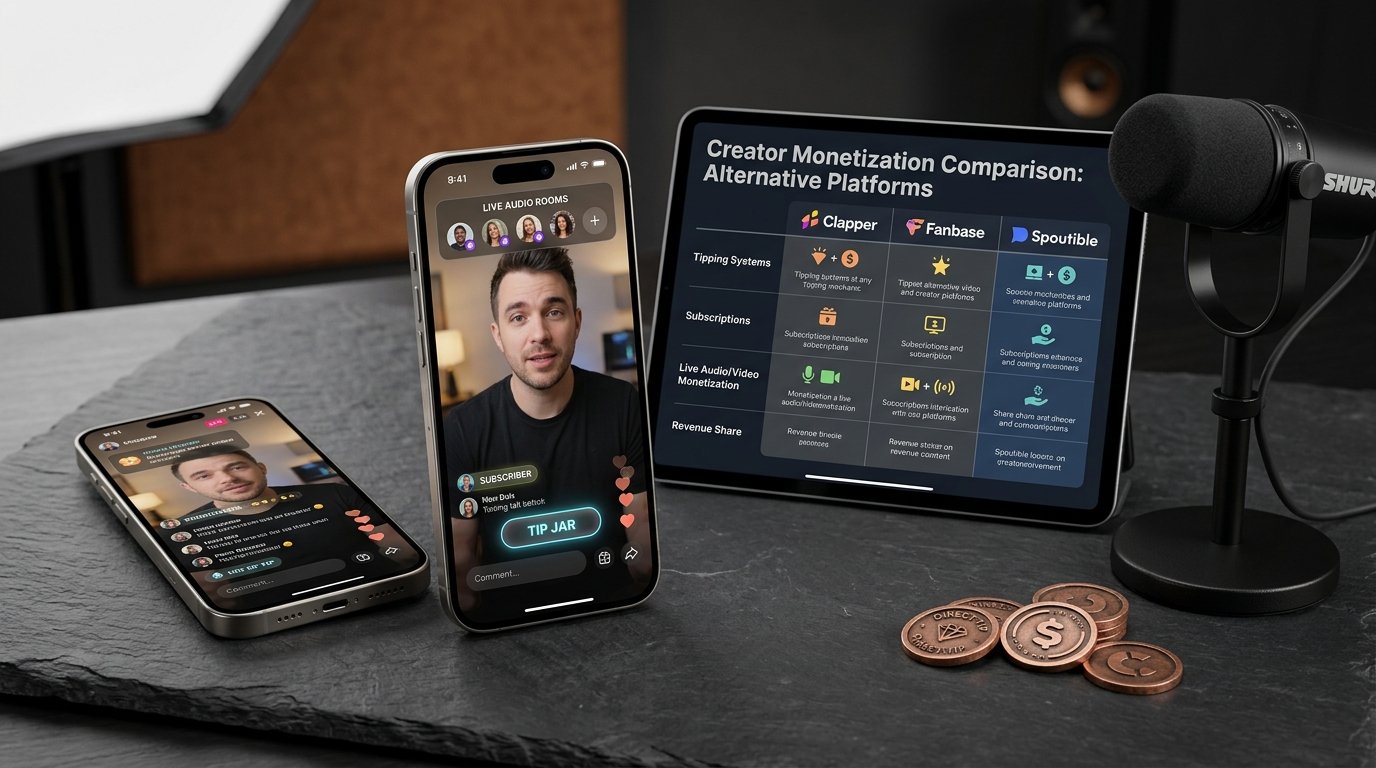
The closest apps to Clapper depend on which part of it you use. If you come for live rooms, look at live-first apps. If you come for talk, look at audio rooms or group chat. If you come for short clips from a community you know, look at web video. No single app mixes all of it in the same way.
This guide sorts the options by community style, states what each one says about itself on its own store listing or help page, and ends with the gap each style leaves open. If you are a founder rather than a viewer, the last sections turn those gaps into niches you could serve with a white-label Clapper clone. All store details below are as of October 2026 and can change.
What people want from a Clapper-style app
Clapper's App Store listing describes the product in its own words. It lists videos of up to three minutes with editing tools, solo live streams, a "duet live" feature, an audio radio feature for up to 2,000 listeners and 20 speakers, groups for direct contact with supporters, a feature for voting support or opposition on a post, and local content. It describes the app as free with no ads, lists gifts on videos, subscriptions with creator-set pricing and live earnings, and carries an 18+ rating. Coin packs for gifts are sold in the app, from 70 coins at $0.99 up to 17,500 coins at $249.99.
Those are the company's claims, and we have not tested the product. They do tell us what the audience is shopping for. Four wants come up in that list:
- Conversation. Groups, voting on opinions and audio rooms are all about talking, not only watching.
- Live. Live video and radio give a reason to open the app at a set time.
- Video replies and short clips. A clip is the quick way to join a discussion or invite people into a room.
- An adult audience. The 18+ rating tells you the community expects mature topics and plain speech.
When someone searches for an alternative, they usually want to keep at least two of these four. That is why the sorting below is by activity. For the broader short-video field, our apps like TikTok guide covers feed-led, music-led and commerce-led apps. This post stays with the community side.
Live-first apps
Live-first apps put the broadcast at the center. The feed exists to tell you who is on right now.
Bigo Live
Its App Store listing describes live streaming across gaming, music and general content, video or voice chat for up to eight people, drop-in audio conversations, live "PK" contests between streamers and filters and stickers for broadcasters. It is rated 18+, and in-app purchases range from $0.29 to $129.99. Its own help article on how broadcasters earn and withdraw explains the money flow: viewers buy Diamonds and send gifts, the gifts turn into Beans in the broadcaster's wallet, and Beans can be withdrawn as cash. It also describes an Official Host Program and talent agents who manage hosts for a share of their earnings. We cover the model in more detail in apps like Bigo Live.
Twitch
The Twitch listing describes live streaming across gaming, music, sports, podcasts, cooking and everyday broadcasts, with chat and a way to subscribe to channels. It is free with in-app purchases, including subscription tokens and a virtual currency called Bits, and is rated 13+. It is a live platform first, so short clips are secondary.
The gap
Live-first apps are strong when you already want a broadcast. They are weaker for someone who wants a small, steady circle: a room of thousands is not a conversation. They also bring the hardest moderation problem, because live content cannot be screened before it goes out. Our guide to moderating a live streaming app explains the controls that matter.
Audio-first and group-first apps
Audio-first apps strip away the camera. People join a room, listen, and ask to speak.
Clubhouse
Its listing describes live audio rooms on many topics, a choice to speak or only listen, hosting your own rooms, clubs, room replays and messaging with friends. It lists a Clubhouse Plus subscription and a virtual coin purchase, and carries a 13+ rating. Clapper's own radio feature covers similar ground inside a video app, which is why people who like the talk side of Clapper often look here. We compare the audio model in apps like Yalla and Clubhouse.
The gap
Audio rooms are easy to join and tiring to follow. There is no clip you can send to a friend and no visual identity to build a following around. A community that wants both a quick clip and a room for the follow-up conversation needs the two together.
Group-first apps
Group-first apps organize people into spaces they return to every day. Video is a tool inside the space, not the front door.
Discord, a group-first example
The Discord listing describes servers that members customize, voice and video calls, streaming, and use across phone, computer and console. It is free with optional paid tiers, including a Nitro subscription and server boosts, and carries a 13+ rating. It does not pay creators the way a gifting app does; the money flows from members to the service for extras.
Interest forums
For threaded discussion around a topic, forum-style communities work differently again. Our explainer on how Reddit works shows how subgroups, voting and volunteer moderators fit together, and it is the model behind Clapper's opinion-voting idea.
The gap
Group apps are great for people who already know each other. They are weak at discovery: a stranger cannot find a good clip and then step into a room. They also lack a built-in way for a host to be paid by the audience, which is the point of a creator community.
Web video alternatives
If you want something you can open in a browser, with no install, two services cover the clip side and the live side.
YouTube Shorts
YouTube's Shorts help page says Shorts can run up to three minutes, appear in a Shorts tab, search, the homepage and channel pages, and can earn money through the YouTube Partner Program. It states a qualifying route of 1,000 subscribers with 10 million qualified Shorts views over 90 days, and says earnings are based on engaged views. Because the page describes it, you can plan around it, but thresholds change, so read the current page.
Twitch on the web
Twitch, covered above, also runs in a browser for live viewing and chat.
The gap
Web video wins on reach and search. It is weaker on intimacy: comments under a video are not a room, and the audience is rarely limited to adults who want a particular tone.
Table: style, strengths, gap
This table compares the models, not the companies. The notes come from each service's own listing or help page as of October 2026.
| Style | Examples | What the listing or help page describes | Strength | Gap |
|---|---|---|---|---|
| Community video and live | Clapper | Three-minute videos, solo and duet live, audio radio, groups, gifts, subscriptions, 18+ | All the pieces in one app | Published moderation detail and payout terms to compare |
| Live-first | Bigo Live, Twitch | Broadcasts, gifts or subscriptions, chat, 18+ or 13+ | Strong live habit and a gifting economy | Intimacy and live safety |
| Audio-first | Clubhouse | Audio rooms, clubs, replays, a subscription and coins | Easy to host, no camera needed | No clip to share, no visual identity |
| Group-first | Discord | Servers, voice, video, streaming, paid member extras | Daily habit among known people | Discovery and creator payouts |
| Web video | YouTube Shorts | Clips up to three minutes, search, Partner Program | Reach, search and no install | Small-room conversation |
How the money works across these apps
Creators often ask which app pays. The better question is who pays whom, because the answer decides what kind of host does well. These are the routes each service describes on its own pages, as of October 2026.
| Service | Who pays | Route described | What it favors |
|---|---|---|---|
| Clapper | Viewers and subscribers | Coins for gifts, creator-priced subscriptions, live earnings | Hosts with a loyal live audience |
| Bigo Live | Viewers | Diamonds become gifts, gifts become Beans, Beans can be withdrawn; host program and agents | Full-time broadcasters |
| Twitch | Viewers | Channel subscriptions and Bits | Regular streamers with a schedule |
| Clubhouse | Members | A Plus subscription and coins | Hosts who want conversation, not income first |
| Discord | Members | Paid personal tiers and server boosts | Group owners, not paid performers |
| YouTube Shorts | Advertisers | Partner Program with thresholds | Creators with large clip reach |
The pattern is simple. Gift and subscription apps pay hosts who can hold a room. Ad-share apps pay creators who can reach many strangers. Group apps mostly charge the members. A founder building a community picks the mix on purpose; the overview of how creator platforms make money sets out each line.
A worked example with invented numbers
Say a host runs a weekly live show. Fifty regulars each send gifts worth 2 in coin value during a show, so the room generates 100 in gift value. If the platform keeps 30%, the host receives 70. Over four shows that is 280 a month. Add 40 fan club members at 5 a month, with the platform keeping 20%: another 160. The host earns 440 a month from 90 engaged people. These numbers are an illustration, not figures from any service. The point is that a small, loyal room can matter more than a large passive one, which is why community apps build for regulars first.
How to choose by what you do most
Match the app to your habit, not to a ranking.
- You watch lives most evenings. Start with a live-first app, and check the report tools before you spend on gifts.
- You like to talk without being on camera. Try an audio app, then look for one with replays so you can catch up.
- You want a daily circle of known people. A group app fits, and a paid tier is optional.
- You want clips and search. Web video gives reach; live is a separate part of the service.
- You want all of it with an adult tone. That is the space Clapper's listing describes, and the one a niche founder can recreate with their own rules.
Terms worth knowing
- Duet live: a live session shared by two hosts at once.
- Radio or audio room: a live room with speakers and listeners but no video.
- Coins: in-app currency bought with real money and spent on gifts.
- Fan club: a recurring paid membership with a single host.
- Partner program: an ad-revenue share with eligibility thresholds.
Feed choices: chronological or recommended
When you compare apps, the feed decides how the community feels. There are two basic designs and a blend.
Chronological
The feed shows what people you follow posted, newest first. It is predictable and feels fair, because no hidden ranking decides who is seen. The weakness is discovery: a new member with no follows sees an empty screen, and a new creator has no way to reach strangers.
Recommended
The feed picks clips and live hosts it thinks you will like, from creators you do not follow. New creators can break through, and new members see something good at once. The weakness is that the ranking is a black box, creators can feel they are chasing it, and it can push heated posts because they get a reaction.
The blend
Most community apps end up with two views: a following view for regulars and a recommended view for finding someone new, plus a rail that shows who is live. If you build one, publish a plain sentence about how each view works. For the mechanics of the recommended side, see how the TikTok algorithm works, and for the follow-based side the notes in how to start a niche social network.
Niche versions you could build
Large community apps serve a general audience. A narrower app can do better for a defined group because the rules, the language and the hosts all match. Four examples show the pattern, using invented numbers to illustrate scale, not market data.
- Politics-free hobbyists. A community for woodworkers, gardeners or retro gamers with a plain rule that politics belongs elsewhere. The rule makes moderation easy to explain, and the live rooms are build-alongs and Q&A.
- Faith communities. Weekly live sessions, short study clips and groups per congregation. The host needs private rooms and a firm stance on harassment.
- Fitness. A coach runs a live class, posts form-check clips and offers a paid fan club for a program. Say a coach has 200 paying members at 8 a month and the platform keeps 20%: the coach receives 1,280 a month. That is an example, not a statistic.
- Regional language. A single-language app with local hosts, local trends and moderators who know the slang. Large apps handle small languages poorly, and that is the opening.
Each of these needs the same building blocks: short video, live rooms with chat, gifts, fan clubs and an admin panel for reports and payouts. Our Clapper clone features page lists them, and the Clapper clone business model page explains how the revenue lines fit together. For cost, see the Clapper clone development cost page. We deliver the ready-made platform in 6 working days, with 60 days of technical support, one year of updates and the full source code. Tailored work, such as stricter age checks or a multi-host room format for your build, takes 2 to 8 weeks, and we confirm the exact scope with you at kickoff through the contact page.
If you are starting from zero, the live streaming app guide gives the launch sequence.
What to check before joining any of them
Whether you are a viewer who wants a home or a creator who wants income, a ten-minute check saves trouble later. Use this list for any app in this guide.
- Read the community rules. Are they published, specific and recent? Vague rules mean surprising removals.
- Find the report and appeal route. A real app lets you report a post, block a user and contest a decision. Our sample wording for these is in the moderation policy template.
- Read the payout terms. What share does the platform keep, what is the minimum to withdraw, how long does it take, and can funds be held? Our post on how Clapper makes money shows how to read these terms.
- Check the age rating and settings. A listing rating tells you who the app expects. An 18+ rating, as on Clapper's and Bigo Live's listings, means content can be mature.
- Look at the privacy label. Store listings show what data the app collects. Decide if you are comfortable.
- Export what you can. If you build an audience, keep your own list of followers or an email address, so a rule change does not cost you everyone.
Creators should treat any platform as rented space. The same goes for the apps above, which are separate companies with their own terms. Nothing here is a ranking, and nothing replaces reading the current terms yourself.
What to decide next
If you are a viewer, pick by activity: live rooms, audio talk, group chat or web clips, then try the free version of two apps and see where you stay. If you are a creator, pick by payout terms and moderation, and do not move your audience to a platform whose rules you have not read.
If you are a founder, pick a niche from the list above, write your rules first, and decide which revenue lines you will switch on. Then look at the Clapper clone script to see what a live, community-first build includes, and read our pricing for the published price. The people who join a community stay for its tone, and you get to set that.
Questions and answers
What replaced Clapper for creators?
Nothing replaces it exactly, and we cannot say whether it is right for you. Creators who liked live rooms and gifts often look at live-first apps; those who liked the talk and groups side look at audio and group apps. Each has different payout terms, so compare the current rules for the way you earn.
Are there web versions of apps like Clapper?
Yes, in part. YouTube Shorts and Twitch run in a browser and on phones, and Discord has a web client. They cover pieces of the Clapper experience, short clips or live or group chat, but none bundles all three the same way. Check each service's site for the features available on the web.
Which app pays creators?
Several do, through different routes. Clapper's listing describes gifts, subscriptions and livestream earnings. Bigo Live's help page describes gifts that convert to a withdrawable balance. YouTube describes a Partner Program with thresholds. Rules, fees and eligibility differ and change, so read each current page and do not rely on a summary.
Can I build my own community video app?
Yes. A founder can launch a branded community app with video, live rooms, gifts, fan clubs and an admin panel. Our ready-made route goes live in 6 working days, and tailored work usually takes 2 to 8 weeks. You still write your own rules, run moderation and handle legal compliance in your market.
Do these apps have live streaming?
Most do, in different forms. Clapper's listing describes solo live, duet live and audio radio. Bigo Live is built around live broadcasts. Twitch is a live platform. Clubhouse is live audio. Discord offers voice, video and streaming inside servers. YouTube Shorts is mainly short clips, with live handled elsewhere on YouTube.
Is a chronological feed better than a recommended one?
Neither wins outright. A chronological feed shows what people you follow posted, in order, which feels fair and predictable. A recommended feed finds strangers worth watching, which helps new creators and new members. Community apps usually need a following view for regulars and a recommended view for discovery.
Sources
- App Store: Clapper: Video, Live, Chat
- App Store: BIGO LIVE
- Bigo Live: How to earn money and withdraw
- App Store: Clubhouse
- App Store: Discord
- App Store: Twitch: Live Streaming
- YouTube Help: Shorts
Checked in October 2026. Rules, fees and programme terms change; confirm on the source before you rely on them.
Keep reading
Moderation Policy for a Community Video App: Setup Guide
Community guidelines template for a social app: scope, prohibited content, enforcement ladder, reporting, appeals and transparency, with sample clauses.
14 min read TikTokAlternatives and apps likeApps Like TikTok: Alternatives and the Gaps Left Open
Apps like TikTok grouped by what they emphasize: feed-led, music-led, live and community, lifestyle and commerce, with the gap each leaves open for founders.
12 min read Bigo LiveAlternatives and apps likeApps Like Bigo Live: Live Streaming Platforms by Model
Apps like Apps like Bigo Live grouped by model: gifting apps, creator-led live, voice rooms and game streaming, compared on host supply and how money flows.
12 min read