
Fanvue Clone Business Model: AI Credits Beside Commission
Most creator platforms earn from one thing: a share of what creators make. An AI-forward platform adds a second income line that behaves differently, because it carries a real cost per message. This page explains both lines, how to price the new one, and the order in which to open each lever.
- 2
- income lines to balance
- $3,699
- one-time, no revenue share
- 6 days
- to start earning
On this page11 sections
- Why AI changes the shape of a creator platform
- Where a Fanvue clone earns
- The Fanvue Clone, on screen
- How Fanvue is known to position itself
- Which lever to use at each stage
- Three ways to run an AI-forward platform
- Monetization mistakes that hurt AI platforms
- Which lever to switch on first
- Try the live Fanvue Clone demo
- Fanvue Clone business model FAQs
- Explore the Fanvue Clone
Why AI changes the shape of a creator platform
A normal creator platform keeps a share of creator earnings, and its costs are mostly fixed: servers, moderators, support. Adding AI introduces a variable cost, because each reply is billed by a provider. That makes the AI line closer to a retail business, with a unit cost and a price, than to a commission business with a rate and a base. Understanding which of the two you are running at any moment is the first step to pricing it sensibly.
It also changes what a creator can do. One person can only type so many messages, which caps how many fan relationships they can maintain. Personas, suggested replies and scheduled outreach raise that cap, so the same creator can serve more fans, and more conversations means more chances to sell locked media, unlocks and subscriptions. Fans also notice quicker replies, which tends to raise satisfaction and renewals, provided the conversation still feels worth paying for.
The sensible model is therefore two lines working together. Commission on subscriptions and unlocks stays your steady base, and AI credits sit beside it as a priced product with its own margin. The risk is treating credits as free growth: without pricing discipline and token limits, heavy users can cost you more than they pay. Review both lines together every month, because a rise in one can hide a problem in the other.
Where a Fanvue clone earns
Seven lines feed the platform, and they behave differently enough that grouping them under one rate hides what is working. The AI line is listed first because it needs the most care, since its cost is variable and its price is entirely yours to set.
AI persona credits
Fans buy credit bundles and spend them on conversations with personas. You keep the difference between what fans pay and what your provider bills you. There is no market rate to copy, so measure cost per message first, then price above it and review the margin regularly as usage patterns settle.
Subscriptions
The recurring base. Creators price access by period, and you keep your configured share of each renewal. It is predictable and easy to forecast, but it is also the figure creators compare across platforms, so the rate needs the most careful thought and should rarely change. Longer plans reduce churn but give creators less flexibility, so offer them as options and not as defaults.
Pay-per-view
A fan pays once to open a post, set or message, and you keep a share. Automation helps here: with scheduled sends and persona conversations running, creators can attach priced media to more messages than they could type by hand, which lifts unlock volume. Operators often promote it as a gentle first purchase before a fan commits to a plan.
Paid messaging
Priced media in conversation, sent individually or to saved lists, converts attention into revenue. You keep commission on message income. Because templates and personas increase how many conversations a creator can sustain, this line tends to scale with automation more than the others do. Fans accept higher prices here because the exchange feels personal, which is why creators guard this line closely.
Tips and gifts
Fans send wallet-funded support, at any time or during streams. You keep a share, often at a lighter rate than subscriptions, since impulsive support is not compared the way plans are. The wallet is what keeps these small payments frictionless. The wallet matters, because a tip that needs a fresh card entry is often abandoned before it is completed.
Live, calls and shoutouts
Higher-ticket creator time sold per session, priced by the creator. You keep commission on entry and bookings, less the usage you pay your streaming provider. These are the human-only premium products that AI conversations can lead fans toward. Both depend on a streaming provider you contract, so usage cost scales with session length and audience size, and prices should reflect that.
Shop and promotions
Storefront orders, coupons, boosts and featured placement. You earn commission on orders and flat fees on placements, which do not depend on how much any one fan spends and give the model a source of income outside creator sales. Physical goods add shipping questions and support effort, so many operators begin with digital items and services before opening merchandise.
The Fanvue Clone, on screen
Real screens from the working product. Your platform ships rebranded with your name, logo and colors.
Admin panel 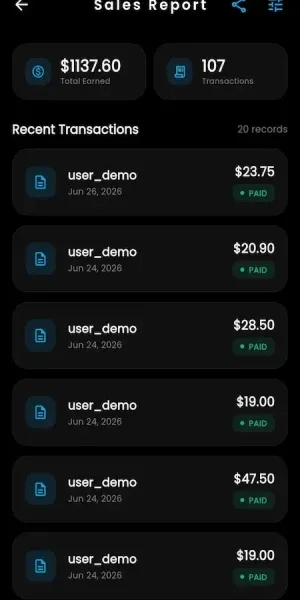
Creator studio 
Web app 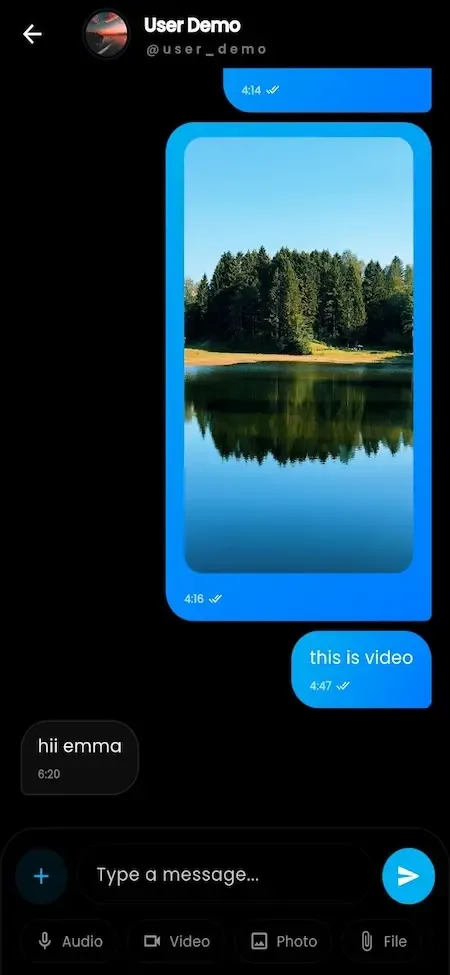
Fan app 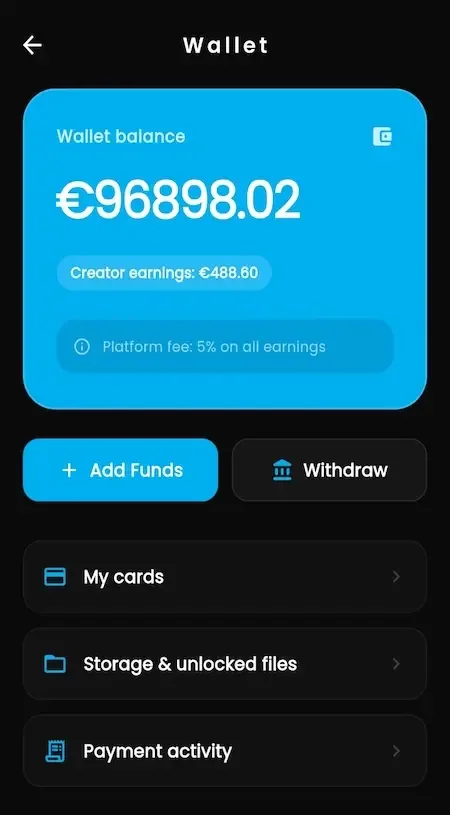
Fan app
How Fanvue is known to position itself
Fanvue is widely known as a creator subscription platform that puts creator tooling, including AI-assisted engagement, near the center of its pitch. As with other services in this category, creators set prices, fans pay through subscriptions, unlocks and tips, and the service keeps a share of creator earnings. The AI emphasis is what distinguishes its angle.
This platform follows the same emphasis and gives you the machinery to run it yourself: personas, sessions, provider choice, credits and commission. What it cannot supply is the audience or the brand recognition of an established service. A new operator wins by serving a clear niche, pricing AI honestly and being the place where creators actually receive reliable payouts.
Which lever to use at each stage
AI is most useful when creators already have conversations to scale, so it works best as a second step. The order below keeps your early cost low, protects creator goodwill and gives you real usage data before you set final credit prices.
| Stage | Lever to use | Why |
|---|---|---|
| Launch | Subscriptions, pay-per-view and a competitive commission | These are the two paths creators already understand, and they carry no variable provider cost |
| First creators earning | Templates, fan lists and scheduled outreach | Simple automation saves creators hours without any per-message bill, and it shows where conversation volume is heading |
| Conversation volume rising | AI-assisted replies for creators and staff | Suggested replies speed up routine answers while a person still decides, so quality stays in the creator hands |
| Cost per message known | AI persona credits in a small bundle range | You can now price above a measured cost, and a modest range lets you test demand safely |
| Established base | Voice, region-specific AI and path-specific rates | Premium audio and per-market flags suit a mature platform with data on who actually pays |
Three ways to run an AI-forward platform
The same product supports different businesses. Which one you pick decides where AI sits in your offer, how you recruit creators and which settings you tune first, so make the choice before you configure launch options and credit pricing.
The AI-led creator startup
You put personas and automation at the front of your pitch while keeping the subscription base underneath. Creators come because they can serve more fans than one person could alone. Cost control, token limits and honest disclosure are the disciplines that decide whether this works. Narrow your pitch to creators who genuinely struggle with message volume.
The agency toolkit
Management teams run several creators through delegated manager access and use AI-assisted replies and scheduled outreach to extend their staff. Business verification, per-creator commission and roster reporting matter most, and negotiated rates are typical because agencies bring volume. Agencies compare platforms carefully, so clear reporting is part of how you win them.
The niche community
A branded platform for one genre or audience, with AI as a module that you can enable region by region. Fans value the focus, and creators benefit from discovery inside a small catalogue. You can start without AI and add it when the community asks. Narrow categories also make policy and moderation simpler to write.
Monetization mistakes that hurt AI platforms
These are decisions that look reasonable at launch and become expensive once fans and creators depend on them. Most are easy to avoid when they are named in advance, and several are about cost control, not about creator relations.
Pricing credits without measuring cost
If you set a bundle price before you know what a typical conversation costs, heavy users may cost more than they pay. Run a small trial, record provider charges per message and set prices above that figure with room for processing fees.
Leaving token limits open
Unlimited length per reply is an open invitation to a large bill. Use the token and model settings to cap exposure, and review usage weekly while the feature is new. Limits protect margin without ruining the experience for ordinary fans.
Hiding that a persona is AI
Fans who feel misled leave, complain and sometimes involve their payment provider. Disclose clearly, in the way that suits your market, and keep session records so you can answer a complaint with facts instead of memory.
Replacing the creator entirely
Automation should extend a creator, not substitute for them. Fans pay for access to a person, and the premium products such as calls and shoutouts depend on that. Use AI for volume and keep people in the high-value moments.
Raising commission after launch
A few high earners usually carry much of the income, and they compare rates across platforms. A later increase puts exactly those creators in the position of reconsidering. Choose the first rate as though it were permanent.
Ignoring provider usage rules
AI providers publish acceptable use terms that apply to your deployment. Check them against your content category before launch, because losing a provider mid-growth is far more disruptive than choosing a suitable one at the start.
Which lever to switch on first
Begin with commission and subscriptions, and set the rate before recruiting anyone, because it is both your margin and your recruiting pitch. Open pay-per-view beside it. Keep AI off at first, or limit it to template-based scheduled sends, so you learn how creators actually talk to fans before you pay for automation that guesses. Write down your payout threshold and schedule at the same time, since both affect creator trust.
Once conversations are steady, enable AI-assisted replies for staff, then introduce persona credits in a small range with strict token limits. Compare credit income with provider invoices after the first full week, adjust prices, and only then promote the feature. Decide your disclosure wording and complaint routine before any fan meets a persona. Keep a written log of every price change so you can explain results later.
Try the live Fanvue Clone demo
The demo is the shared creator platform as delivered, still wearing vendor demo branding, so you can see the creator tools, wallet and admin controls that AI features plug into. Use the sample accounts to follow a conversation from the fan side, then check how a creator and an operator manage the same activity before your own branding goes on.
-
Fan app
Open the Fan app demo- Login
user@demo.com- Password
User_321
Worth trying
- Open a creator profile and read the free preview
- Send a message and look at how paid replies appear
- Fund the wallet and see the balance update
- Look for the AI persona area and start a chat
-
Creator web app
Open the Creator web app demo- Login
creator@demo.com- Password
Creator_321
Worth trying
- Open message templates and fan lists in the inbox
- Schedule a send to one list of fans
- Set subscription prices and lock a single post
- Review the earnings screen and statistics
-
Admin panel
Open the Admin panel demo- Login
admin@demo.com- Password
Admin_$321
Worth trying
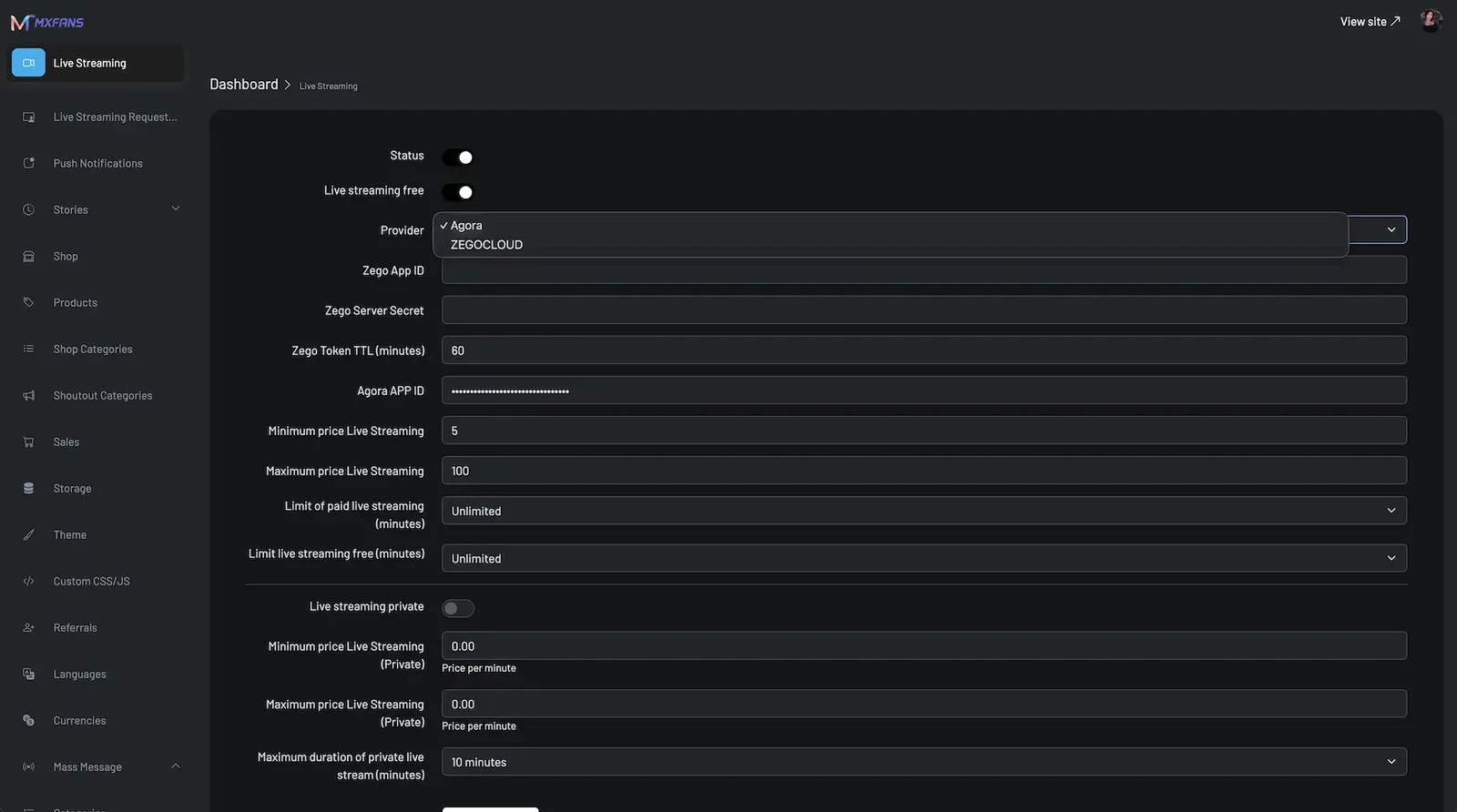
- Find the feature settings that switch modules on or off
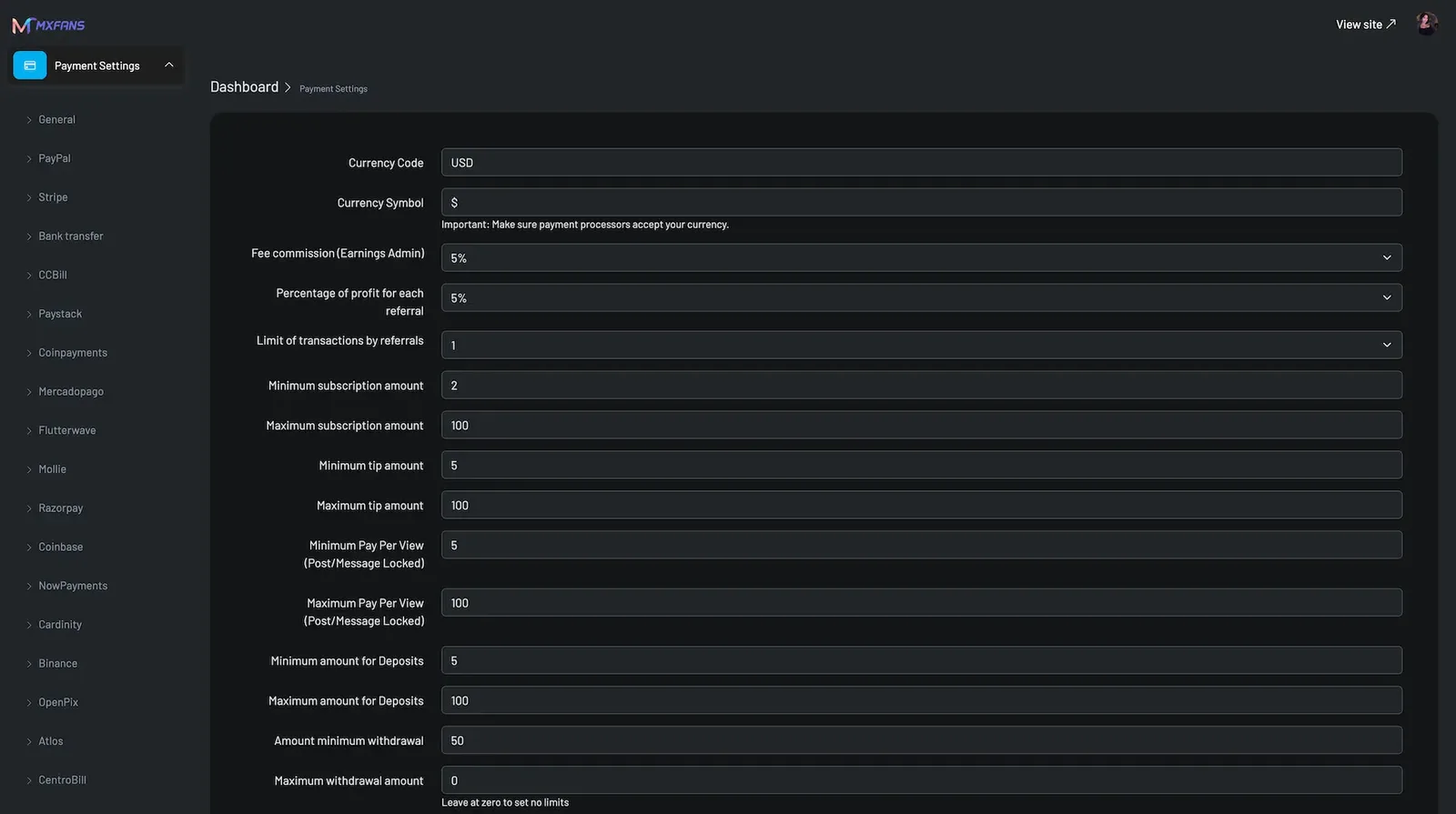
- Review commission rates by revenue type
- Open the moderation queue and a reported item
- Check wallet movements and the withdrawal queue
Fanvue Clone business model FAQs
Should AI be part of the launch?
Not necessarily. Many operators open with subscriptions, messaging and live, and add personas once creators have conversations worth scaling. The modules switch on later through feature settings without a rebuild. Launching without AI also means no provider bill until you have measured what a typical conversation would cost.
Is AI income subject to commission?
Credits are a product you sell, not creator earnings, so their economics differ. You earn the margin between what fans pay and what your provider bills. If you want creators to share in persona income, you can structure that through your own commission rules and agreements.
What stops one fan costing me more than they pay?
Token limits, model choice and credit pricing, all set by you. Limits cap what a single reply can cost, and credits decide what the fan pays. Review usage per user in the first weeks, and adjust bundle sizes if a small group is consuming a large share of your provider spend.
Can I run AI only in some countries?
Yes. Feature flags can differ by platform and region, so you can launch AI in one market, watch cost and complaints, then widen. You can equally switch it off where a provider policy or local rule makes it unsuitable, without touching the rest of the platform.
Do creators need to be technical to use these tools?
No. Templates, fan lists and scheduled sends are ordinary inbox features, and AI-assisted replies appear as suggestions that a creator or staff member accepts or edits. The operator handles persona and provider configuration, so creators can concentrate on their audience.
Do you give revenue projections?
No. Results depend on how many creators you attract, how fans respond to automation, what your provider charges and what your processor holds back. The levers above are the real inputs, and your own trial data will be a better guide than any projection we could invent.
Explore the Fanvue Clone
The overview and its companion pages answer the main questions in turn. Pick the one you need next.
-
Fanvue Clone
The overview: live demo, screens, price and everything in the box.
Back to the overview -
Features
Creators run out of hours before fans run out of questions.
See the full breakdown -
Development cost
An AI-forward creator platform has two kinds of cost: a one-time purchase for the software, and a variable bill for every conversation your fans have.
See exact pricing -
Development company
Adding a chat box to a subscription site is easy to promise and hard to do responsibly.
Compare options
→Start here
Tell us what you want to launch.
Share the platform and your market. You get a walkthrough of the live demo, the exact scope of what ships, and a fixed price in writing. First response in under 2 hours, Monday to Saturday, 10:00 to 19:00 IST.
Trademark and independence notice
This page uses the name Fanvue to describe a type of platform. The product sold here is separate software, built independently, and Fanvue has no part in it.
Why this name
"Fanvue clone" is industry shorthand that founders use when searching for software with a comparable business model. It names a category of product, not a copy of Fanvue.
Who built this
The platform is an original product designed and written by Miracuves. It contains no code, design, graphics or content originating from the Fanvue website or applications, and it ships under your own brand.
Trademarks
Fanvue and its logos are trademarks of their respective owner and are named here for reference only. GetFame is not affiliated with, sponsored by or endorsed by Fanvue. Rights holders can write to legal@miracuves.com.
Operator responsibility. The operator of a launched platform is responsible for legal compliance in the markets it serves. Nothing on this page is legal advice.Read the full disclaimer