
MoboReels Clone Business Model: Making a Library Pay
A library-led operator earns in a particular order. The titles are paid for before any viewer arrives, so the levers that matter first decide how much of that library people pay to open. This page explains that thinking, each way the platform collects money, and what to switch on at each stage.
- 3
- ways to open an episode
- 3
- catalog levels
- None
- revenue share to us
On this page11 sections
- The idea: the library is spent first, then earned back
- How a library collects money
- The MoboReels Clone, on screen
- How the MoboReels model works, in general terms
- What to use at each stage of the library
- Three ways to run a drama library
- Library monetization mistakes
- What to switch on first
- Try the live MoboReels Clone demo
- MoboReels Clone business model FAQs
- Explore the MoboReels Clone
The idea: the library is spent first, then earned back
Content is bought, licensed or produced before the first viewer arrives, which makes it a sunk cost and not a variable one. Every pricing choice after that is really a decision about how quickly that spend is recovered. Seen this way, the question is not which model is best but which lever recovers cost fastest on each kind of title. A new release and a title licensed years ago answer that question differently, and the platform lets each have its own answer.
Titles differ in what they can bear. A new release can carry a higher price, an older series mostly cannot, and a finale deserves a different price from a filler episode. A platform that sets price per title cannot express that, while one with price on the episode can. That flexibility is where a library earns its margin. It also lets you discount a back catalog without touching the front, so a promotion on old series does not cut into new releases.
The second half of the idea is evidence. A licensor renewing a deal wants to see what a series earned, and an editor deciding what to promote wants to see which episodes pull. Reports by series and episode turn a library from a pile of files into a portfolio you can manage. A title that opens well and loses viewers at the first lock is telling you to move the lock, and the report is the only place that appears.
How a library collects money
Each stream is separate in the platform, so one can be tuned without disturbing the others. The mix depends on how deep the library is and how old its titles are.
Per-episode coins
Coin price sits on every episode, so pricing follows the story. The viewer pays when a lock appears, and you recognize the spend as the episode opens. It is the lever editors use most often, because a price change is a field edit and results show in the series report within days.
Coin packs
Viewers buy bundles through hosted checkout or store billing, with bonus coins and an offer price you set. Purchased coins do not expire, which reduces refund pressure and makes larger packs easier to sell. Pack design affects how many episodes a viewer opens in one sitting. A small pack suits a first purchase and a larger one with bonus coins suits a viewer in the middle of a deep series.
VIP windows
A plan with a validity window opens locked episodes while it runs, and suits viewers working through a deep library. On a thin catalog the same plan can undercut per-episode revenue, so it belongs after you have enough titles to make a window feel worth buying. Once the library is deep, a pass becomes the natural offer for the viewer who has already paid for coins several times and would rather stop counting.
Back-catalog ads
A viewer without coins watches a rewarded unit to open an episode, under a daily cap per title. The advertiser pays through your own ad network account, and live ads run on the store app. This is how older titles earn from viewers who will never pay. The daily cap keeps the route from emptying the paid ladder, so a library can run ads on aged series while keeping headline titles for coins.
Check-in and reward ladder
A seven day streak, quests and referrals pay in coins you issue. They are not revenue, but they bring people back to a library that is large enough to deserve repeat visits. Reward values are settings, so the ladder can be tightened as the library matures. A new library has little to bring viewers back to, which is why rewards belong after the catalog has some depth, not before.
Licensing and reporting
You can license a configured deployment to another operator, and series revenue and top episodes support licensor negotiations. Terms are yours to set, and nothing is owed to us. Your content licenses decide what you may pass on. A deployment passed to a partner does not carry your titles with it unless your own agreements allow it, so settle the rights question before the technical one.
The MoboReels Clone, on screen
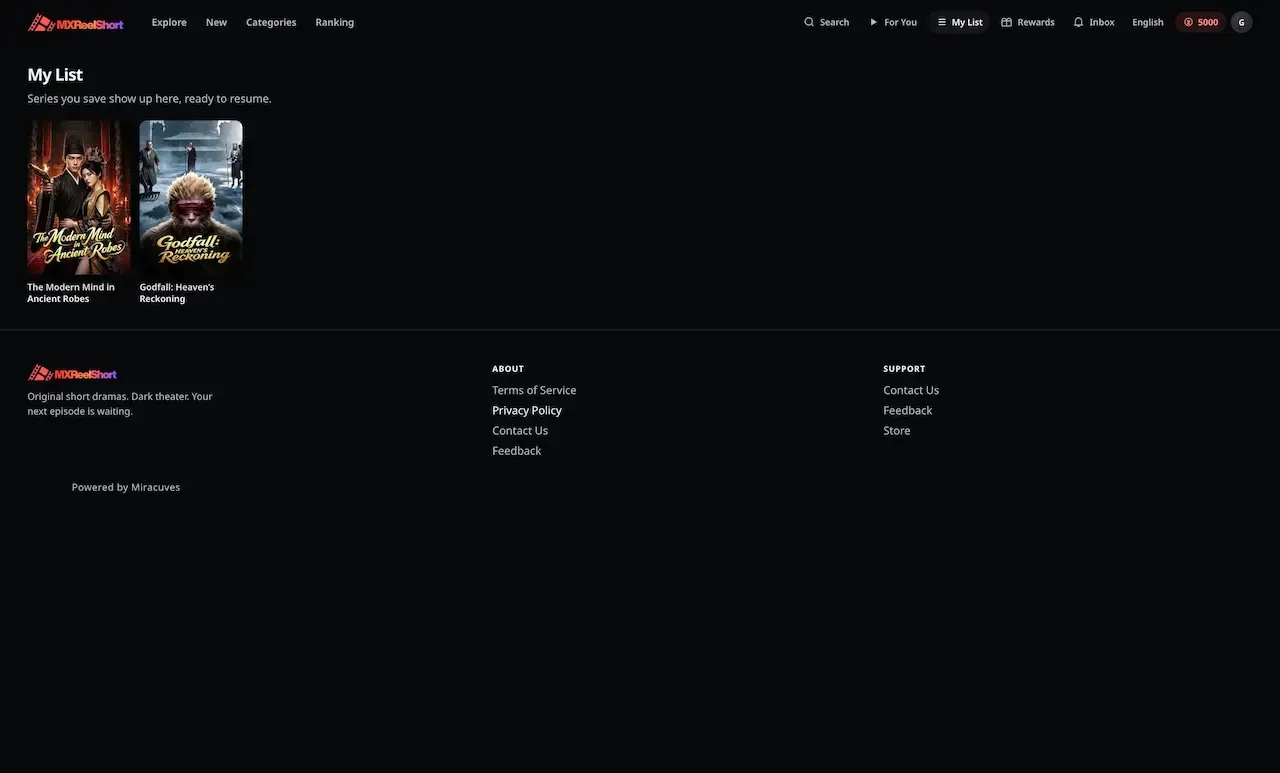
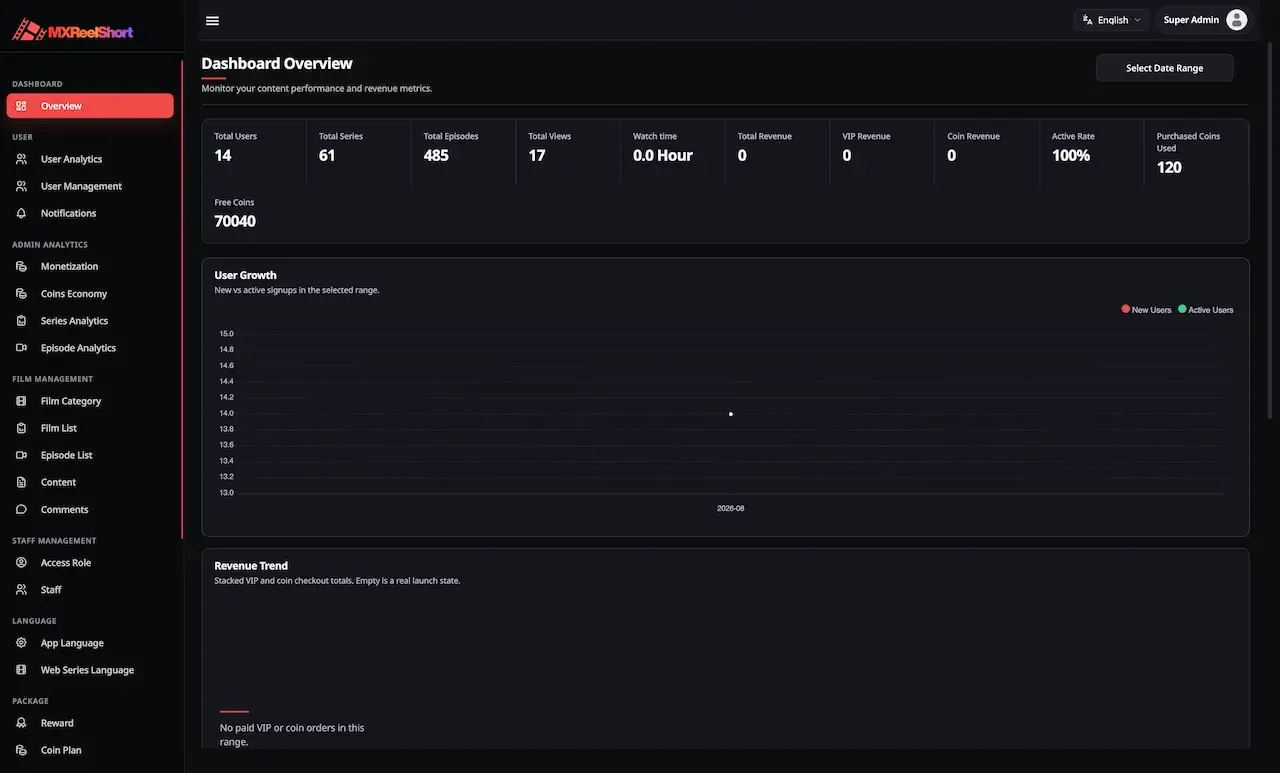
Real screens from the working product. Your platform ships rebranded with your name, logo and colors.
Admin panel 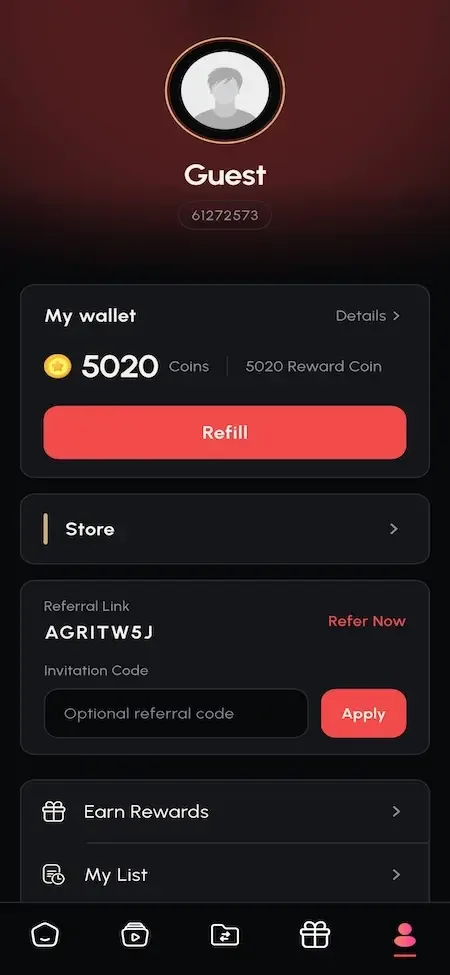
User app 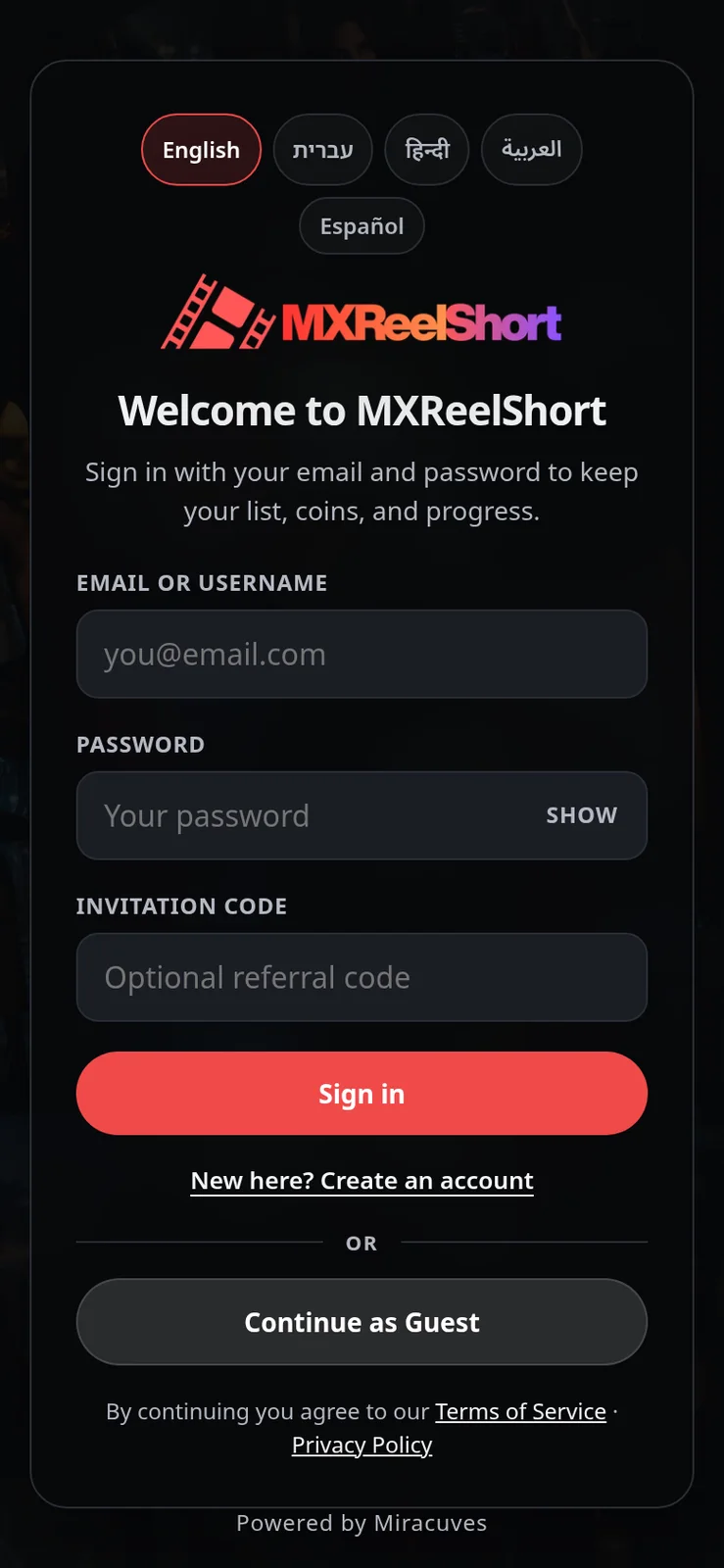
Web app 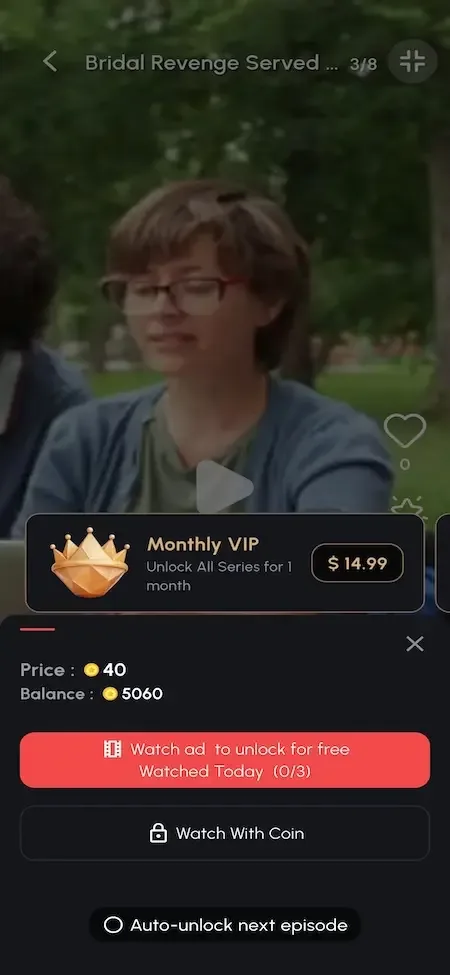
User app 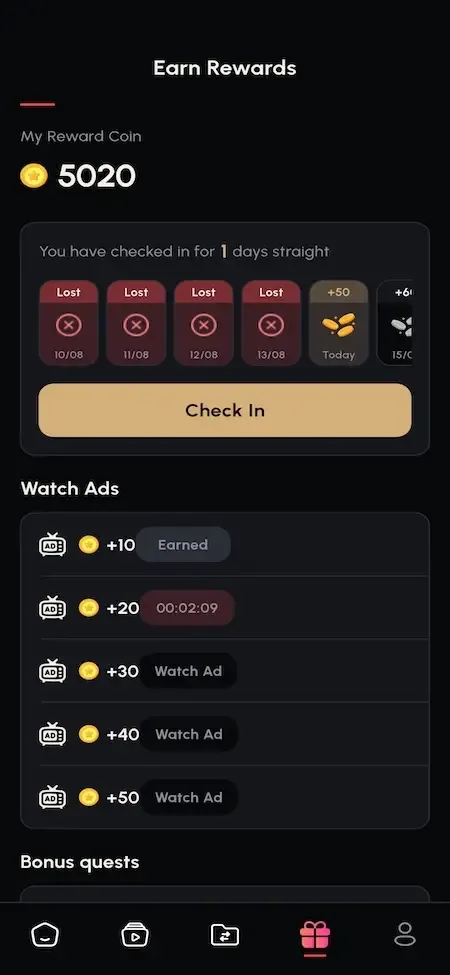
User app
How the MoboReels model works, in general terms
MoboReels sits among the vertical drama apps that put a broad library beside free viewing and paid unlocks. People tend to find stories through genre browsing and shelves, watch early episodes without charge, and then spend coins or watch an ad to continue. A wide catalog is part of the appeal. We describe the category only in general terms, make no claims about the brand's business and imply no connection to it.
This is a general description of the category only, and we make no claim about any company internal numbers or choices. The lesson for an operator is the structure: many titles, a free entry point, several tenders on the lock, and attention to which stories pull. The platform provides the structure, and the drama and its rights come from you.
What to use at each stage of the library
Switching everything on at launch makes it hard to read results. This sequence follows how a library grows, and it is a judgment based on the mechanics, not a promise. Your content will move it.
| Stage | Lever to use | Why |
|---|---|---|
| Small library | A generous free window and coin packs | Few titles must convert viewers quickly, and you need a baseline before adding passes |
| Growing library | Episode price tuning guided by series reports | Reports show where viewers stop paying, so you change one price at a time |
| Deep library | VIP windows for heavy viewers | With enough to watch, a pass suits people who binge and dislike counting coins |
| Aging back catalog | Rewarded ads with a generous cap per title | Old titles earn from viewers who would never buy coins |
| Partner stage | Licensor reports and onward licensing | Evidence of what a series earned supports renewals and new deals |
Three ways to run a drama library
The same code serves different businesses. Which one you are decides the settings you use most and the people you need, so pick the closest profile to your plan and read it for the daily work it implies before committing.
Owner of the titles
You produce or hold full rights to the stories. Coin spend on owned content carries the highest margin, because no licensor takes a share. The risk is production cost and hit rate, so series reports tell you which stories earn back their cost and which to stop making.
Licensed library operator
You license finished series per territory and compete on breadth. Region chips, license windows and clear reports matter most, because licensors expect evidence at renewal. A mix of coins, passes and ads suits a wide catalog with titles of varied age. Expect to spend your week negotiating and reconciling, and to lean on the series reports whenever a licensor asks how a title performed.
Aggregator with partner feeds
You stock the library from partner sources through imports or your own pipeline, and focus on curation and the audience. Shelf composition and promotion are the daily work, and reports on top episodes guide placement. We can set up bulk import for your build. Your edge is taste and speed in choosing what reaches the home screen, so your editors matter more than your developers.
Onward licensor of the platform
You configure the platform for other operators and license it to them. The asset is the source code and a repeatable setup. Each licensee runs its own deployment with its own brand, and your terms are negotiated directly with them. A written checklist for configuring a new deployment is worth more than any single feature, because it is what makes the second and third client faster than the first.
Library monetization mistakes
These are the errors that cost library operators most, with the setting or habit that prevents each. Read them against your first batch of titles before you publish, since each is easier to avoid than to repair once viewers have paid.
Locking the first episode
A viewer who has watched nothing cannot value a title. Keep the opening run free so attention becomes a started series, then place the lock at the hook. The free window is one setting, and the lock position is a field on each episode.
One price for a whole title
The same price on every episode wastes the lever that follows the story. Price a cheap first lock to ease the first purchase and test a higher price on a finale, then read the series report.
A pass on a thin catalog
A window is worth buying only when there is more to watch than it allows. On a small library it undercuts coin revenue and returns little. Hold passes until the catalog is deep enough. A viewer who finishes everything within a week of buying a pass will not renew, and will remember that the library ran dry.
Treating old and new titles alike
A new release can bear a premium price while a two-year-old title mostly cannot. Use rewarded ads and lower prices on back catalog, and keep headline prices for what is fresh. Since price lives on the episode, reducing the cost of an old series is a quick edit and does not touch the titles you want to sell at full price.
Reporting only totals to licensors
A single total cannot support a renewal. Use revenue by series and top episodes so you can argue from evidence, and keep those reports ready before the conversation starts. A licensor who sees which episodes carried a series, and where viewers stopped, will treat your numbers as credible and discuss terms rather than asking you to prove them.
Stocking before clearing rights
Adding titles you cannot serve in some territories creates a takedown problem later. Enter region chips and license windows before publishing, and keep contracts and settings in step. It is far easier to publish a title restricted to the right countries from the start than to remove it later from viewers who have already paid to unlock its episodes.
What to switch on first
Start with a small set of strong titles, a free opening run, a modest price per locked episode and two or three coin packs. Keep the reward ladder simple and leave passes and ad caps at conservative values. Fill region chips and license windows from the start, so the habit of recording rights is in place before the catalog grows.
After a few weeks, read the series and episode reports. Where viewers stop paying, change one price or one lock position and wait. When the library has real depth, add a pass, and use rewarded ads to monetize older titles. Each step should have a baseline from the step before. Keep a short log of what you changed and the date, so a later dip in revenue can be traced to a decision instead of guessed at.
Try the live MoboReels Clone demo
The demo is best used for catalog work: publish a title, reorder its episodes, watch the numbering and locks follow, then add a subtitle file and see it in the player. It carries our demo branding and a seed catalog of royalty-free stills, so judge the tools rather than the titles.
-
Viewer web app
Open the Viewer web app demo- Login
webuser@demo.com- Password
User_$321
Worth trying
- Browse the banner, trending and coming soon shelves
- Search by title and by a word from the plot
- Open a title and play its trailer episode
- Turn on a subtitle track during playback
-
Catalog console
Open the Catalog console demo- Login
admin@demo.com- Password
Admin_$321
Worth trying
- Open the film category, film list and episode modules
- Read how a title carries artwork and toggles
- Look at series revenue and top revenue episodes
- Try an edit and see the view-only role refuse it
-
Android viewer app
Open the Android viewer app demo- Login
webuser@demo.com- Password
User_$321
Worth trying
- Scroll episodes in the fullscreen vertical player
- Check that title numbering matches the web app
- Add a title to My List and find it again
- Open the For You view of grouped trailers
MoboReels Clone business model FAQs
Which lever matters most for a library?
Per-episode pricing, since it is the one that follows the story and can be changed in a field. Coin packs and passes then determine how easily viewers can pay. The right balance depends on the titles and the audience, so treat any ranking as a starting hypothesis and check it in your series reports.
How do licensors usually want to be paid?
Terms vary by deal and are between you and the licensor. Some want a fixed fee, others a share of revenue by title. The platform helps by producing revenue by series and top episodes, but the contract, the payment and the statements are handled by you. We do not take part in those arrangements.
Can I tune ads separately for old titles?
Yes. The daily cap for rewarded ads is set per title, so back catalog can allow more ad unlocks while a new release stays tighter. Remember that live ad income runs through the store app. Compare ad income with coin income by series to see whether the settings are right.
Do I need every title in every country?
No. Region chips and license windows let you serve each title only where you hold rights, and the shelves adjust. A narrower catalog in a market is better than one that breaches a license. You enter the rules, because the platform cannot read your contracts.
Will you estimate revenue from my library size?
No. Revenue depends on the stories, pacing, free window, price and audience, and it varies enormously between libraries. We explain the mechanics, help plan an order of experiments, and rely on the reports for evidence. Any number given before we saw your catalog would be a guess.
Can I run the library on several brands?
Each brand is its own deployment, with its own database, domains and store listing. You can share a content source between them with your own pipeline or an import module. Because you own the source, you can also license a configured deployment to another operator for a fee you set.
Explore the MoboReels Clone
The overview and its companion pages answer the main questions in turn. Pick the one you need next.
-
MoboReels Clone
The overview: live demo, screens, price and everything in the box.
Back to the overview -
Features
Drama platforms are usually sold on the player, yet operators spend their days in the library: publishing a title, numbering episodes, setting prices, fixing mistakes after release and showing a licensor what a series earned.
See the full breakdown -
Development cost
For a library business the software is a small share of what you spend.
See exact pricing -
Development company
Any studio can show you a player.
Compare options
→Start here
Tell us what you want to launch.
Share the platform and your market. You get a walkthrough of the live demo, the exact scope of what ships, and a fixed price in writing. First response in under 2 hours, Monday to Saturday, 10:00 to 19:00 IST.
Trademark and independence notice
This page uses the name MoboReels to describe a type of platform. The product sold here is separate software, built independently, and MoboReels has no part in it.
Why this name
"MoboReels clone" is industry shorthand that founders use when searching for software with a comparable business model. It names a category of product, not a copy of MoboReels.
Who built this
The platform is an original product designed and written by Miracuves. It contains no code, design, graphics or content originating from the MoboReels website or applications, and it ships under your own brand.
Trademarks
MoboReels and its logos are trademarks of their respective owner and are named here for reference only. GetFame is not affiliated with, sponsored by or endorsed by MoboReels. Rights holders can write to legal@miracuves.com.
Operator responsibility. The operator of a launched platform is responsible for legal compliance in the markets it serves. Nothing on this page is legal advice.Read the full disclaimer