MoboReels Clone Development Company: How to Choose a Partner
Any studio can show you a player. A good library partner can show how a title is published, how an episode is moved without stranding paid viewers, and how a licensor report is produced. Use this page to compare providers on those points and to see exactly what we do and do not take on.
- 6 days
- to a live platform
- 9,000+
- projects delivered
- 1 year
- of free updates
On this page10 sections
- What matters when you operate a library every day
- Agency, freelancer or GetFame for a library platform
- Questions to ask any provider about library tools
- The MoboReels Clone, on screen
- How a GetFame delivery runs for a library launch
- Warning signs in a library platform proposal
- What we do not do
- Try the live MoboReels Clone demo
- MoboReels Clone development company FAQs
- Explore the MoboReels Clone
What matters when you operate a library every day
The test of a library platform is the operator console, not the player. Ask to see a title published, an episode reordered and a subtitle attached, with a real editor doing it. A provider that has built library tools will show you the awkward cases, such as what happens to viewers who already paid when an episode moves. Watch for hesitation, because a vendor who has not tried the case will usually find it during your demo.
Then ask about rights and reports. Region rules, license dates and series-level revenue are what licensors look at, so they should exist in the product and not in a spreadsheet. Confirm that you receive the source, the data model and documentation, and a support window long enough for your editors to learn the system. Ask also what happens to your library data if you leave, and in what form you can take it.
Agency, freelancer or GetFame for a library platform
Each route suits a different situation. An agency fits a product unlike anything shipped before, a freelancer fits a narrow task, and a ready-made platform fits operators whose edge is the catalog and the brand rather than the software.
| Aspect | Agency | Freelancer | GetFame |
|---|---|---|---|
| Time to launch | Many months of discovery and build | Depends on one person availability | 6 working days to a branded deployment |
| Catalog console | Built to spec, often late in the schedule | Basic forms or none at all | Titles, episodes, subtitles and regions included |
| Reordering episodes | Depends on how the unlock model was designed | Often a manual database edit | Drag and drop that renumbers and relocks |
| Licensor reports | Custom reports priced separately | Rarely in scope | Revenue by series and top revenue episodes |
| Cost shape | Large budget with change requests | Lower fee, risk shifted to you | One fixed price, tailored work confirmed with us |
| Source code | Normally yours, check the contract | Sometimes limited or undocumented | Full source with documentation |
| After launch | Retainer or a new contract | Depends on availability | Sixty days support and a year of updates |
| Best fit for | New products and heavy customization | Narrow additions to an existing system | Operators who want a library live and operable |
Questions to ask any provider about library tools
Ask these in a live demonstration with your own editors present, not by email. A provider who has built library software will answer in specifics and mention the pitfalls before you do.
What happens to paid viewers on a reorder?
Ask to see an episode moved in a title that viewers already unlocked. Ownership should stay attached to the viewer and the episode, with numbers and locks recalculated. If the answer involves manual repair, you are buying a future support problem.
Where is price stored?
Price should be a field on each episode, editable in the console. If it is one value per title or fixed in code, you cannot price a finale differently or discount a back catalog, and every change becomes a development ticket.
How are subtitles attached?
Ask for an upload on a single episode, the formats accepted and how the language is recorded. A good answer shows the track appearing in the player on web and mobile. A poor one involves placing files in storage by hand.
How do you restrict a title by country?
Request an example with start and end dates, and ask what viewers outside the territory see. Rights administration is core to a licensed library, and a product that cannot do it limits the deals you can accept. A good answer shows the title missing from the other region's shelves and search, not merely hidden behind a label.
What reports can I show a licensor?
Ask for revenue by series and a ranked list of top episodes, drawn from live data. A grand total cannot support a renewal. Also ask how far back the data goes and how it can be exported. A licensor may ask for last year's figures, so a system that keeps the history and lets you hand over a file is more useful than one that only shows today.
Who can edit what?
A role should be a list of modules and actions, with one role per staff account. Ask whether the permissions are enforced in the interface only or also on the server, since that decides how much trust a shared account can have.
What does bulk loading involve?
Be clear how the product handles large intake and whether an import module or script comes with it. Ask what it costs, what it needs from partners and whether licensing for imported titles stays with you. A library arriving from a partner's catalog in the hundreds is a different job from adding titles one at a time, and the plan should say which you expect.
What is unfinished or simulated?
Ask for a written list, including demo-only behavior and any hardening backlog. A provider that gives no list has not looked or will not tell you, and you inherit the risk either way. A good list names the item, says whether it matters for your plan and says what closing it would involve and cost.
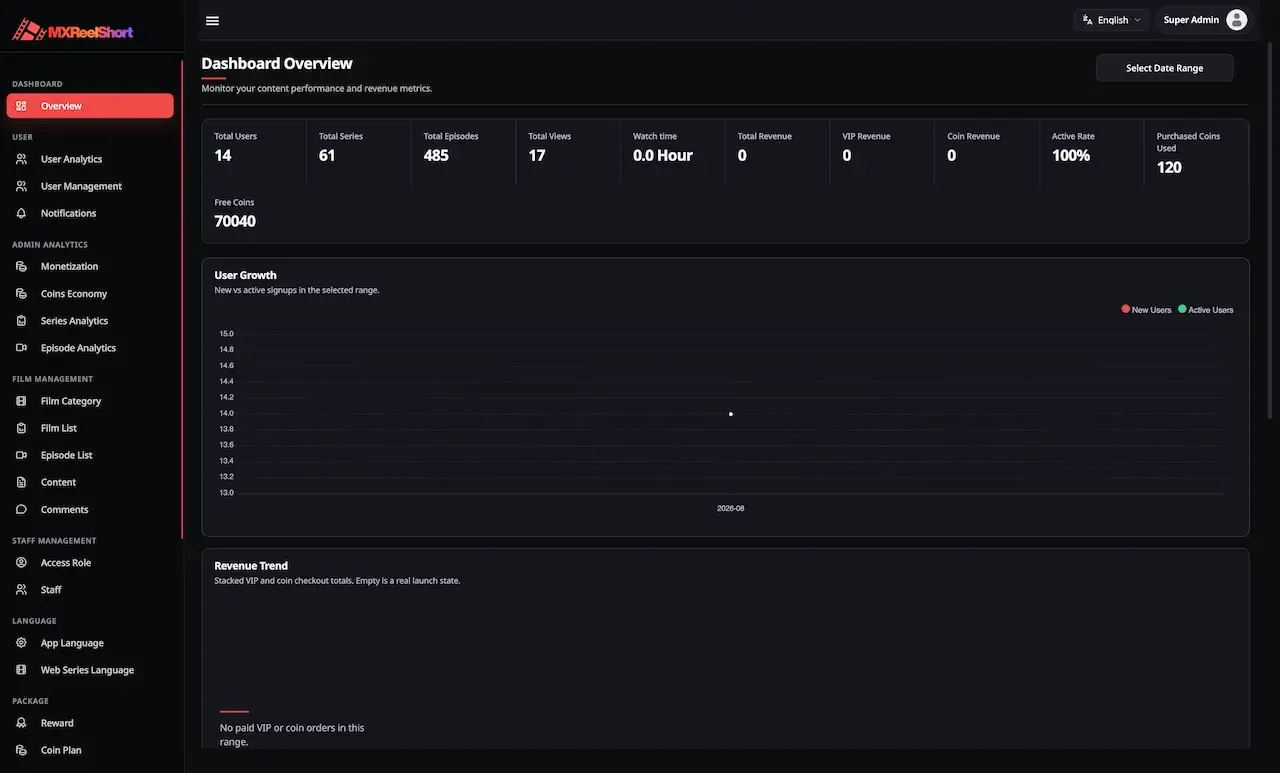
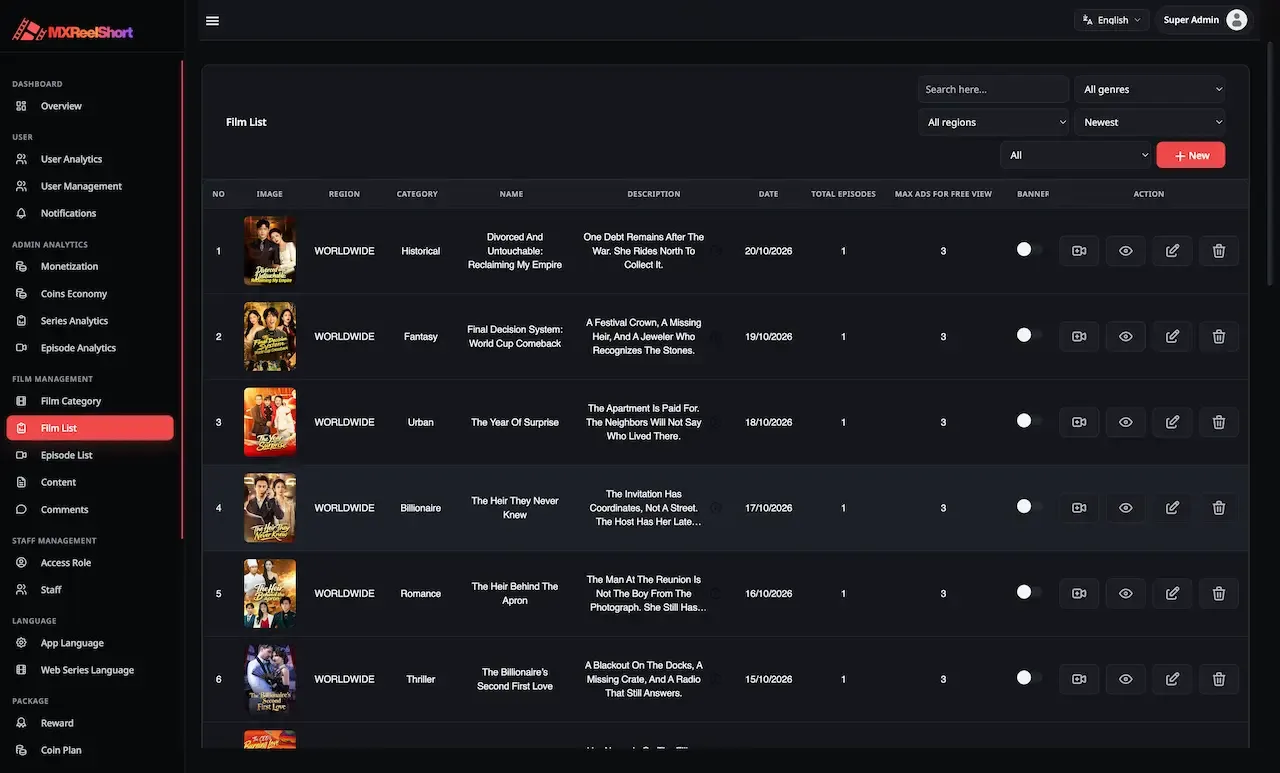
The MoboReels Clone, on screen
Real screens from the working product. Your platform ships rebranded with your name, logo and colors.
Admin panel 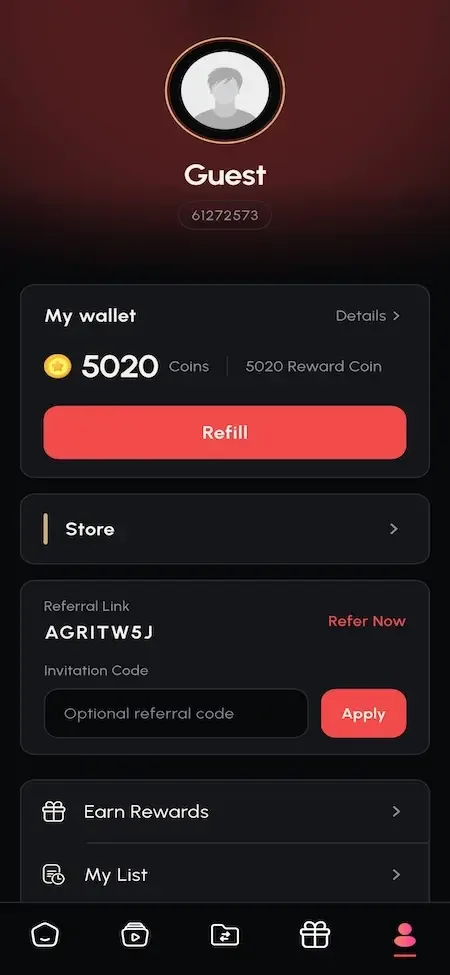
User app 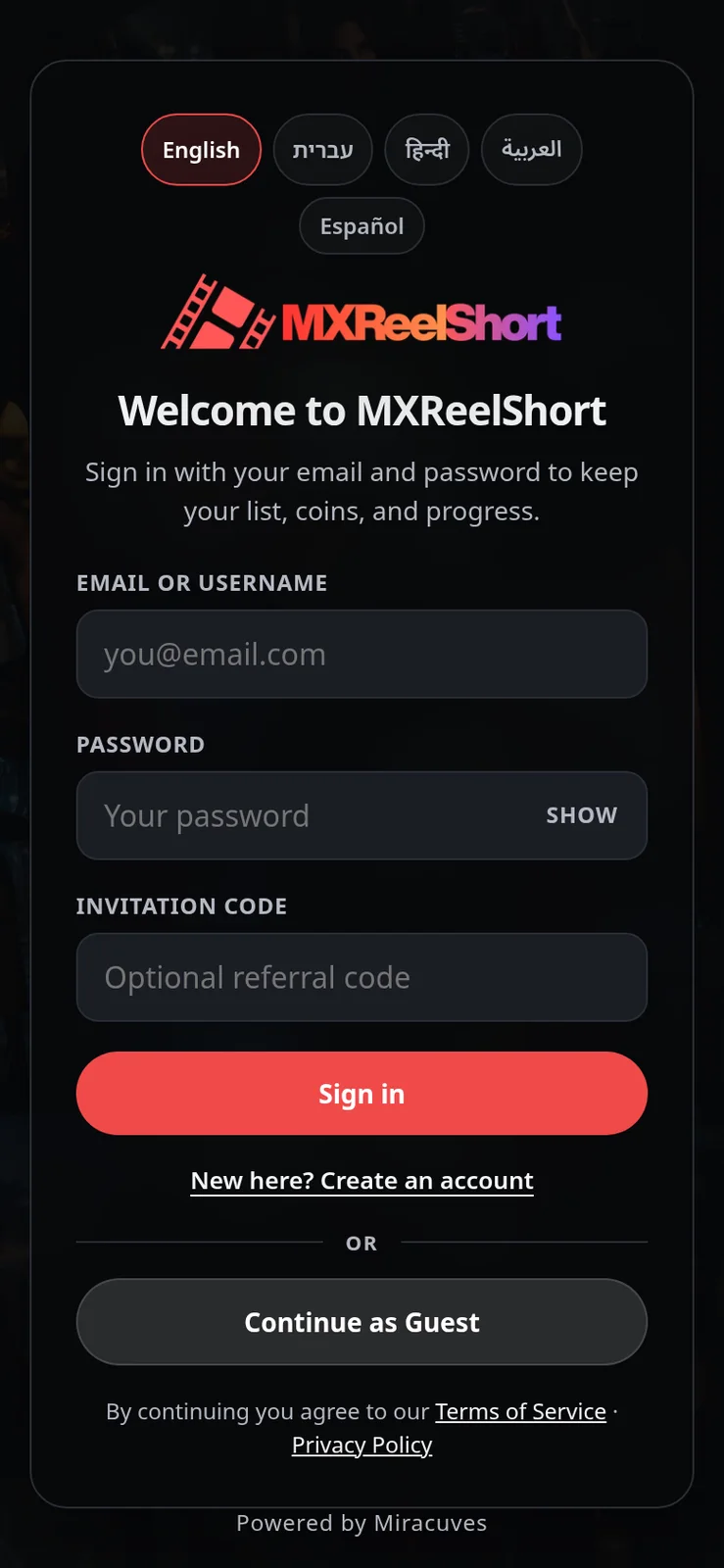
Web app 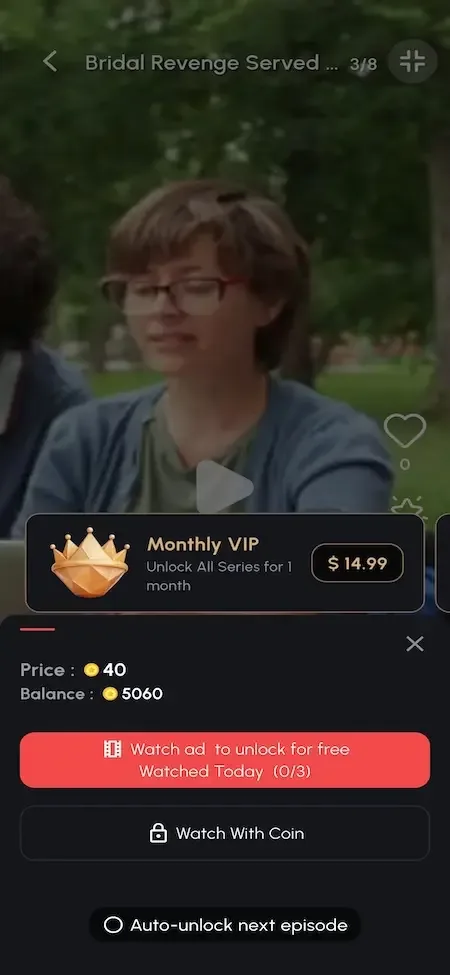
User app 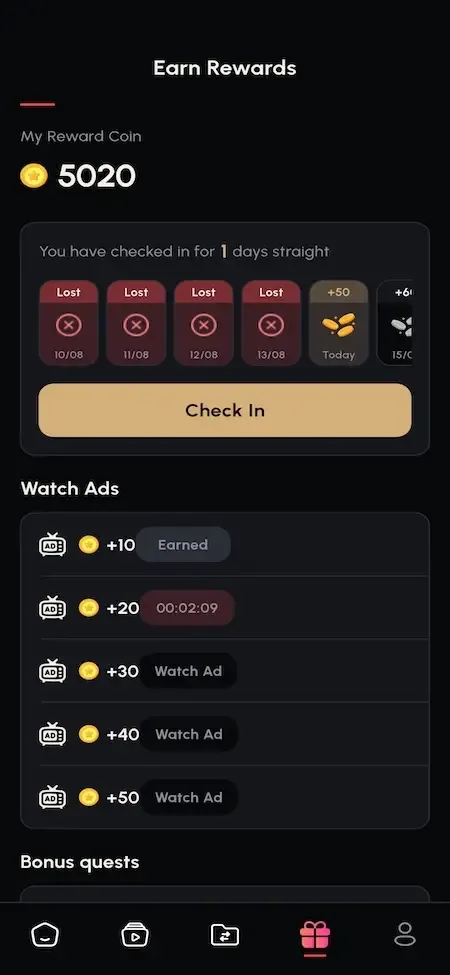
User app
How a GetFame delivery runs for a library launch
The platform exists already, so our six working days go on branding, configuring, deploying and connecting accounts. Content and approvals run on other clocks and proceed beside it.
-
Scope call and catalog check
We confirm locales, gateways and your plan for titles, and ask frankly whether rights and files are ready. Your catalog, more than any software task, decides the public launch date, so we raise it first. If rights are still being negotiated, we say so, and you can decide whether to start the technical work now or wait.
-
Branding and settings
We apply your identity across the web app, store app and console, then set locales, currency, the free window and first coin prices. Plans and rewards are agreed with you and can be edited later from the console.
-
Deployment to your own server
We deploy the web app, console and API behind nginx and PM2 and seed the demo catalog for testing. You provide hosting access and DNS changes, and choose local disk, AWS S3 or DigitalOcean Spaces for media.
-
Connecting your accounts
We connect storage, your payment gateway and ad units, then test a purchase and a rewarded unlock end to end. Keys come from your merchant and ad accounts, and approvals may take longer than the integration.
-
Loading the first titles
We help load your first titles, episodes, artwork and subtitles, and train your editors on publishing and reordering. You enter region chips and license dates, and we check the unlock paths with real coins. Have the editors reorder a published episode while we watch, since that is the operation most likely to surprise a new team.
-
Handover and publishing help
We walk your team through the console, hand over the code and documents, and begin app publishing support. Sixty days of technical support and a year of free updates then apply. By the end of the session, your editors should be able to publish a title, attach a subtitle and read the series report without asking us what a button does.
Warning signs in a library platform proposal
These show up in demos and quotes before any code exists. Several together are a good reason to keep looking, however good the player appears, because library problems lie in the console and in the data, which a polished demo rarely shows.
- Price held per title only, with no way to charge differently for a finale.
- Reordering episodes described as a developer task and not an editor task.
- Subtitles uploaded to storage by hand with no link to the episode record.
- No way to restrict a title by country or to end a license on a date.
- Reports that show only a grand total and nothing by series or episode.
- Staff permissions enforced by hiding buttons, with no server-side check.
- Source code encrypted, obfuscated or licensed on an annual basis.
- An offer to supply licensed drama, with no clear answer on who holds rights.
- No written list of what is simulated, partial or not yet built.
What we do not do
A library business has several responsibilities that sit outside any software delivery. These are the areas where we provide tooling or advice at most, and where the task stays with you or a third party.
Supply or license titles
We sell software, not content. You produce or license every title and you answer for rights in each territory. The demo catalog is seed material with royalty-free stills, and is not licensed drama.
Encode and subtitle your files
The platform serves the files you upload and stores your subtitle tracks. Preparing them is your job or a vendor job. We can also set up adaptive streaming through a video service on your account.
Negotiate with licensors
We provide reports and region controls, but contracts, payments and statements are between you and your licensors. We do not take part in those negotiations. If a licensor wants a particular report format, tell us early, and we can tailor it rather than assuming the shipped screens will satisfy them.
Give legal advice
Rights, consumer rules and privacy law differ by country. We provide data export and deletion tools and editable policy pages, not legal advice, so involve an adviser for each market. The adviser should see the territory list and the regions you plan to restrict, since those settings carry legal consequences beyond the software.
Guaranteed approvals from third parties
Merchant accounts, ad networks and the app stores decide on their own terms. We connect and test what you obtain, but cannot influence an approval or a review. Start those applications as soon as your brand details are ready, and run them in parallel, since the slowest one sets the date for a public launch.
Run your editorial desk
The console gives editors, moderators and campaign managers their tools. People to use them, and the rules they follow, are your responsibility, including what to do about content you are obliged to remove.
Try the live MoboReels Clone demo
The demo is best used for catalog work: publish a title, reorder its episodes, watch the numbering and locks follow, then add a subtitle file and see it in the player. It carries our demo branding and a seed catalog of royalty-free stills, so judge the tools rather than the titles.
-
Viewer web app
Open the Viewer web app demo- Login
webuser@demo.com- Password
User_$321
Worth trying
- Browse the banner, trending and coming soon shelves
- Search by title and by a word from the plot
- Open a title and play its trailer episode
- Turn on a subtitle track during playback
-
Catalog console
Open the Catalog console demo- Login
admin@demo.com- Password
Admin_$321
Worth trying
- Open the film category, film list and episode modules
- Read how a title carries artwork and toggles
- Look at series revenue and top revenue episodes
- Try an edit and see the view-only role refuse it
-
Android viewer app
Open the Android viewer app demo- Login
webuser@demo.com- Password
User_$321
Worth trying
- Scroll episodes in the fullscreen vertical player
- Check that title numbering matches the web app
- Add a title to My List and find it again
- Open the For You view of grouped trailers
MoboReels Clone development company FAQs
Can you train my editors?
Yes. At handover we walk your team through publishing a title, setting prices and locks, attaching subtitles, setting regions, reordering and reading the reports. The console is built for editors, and the documentation covers the same ground. Questions during the support window go through our normal channel.
Can I see the console without risk?
Yes. The demo console login is view-only, and the server refuses writes, so you can browse every module safely. For a hands-on trial of publishing, we can discuss a walkthrough call and show the steps live on a seeded title.
Will my engineers be able to work on it?
Yes. The stack is Node, MongoDB, a React web app, a Next.js console and a Flutter app, which are common skills. You also get the schema reference, an API collection and developer and security handbooks, so an internal team can take over operation or extend the platform.
What if I outgrow the starting catalog tools?
You can ask us for tailored work, such as a season structure or personalized shelves, usually in two to eight weeks, or hand the source to your own team. Because you own the code and run it on your own infrastructure, nothing requires our involvement, though we are glad to estimate.
How quickly do you answer questions?
First response comes within two hours, Monday to Saturday, from 10:00 to 19:00 IST. Technical questions during delivery and for sixty days afterward use the same channel. If something needs deeper investigation, we say so and give you a time instead of leaving you waiting.
Do you sign NDAs?
Yes, we can sign a mutual non-disclosure agreement before you share catalog details, licensor terms or business plans. Mention it at the start and we will arrange it. The platform runs on your servers with credentials you control, so your data stays in your own environment.
Explore the MoboReels Clone
The overview and its companion pages answer the main questions in turn. Pick the one you need next.
-
MoboReels Clone
The overview: live demo, screens, price and everything in the box.
Back to the overview -
Features
Drama platforms are usually sold on the player, yet operators spend their days in the library: publishing a title, numbering episodes, setting prices, fixing mistakes after release and showing a licensor what a series earned.
See the full breakdown -
Development cost
For a library business the software is a small share of what you spend.
See exact pricing -
Business model
A library-led operator earns in a particular order.
See the playbook
→Start here
Tell us what you want to launch.
Share the platform and your market. You get a walkthrough of the live demo, the exact scope of what ships, and a fixed price in writing. First response in under 2 hours, Monday to Saturday, 10:00 to 19:00 IST.
Trademark and independence notice
This page uses the name MoboReels to describe a type of platform. The product sold here is separate software, built independently, and MoboReels has no part in it.
Why this name
"MoboReels clone" is industry shorthand that founders use when searching for software with a comparable business model. It names a category of product, not a copy of MoboReels.
Who built this
The platform is an original product designed and written by Miracuves. It contains no code, design, graphics or content originating from the MoboReels website or applications, and it ships under your own brand.
Trademarks
MoboReels and its logos are trademarks of their respective owner and are named here for reference only. GetFame is not affiliated with, sponsored by or endorsed by MoboReels. Rights holders can write to legal@miracuves.com.
Operator responsibility. The operator of a launched platform is responsible for legal compliance in the markets it serves. Nothing on this page is legal advice.Read the full disclaimer