Ready-made, one-time
$3,999
MoboReels Clone
Live in 6 working days from kickoff
- Full source code
- White-label under your brand
- 60 days of technical support
- 1 year of free updates
- App publishing support
Micro drama app
A micro drama app that treats the library as the product
For operators who already hold stories, scripts or finished episodes. Categories, titles and numbered episodes are records you publish from a console, each with artwork, subtitles, a coin price and a lock. Region targeting and per-series reporting come with it, and the same library feeds a web app and a Flutter app under your brand.
The facts a buyer checks first, in one place. Everything on this page is the product as it ships.
| Product type | Catalog-led micro drama app with ad-supported and coin-based viewing |
|---|---|
| Content model | Categories, titles typed as movie or web series, and numbered episodes |
| Clients included | Web app for viewers, Flutter app for iOS and Android, and a console for editors |
| Reporting | Series and episode analytics, revenue by series, top revenue episodes |
| Price | $3,999 one time, with no per-title or revenue-share fee |
| Launch time | 6 working days from kickoff |
| Source code | Full source code for every client and the API |
| Media storage | Local disk, AWS S3 or DigitalOcean Spaces, among eight supported providers |
| Payment gateways | PayPlus hosted checkout, Stripe, Razorpay, Flutterwave and Google Play billing |
| Support and updates | 60 days of technical support and 1 year of free updates |
A MoboReels clone is a micro drama platform organized around its library. Genre buckets hold titles, titles are typed as movie or web series, and each title holds numbered episodes with video, duration, artwork, an optional subtitle file, a coin price and a lock. Operators publish and reorder all of it from a console, not a database client.
Episode zero is reserved for the trailer, so promo material is published, reordered and region targeted in the same way as any episode. Dragging an episode to a new position renumbers the title and reapplies the locks, which makes re-cutting a series after launch a routine edit.
It is not a generic file CMS. Rails are composed by an operator from the catalog. A multi-season library is modeled as separate titles today, and we can add a season container for your build. You supply the content, and we deploy and brand the platform.
The name MoboReels is easy to confuse with unrelated search results, such as game modifications that use the word mob and generic app download pages. We make no claims about any brand of that name. On this page, a MoboReels clone means a short drama or micro drama platform organized around its library: a catalog of titles, each cut into numbered vertical episodes that viewers open with coins, a pass or a rewarded ad.
What distinguishes the library angle is where the work sits. A catalog business spends most of its time on titles: getting them in, numbering and pricing episodes, attaching subtitles, restricting them by territory and reporting to the people who own the rights. The player is the visible part, while the console is where the operator lives, so this page concentrates on that side of the product.
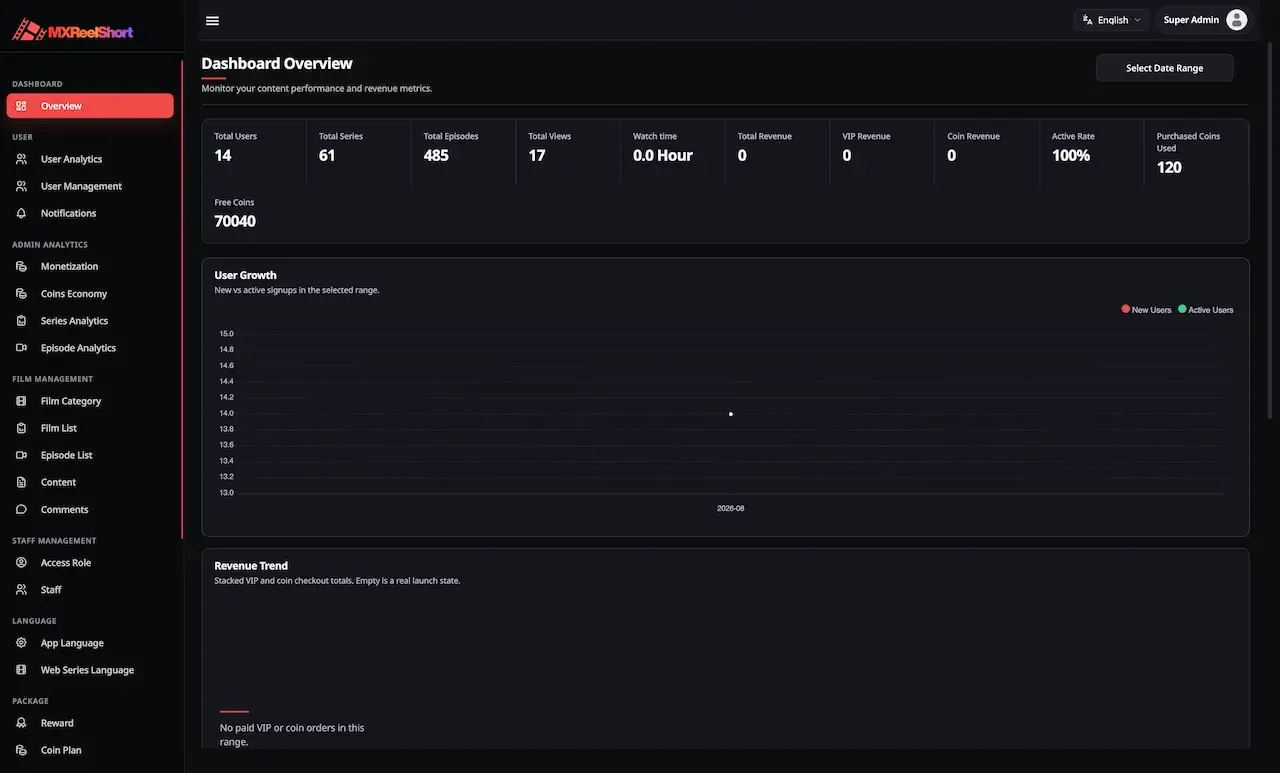
Each role works in its own side of the same product. The screens come from the working demo.
The console is a publishing desk for a drama library. Titles arrive as records with artwork and a trailer, episodes are numbered and priced, subtitles attach to individual episodes, and the whole run can be re-ordered later without breaking what viewers already own.
Viewers meet a library shaped like a streaming shelf. They scan banners and genres, search by title or plot, start a story free, and meet a lock where a coin, a rewarded ad or a VIP window will carry them to the next episode.
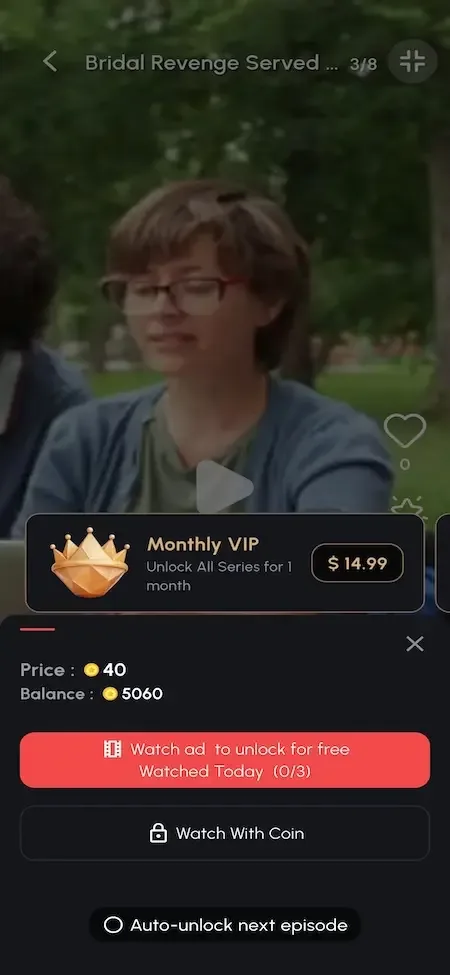
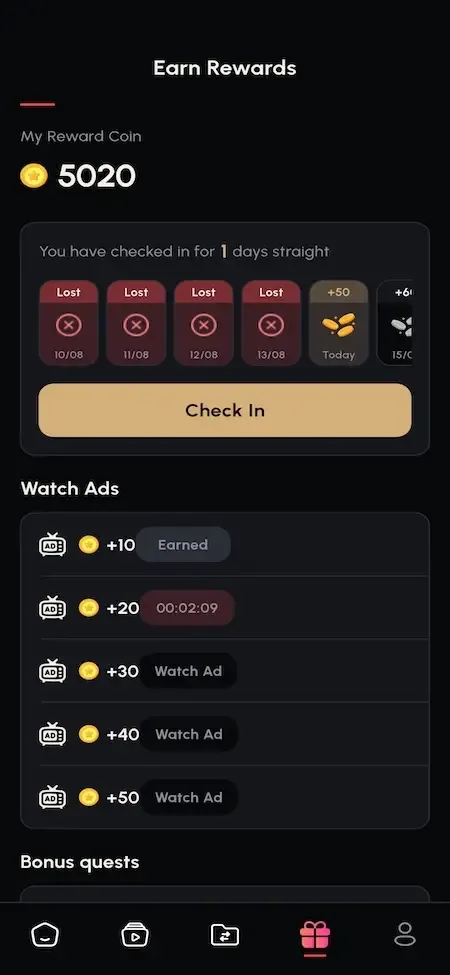
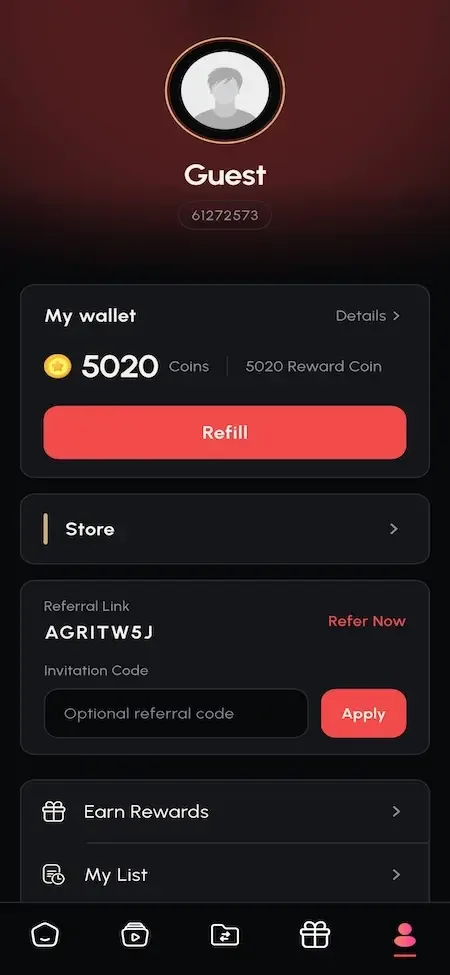
A library business lives on knowing which titles earn. The console reads live operating data and breaks it down by series and by episode, which is what you show a content owner and what you use to decide what to acquire next.
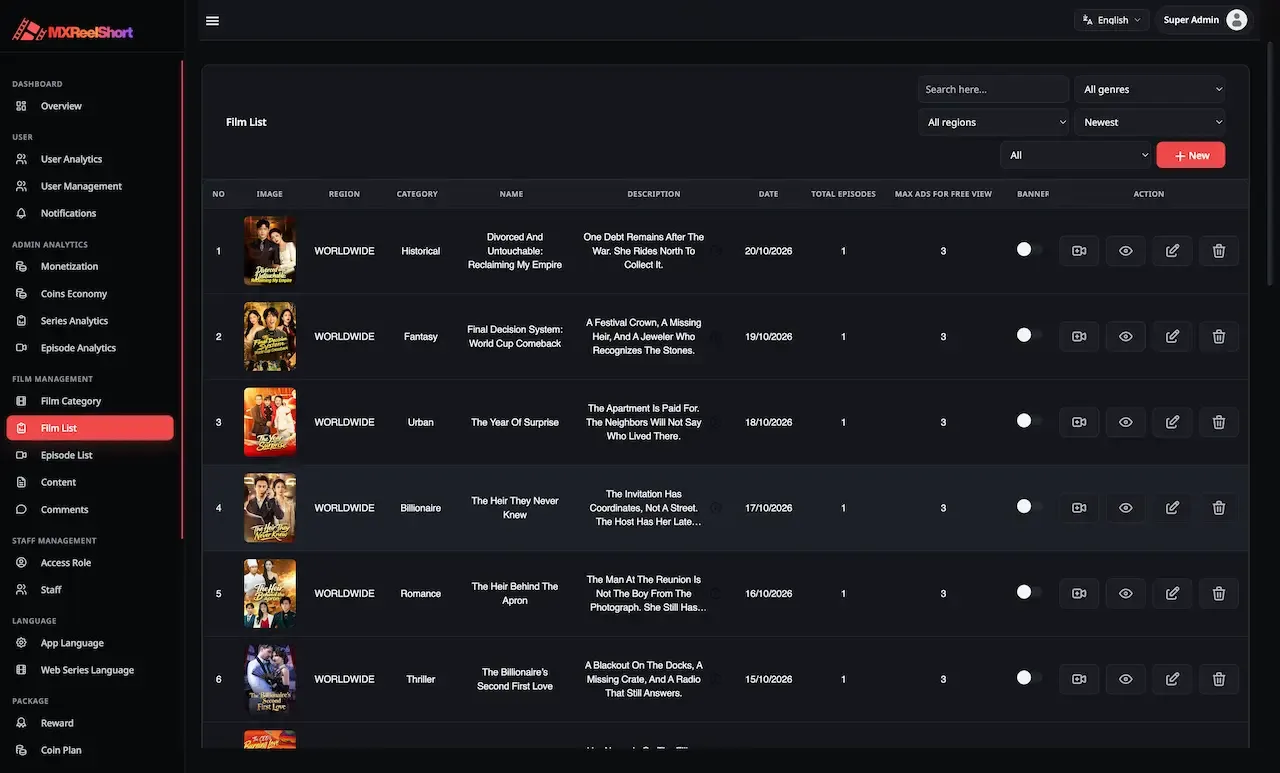
Libraries need several hands. Editors publish, moderators handle reports and managers review numbers, and each role sees its own part of the console. A view-only demo login lets you show licensors the product without letting them change anything.
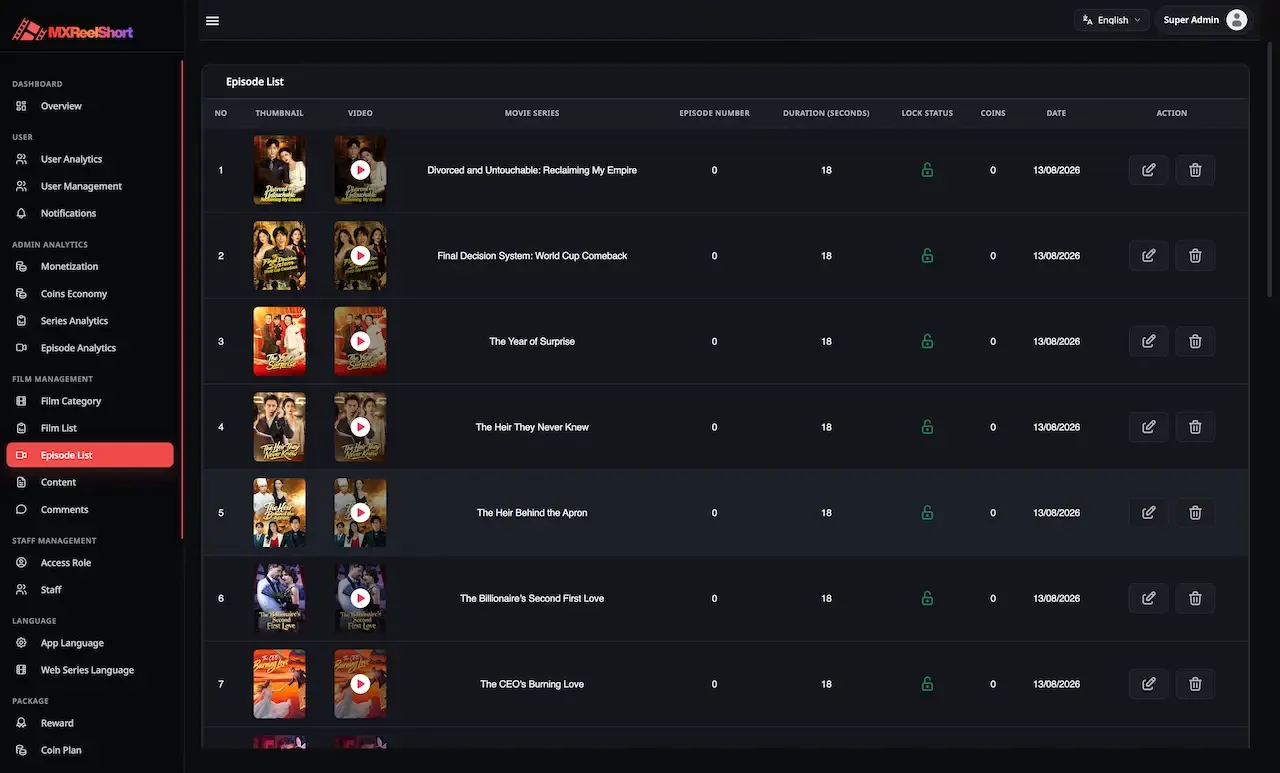
14 screens from the working demo, grouped by where they live. Your platform ships rebranded with your name, logo and colors.
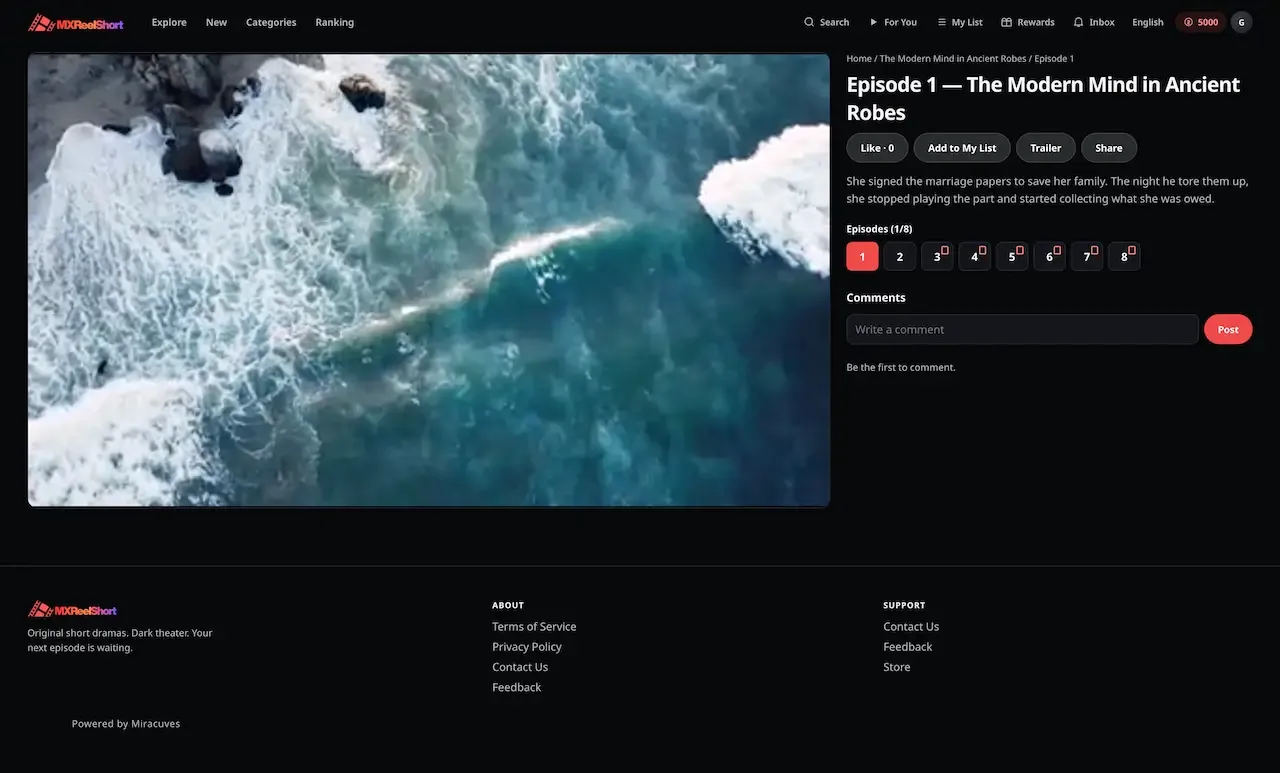
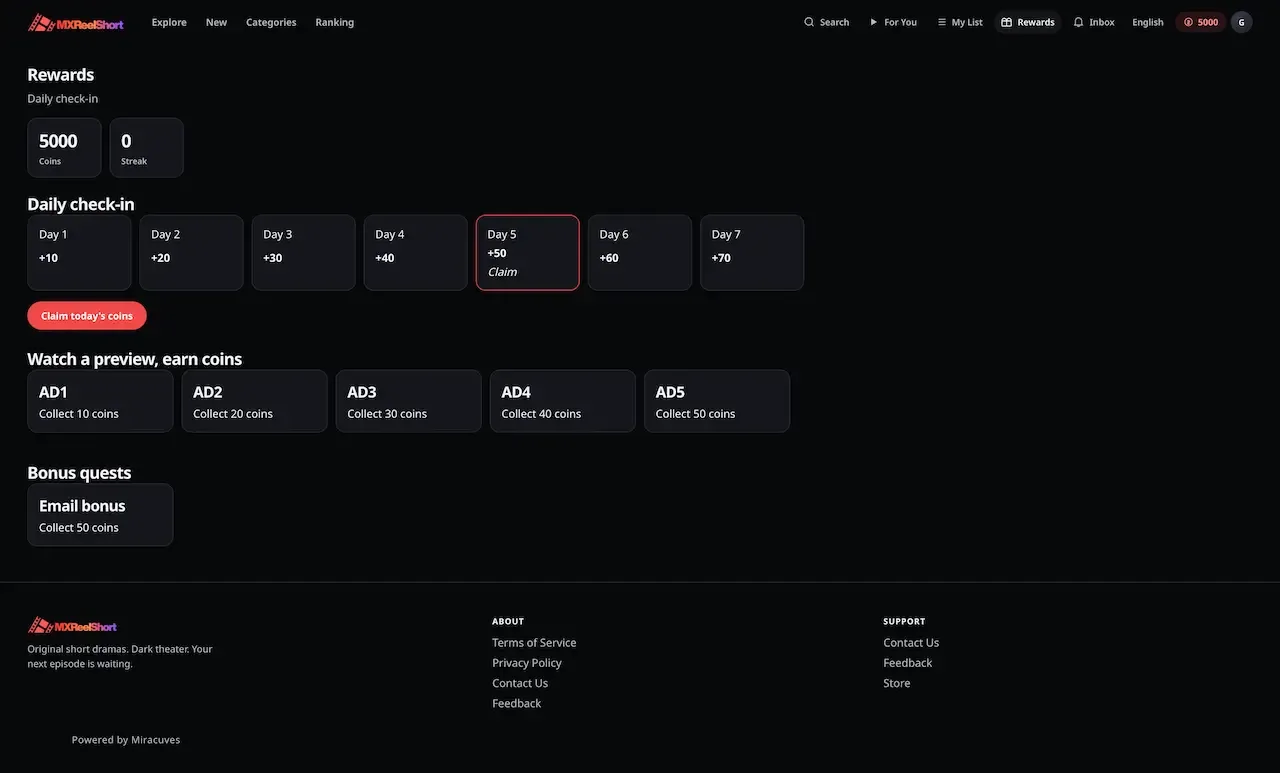
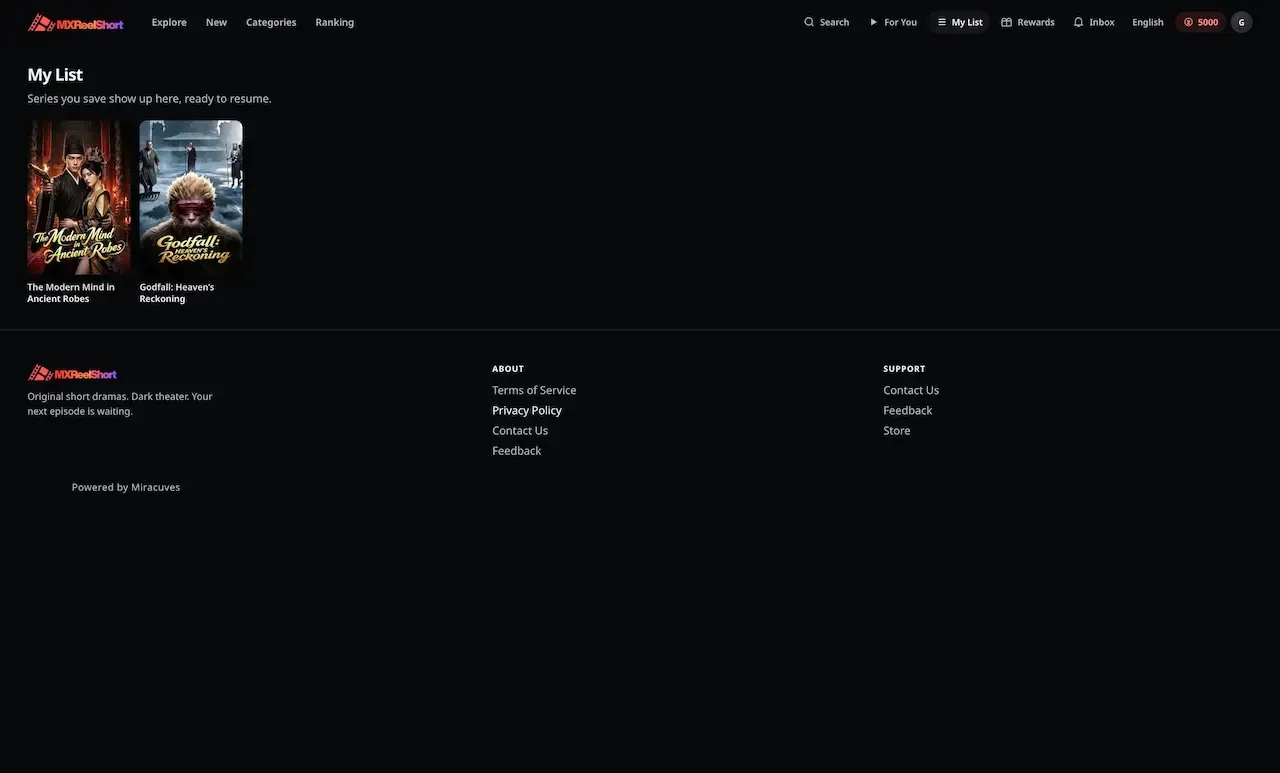
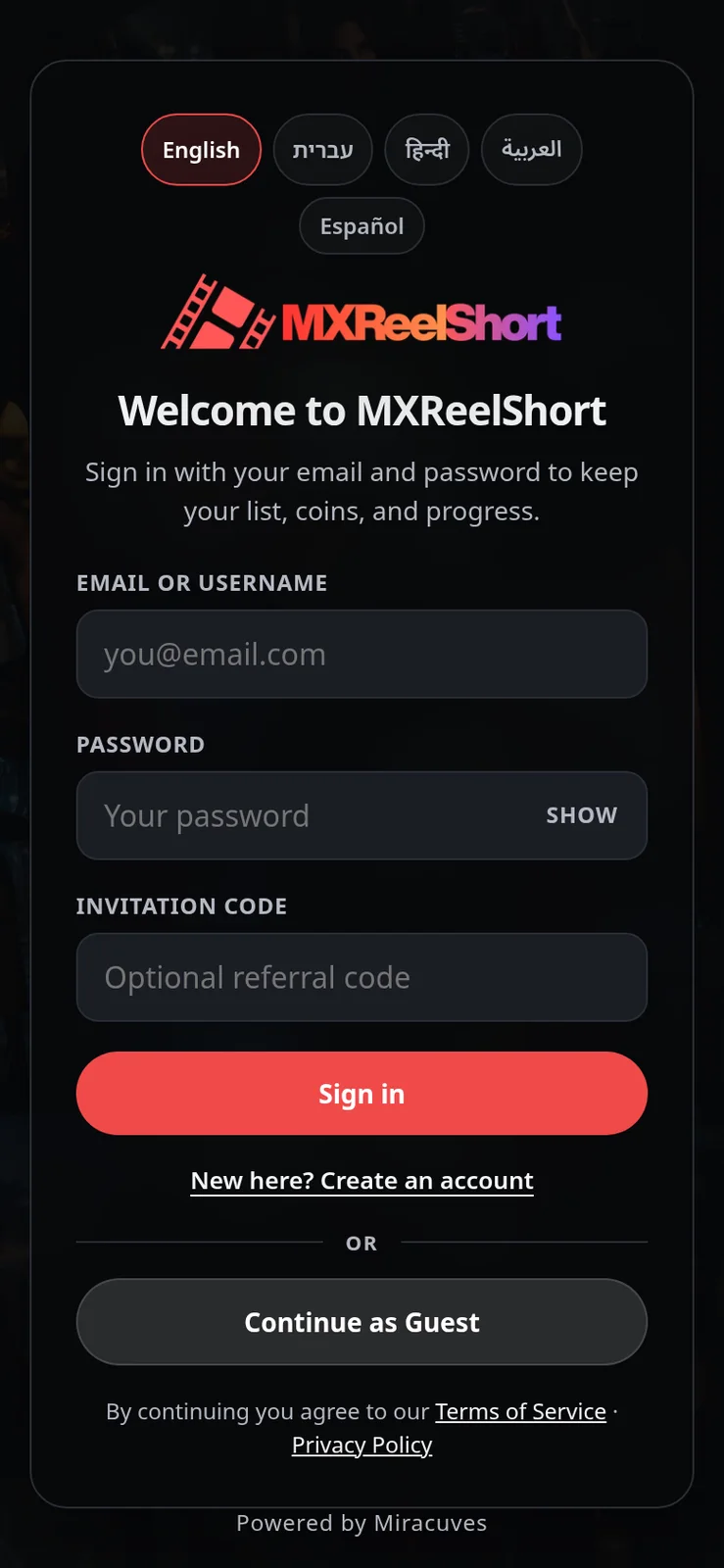
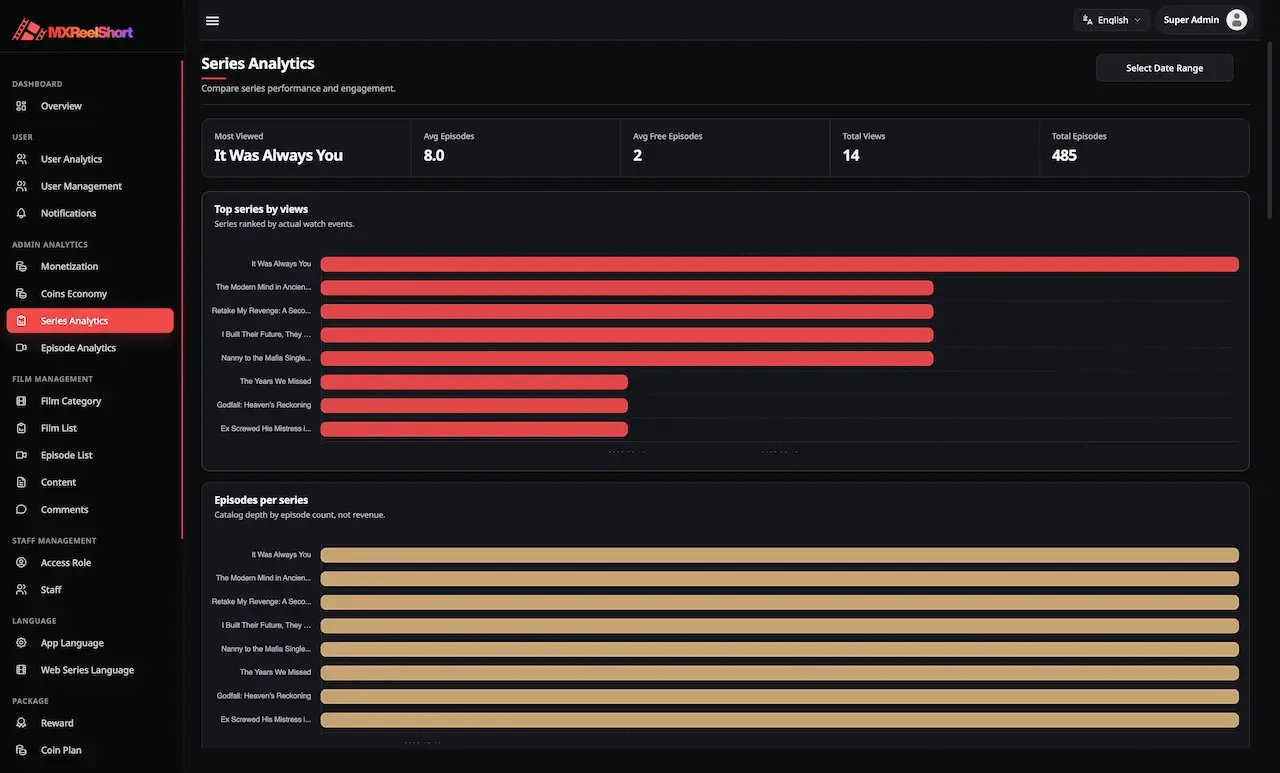
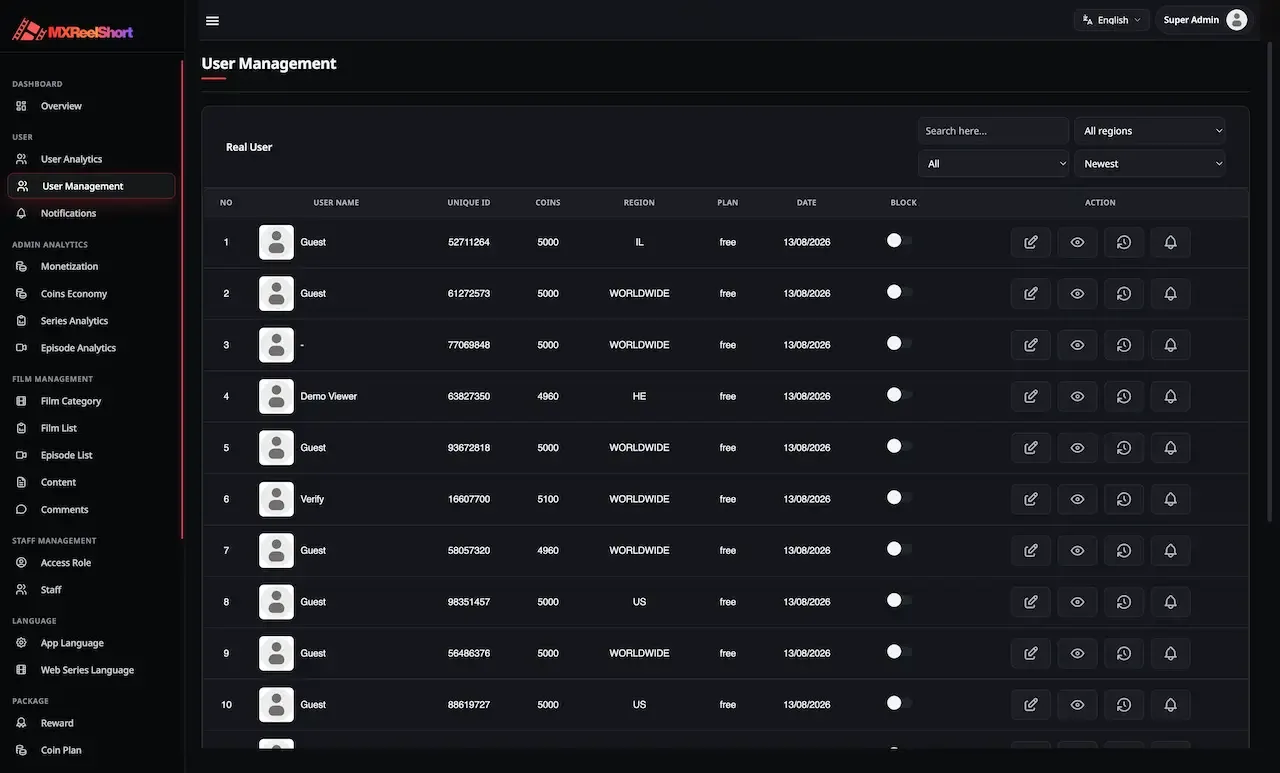
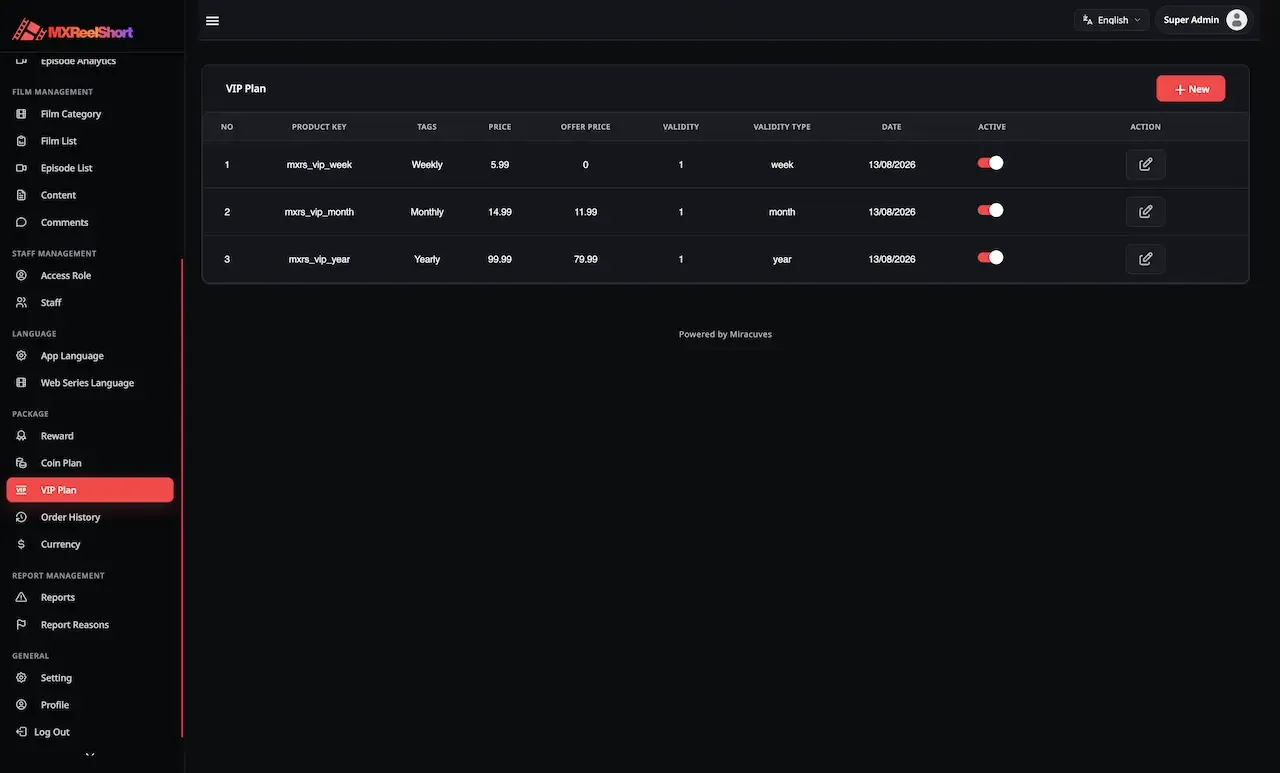
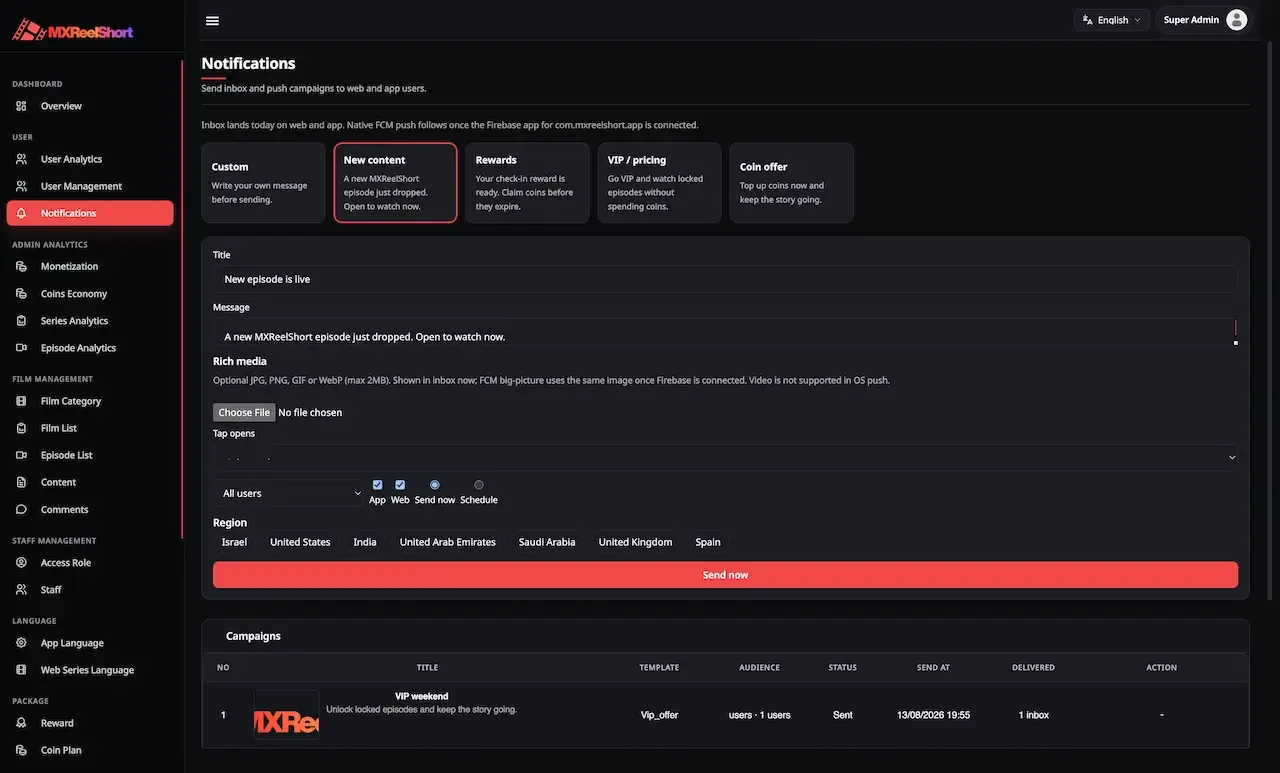
The demo is best used for catalog work: publish a title, reorder its episodes, watch the numbering and locks follow, then add a subtitle file and see it in the player. It carries our demo branding and a seed catalog of royalty-free stills, so judge the tools rather than the titles.
webuser@demo.comUser_$321admin@demo.comAdmin_$321webuser@demo.comUser_$32146 features across 4 roles. The first six of each role are here and the full list is one click away. Nothing is held back for a sales call.
Genre buckets contain titles and titles contain numbered episodes, mirroring how a drama library is actually organized.
Titles are typed, so a single film and a long series use the same catalog with the right behavior for each.
Poster and banner images attach to the title, with an option for an auto-animated hero on the front shelf.
Trending, coming soon and active switches decide where a title appears and whether it appears at all.
Promo material is published as episode zero, so it is ordered, targeted and hidden using the same tools as episodes.
Every episode has its own lock, independent of the free window, so a back catalog can be opened up selectively.
8 more Library operators features are in the full list.
An unreleased title shows on its own shelf with an announce date and stays off every other rail.
Search reads both title and plot text, with an optional genre filter on web and mobile.
Saved items are kept at the series level, and a resume point is remembered for each title.
Trailers are grouped by title in a discovery view that works as a cheap preview of the library.
Sequential playback with auto advance, a subtitle track, likes, comments, reports and sharing.
An episode can offer choices, and a Choice Pass option sits beside auto-unlock for the rest of a title.
5 more Viewers features are in the full list.
Date-bounded counts and charts for users and revenue, drawn from live operating data and not a nightly export.
Performance per series, so you can compare titles that sit in the same genre.
Performance per episode with roll-ups to the series, which shows exactly where viewers stop.
A breakdown of paid revenue across titles, which is the figure a rights holder asks for first.
A ranked list of the episodes viewers actually paid at, a guide to where production budget should go.
Coin and VIP purchases keep a record of each order for reconciliation against processor statements.
5 more Reporting features are in the full list.
Roles carry module and action grants, so editors, moderators and managers each work inside their own remit.
Menu entries a role has no claim to are removed from the sidebar.
Viewer reports use reasons you write, and a solved state notifies the reporter.
Hide a comment or block a user directly from the console.
Choose local disk, AWS S3 or DigitalOcean Spaces for media, from eight supported providers.
The first bytes of every artwork, video and subtitle upload are read, and disguised files are discarded.
4 more Staff features are in the full list.
The path through the product, in the order it happens for the people using it.
Decide how your stories and chapters become categories, titles and numbered episodes, and where trailers and subtitles sit.
Create titles, upload episode video and artwork, attach subtitle files and set coin prices and locks.
Add region chips, set trending and coming soon switches and decide what leads each rail.
Viewers search, save a series, watch the free window and unlock later episodes by coin, ad or VIP pass.
Read revenue by series and episode, then reorder, reprice or relock titles without a release.
Every earning route built into the product you receive: how it works, who pays and where the operator earns.
| Revenue model | How it works | Who pays | How you earn |
|---|---|---|---|
| Episode coin sales | Coin price sits on each episode, so you can price a long library unevenly, with higher prices where the story pulls hardest. | Viewer | Coin spend recognized episode by episode across the library |
| Coin pack sales | Packs with bonus coins and an offer price are bought at hosted checkout or through store billing. | Viewer | Pack revenue after processor and store fees are deducted |
| VIP windows for bingers | A plan by validity window opens locked episodes for the viewer who consumes many titles in a short period. | Viewer | Plan income per window, with HD playback as a visible perk |
| Rewarded ads on back catalog | Viewers who will not pay watch a rewarded video to open an older episode, within a per-title daily cap. | Advertiser, through your ad network | Payout from the ad network for each finished reward view |
| Licensor reporting | Revenue by series and top episodes give licensors evidence of what their titles earned on your service. | Not applicable | Better terms in the next licensing negotiation |
| Coupons and redeem codes | Codes grant coins or VIP days, useful when launching a new title or partnering with another publisher. | Operator, as a promotional cost | New viewers entering a title they then pay to continue |
| White-label licensing | Branding and plans are settings, so a library can be sold onward to another operator on the same codebase. | Licensed operator | Licence income negotiated outside the platform |
| Catalog import | Partner API import stocks the shelves with licensed titles that then earn through the normal unlock routes. | Viewer | Revenue from a larger library without manual uploading |
The flow of money, the gateways you can connect and how payouts are handled.
In a library business the money story is simple on the way in and detailed on the way out. Coin packs and plans are bought through the gateways you enable, spending is recorded against episodes, and revenue is then reported by series. That last step matters when a licensor expects a statement. Merchant accounts belong to you, and we connect them to the gateway switches during delivery.
| Gateway | What it covers |
|---|---|
| Card | |
| PayPlus | Hosted checkout where the processor takes the card, so card numbers are not stored in your database. |
| Stripe | Server-side confirmation with the processor before coins or VIP days are credited. |
| Regional | |
| Razorpay | Regional gateway, confirmed on the server in the same way. |
| Flutterwave | An additional regional switch managed in the console. |
| Other | |
| Google Play billing | Store billing for in-app coin purchases where store rules require it. |
You operate the platform, so legal compliance in each market you serve is yours. This is the tooling that ships in the product. It is not legal advice.
A deep library multiplies rights questions. Region chips and dated licence windows apply what you enter, so record each title territories and dates from the contract at the moment you publish. Signed expiring playback links with geo rules add file-level enforcement. You remain responsible for what you stream in every market.
A library usually has several editors uploading files. Every upload is read at the byte level and only image, video and subtitle families pass, so a renamed executable or archive is discarded. Pair that with named roles so that only the editors who need upload access have it.
Viewers can report comments and episodes using reasons you define, and staff clear them from a queue that notifies the reporter once solved. Comments can be hidden and users blocked. Decide response times and escalation before launch, particularly for titles with sensitive themes.
Hosted checkout takes cards on the processor side, so card numbers do not reach your database. Card and regional purchases are confirmed on the server before coins are credited. Allow time for merchant approvals, since a library earns nothing until at least one rail is live.
Account export, anonymization and permanent deletion are available from the console, which supports access and erasure requests. Publish your own privacy and terms pages through the content editor. The rules that apply depend on your markets, and we do not give legal advice.
The product documentation names items to close with you, among them stronger password hashing, request rate limiting and wider enforcement of staff permissions. Ask for the security reference and agree a list before go-live. We set these up with you and confirm the scope at kickoff.
Hosted checkout keeps card entry on the processor, so card numbers are not written to your database on that path.
A persistent audit log, request throttling and processor-side verification for some gateways are scoped additions. Raise them before go-live.
The layers of the product as delivered. You receive the full source code for every one of them.
| Layer | Built with | Hosting note |
|---|---|---|
| Operator console | Next.js 14, Redux, ApexCharts | A Next.js 14 application used by editors, moderators and managers. |
| API | Node.js, Express, Mongoose | Node.js and Express under PM2 behind nginx, with indexed queries for shelves and search. |
| Database | MongoDB, indexed on active titles and release date | MongoDB holding categories, titles, numbered episodes, wallets and the ledger. |
| Consumer web app | Vite, React, React Router | A static React build served directly by the proxy. |
| Store app | Flutter, GetX (iOS and Android) | |
| Media storage | Local disk, AWS S3 or DigitalOcean Spaces | Local disk, AWS S3 or DigitalOcean Spaces, one active, among eight supported providers.A CDN in front of the bucket is your deployment decision, and bandwidth grows with the audience. |
| Encoding | Files you upload are served as they are, and we can set up a transcoding pipeline around the platform. | |
| Scheduled work | Midnight ad counter resets and minute-by-minute campaign dispatch run inside the API process. | |
A large library is mostly files, so storage and delivery matter more than the application servers. The platform separates the two: the API handles records and wallet logic, while media sits in object storage you choose, ideally behind a CDN you add. That split lets the library grow without moving the application.
Large libraries rarely arrive in a tidy format. The product has no built-in bulk loader, so the route you choose depends on how your titles are held today. This table sets out the paths, what each involves and where effort lands, so you can estimate the work before you commit to a launch date.
| Where titles come from | How they get in | What to prepare |
|---|---|---|
| A handful of finished titles | Publish by hand through the console forms, with artwork, episodes and subtitles. | Videos encoded and named in order, plus a poster, banner and trailer for each title. |
| A large library of files | A migration we run that loads titles and episodes, with scope confirmed with us. | A spreadsheet of titles, episode order, prices and territories, and files in a consistent format. |
| Written stories or chapters | Decide how chapters map to episodes, then produce and publish the video episodes. | A numbering convention and a plan for artwork, trailers and subtitles per title. |
| Licensed partner feeds | The paid import module loads titles from partner APIs on a schedule. | Partner credentials, a source priority and the field mapping and import defaults. |
| Another platform being replaced | A scoped migration of titles, plus a plan for viewers who already paid. | An export of titles and entitlements, and a decision on how to honor existing unlocks. |
| Files in different formats | Encode before upload, or add the streaming module that uses an encoding service. | A target format and an encoding service on your own account. |
| Seasons of one story | Model each season as its own title, or scope a season level above the episode. | A decision on whether viewers should see one title or several. |
A library is only as valuable as the rights behind it, and licensors will ask how those rights are enforced and reported. The points below describe what the product does, what we set up around the platform and what stays your responsibility, so you can answer a licensor honestly and early.
A large catalog changes how you think about pricing and billing. Coin price sits on each episode, so an opener can be free, a middle episode cheap and a finale priced properly. Older titles can carry lower prices or rely on rewarded ads under a per-title daily cap, while new releases earn through coins. That uneven approach is the main commercial advantage of putting price on the episode and not on a plan.
Billing needs a plain look before launch. Sales that happen in a browser checkout sit outside the store rules. Inside a store app, digital goods such as coins generally fall under the store billing rules, with exceptions that vary by region and change over time. Google Play billing and Apple in-app purchase are both delivered, and each coin pack carries a store product key. Read the current policy of each store, and take advice for your market.
One fixed price for the ready-made platform, published here so you can plan before you talk to us.
Ready-made, one-time
$3,999
Live in 6 working days from kickoff
The engineers who deploy your platform stay with it once it is live.
Need more? We tailor the platform to your plan, typically in 2-8 weeks, and confirm the scope with you before work starts. App store review times are set by Apple and Google.
Everything here is available around the ready-made MoboReels clone. We confirm the scope with you before any price is agreed.
Fills the library from licensed partner APIs on a schedule, with imported titles behaving like any other series in unlocks and analytics.
Confirm with usAdaptive bitrate playback for weaker networks, with encoding on Mux or Cloudflare Stream under your account.
Confirm with usA licence step for catalogs whose rights holders demand it, using your Widevine or FairPlay vendor.
Confirm with usAudience polls that decide which title returns for a new season, with extra votes for VIP members.
Confirm with usPer-country prices and currencies for coin, VIP and Premium plans, charged on the server.
Confirm with usSeasons are modelled as separate titles today. We can build a native season container for your build.
Confirm with usWe can set up both if the library needs personalized shelves or in-house encoding.
Confirm with usA library platform is judged by how it handles titles, so this matrix starts with catalog work and then covers the commerce around it. Most of the platform ships ready, and the rest is set up around your plan.
Three levels of library structure, with artwork and behavior flags on each title.
A title can be flagged as a single film or as a numbered series.
Promo material lives inside the title and is published and targeted like any episode.
Reordering renumbers the episodes and reapplies locks, so paid unlocks are not stranded.
Price is a field on the episode, so a library can be priced unevenly.
Both VTT and SRT files are accepted and shown as a track in the player.
Territory targeting is applied in the same query that builds each shelf.
A title publishes and retires on schedule to match a rights agreement.
Banner, trending, new, coming soon and category rails are assembled by hand.
Search covers titles and plot text, with an optional genre filter.
Performance at both levels, revenue by series and a ranked list of top episodes.
Three routes at the lock, with a per-title daily cap on rewarded ads.
Reward coins and purchased coins are tracked apart, with expiry on rewards only.
Media can sit on local disk, an object storage bucket or DigitalOcean Spaces.
Uploads are judged by file signature, so a renamed executable is discarded.
A demo login browses the whole console while the server refuses every write.
The iOS app is delivered with Apple in-app purchase, set up with you during delivery.
We set up an import that fills the catalog from licensed partner APIs on a schedule.
We set this up with an encoding service on your own account.
We add a stream license step for catalogs whose licensors require it.
Large libraries are loaded by a migration we scope with you and confirm at kickoff.
A multi-season library is modeled as separate titles today; we can build a season level for you.
Four pages go deeper on the questions buyers ask most about the MoboReels Clone. This page stays the overview.
Drama platforms are usually sold on the player, yet operators spend their days in the library: publishing a title, numbering episodes, setting prices, fixing mistakes after release and showing a licensor what a series earned.
See the full breakdownFor a library business the software is a small share of what you spend.
See exact pricingA library-led operator earns in a particular order.
See the playbookAny studio can show you a player.
Compare optionsFrom kickoff to a live MoboReels clone under your brand: what we do each day, and what we need from you.
1Day 1
2Day 2
3Day 3
4Day 4
5Day 5
6Day 6
For a library business the price of the software is dwarfed by the cost of the library. Rights, encoding, subtitling and storage grow with every title, while the platform cost stays fixed. That makes the important question which route lets you add titles cheaply and show what each earned. A generic video script stores files but knows nothing about numbered episodes, locks or series revenue, and a custom build must create that model before it publishes anything. The table compares what each route requires from you once the library is large.
| Factor | Build from scratch | Rent a SaaS | Own it with GetFame |
|---|---|---|---|
| Episode numbering | Designed and tested by your team | Depends on the vendor content model | Numbered episodes with reorder and relock |
| Subtitles and trailers | Built as separate subsystems | Often limited formats | VTT and SRT per episode, trailer as episode zero |
| Rights reporting | Needs custom analytics | Basic exports at best | Revenue by series and top revenue episodes |
| Territory control | A rights model to design | Basic or absent | Region chips plus licence windows entered by your team |
| Factor | Build from scratch | Rent a SaaS | Own it with GetFame |
|---|---|---|---|
| Growth in library size | Depends on your architecture | May change your plan or fees | Object storage and a CDN you control |
| Ownership | Yours | Held by the vendor | Full source and your own MongoDB |
Running costs. Running costs fall outside the platform price: hosting and bandwidth, a CDN, processor and store fees, encoding and subtitle production, staff to publish and moderate, and above all the licences for the titles themselves. The platform has no per-title charge, so growth in titles costs you storage and rights, not software fees.
Most of a library platform is unglamorous work that is easy to underestimate. Numbered episodes, safe reorders, subtitle handling and rights reports each take longer than they look. Here is how each module compares when built from scratch and when it comes ready-made.
Build it yourselfA data model for categories, titles and episodes, with artwork, flags and forms for non-developers to use.
Ready-madeThree library levels with artwork and flags, managed from console screens.
Build it yourselfRenumbering that keeps locks and paid entitlements correct, tested against titles that already have viewers.
Ready-madeDrag reorder renumbers and relocks the episodes in a single action.
Build it yourselfFormat support, storage per episode, a language label and consistent rendering in two clients.
Ready-madeVTT and SRT files attach per episode and appear as a track in web and mobile.
Build it yourselfA parallel media library for promos, with its own ordering and targeting rules.
Ready-madeThe trailer is episode zero, so it is published and targeted like any other episode.
Build it yourselfConditions applied everywhere a list is built, so an unlicensed title never leaks onto a shelf.
Ready-madeRegion chips are applied inside the same query that builds rails.
Build it yourselfExports rebuilt by hand each quarter, with revenue split by title and episode.
Ready-madeSeries and episode analytics with top revenue episodes are produced from live data.
Build it yourselfPrice rules attached to plans, which makes uneven pricing across a large library awkward.
Ready-madeCoin price is a field on each episode, so pricing can vary freely.
Build it yourselfFile type checks that do not trust extensions, plus rules for who may upload what.
Ready-madeUploads are inspected by file signature, and permissions limit who can edit.
Build it yourselfRole design so editors, moderators and finance see different parts of the console.
Ready-madeNamed roles with grants by module and action, and a role-filtered sidebar.
Build it yourselfA cross-platform build, store accounts and review cycles to manage.
Ready-madeA Flutter build for the stores, with publishing help during delivery.
MoboReels is commonly grouped with vertical drama apps that pair a broad library with free viewing and paid unlocks. This comparison describes that general library-led model, and it makes no claims about any company internal systems.
| Aspect | The MoboReels model | This platform |
|---|---|---|
| Library control | The app owner decides what is added and when | You publish titles and episodes from your own console |
| Free and paid mix | Free viewing alongside ads and paid unlocks is common | Free window, rewarded ads, coins and VIP, all settings |
| Episode handling | Handled by the owner production pipeline | Numbered, priced and reordered by your editors |
| Rights holder reports | Internal to the company | Revenue by series and top episodes you can show a licensor |
| Territory rules | Set by the owner deals | Region chips and licence windows you enter |
| Audience | Belongs to the brand app | Viewers sign up under your name and domain |
| Source access | Not offered | Full source code yours to modify |
The founders and teams this product fits most directly, one line each. The launch ideas that follow turn these audiences into a first-week plan.
Turn a written back catalog into vertical episodes with artwork, trailers and subtitles in one console.
Run a storefront and library engine for owned series, with episode-level pricing.
Use series and episode analytics to see which titles in a deep back library earn.
Target each title to its territories and bring per-series revenue to renewal talks.
Run separate branded services, each with its own database, domains and store binary.
Where a library comes from decides which tools matter most. These ideas describe who owns the titles, how viewers pay and which console setting to touch before publishing anything, so that the first catalog is clean and the first reports are usable.
A publisher with written stories adapts them into vertical episodes. The audience pays per episode as the story hooks them. Decide how a chapter becomes an episode first, then publish titles with a trailer, artwork and subtitle file attached. Start with a small set so the numbering conventions are settled before the library grows.
A production company releases new titles regularly and re-cuts earlier ones. Reorder that renumbers and relocks makes re-cutting a routine console action. Configure the free window and episode prices first, and use the series reports to decide what to produce next.
A rights holder distributes licensed titles in chosen territories and must prove performance at renewal. Configure region chips and license windows before anything goes live. Use the read-only demo login to show licensors the console, and series reports to show which episodes earned.
An operator fills the catalog from several partners and wants imported titles to behave like any other. The paid import module loads titles on a schedule, with source priority and field mapping set during delivery. Configure defaults for price and lock first, so imported episodes arrive consistently.
An owner of older titles wants them to earn again without a heavy launch. Rewarded ads under a per-title cap suit viewers who will not pay for older stories, while coins serve the rest. Configure caps per title first, and price older episodes lower than new ones.
A distributor runs several branded services from one library or licenses branded copies to partners. Each brand wants its own name, languages and prices. Configure branding and plans per deployment first, and agree who holds the merchant and store accounts for each brand.
Anyone who owns or licenses a catalog has more choices than a clone script. Each option below handles the library in a different way, and each is described in general terms. The right choice depends on whether your priority is control, speed or the viewer relationship.
Distribution apps such as ReelShort
Rights holders who want reach and prefer licensing titles over running a service.
You do not own the audience, the pricing rules or the viewer data.
Developer video platform
Teams with engineers who want to build their own app on top of hosted video.
Wallet, unlock rules and episode numbering still have to be built.
Hosted video SaaS
Creators selling monthly access to a catalog on a hosted site.
Plan-based access rarely supports per-episode coins or rewarded unlocks.
Open-source video platform
Communities wanting a self-hosted, federated video site with no payments model.
No coin wallet, episode locks or rights reporting, so drama commerce is custom work.
Bespoke development
Operators with unusual catalog rules and a calendar to specify them.
Library tooling consumes much of the project before any viewer arrives.
A white-label library platform suits an operator whose advantage is the catalog and who needs the tools to run it. You own the code, the console and the viewer relationship, and you set episode prices and territory rules yourself. You also carry the editorial and rights work, and loading a large library is a migration project.
Longer answers to the questions buyers of this model ask before they commit.
If your stories exist as chapters, scripts or long videos, the first job is to decide where one episode ends and the next begins. Vertical drama works on short, hooked segments, so cut at moments that pull the viewer on, not at natural chapter breaks. Write the episode map in a spreadsheet before touching the console.
Then build in order of strength. Publish your best five or ten titles first, each with a poster, a banner, a trailer as episode zero and subtitles, and hold the weaker titles back until the shelves are working. A small library that feels finished beats a large one with missing artwork and blank subtitle tracks.
Keep the numbering rules consistent across titles. Because reordering renumbers and relocks episodes, you can fix mistakes later, but a consistent habit saves time. Decide how many episodes are free, which are priced higher and which are held back for VIP before uploading, so locks are right the first time.
Subtitles are not decoration in a library service. Many viewers watch without sound, so a well timed subtitle track affects whether they reach the lock at all. Store one file per language per episode, in VTT or SRT, and have a native speaker check timing against the vertical frame, where lines wrap sooner.
Trailers do the selling for titles the viewer has not started. Because a trailer lives as episode zero inside the title, you can region target it and hide it like any other episode. Keep trailers short and end them on an unresolved moment, then check the For You view to see how the shelf reads.
Review both at the same time you review pricing. A title with weak subtitles and a flat trailer will underperform at any price, and the series analytics will show a pattern of viewers leaving early. Fix the presentation before you cut the coin price.
Licensors usually ask the same questions: what did my titles earn, which episodes drove it and how many people watched. The console answers the first two directly, with revenue by series and a ranked list of top revenue episodes, so you can reply from the screen and not from a rebuilt export.
Agree the reporting period and the figures with each licensor before the first title goes live. If a contract expects numbers the platform does not record, you want to learn that now, while it is still a configuration or tailoring question. Order history gives you the underlying purchases for reconciliation.
Use the view-only demo operator when you pitch a new licensor. It lets them browse the same screens your team uses while the server refuses writes, which is a stronger demonstration of transparency than a slide.
A deep library gives you something a single series cannot: old titles that still deserve viewers. Rewarded ads are a natural fit for them. A viewer who will never buy a coin can still open an older episode by watching a video, and that attention has value for you through your ad network.
Keep new releases and cliffhangers on coins and VIP, where the intent to pay is strongest, and let ads carry the back catalog. The per-title daily cap keeps ads from replacing purchases, so start tight and loosen it once ad income and coin income appear as separate lines in the analytics.
Remember that live ad revenue comes from the store app through AdMob with your own unit IDs. The web app ad unlock is a simulated preview. If most of your audience is on the web, weigh that before you plan income around ads.
Projects and comments as published by our parent company, Miracuves, with the release notes as printed there.
The episode reorder was the feature we did not know to ask for. We re-cut two titles after launch and nothing about the numbering or the locks had to be fixed by hand.
We came from a written catalog, so what mattered was how fast a title becomes numbered episodes with artwork and a trailer. That is a console job here rather than a developer job.
Series and episode analytics are what we put in front of rights holders. Before this we were exporting collections and rebuilding the same spreadsheet every quarter.
The demo console sold it. Handing a prospect a live admin login that physically cannot write anything is not something our previous vendor could do.
v2026.4Sep 2026
v2026.3Sep 2026
v2026.2Sep 2026
v2026.1Sep 2026
The ready-made white-label platform costs $3,999 one time and launches on your server in about 6 working days. What moves the figure is the library: how many titles need ingesting, the state of artwork and subtitle files, how many territories your region chips must express, and store publishing scope. Tailored work takes between 2 and 8 weeks.
You publish titles and episodes through the console, uploading video, artwork and subtitles and setting prices and locks. We map how your stories and chapters become categories, titles and episodes during onboarding. We can also set up an import that pulls titles from licensed partner APIs, with scope confirmed with us.
Not as a separate entity today. Titles hold numbered episodes, and a multi-season library is modeled as separate titles. A season container above the episode level is a scoped schema extension, so ask us during planning if your catalog needs it.
Dragging an episode to a new position renumbers the whole title and reapplies the locks afterwards. That keeps the numbering consistent across the web app, the mobile app and the console, so re-cutting a series after launch does not need a manual data repair.
VTT and SRT files are accepted, with the language and format recorded per episode, and they render as a track in the vertical player on web and mobile. Episodes can also carry selectable audio tracks, and the series language catalog is kept separate from interface text.
We can set up both. Rails are composed by operators from the catalog, and files are served as you upload them. We add adaptive streaming through Mux or Cloudflare Stream and DRM, connected to your own accounts, and recommendations or transcoding can be tailored for your build. Scope is confirmed with us at kickoff.
Yes. An episode can be opened with coins, a rewarded ad or a VIP pass. Rewarded ads work through AdMob on the store app with your own units. On the web app the ad unlock is a simulated preview, so it does not earn ad revenue there.
Yes. The console, API with its Mongoose models, web app, Flutter app, seed script and deployment configuration all transfer to you. There is no per-seat fee and no revenue share, and the database is standard MongoDB, so nothing proprietary needs unwinding later.
You launch under your own brand with a catalog you own or license. The software uses common micro drama patterns and contains no code, design or content from any existing app. We are not affiliated with MoboReels. Rights and compliance in your markets are your responsibility, and this is not legal advice.
Operators model a second season as a separate title and link it through shelves and naming. If you need a true season structure with grouped episodes and shared locks, we build it for you, confirm the scope with you and typically deliver in 2 to 8 weeks.
The platform serves the files you upload, so encode to a consistent vertical format before upload. We can also set up adaptive bitrate playback using Mux or Cloudflare Stream on your own account, and a transcoding pipeline around the platform, with scope confirmed with us.
VTT and SRT files are accepted and stored against a single episode with the language and format recorded. The player renders them as a track on both the web app and the store app. A separate series language catalog keeps content languages apart from interface language.
Shelves are composed by the operator from banner, trending, new release, coming soon and category rails, and the For You view groups trailers by title. We can add personalized recommendation for your build. Series and episode analytics help you decide which titles to promote.
Manual publishing through the console works for steady uploads. For bulk stocking, the Content Import module pulls licensed titles from partner APIs on a schedule, with field mapping and defaults configured during delivery. We set it up for your build, and the licences for imported titles remain your responsibility.
Unlock records are tied to the viewer and the episode, and reordering renumbers the run and reapplies locks. People who already opened an episode keep access to it. Test a reorder on a staging title before you re-cut a popular series, and tell your team about the change.
Yes. The demo operator login can browse the console and the server refuses every write, so a licensor can inspect catalog tools and analytics safely. It is enforced by the server and not just hidden in the interface, which makes it suitable for partner meetings.
The platform is single tenant, so each brand is its own deployment with its own database, domains and store binary. Several brands can share a content source through the Import module or through your own pipeline. Licensing the platform onward to another operator is possible because you own the code.
The name is easy to confuse with unrelated results such as game modifications and app download pages, and we make no claims about any brand of that name. On this page it stands for a short drama library platform: titles cut into numbered vertical episodes that viewers open with coins, a pass or a rewarded ad.
A generic video CMS stores and plays files. This product adds the commerce around a drama catalog: a wallet, per-episode locks and prices, a reorder that keeps paid unlocks intact, territory rules and reports by series and episode. The extra work is in the commerce and the library tools, not in the player.
A large library is moved by a migration we scope with you. We also set up an import that loads titles from licensed partner APIs on a schedule. Prepare a spreadsheet of titles, order, prices and territories, and consistent files, to keep the migration short.
A multi-season library is modeled as separate titles today, which many operators find clear enough for reporting. If your catalog needs a season level above the episode, we can build it and confirm the scope with you. Because you own the source, the change can be made by our team or yours.
Both VTT and SRT files are accepted. The file is stored with its language and format recorded against the episode, and it appears as a track in the vertical player on the web app and the store build. Interface language and subtitle language are independent, so a viewer can mix them.
We can set up both. Files are played as stored, so encode them before upload, or we add adaptive streaming that uses an encoding service on your own account. Shelves are composed by hand today, and we can build a recommendation feature on the data you collect.
Use layers and be honest with licensors. Territory rules and license windows control where a title appears, uploads are inspected, and release builds block screenshots. We set up DRM and adaptive streaming for catalogs that require them. No control stops every copier, so agree expectations and takedown handling in the contract.
Not for sales on your own website. Inside a store app, digital goods like coins generally fall under the store billing rules, with exceptions that vary by region and change over time. Google Play billing and Apple in-app purchase are both delivered. Check current store policy before setting prices.
The reorder renumbers the episodes and reapplies the locks in one action, and the trailer stays as episode zero. The design intent is that re-cutting becomes routine console work instead of repairing data by hand. Test a reorder on a copy of a title before using it on a live one.
The platform is single tenant by design, so each brand is its own deployment with its own branding, languages and prices. Several deployments can be loaded from the same set of titles. Agree early who holds the merchant and store accounts for each brand, because those belong to the brand owner.
→Start here
Share the platform and your market. You get a walkthrough of the live demo, the exact scope of what ships, and a fixed price in writing. First response in under 2 hours, Monday to Saturday, 10:00 to 19:00 IST.
This page uses the name MoboReels to describe a type of platform. The product sold here is separate software, built independently, and MoboReels has no part in it.
"MoboReels clone" is industry shorthand that founders use when searching for software with a comparable business model. It names a category of product, not a copy of MoboReels.
The platform is an original product designed and written by Miracuves. It contains no code, design, graphics or content originating from the MoboReels website or applications, and it ships under your own brand.
MoboReels and its logos are trademarks of their respective owner and are named here for reference only. GetFame is not affiliated with, sponsored by or endorsed by MoboReels. Rights holders can write to legal@miracuves.com.
Operator responsibility. The operator of a launched platform is responsible for legal compliance in the markets it serves. Nothing on this page is legal advice.Read the full disclaimer
First response under 2 hours, Mon-Sat 10:00-19:00 IST
India+91 98300 09649 United States+1 516 202 3950