
DramaBox Clone Business Model: One Catalog Earning in Many Markets
The expensive part of short drama is the catalog, and a catalog costs the same whether one country watches it or ten. That single fact is the strongest argument for a multi-market design. This page explains how the model works across countries, which levers behave differently by market, and what to open first.
- 5
- interface locales shipped
- 3
- ways to open an episode
- None
- revenue share to us
On this page11 sections
- The idea: pay for the story once, sell it in every language
- How each market can pay you
- The DramaBox Clone, on screen
- How the DramaBox model works, in general terms
- Opening markets in a sensible order
- Three ways to run a cross-border drama service
- Cross-border mistakes that cost money
- What to switch on first
- Try the live DramaBox Clone demo
- DramaBox Clone business model FAQs
- Explore the DramaBox Clone
The idea: pay for the story once, sell it in every language
Producing or licensing a series is the largest expense in the business, and it is incurred before any viewer arrives. Adding subtitles or an alternate audio track afterward costs far less than the original spend. Each extra language therefore adds audience against content you have already paid for, which is why a multi-market design improves the economics of the whole catalog. A series that took a season to commission can open in a new country with a translated lock screen and a subtitle file.
What does not transfer between countries is price sensitivity and payment habits. A coin price that feels trivial in one market feels steep in another, card use varies, and some audiences prefer a pass while others prefer to watch an ad. The same levers exist everywhere, but the values you set in them should be allowed to differ. A launch that copies the home prices exactly often sees the paywall work in one country and bounce viewers in another, which looks like a content problem and is really a pricing one.
So the operating question is less about which model to run and more about how finely you can tune it by market. Per-episode prices, a global free window, a currency catalog and gateway switches give you room to adjust without a release, and territory controls keep the catalog inside the rights you hold. Treat each later market as a small experiment rather than a copy, and let what the first one taught you set the starting values for the next.
How each market can pay you
The streams are the same in every country, but their weight differs by audience. Each is separate in the platform and written to a typed ledger, so you can compare a stream across markets.
Coin packs
Viewers buy bundles of coins through hosted checkout, with bonus coins and an offer price you set. The viewer pays when the story reaches a lock. This stream is the most sensitive to local price expectations, so test pack sizes market by market rather than copying one price list worldwide.
VIP windows
A plan with a validity window opens locked episodes while it lasts. It suits heavy viewers and tends to steady revenue once a market matures. The plan price is collected at each purchase and renewal, and the plan length is a setting, so you can offer shorter windows where commitment is harder to win.
Rewarded ads
A viewer without coins watches a rewarded unit to open one episode, under a daily cap per title. The advertiser pays through your ad network account. Where card payments are rare, this route may carry more of the load, and it runs live through the store app. Think of it as a market-entry tool: in a region with little card use it may be how most first episodes get paid for, while in a card-friendly market it settles into a side line next to coins.
Episode pricing
Coin price is a field on every episode, so one title can be priced differently in how it is positioned across your catalog. A back catalog can be discounted without touching new releases. Because the price field is global, adapt market differences through packs and plans or ask us about regional pricing.
Rewards for retention
A seven day check-in ladder, quests, follow bonuses and referrals pay out in coins you issue. They are not income, but they bring viewers back when a story is at its best. Reward values are settings, so a generous ladder in a new market can be tightened once it has done its job.
Territory licensing
With region chips and dated license windows, you can sell exclusive or limited rights to a country partner, or hand a configured deployment to a local operator. The licensee pays you under terms you negotiate. Nothing is owed to us, and your content licenses define what you can pass on.
The DramaBox Clone, on screen
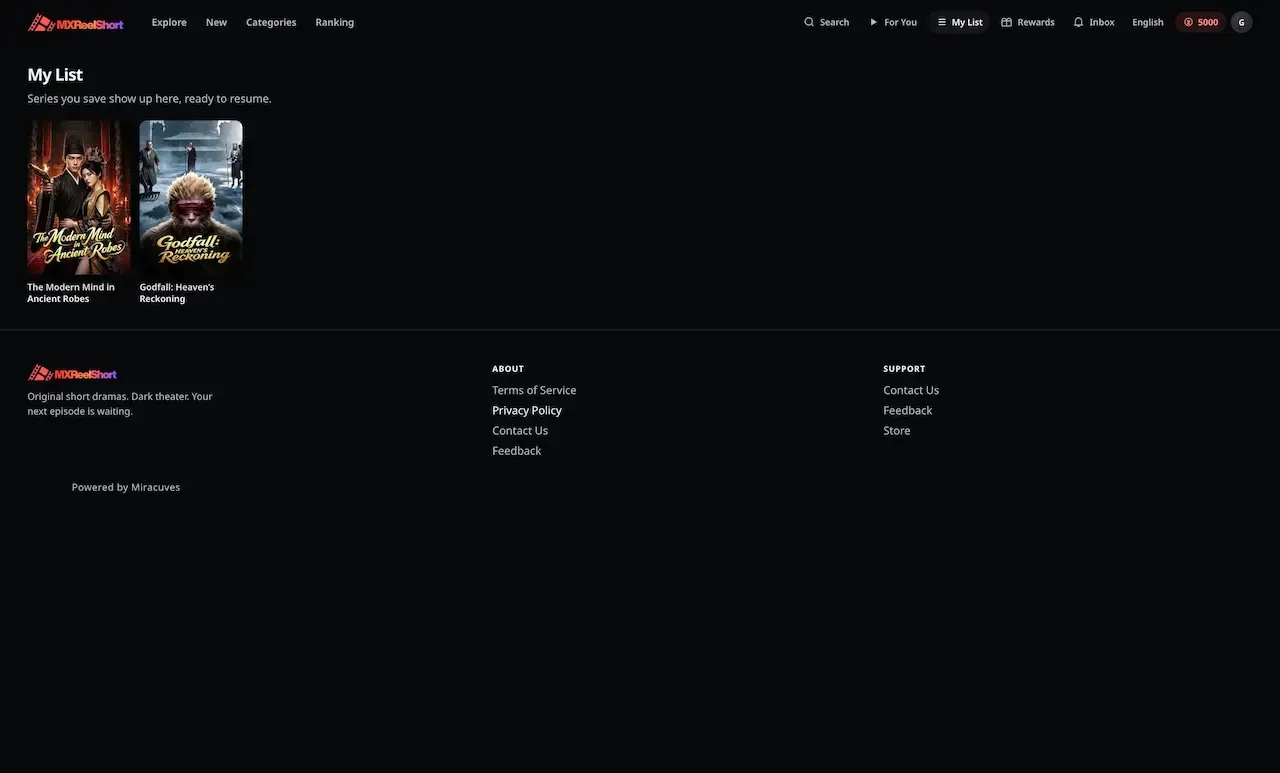
Real screens from the working product. Your platform ships rebranded with your name, logo and colors.
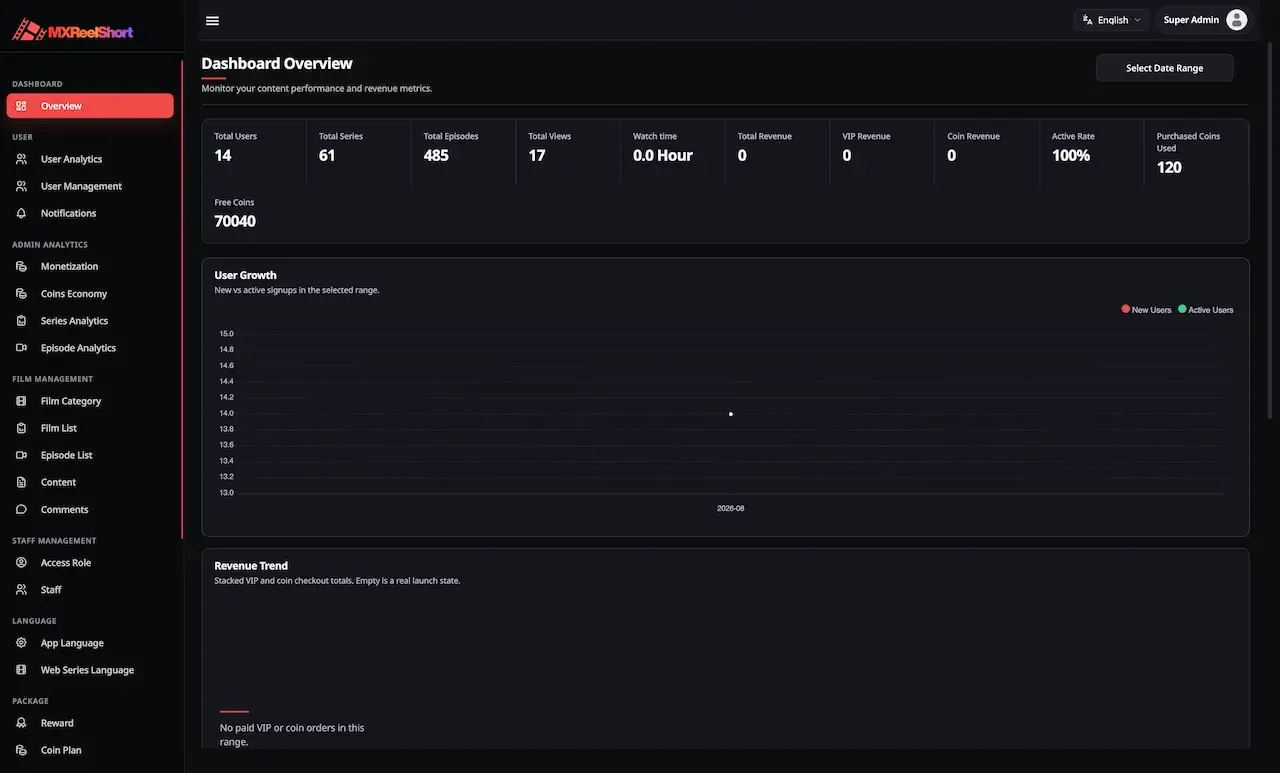
Admin panel 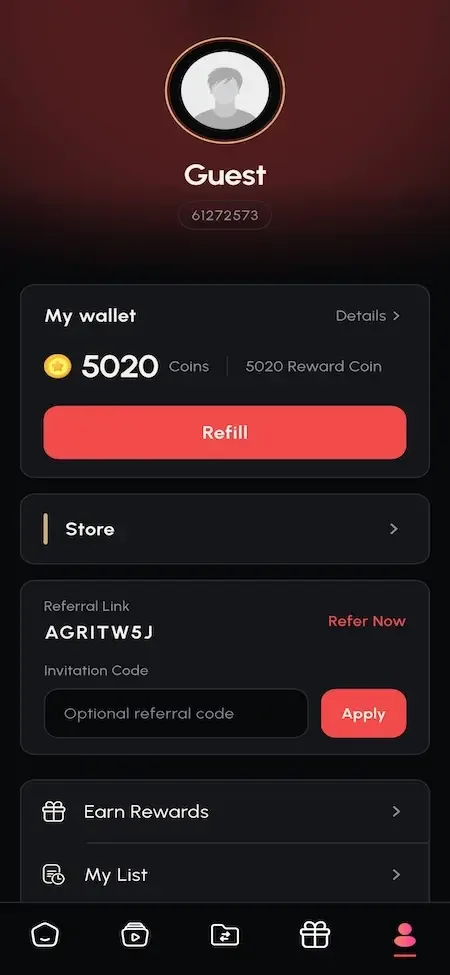
User app 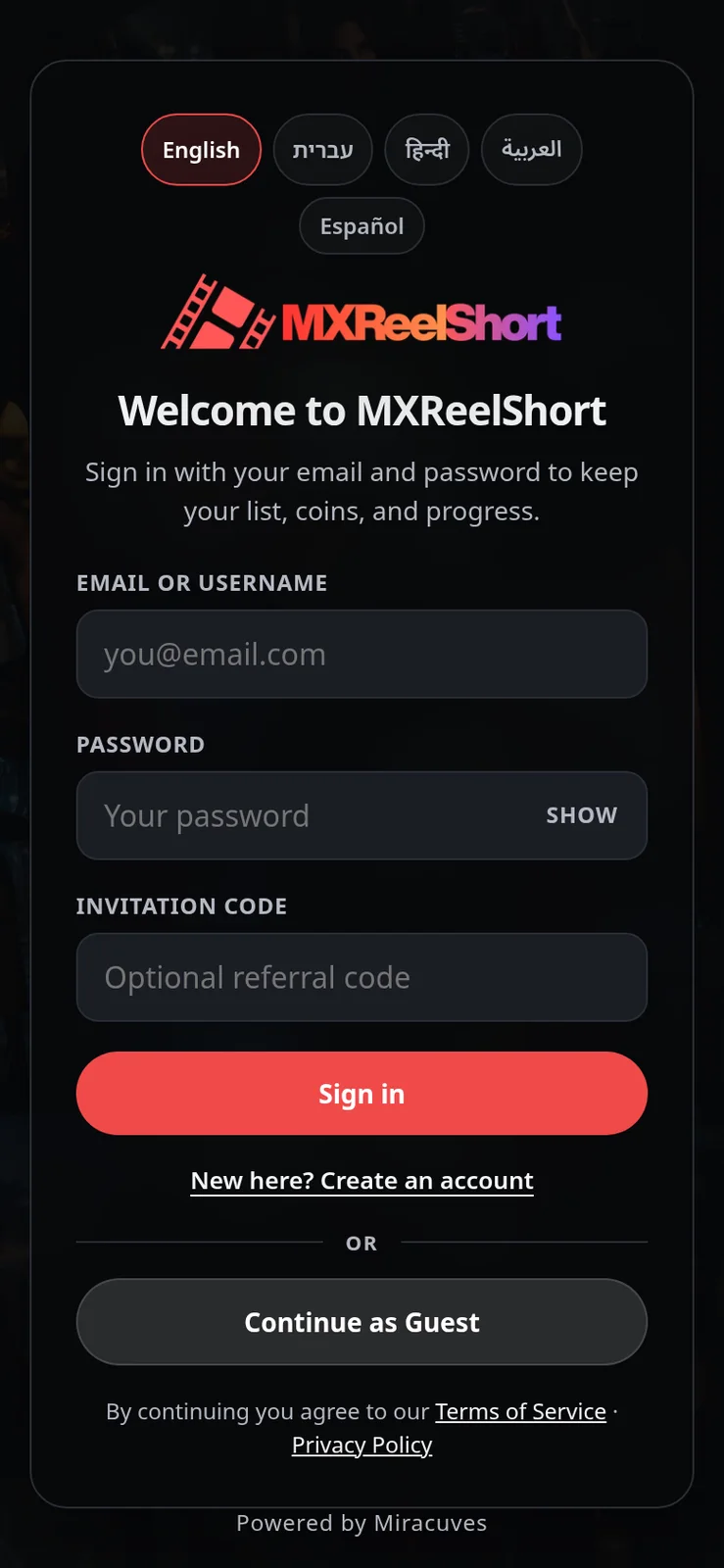
Web app 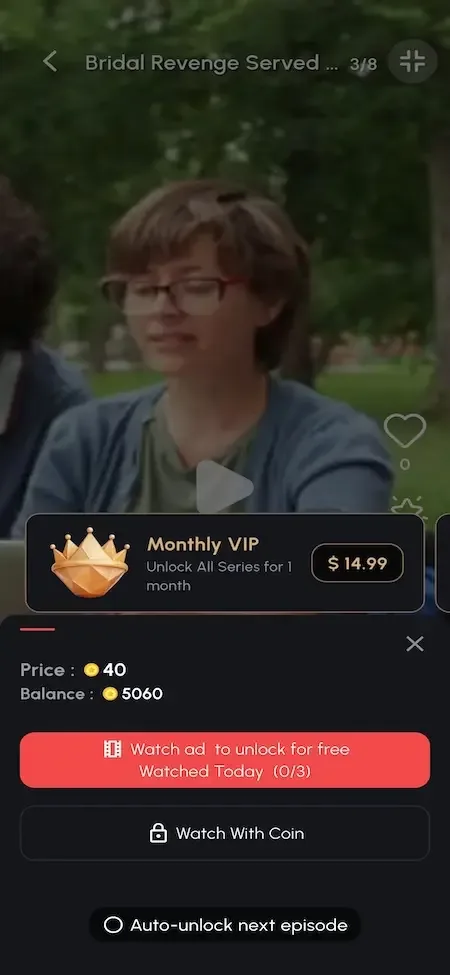
User app 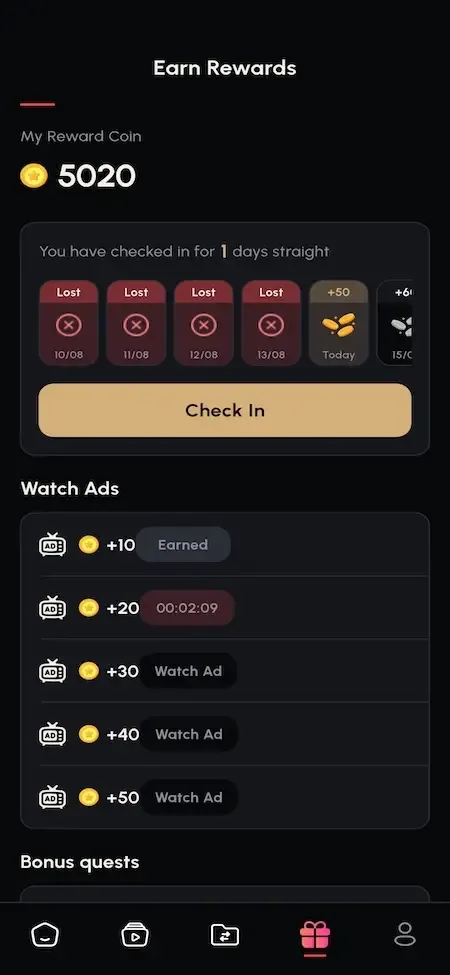
User app
How the DramaBox model works, in general terms
DramaBox is widely known as a short drama app that reaches viewers in many countries and presents series in the language each audience reads. Early episodes are typically free, with later ones opened by coins, and viewers can also take a pass or earn rewards. A large part of its appeal is that a story can be offered in several languages.
These are public, general facts only. We make no claim about the company figures or its internal choices. For an operator, the instructive part is the structure: one body of drama presented in many languages, prices set to local expectations, and several ways to pay. The software supports the structure, and the dramas and their rights come from you.
Opening markets in a sensible order
Opening every country at once spreads your attention and your budget too thinly. This order follows how the mechanics interact, and it is a judgment, not a promise. Your catalog and audiences will change it.
| Stage | Lever to use | Why |
|---|---|---|
| First market | A free window and a few coin packs | You need a clean baseline for conversion before other markets complicate the picture |
| Second market | The same catalog with a new locale and its own pack prices | It tests whether content already paid for earns again at modest extra cost |
| Low-card markets | Rewarded ads on the store app, kept capped | Viewers who rarely pay by card can still be worth something to you |
| Mature markets | VIP windows by validity length | Heavy viewers appear and a pass suits them better than counting coins |
| Several markets | Regional pricing and territory licensing | Different price lists and partner deals become worth the added setup |
Three ways to run a cross-border drama service
The same code supports different businesses. Which you are changes the settings you use most and the people you need to hire in each country.
One brand, many languages
A single brand and storefront serves every country, with the interface switched by language. This keeps marketing and support simple and suits operators whose catalog is the draw. Locale wording, mirrored layouts and the territory rules on each title do the work, and one store listing can be localized per country.
Local brands from one library
A group runs a different branded app for each region, all fed by one catalog and one body of source code. Each brand has its own name, plans and domain, and can feel local to its audience. The cost is more store listings and more marketing, in return for stronger local identity.
Regional licensing partner
An operator licenses a configured deployment to partners in other countries, each running its own service under its own brand. The partners pay under negotiated terms. The valuable assets are the source code, a stable configuration and a documented handover process. Each partner usually wants its own locale defaults and gateway, so agree early who answers viewer questions and who holds the merchant accounts, because that split decides whether the arrangement stays tidy.
Cross-border mistakes that cost money
Most of these come from assuming that a second country behaves like the first. Each has a setting or a habit that avoids it.
Copying one price list everywhere
A coin pack that converts in one market can be too expensive in the next. Test pack sizes and bonuses per market, and consider regional pricing once volumes justify it. Treat the first price list as a hypothesis, not a decision.
Translating the menu but not the paywall
Viewers decide at the lock screen, so that wording does the selling. A literal translation can sound cold or pushy. Have a native reader review the lock, the wallet and the checkout text, and use the console to adjust them as you learn.
Launching titles you cannot serve
A series licensed for one country must not appear in another. Enter region chips and license windows before the title goes live, and keep contracts and settings aligned. Fixing an accidental release is harder than preventing one.
Skipping local payment habits
Cards are not the default everywhere. If your gateway does not support the rail your viewers trust, conversion drops regardless of price. Choose the gateway for each market before you promote it, and start merchant approval early.
Ignoring support in the viewer language
Wallet questions and reports arrive in many languages. Without a way to answer, small issues become public complaints. Decide who handles each market before opening it, even if that is a part-time vendor. A one-person team reading reports in a language they do not speak will either miss problems or hide behind a translator's delay, so name the person, the language and the response time you promise.
What to switch on first
Begin with one market, the free window and a simple price list. Set the default locale, check the mirrored layout if the market reads right to left, and confirm the currency and gateway are right for that audience. A small set of strong titles with cleared rights is better than a wide, uneven library. Resist switching every lever on at once; one market with one tender configured correctly teaches you more than three markets half set up.
Once the first market shows a stable pattern, copy the catalog into the next language rather than the next idea. Change the locale, adjust packs and the lock wording, and compare series reports between markets. Add passes and ads after you can see coin income clearly, so each new lever has something to be measured against.
Try the live DramaBox Clone demo
The demo shows the language side of the product best: a viewer app on the web and on Android, and a view-only operator console. It carries our demo branding and a seed catalog of royalty-free stills, so judge the layouts, wallet and settings screens rather than the titles.
-
Viewer web app
Open the Viewer web app demo- Login
webuser@demo.com- Password
User_$321
Worth trying
- Switch the interface to Arabic and watch the layout mirror
- Compare the same catalog under another interface language
- Open the wallet and the coin packs screen
- Hit a locked episode and read the three choices
-
Operator console
Open the Operator console demo- Login
admin@demo.com- Password
Admin_$321
Worth trying
- Find the app language editor and read the wording keys
- Look at the currency list and the default for checkout
- Open a title and read its region and language fields
- Try an edit and see the view-only role refuse it
-
Android viewer app
Open the Android viewer app demo- Login
webuser@demo.com- Password
User_$321
Worth trying
- Change the app language and note which screens mirror
- Watch an episode with its subtitle track on
- Open the quests tab and the referral screen
- Check the wallet history in the other language
DramaBox Clone business model FAQs
Does the platform split revenue by country?
User analytics carry a country filter, and revenue reports run by series, by episode and by ledger code. That lets you compare markets using your own data. Detailed financial reporting by country, such as tax treatment, is a matter for your accounting systems, which can use the order and ledger records as inputs.
Can I run different free windows in different markets?
The free window is a single global setting today. Per-title and per-episode prices are fields you can vary, and that is where market adaptation usually happens. A free window that differs by country would be a small custom change, which we would scope with you after understanding the markets involved. Until then, you can place the lock later in a series that is aimed at a more price-sensitive audience.
How do ads fit into countries with low card use?
Rewarded ads give viewers who cannot or will not pay a way to open episodes, and they earn through your ad network account in the store app. They work best as a supplement with a tight daily cap per title, so they do not displace coin sales from viewers who would have paid.
Do I need a legal entity in each country?
That depends on each market and on how you collect payments, which is a question for a local adviser. The platform does not require one, and we do not give legal advice. Think about tax, consumer rules and content regulations for each country before you promote it, and set policy pages in the console.
Can a local partner run its own version?
Yes. Because you own the source and run it on your own servers, you can deploy a configured copy for a partner under their brand. Terms are between you and the partner, and your content licenses decide what may be passed on. No part of that arrangement involves a share to us.
What results should I expect from a second language?
We make no forecasts, since outcomes depend on the titles, the audience, price points and marketing. What we can say is that a second language adds audience against content you already own. The reports let you compare the same series in two markets and judge whether the extra effort paid off. Give the experiment a fixed period and a clear question, such as whether completion past the first lock improved.
Explore the DramaBox Clone
The overview and its companion pages answer the main questions in turn. Pick the one you need next.
-
DramaBox Clone
The overview: live demo, screens, price and everything in the box.
Back to the overview -
Features
Most short drama software handles one language and treats every other as a translation job added later.
See the full breakdown -
Development cost
Serving several countries changes the budget less in software than in content, language work and payments.
See exact pricing -
Development company
Anyone can promise a multilingual app, and few can show right-to-left layouts working in a wallet screen or territory rules attached to a title.
Compare options
→Start here
Tell us what you want to launch.
Share the platform and your market. You get a walkthrough of the live demo, the exact scope of what ships, and a fixed price in writing. First response in under 2 hours, Monday to Saturday, 10:00 to 19:00 IST.
Trademark and independence notice
This page uses the name DramaBox to describe a type of platform. The product sold here is separate software, built independently, and DramaBox has no part in it.
Why this name
"DramaBox clone" is industry shorthand that founders use when searching for software with a comparable business model. It names a category of product, not a copy of DramaBox.
Who built this
The platform is an original product designed and written by Miracuves. It contains no code, design, graphics or content originating from the DramaBox website or applications, and it ships under your own brand.
Trademarks
DramaBox and its logos are trademarks of their respective owner and are named here for reference only. GetFame is not affiliated with, sponsored by or endorsed by DramaBox. Rights holders can write to legal@miracuves.com.
Operator responsibility. The operator of a launched platform is responsible for legal compliance in the markets it serves. Nothing on this page is legal advice.Read the full disclaimer