
DramaBox Clone Development Cost for a Multi-Market Launch
Serving several countries changes the budget less in software than in content, language work and payments. This page states the platform price, shows where a multi-market plan adds cost, and lists the monthly bills that grow with each country you open, so the plan covers more than the first launch.
- $3,999
- one-time platform price
- 5
- locales already included
- None
- fee per market opened
On this page11 sections
- The platform price and what it does not cover
- Three routes to a multilingual drama service
- Inside the one-time price
- What raises the figure on a global plan
- The six-day DramaBox Clone launch, day by day
- The DramaBox Clone, on screen
- Costs that grow with every country
- Why there is no charge per market
- Try the live DramaBox Clone demo
- DramaBox Clone cost FAQs
- Explore the DramaBox Clone
The platform price and what it does not cover
The platform costs $3,999 once. That payment covers the viewer web app, the Flutter app, the operator console and the API, deployed to your server under your brand, with full source code. Five interface locales are already built in, so opening a second or third language does not add a software charge from us. In practice the same payment covers a launch in one country and an expansion into several, so the first market and the fourth cost the same on the software side.
What it does not cover is the work around languages. Translating your wording, subtitling and dubbing the library, setting up merchant accounts for each country and complying with local rules are costs of the business, not of the software. We separate them here so you can plan realistic budgets for each market you add. A useful habit is a one-page budget per country with four lines: wording review, subtitles or dubbing, merchant onboarding and local advice.
Three routes to a multilingual drama service
A multi-market product exposes the weakness of a quick build quickly, because language, layout and currency touch every screen. This comparison stays qualitative, since the cost of building alone depends on team and region, and it highlights what each route does about those market demands.
| Aspect | Ready-made with GetFame | Custom build | Renting a SaaS |
|---|---|---|---|
| Upfront cost | $3,999 one-time | A large budget, open-ended until requirements settle | Low to begin, repeated every billing period |
| Adding a language | A console edit with five locales ready | Engineering work for each new locale | Limited to what the vendor has translated |
| Right-to-left markets | Mirrored layouts on all three clients | A retrofit unless specified at the start | Rarely supported across the vendor product |
| Time to launch | 6 working days from kickoff | Many months before wallet and console work | Fast to begin, then bound by the plan |
| Per-market fees | None from us | None, once the product is built | Pricing tiers that can rise with territories |
| Territory controls | Region chips and license windows included | Designed and tested by your engineers | Whatever the vendor allows |
| Who owns the build | Full source code and your own database | Yours, since you paid to build it | Audience and content sit with the vendor |
| Store apps | Flutter app under your listing | Built and maintained by your team | Sometimes a shared or vendor-branded app |
Inside the one-time price
Everything below is delivered for the platform price. Localization services, extra modules and tailored features are confirmed with us, so this is the list to hold other quotes against.
- Viewer web app with a language picker and mirrored layouts
- Flutter app for iOS and Android under your listing
- Operator console with the app language editor
- Five interface locales including Hebrew and Arabic
- Currency catalog with a checkout default
- Region chips and license windows on every title
- Coin packs, VIP plans and the rewards ladder
- Rebranding of logo, colors, names and store text
- Deployment to your own server and domains
- Connection of your gateway, storage and ad accounts
- Schema reference, API collection and developer handbook
- Help with app store submission
- Sixty days of technical support and one year of free updates
What raises the figure on a global plan
The standard setup suits operators whose markets share a pricing logic. These additions are typical for services that go further, and each is estimated from a short brief with no obligation to proceed.
Per-country price lists
If a coin pack must cost different amounts in different countries, the regional pricing module adds local prices and currencies per plan, charged through a supported gateway. Scope is confirmed with us, and testing time grows with each currency, so choose the markets that justify it.
Additional interface languages
Five locales ship. A sixth or seventh language, with its wording and layout checks, is something we set up. Right-to-left additions take more care than left-to-right ones. We estimate from the language and the screens involved, and your translators supply the wording itself. Mixed strings such as numbers inside Arabic sentences and price labels are where mirrored layouts most often break, so they get checked screen by screen, not from a spreadsheet.
Dubbed and subtitled series
The platform stores tracks and attaches them to episodes, but producing them is a content task. If you want our help with import scripts for large numbers of tracks, or a catalog language workflow suited to your pipeline, we set that up as tailored work.
Partner catalog import
Operators who license titles from partners with an API can add a scheduled import so series arrive in the console as normal titles. The cost depends on the partner format and how often content changes, and scope is confirmed with you after we have read their documentation.
Adaptive streaming and DRM
Viewers on weak connections benefit from adaptive bitrate playback, and some licensors require protected streams. Both are modules we set up that depend on your own accounts with a video or DRM vendor, so our scope and the vendor bills are separate lines. A sensible order is to launch without them, watch where viewers drop off on slow connections, and add the module only where that justifies it, unless a licensor makes protection mandatory.
Hardening before a new market
Opening in a country with strict privacy or security expectations may justify closing items from the hardening list first. The cost depends on how many items you choose and how your auditor reads them. We scope this with you before the market launches. Because the work attaches to the deployment you are about to open, a strict market can be planned separately from an easier one, so the hardening list does not have to hold back the whole expansion.
The six-day DramaBox Clone launch, day by day
Launch takes six working days from kickoff. This is who does what on each day, so the schedule has no surprises on either side.
| Day | What we do | What you do |
|---|---|---|
| Day 1Kickoff and market list | We confirm which locales and territories you open first, record gateway choices and collect your brand assets. | Share your launch markets, logo, colors and domain access. |
| Day 2Branding and locale setup | We apply your brand across all three clients and switch on the locales you need, with the default set. | Choose the default locale and review the wording for your paywall. |
| Day 3Currency and plans | We load your currency catalog, coin packs and VIP plans and set the free window for the first market. | Decide the currencies, pack sizes and plan lengths per territory. |
| Day 4Deployment and gateways | We deploy to your server, connect storage and the gateways you chose, and test a purchase end to end. | Provide server access and merchant keys for each enabled processor. |
| Day 5Territory tagging and checks | We help tag your first titles with region chips and windows and test mirrored layouts on web and mobile. | Deliver titles, artwork and subtitles along with their licensed territories. |
| Day 6Handover and publishing help | We hand over code and documents, train your staff on roles and the language editor, and begin app publishing support. | Open store accounts and approve the final build. |
The DramaBox Clone, on screen
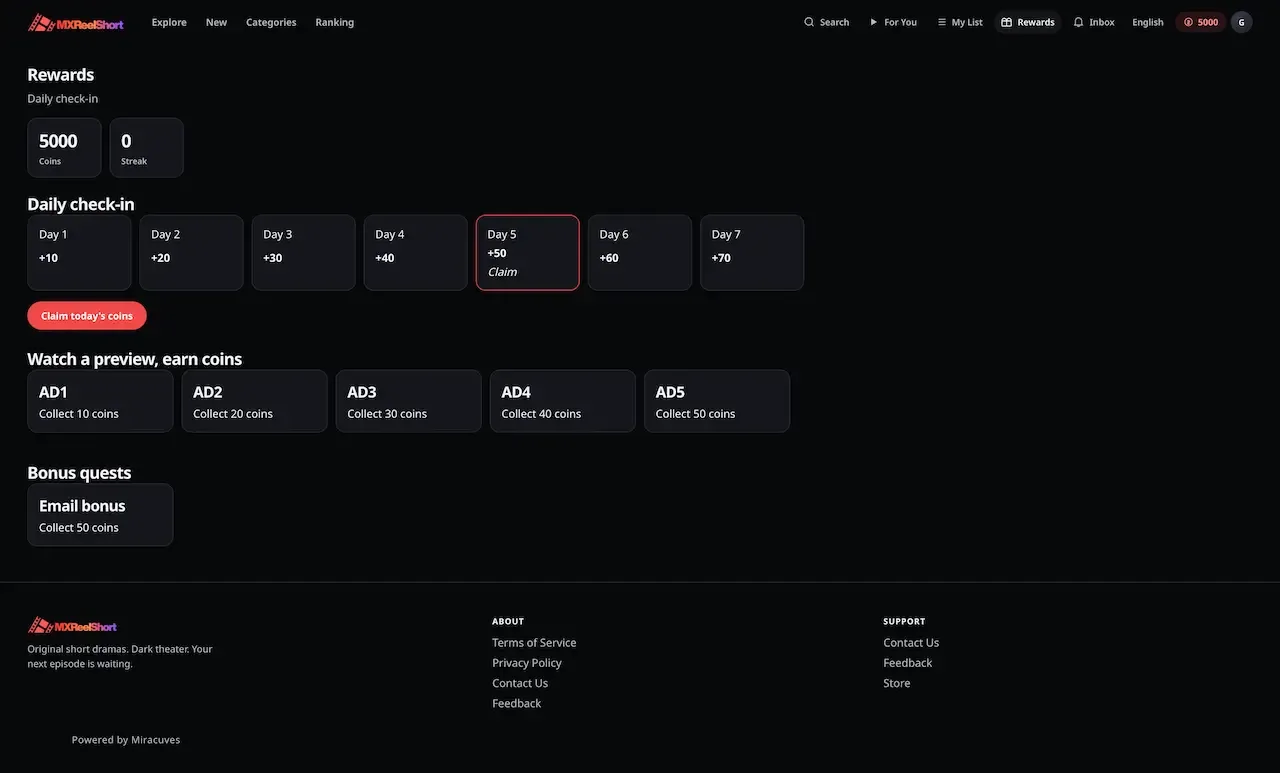
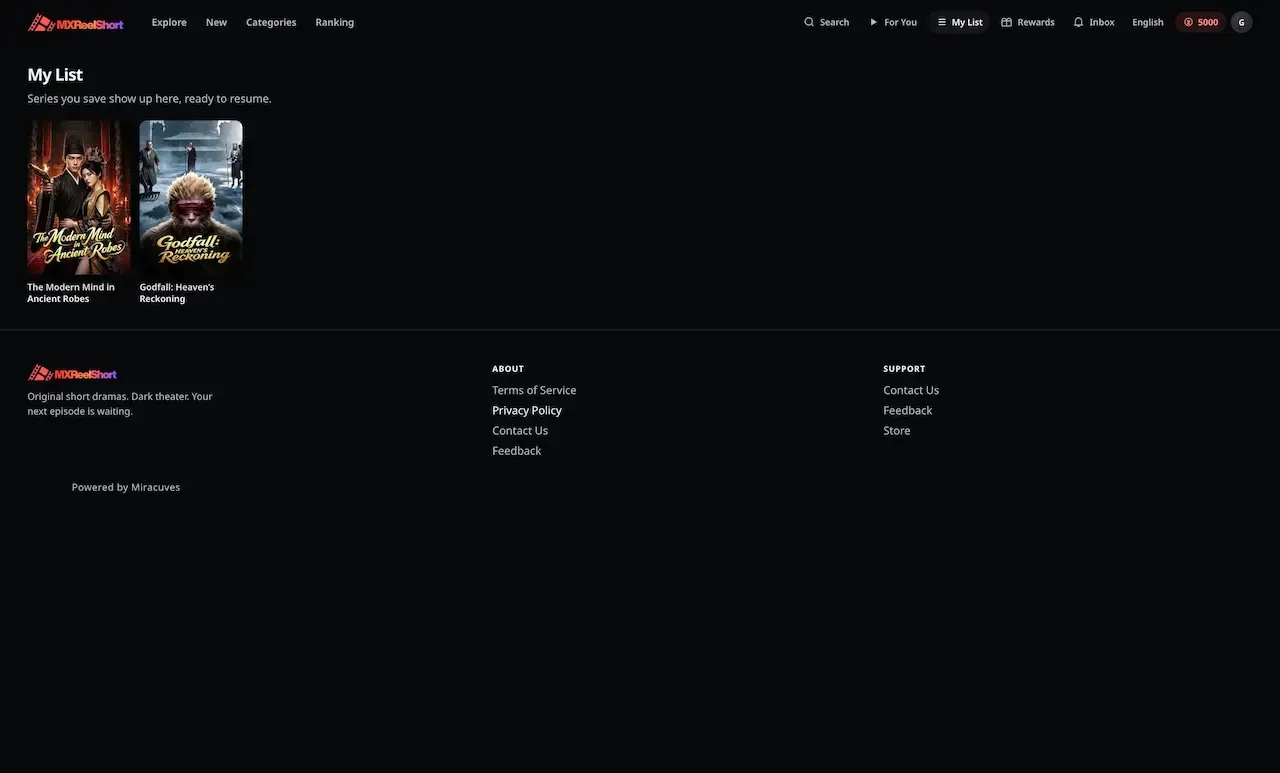
Real screens from the working product. Your platform ships rebranded with your name, logo and colors.
Web app 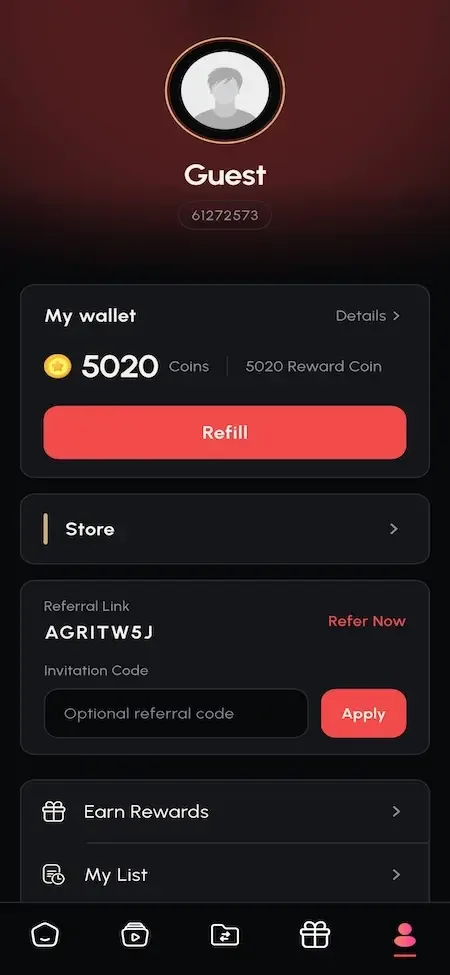
User app 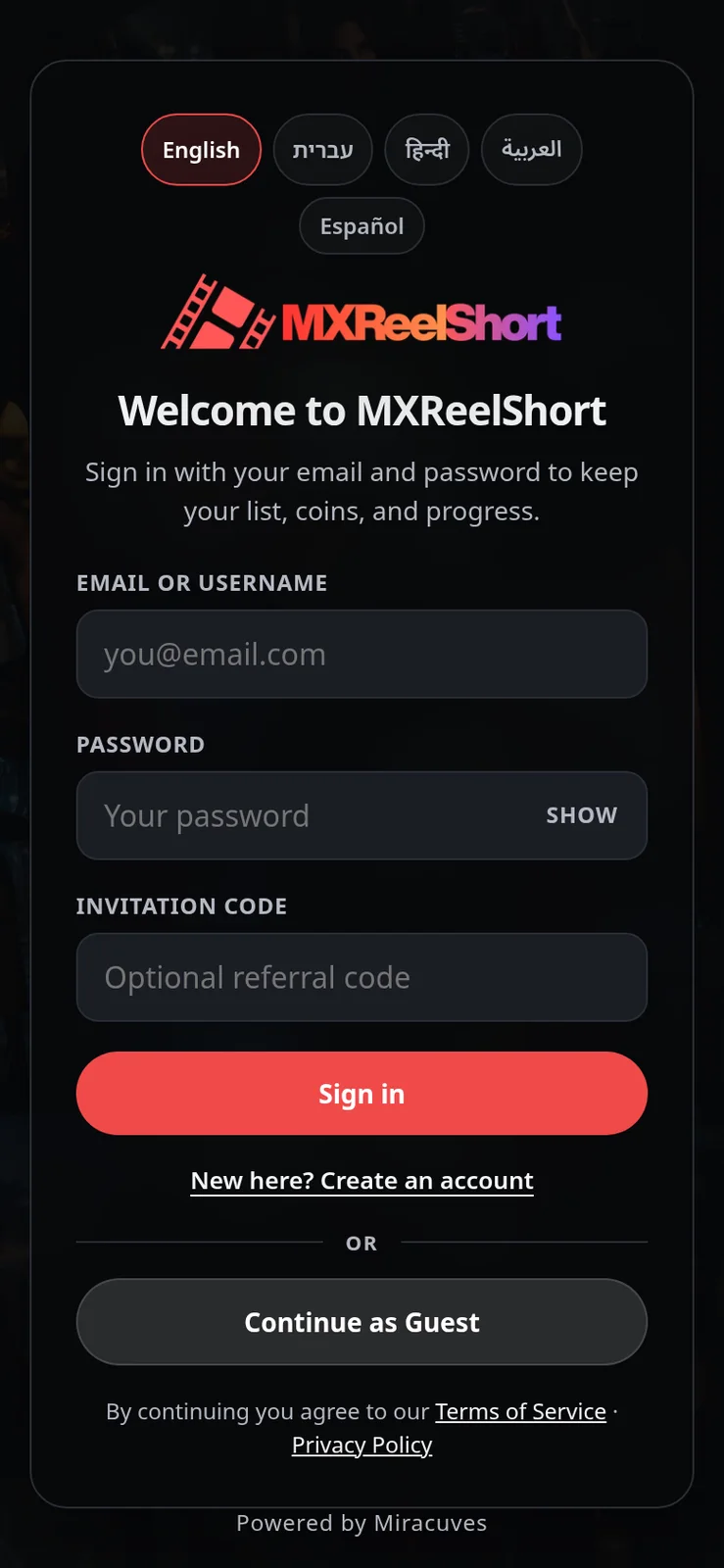
Web app 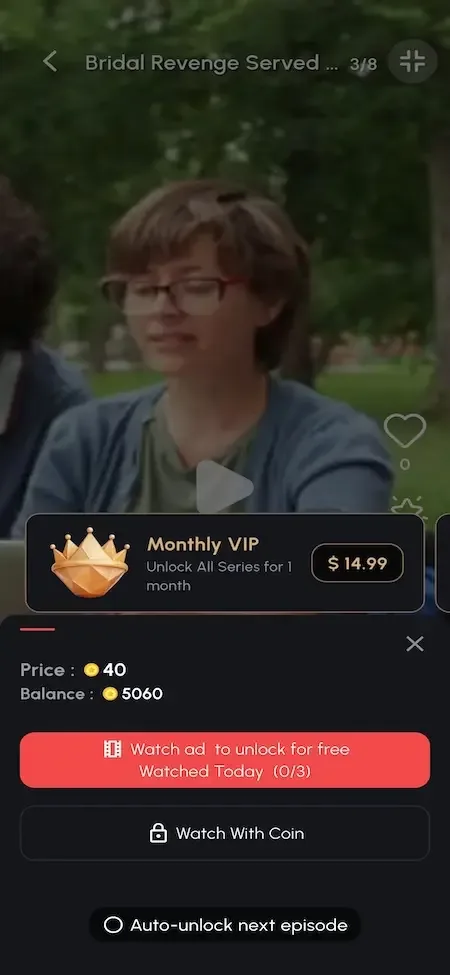
User app 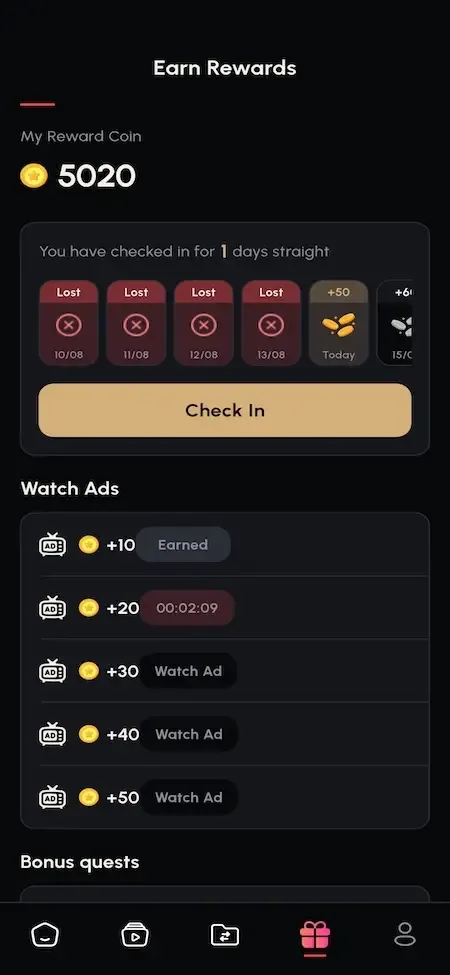
User app
Why there is no charge per market
The platform price does not rise with the number of countries, languages or currencies you use, because the software is the same in each. A per-market fee would reward us for your growth without any extra work on our side, and it would make your plan harder to budget. You pay once and open as many markets as your content and payments can support.
That commits us to a few things in return. The platform you saw in the demo is what we deploy for the listed price, the source code is yours, and anything tailored beyond what ships is confirmed in writing before work begins. Your support window and one year of updates cover every market you launch inside them.
Try the live DramaBox Clone demo
The demo shows the language side of the product best: a viewer app on the web and on Android, and a view-only operator console. It carries our demo branding and a seed catalog of royalty-free stills, so judge the layouts, wallet and settings screens rather than the titles.
-
Viewer web app
Open the Viewer web app demo- Login
webuser@demo.com- Password
User_$321
Worth trying
- Switch the interface to Arabic and watch the layout mirror
- Compare the same catalog under another interface language
- Open the wallet and the coin packs screen
- Hit a locked episode and read the three choices
-
Operator console
Open the Operator console demo- Login
admin@demo.com- Password
Admin_$321
Worth trying
- Find the app language editor and read the wording keys
- Look at the currency list and the default for checkout
- Open a title and read its region and language fields
- Try an edit and see the view-only role refuse it
-
Android viewer app
Open the Android viewer app demo- Login
webuser@demo.com- Password
User_$321
Worth trying
- Change the app language and note which screens mirror
- Watch an episode with its subtitle track on
- Open the quests tab and the referral screen
- Check the wallet history in the other language
DramaBox Clone cost FAQs
Does adding a language cost extra?
Not for the five that ship, since they are already part of the platform. Wording in those locales is edited in the console at no software cost. A sixth language or a new right-to-left layout is something we set up, with scope confirmed from the screens involved. Translation of the wording itself is a content cost paid to your translators, not to us.
Is regional pricing included?
A currency catalog with a checkout default is included. Different amounts per country come from the regional pricing module, which we set up and which needs a gateway able to charge each currency. If your markets have similar spending power, you may not need it at launch and can add it later.
Will my recurring costs rise with each country?
Your own costs will, though ours will not. Bandwidth, payment fees, translation, moderation and any local store or tax obligations tend to grow with each market. The platform price stays one-time with no fee per country, and there is no revenue share to us at any point. Keep a separate line in your plan for each country so you can see which markets pay for themselves and which are still being built.
How long does a multi-market launch take?
The platform itself is deployed in about six working days. Languages beyond the five shipped, local gateway approvals and content localization run on their own clocks. A phased plan works well: open the first market on day six, then add countries as translations, rights and merchant accounts are ready. Starting the merchant application for the second country while the first is still launching saves the most calendar time.
Can I move the platform to a server in another region?
Yes. It runs on standard Node services, MongoDB and a static web build, with storage you can repoint. Moving means copying the database and media and updating configuration. Hosting close to your main audience can improve playback, and nothing in the code ties it to our infrastructure. Plan the move for a quiet period, take a backup first, and test a purchase and an episode unlock afterward.
Are the store apps included for every language?
One Flutter build carries all five locales and serves every market, so you are not paying for separate apps. Localized store listings and screenshots are a publishing task per market. We help prepare the builds for submission, while accounts and review decisions remain with you and the stores.
Explore the DramaBox Clone
The overview and its companion pages answer the main questions in turn. Pick the one you need next.
-
DramaBox Clone
The overview: live demo, screens, price and everything in the box.
Back to the overview -
Features
Most short drama software handles one language and treats every other as a translation job added later.
See the full breakdown -
Business model
The expensive part of short drama is the catalog, and a catalog costs the same whether one country watches it or ten.
See the playbook -
Development company
Anyone can promise a multilingual app, and few can show right-to-left layouts working in a wallet screen or territory rules attached to a title.
Compare options
→Start here
Tell us what you want to launch.
Share the platform and your market. You get a walkthrough of the live demo, the exact scope of what ships, and a fixed price in writing. First response in under 2 hours, Monday to Saturday, 10:00 to 19:00 IST.
Trademark and independence notice
This page uses the name DramaBox to describe a type of platform. The product sold here is separate software, built independently, and DramaBox has no part in it.
Why this name
"DramaBox clone" is industry shorthand that founders use when searching for software with a comparable business model. It names a category of product, not a copy of DramaBox.
Who built this
The platform is an original product designed and written by Miracuves. It contains no code, design, graphics or content originating from the DramaBox website or applications, and it ships under your own brand.
Trademarks
DramaBox and its logos are trademarks of their respective owner and are named here for reference only. GetFame is not affiliated with, sponsored by or endorsed by DramaBox. Rights holders can write to legal@miracuves.com.
Operator responsibility. The operator of a launched platform is responsible for legal compliance in the markets it serves. Nothing on this page is legal advice.Read the full disclaimer