DramaBox Clone Development Company: Choosing a Partner for Many Markets
Anyone can promise a multilingual app, and few can show right-to-left layouts working in a wallet screen or territory rules attached to a title. This page lists what to ask a provider, how an agency, a freelancer and GetFame compare, and what we do not take on, so your shortlist rests on evidence.
- 6 days
- to a live platform
- 6,000+
- clients served
- 1 year
- of free updates
On this page10 sections
- What matters when your audience spans countries
- Agency, freelancer or GetFame for a multi-market build
- Questions to ask any provider about languages and markets
- The DramaBox Clone, on screen
- How we deliver a multi-language launch
- Warning signs when buying for many markets
- What we leave to you or to others
- Try the live DramaBox Clone demo
- DramaBox Clone development company FAQs
- Explore the DramaBox Clone
What matters when your audience spans countries
A provider for a global drama service must handle more than video. Ask how language, layout direction, currency and territory are stored, because these touch every screen and are costly to retrofit. A team that treats localization as a final step will deliver a product that works in one market and strains in the second. Ask for a demonstration in a right-to-left language and a currency other than the provider's own, on the mobile build and the console, and watch how long a wording change takes to appear.
Then check the ownership terms. A service that sells in several jurisdictions needs the freedom to change hosting, add gateways and respond to local rules. That means source code you hold, a documented data model and settings in a console. Be wary of any arrangement that ties your deployment or your audience to the provider. A quick test is to ask what you would do to move to another host next year; the answer should be a list of your own steps, not a request to them.
Agency, freelancer or GetFame for a multi-market build
The right route depends on how unusual your idea is. A bespoke agency suits a genuinely new product, a freelancer suits a narrow task, and a ready-made platform suits operators whose edge is the catalog and the markets rather than the software.
| Aspect | Agency | Freelancer | GetFame |
|---|---|---|---|
| Time to launch | Many months of discovery and build | Depends on one person availability | 6 working days to a branded deployment |
| Languages and RTL | Built to the brief, often as an extra | Frequently left out of scope | Five locales with mirrored Hebrew and Arabic |
| Territory rules | Designed if you specify them | Rarely considered | Region chips and license windows per title |
| Currency handling | A separate billing workstream | Usually one currency | Currency catalog with a checkout default |
| Cost shape | Large project budget with change requests | Lower fee, with risk shifted to you | One fixed price, tailored work confirmed up front |
| Source code | Normally yours, so check the contract | Sometimes limited or undocumented | Full source with documentation |
| After launch | Retainer or a fresh contract | Depends on availability | Sixty days support, one year of updates |
| Best fit for | Unusual products and heavy customization | Narrow additions to an existing system | Operators who want to enter markets quickly |
Questions to ask any provider about languages and markets
These questions test whether a provider has built for several markets before. Ask them in a live call and request a demonstration instead of a slide, then compare the answers across your shortlist.
Show me right-to-left in the wallet
Ask to see Arabic or Hebrew on the wallet, the lock screen and the console, not on a brochure site. A mirrored layout that stops at the home screen means the rest will be a retrofit. A good answer includes a live device and a list of any screens that remain unmirrored.
Who edits the app wording?
The answer should be you, from a console, without a release. If every text change needs a developer and a store submission, your paywall copy will lag behind what you learn. Ask how missing strings are handled and what a viewer sees while a translation is incomplete.
How is the language of a series stored?
A series language, a subtitle track and an interface language are three different things. Ask whether the provider keeps them apart, since a viewer may read in one language and watch in another. A merged model produces a confusing catalog and makes dubbing awkward.
How do you enforce territory rules?
Request an example of a title restricted to certain countries, with dates that open and close it. Ask what happens at the end of a window and whether the title disappears everywhere or only where it should. Rights administration is a core need for any licensed catalog.
Where is the unlock decided?
Ownership of an episode should be recorded on the server and read by every client. If each app decides separately, the web and mobile versions will eventually disagree about what a viewer paid for, and that bug multiplies across markets.
Can I see what is unfinished?
Ask for a written list of anything simulated, partial or still on a backlog, including partly translated strings or demo-only behaviors. A provider who has no list has either not looked or will not tell you, and either way you inherit the risk.
What do I own at handover?
You should receive the full source for every client, the data model, the deployment configuration and documentation, with freedom to host where you like. Ask also whether any module is obfuscated and whether a license server can switch your service off.
How do you handle rights and takedowns?
A trustworthy provider is clear that content is your responsibility. Ask how they would help you act on a takedown request in one country without disturbing others. The software should make that a console edit, not a development task. A good answer also covers who on your team can do it and how the change is recorded, since a licensor or regulator may later ask when a title was withdrawn.
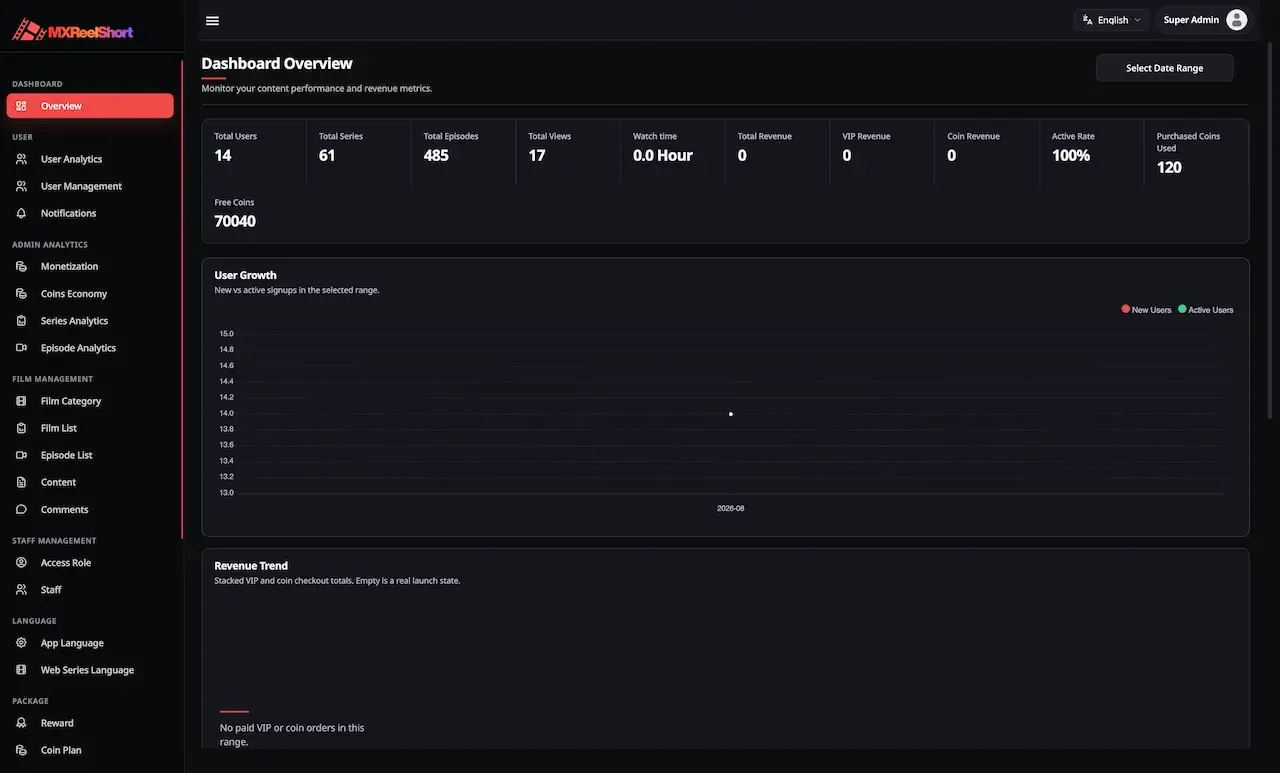
The DramaBox Clone, on screen
Real screens from the working product. Your platform ships rebranded with your name, logo and colors.
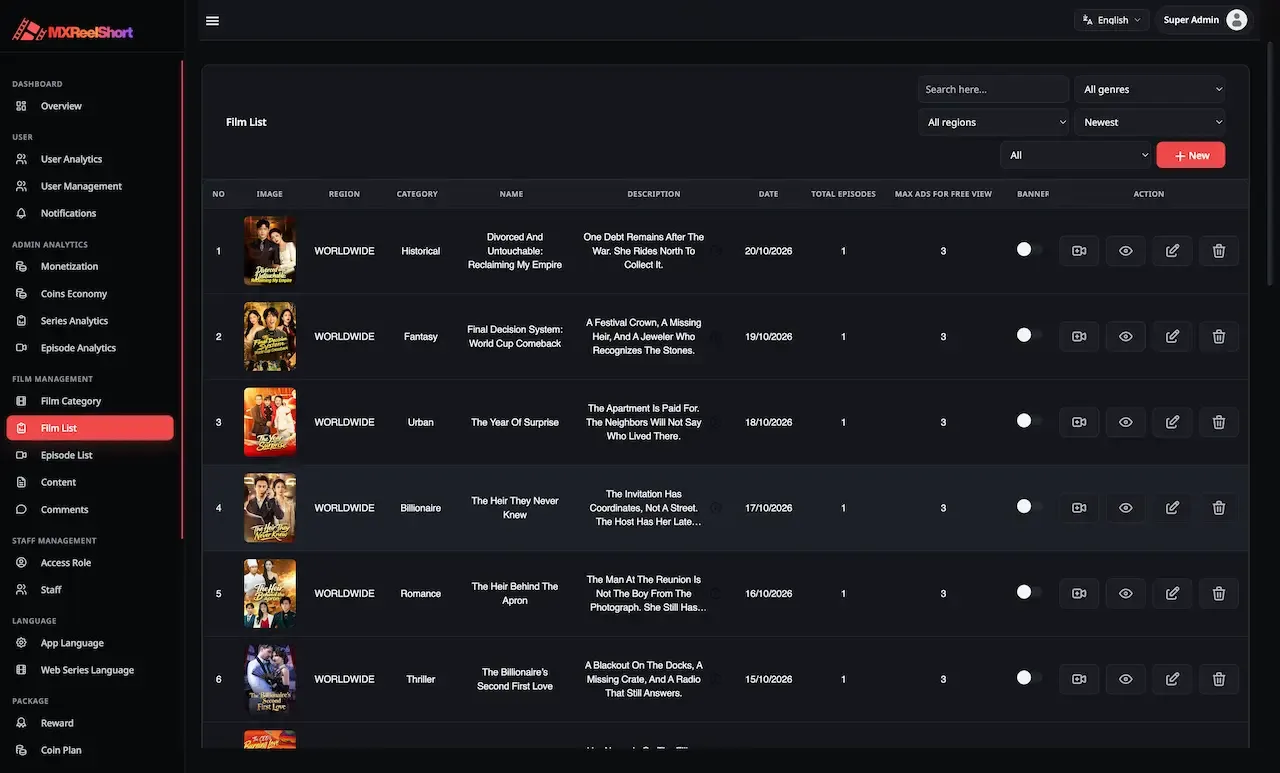
Admin panel 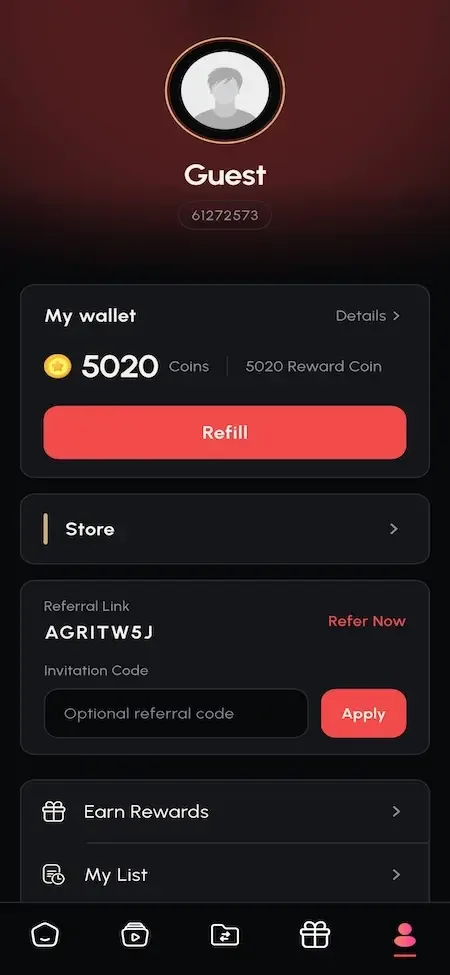
User app 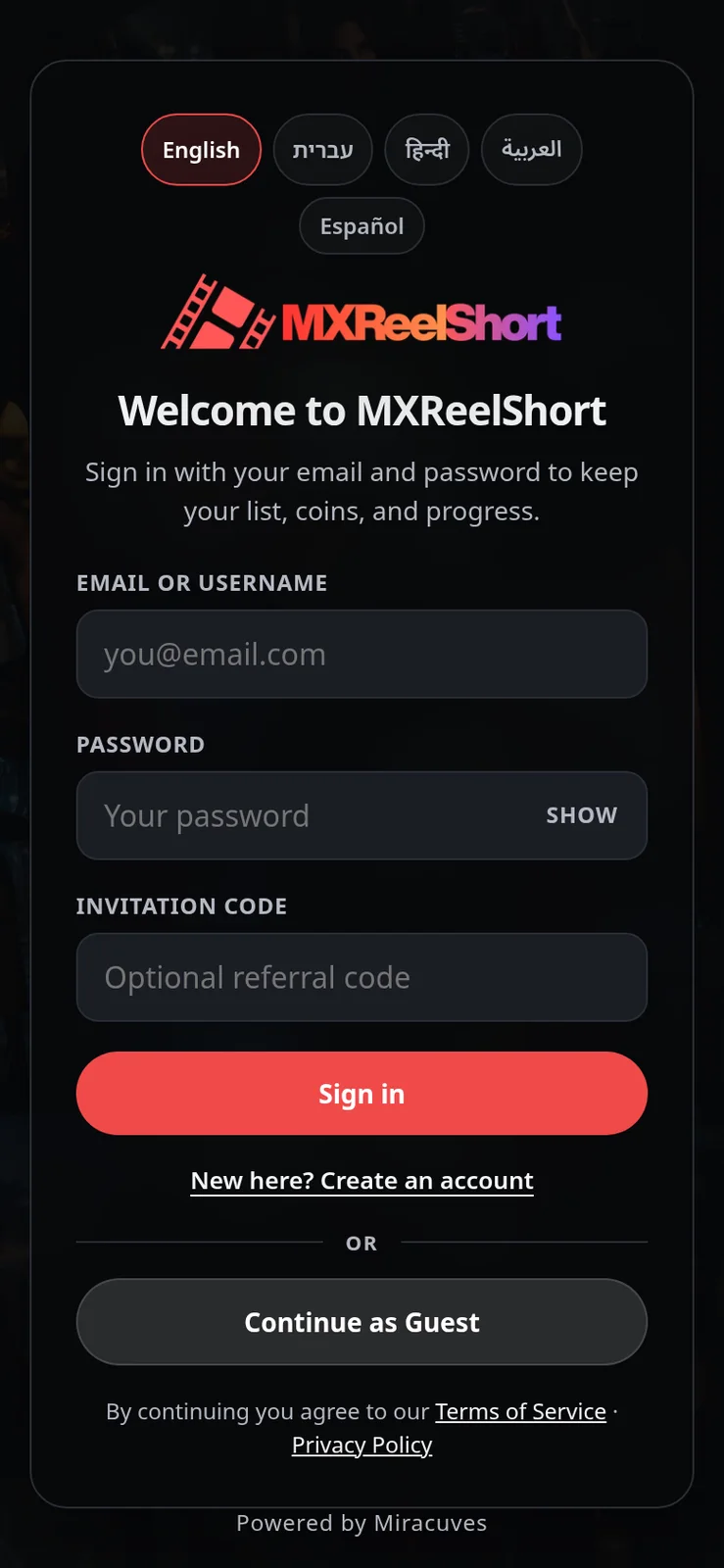
Web app 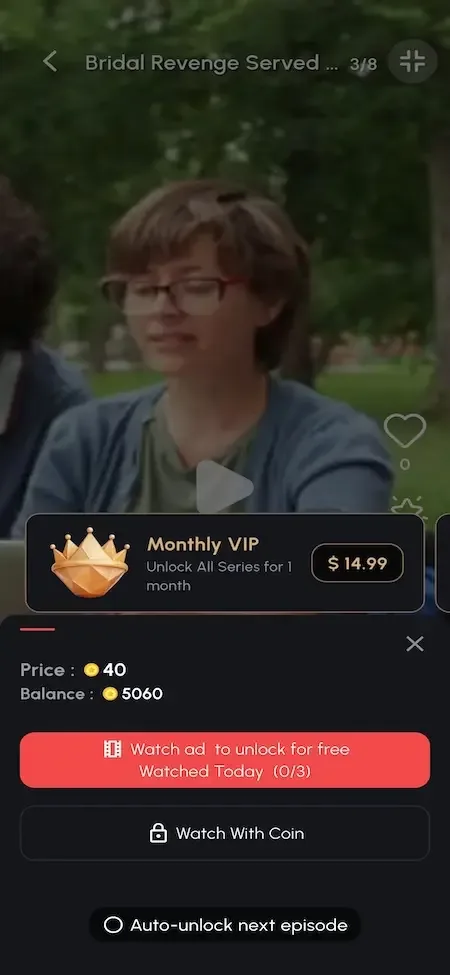
User app 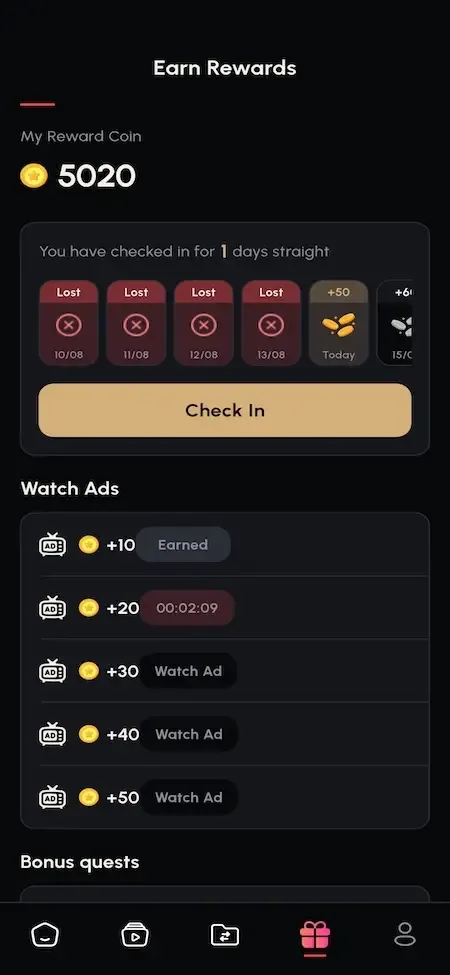
User app
How we deliver a multi-language launch
Our part is short because the platform exists. We rebrand, configure and deploy it in about six working days, and the work that depends on other parties runs in parallel, such as translations, rights and merchant approvals.
-
Scope call and market list
We confirm the languages and countries for launch, your gateways per market, and whether your catalog and rights are ready. We would rather say now if a market needs extra setup than discover it in the final week.
-
Branding and locale setup
We apply your identity across the web app, the store app and the console, then set the default locale, the currency list and the free window. Your first coin prices and plan lengths are agreed with you and changeable later.
-
Deployment to your server
We deploy the web app, console and API behind nginx and PM2, and seed the demo catalog for testing. You provide hosting access and DNS changes. Choose a server location close to your main audience. We check that playback and the console load cleanly on that server before moving on, so connection problems surface in the first week and not after viewers arrive.
-
Connecting your accounts
We connect your storage, payment gateways and ad units, then test a purchase and a rewarded unlock. The keys come from your merchant and ad accounts, and approval may take longer than the integration itself. Where a gateway asks for business verification, start that paperwork on day one instead of waiting for the integration to finish, since it is the usual cause of a delayed first sale.
-
Wording and catalog check
We help load first titles and review language wording and mirrored layouts with you. Anything missing in a locale is completed in the console editor. You tag titles with their regions and license dates. A short pass through the paywall, lock and checkout screens in every language you launch with catches the wording that costs sales.
-
Handover and publishing help
We walk your team through the console, transfer the code and documents, and begin app publishing support. Sixty days of technical support and one year of free updates then apply to everything you have launched. Ask us to watch while a team member edits a locale file and publishes it, since that skill is what keeps your second market independent of us.
Warning signs when buying for many markets
These appear in proposals and demos. Seeing several in one offer is a good reason to keep searching, however attractive the price looks. Ask for the answer in writing, because a vague reply to any one of them is itself a finding about how the provider will behave after you have paid.
- Right-to-left shown only on a marketing page and never inside the working product.
- App wording hard-coded so every text change needs a developer and a store release.
- A single language field that mixes menu language, series language and subtitles.
- No way to restrict a title by country or to end a license on a date.
- One currency only, with multi-currency promised as a later phase.
- Source code that is encrypted, obfuscated or licensed on an annual basis.
- No written list of what is simulated, partial or untranslated.
- An offer to supply licensed drama, with no clear answer on who holds the rights.
- A fixed promise of audience or revenue in a country the provider has never seen.
What we leave to you or to others
Being clear about boundaries matters more when you cross borders. These are the areas where responsibility sits with you or with a third party, and where we provide tooling or advice at most.
Translation and dubbing
We store and serve wording, subtitle files and audio tracks, but do not produce them. You hire the translators, reviewers and studios, and the console editor makes the results easy to maintain. Allow time and budget for native review.
Rights and licenses
We provide region chips and license windows, but you hold the rights and you enter the rules. The demo catalog is seed material with royalty-free stills, not licensed drama, and we cannot clear content for any country.
Local legal and tax advice
Consumer, privacy, tax and content rules differ by country. We provide data export and deletion tools and editable policy pages, not legal advice, so involve an adviser for each market. A takedown notice, a tax registration or a privacy complaint in one country should reach someone qualified there, not a developer.
Payment approvals by market
Merchant accounts belong to you, and each processor reviews applicants by its own rules and by country. We connect approved keys and test the flow, but cannot influence an approval or a fee.
Store acceptance decisions
We prepare the builds and help with submission. Apple and Google decide whether a listing is accepted and where store billing is required, and their timing is outside our control. Plan the first submission early, because a rejected build means a resubmission cycle that no amount of development speed can shorten.
Local marketing and moderation
We do not run acquisition campaigns or staff your moderation desk in any language. The console gives you a report queue and campaign tools, but people and policies for each market are yours.
Try the live DramaBox Clone demo
The demo shows the language side of the product best: a viewer app on the web and on Android, and a view-only operator console. It carries our demo branding and a seed catalog of royalty-free stills, so judge the layouts, wallet and settings screens rather than the titles.
-
Viewer web app
Open the Viewer web app demo- Login
webuser@demo.com- Password
User_$321
Worth trying
- Switch the interface to Arabic and watch the layout mirror
- Compare the same catalog under another interface language
- Open the wallet and the coin packs screen
- Hit a locked episode and read the three choices
-
Operator console
Open the Operator console demo- Login
admin@demo.com- Password
Admin_$321
Worth trying
- Find the app language editor and read the wording keys
- Look at the currency list and the default for checkout
- Open a title and read its region and language fields
- Try an edit and see the view-only role refuse it
-
Android viewer app
Open the Android viewer app demo- Login
webuser@demo.com- Password
User_$321
Worth trying
- Change the app language and note which screens mirror
- Watch an episode with its subtitle track on
- Open the quests tab and the referral screen
- Check the wallet history in the other language
DramaBox Clone development company FAQs
Do you have experience with right-to-left products?
The platform ships with Hebrew and Arabic layouts mirrored across the web app, the store app and the console, and we have delivered many projects since 2010. We can show those layouts in the live demo. For layouts beyond what ships, we set up the extra screens with you and describe the checks we would run.
Can you help us find translators?
We do not run a translation service, but we can describe the file formats and the console editor so that any translator you choose can work with them. Whoever you hire should be a native reader who also understands paywall and payments wording, since that is where clear language protects revenue.
How do we start in only one country and add more later?
Launch with one default locale, one currency and the gateway that suits that market. When you are ready for the next market, add its wording in the console, adjust coin packs and settings, and tag titles with the new regions. Nothing needs to be rebuilt, and the support and update terms continue.
Is there a minimum project size?
The ready-made platform is a single fixed price, so there is no minimum beyond that. Tailored work is estimated from a written brief. Operators of all sizes use the same product, from a first title in one language to a catalog serving several regions, and you can grow into the settings over time.
Who answers questions out of local hours?
First response comes within two hours between Monday and Saturday, 10:00 to 19:00 IST, and that applies to every market. If your own team works in a very different time zone, tell us at kickoff so we can plan handover calls and testing windows that suit both sides.
Can we hand the platform to a local partner later?
Yes. You own the source code and run the platform on your own infrastructure, so you can transfer or license a configured deployment to a partner. The terms are between you and them. We would be glad to scope a handover package with documentation if the partner needs help taking over.
Explore the DramaBox Clone
The overview and its companion pages answer the main questions in turn. Pick the one you need next.
-
DramaBox Clone
The overview: live demo, screens, price and everything in the box.
Back to the overview -
Features
Most short drama software handles one language and treats every other as a translation job added later.
See the full breakdown -
Development cost
Serving several countries changes the budget less in software than in content, language work and payments.
See exact pricing -
Business model
The expensive part of short drama is the catalog, and a catalog costs the same whether one country watches it or ten.
See the playbook
→Start here
Tell us what you want to launch.
Share the platform and your market. You get a walkthrough of the live demo, the exact scope of what ships, and a fixed price in writing. First response in under 2 hours, Monday to Saturday, 10:00 to 19:00 IST.
Trademark and independence notice
This page uses the name DramaBox to describe a type of platform. The product sold here is separate software, built independently, and DramaBox has no part in it.
Why this name
"DramaBox clone" is industry shorthand that founders use when searching for software with a comparable business model. It names a category of product, not a copy of DramaBox.
Who built this
The platform is an original product designed and written by Miracuves. It contains no code, design, graphics or content originating from the DramaBox website or applications, and it ships under your own brand.
Trademarks
DramaBox and its logos are trademarks of their respective owner and are named here for reference only. GetFame is not affiliated with, sponsored by or endorsed by DramaBox. Rights holders can write to legal@miracuves.com.
Operator responsibility. The operator of a launched platform is responsible for legal compliance in the markets it serves. Nothing on this page is legal advice.Read the full disclaimer